
Forward Look Classic: Restored 1956 Plymouth Belvedere Earns Top Honors at Minnesota Car Show
A flawlessly restored 1956 Plymouth Belvedere steals the spotlight at a Minnesota car show with timeless style and presence.
Produced from 1954 through 1970, the Plymouth Belvedere competed in two distinct market segments during its lifespan. It began as a full-size automobile before shifting to the intermediate class in 1962. While that downsizing move is often viewed as a misstep, the Belvedere held its ground and later found itself involved in the height of the muscle car era.
Many enthusiasts remember the Belvedere as the foundation for legendary performance models like the Plymouth GTX and the Plymouth Road Runner. Yet its importance during the full-size years shouldn’t be overlooked.
It helped push the brand further upmarket with the introduction of the Plymouth Fury and ranked among America’s strongest sellers in its prime.
The Belvedere name first appeared in 1951, attached to a premium two-door hardtop version of the Cranbrook. By 1954, it stood as its own model line. Just a year later, it adopted Virgil Exner’s bold “Forward Look” styling theme, a design direction that quickly captured buyers’ attention across the country.
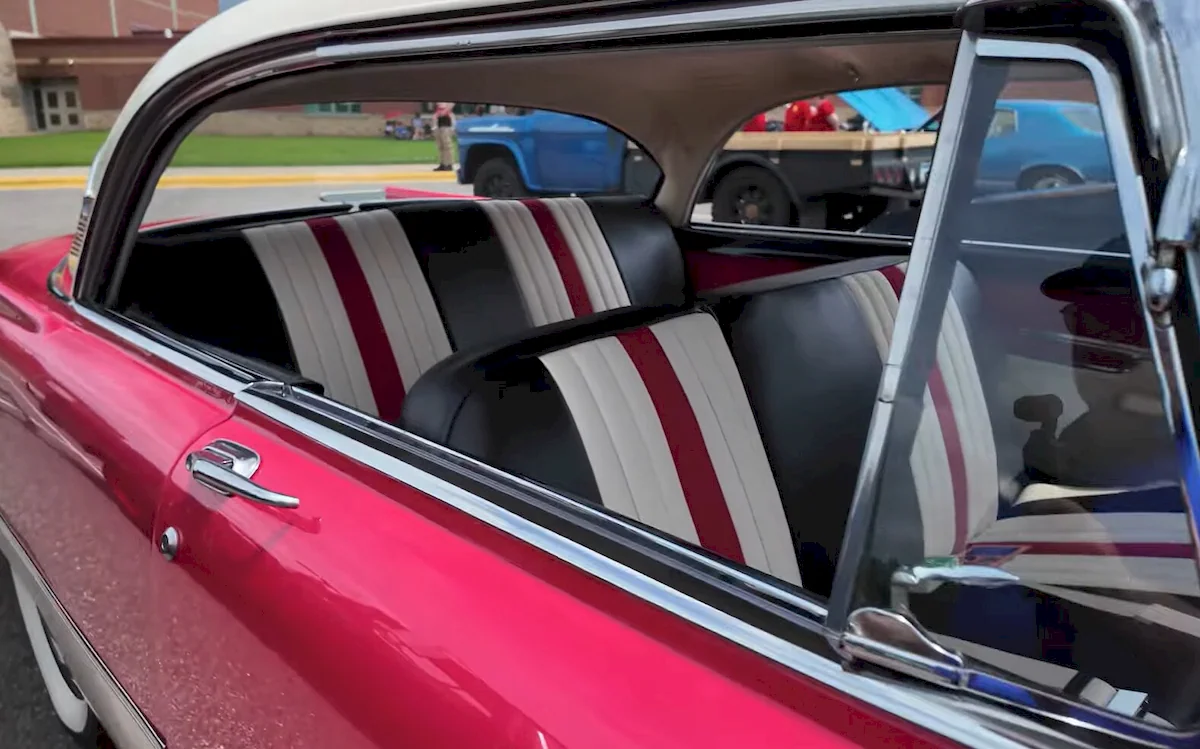
The “Forward Look” period ran through 1961, with major styling revisions introduced in 1957 and again in 1960. Enthusiasts still debate which model year delivered the most attractive Mopars. While opinions differ, the early 1955–1956 cars arguably strike the best balance.
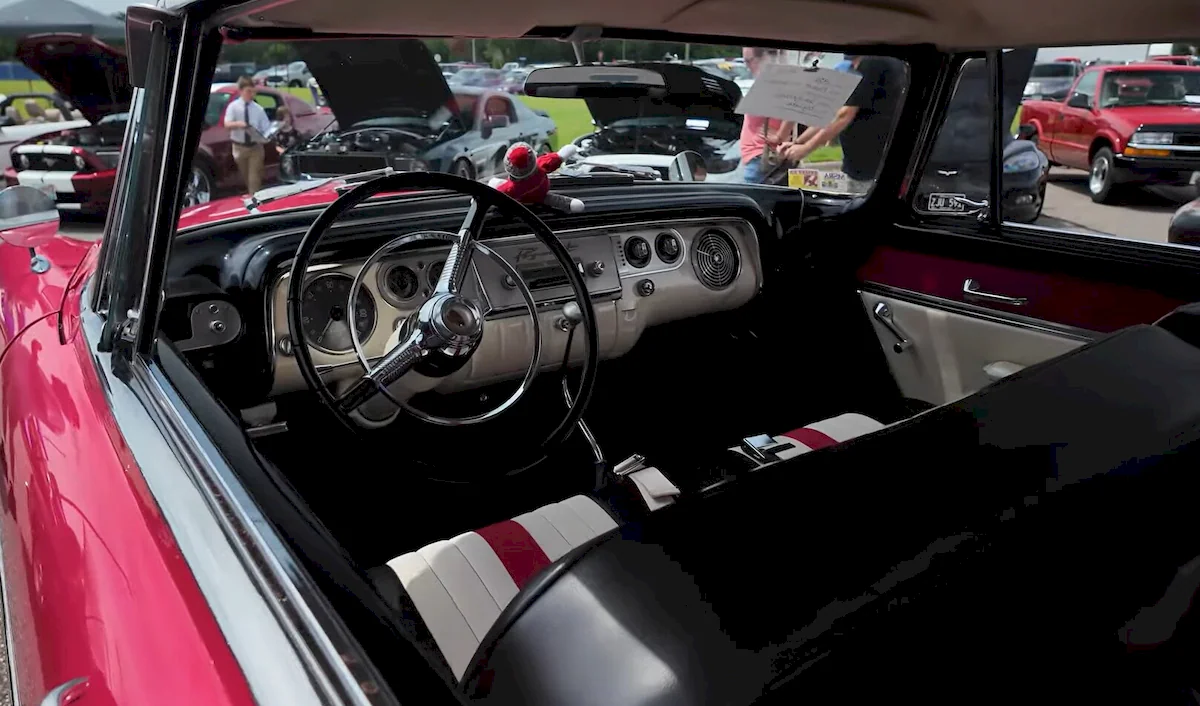
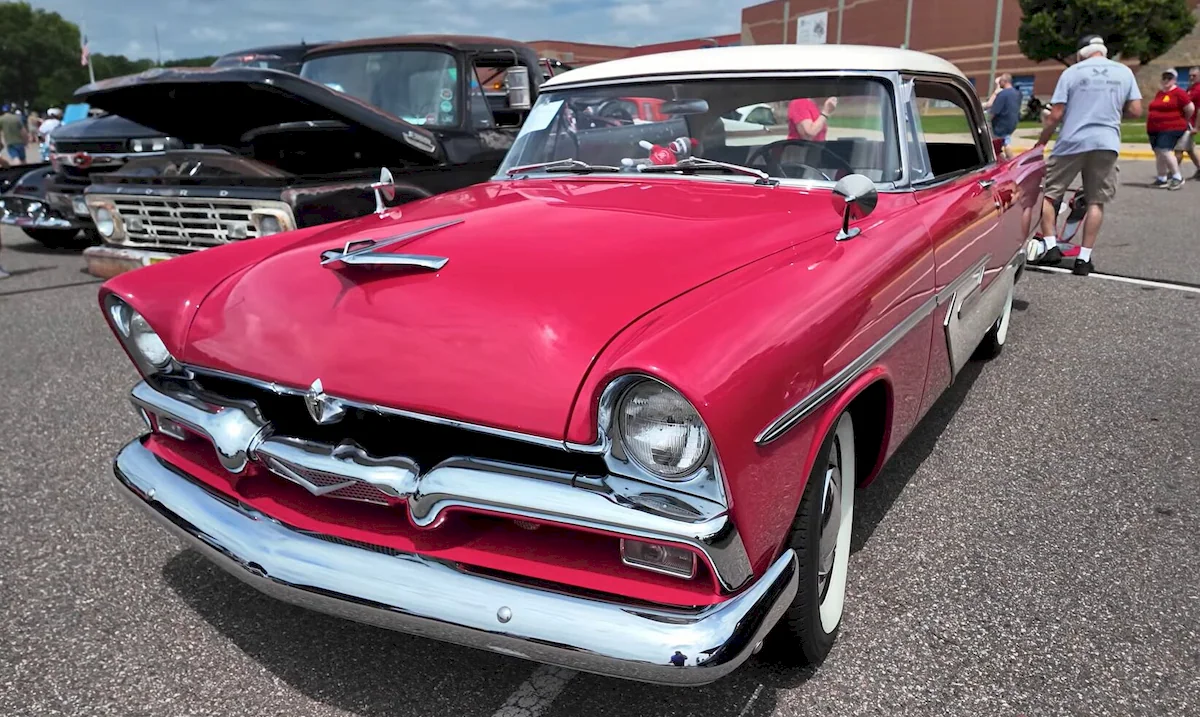
Their lines are confident without being excessive, and the tailfins remain tasteful rather than extreme. The single-headlamp front end adds to the clean aesthetic—a feature that disappeared in 1957 when most American automakers transitioned to quad headlights.
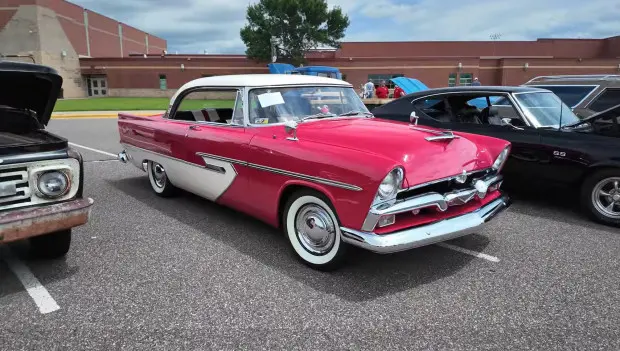
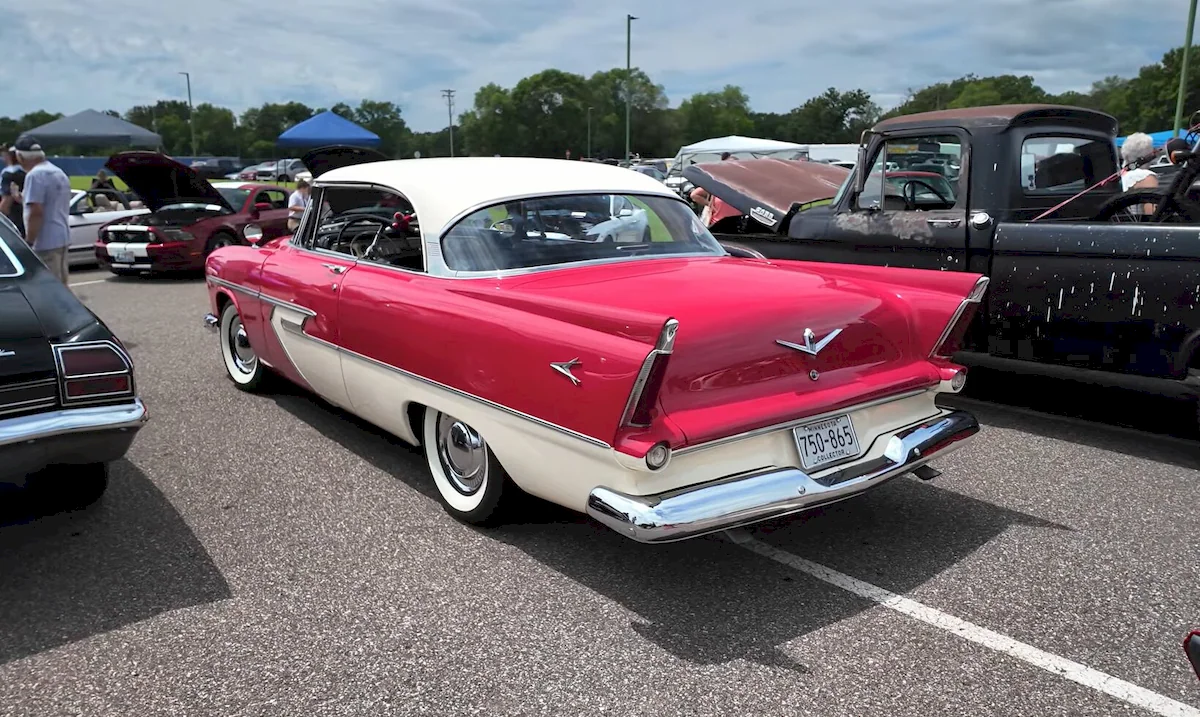
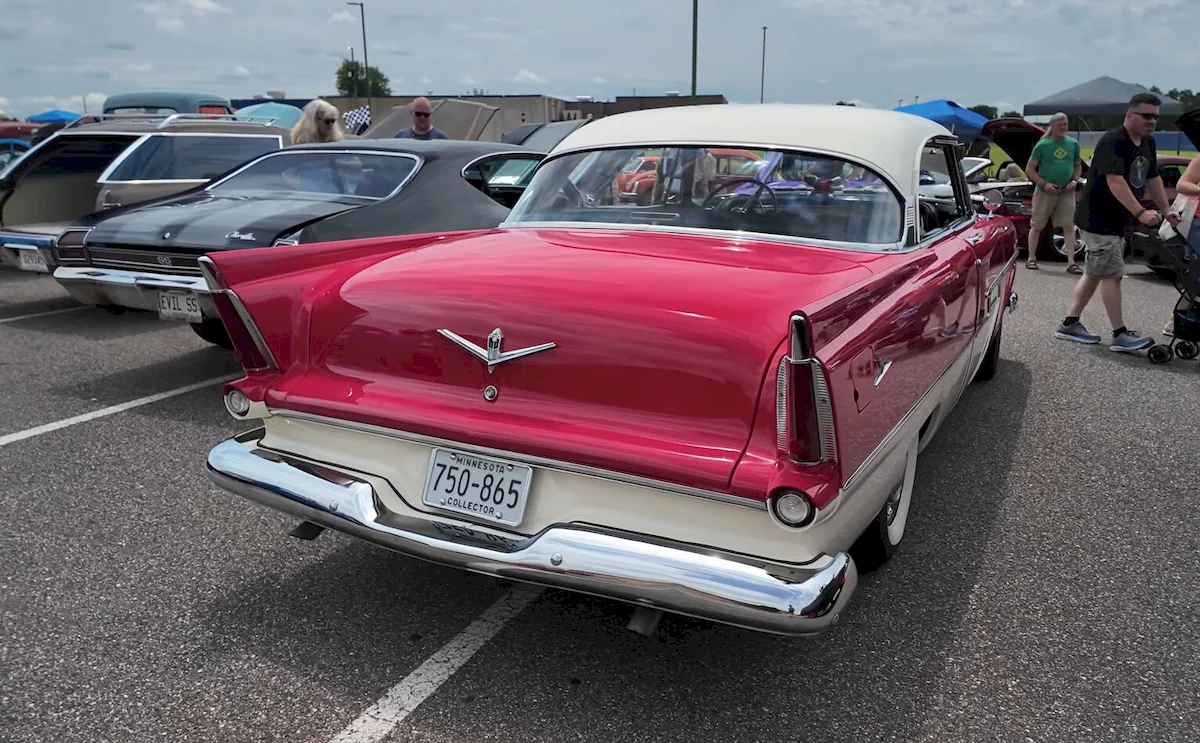
The 1956 two-door Belvedere featured here represents that sweet spot in design history. While production numbers mean it’s not especially rare, examples restored to this level are few and far between. Spotted at a local show in Big Lake, Minnesota, this car stands out as a near-perfect example, likely the result of a meticulous rotisserie restoration.
The exterior finish is exceptional, highlighted by a striking two-tone combination. Though it can appear slightly pink in bright sunlight, the body is most likely painted in factory-correct Cherry Red, paired with Eggshell White on the roof and lower inserts. The arrow-shaped white accent along the side gives the car an unmistakable mid-century flair.
Inside, the presentation is even more dramatic thanks to a three-tone interior scheme. The upholstery may not be exactly as it left the factory, but the coordinated black, red, and white pattern flows seamlessly with the door panels and overall design theme. It feels cohesive and thoughtfully executed.
Under the hood, details remain unclear, though the immaculate condition elsewhere suggests the engine bay is just as carefully finished. In 1956, the Belvedere came standard with a 230-cubic-inch (3.8-liter) inline-six producing 125 horsepower. Buyers could also opt for a 241-cubic-inch (3.9-liter) V8 rated at 165 horsepower or a 270-cubic-inch (4.4-liter) V8 delivering 180 horsepower. Stepping up the performance ladder brought a 277-cubic-inch (4.5-liter) V8 with either 187 or 200 horsepower. At the top sat the 303-cubic-inch (5.0-liter) V8, good for 240 horsepower, reserved exclusively for the Fury variant.
One can hope there’s a V8 resting beneath that red hood, but even the inline-six would hardly diminish the appeal of this beautifully preserved “Forward Look” classic. However it’s powered, this Belvedere captures the optimism and style that defined mid-1950s American motoring.
You may also be interested in the news:
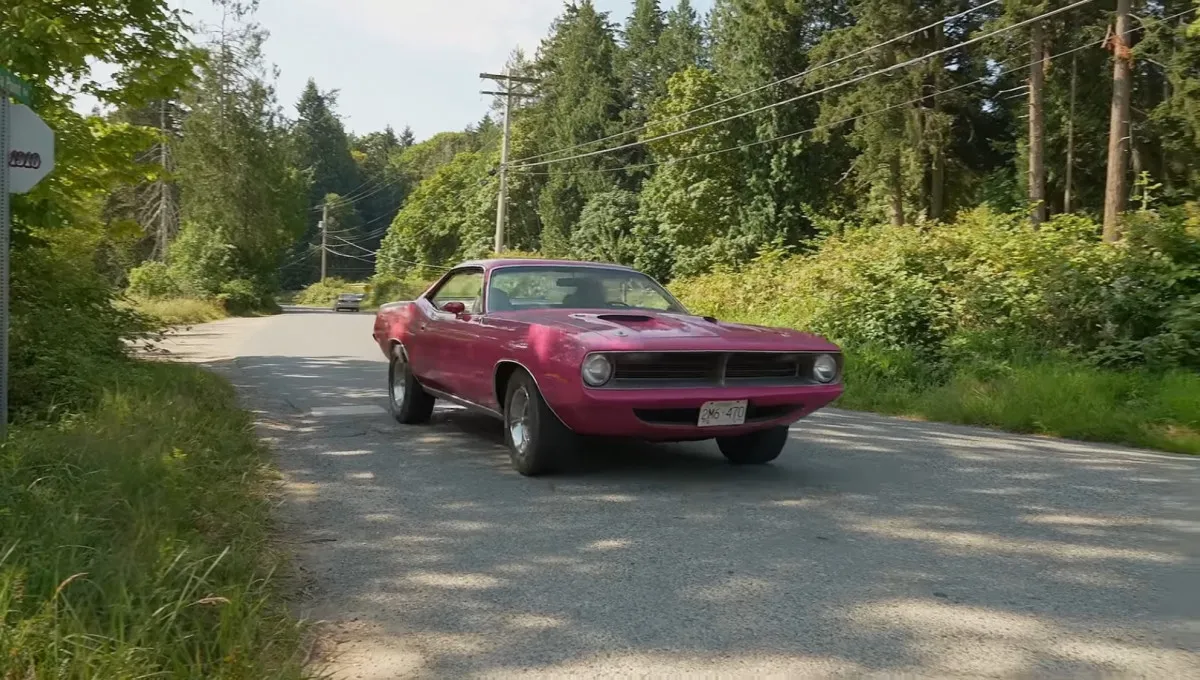
Canadian Bought a Moulin Rouge ’Cuda 40 Years Ago, Restored It, and Still Burns Rubber
A Canadian gearhead bought a rare pink 1970 ’Cuda decades ago, restored it to factory specification, and still drives it today.
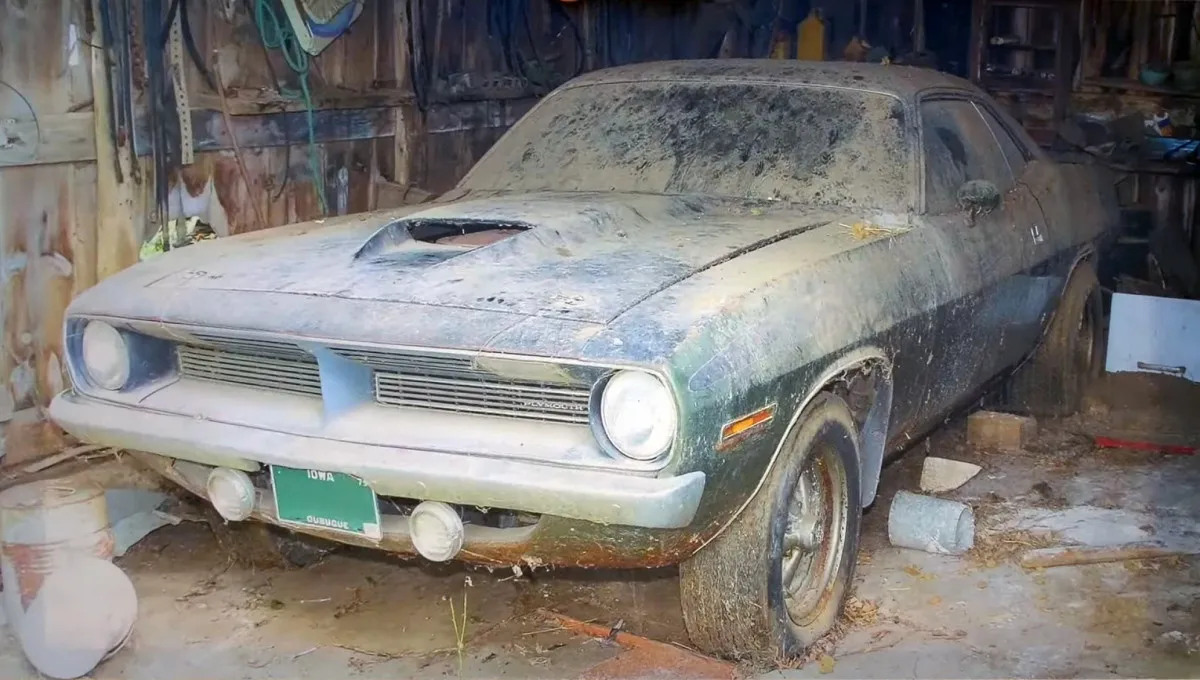
Man Bought an AAR ‘Cuda in 1973, Raced It Hard, Parked It for 20 Years, and a Fire Saved It
The car lived on streets and strips, outran police, then spent two decades hidden away before returning to the road.
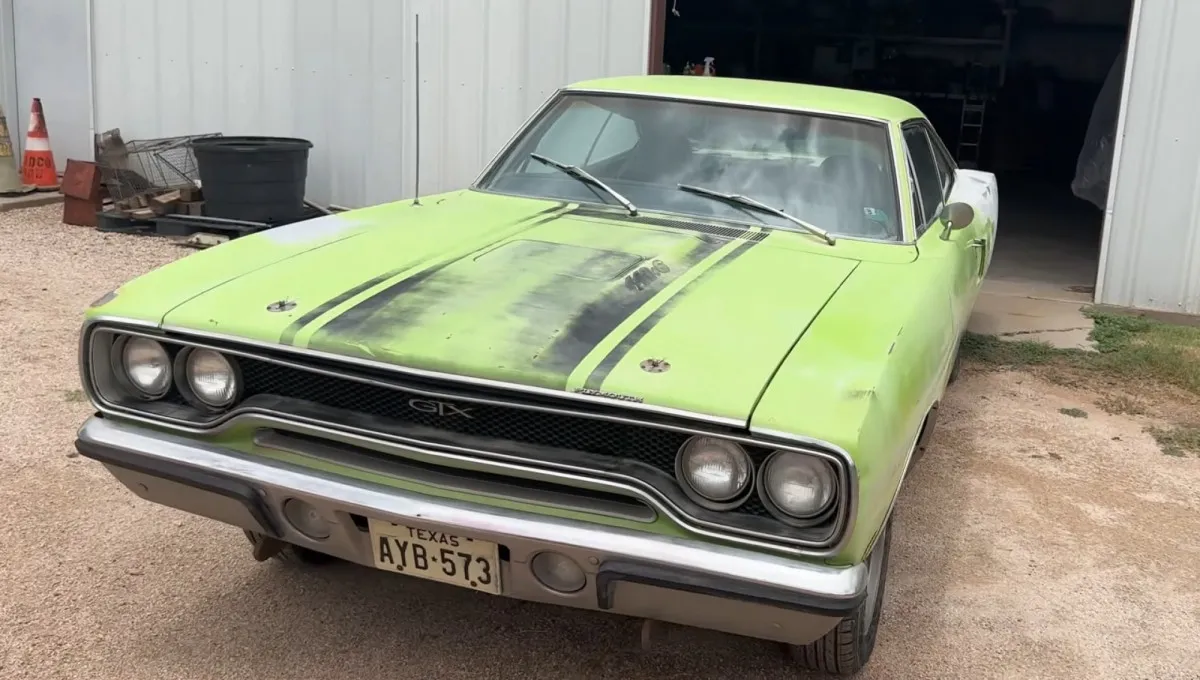
A Real 1970 GTX Sat Under a Carport for 45 Years—Then Rescuers Found Its Holy Grail in the Back Seat
The 440 Six Barrel GTX sat untouched for 45 years, its factory broadcast sheet still hidden beneath the rear seat.
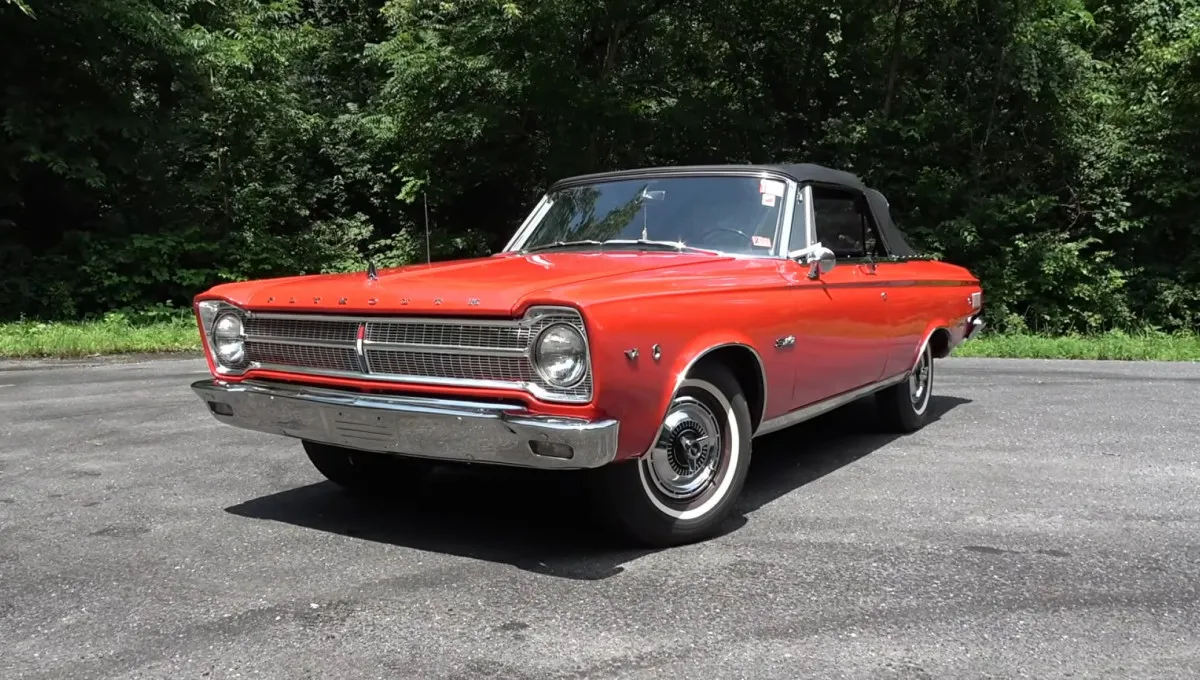
18-Year-Old Bought This 1965 Plymouth Satellite After Graduation—and Still Drives It 61 Years Later
A teenager bought this Plymouth Satellite after graduation, and 61 years later, he still drives it.
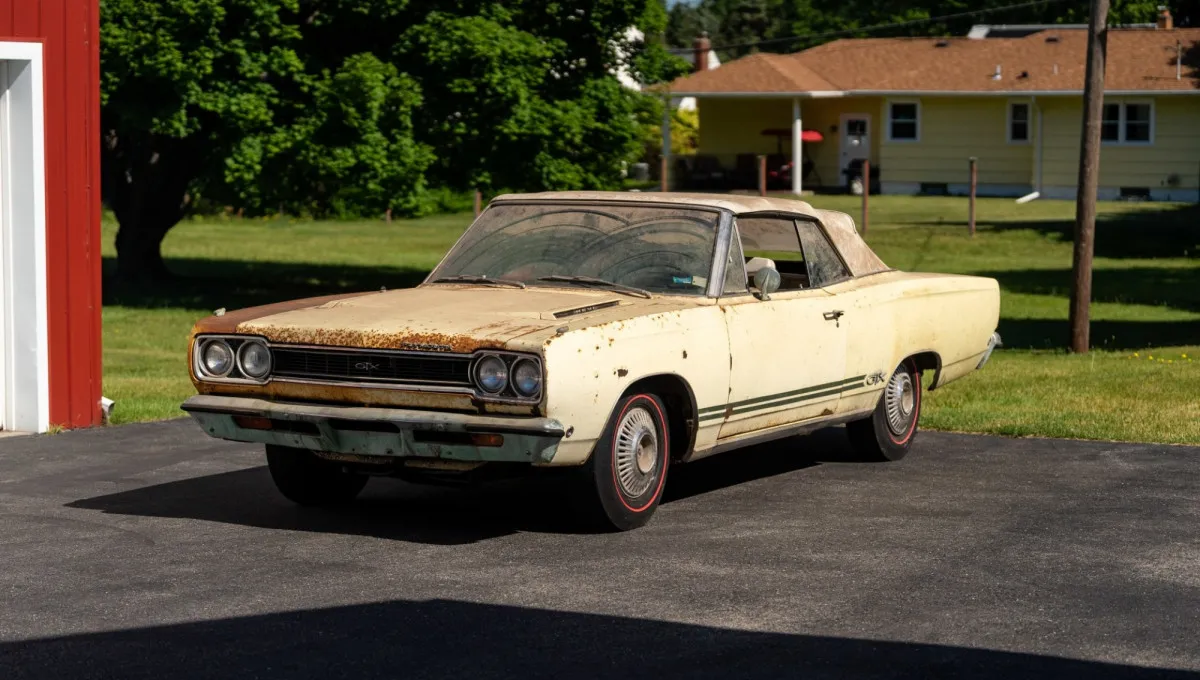
Rare 1968 Plymouth Hemi GTX Convertible Parked for Over 40 Years Sells for Six-Figure Sum
Parked in a barn from the 1970s until 2017, this rare 1968 Plymouth Hemi GTX drop top is a true time capsule with a numbers-matching drivetrain.