
The Ford Ranger That Wasn’t a Pickup: The Story of a Forgotten Edsel
Today, the Ford Ranger name is instantly recognizable—one of the market’s true long-timers.
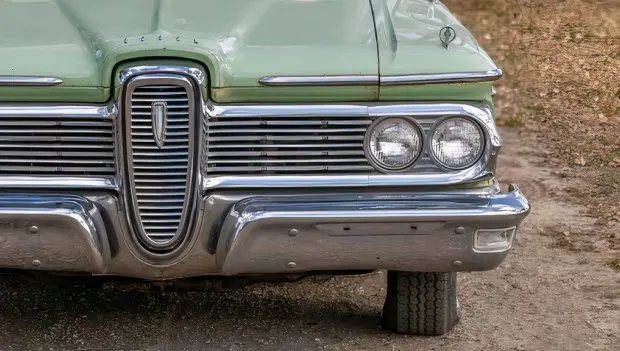
Today, the Ford Ranger name is known to just about everyone. It’s one of the true long-running nameplates in the industry—more than 40 years of popularity, a reputation as a tough workhorse, and steady global sales. But the Ranger badge didn’t always sit on the tailgate of a pickup.
Few people remember that it first appeared on a completely different vehicle—a little-known passenger car from the late 1950s built by an even more obscure Ford division called Edsel. The story of that original Ranger lasted just four years and ended in total failure.
First Generation: Chrome-Era Classic
The Edsel Ranger debuted in 1958 as the entry-level model in the Edsel lineup. It rode on the platform of the Ford Fairlane and was offered in a variety of body styles, including two- and four-door hardtops, a convertible, and traditional sedans.
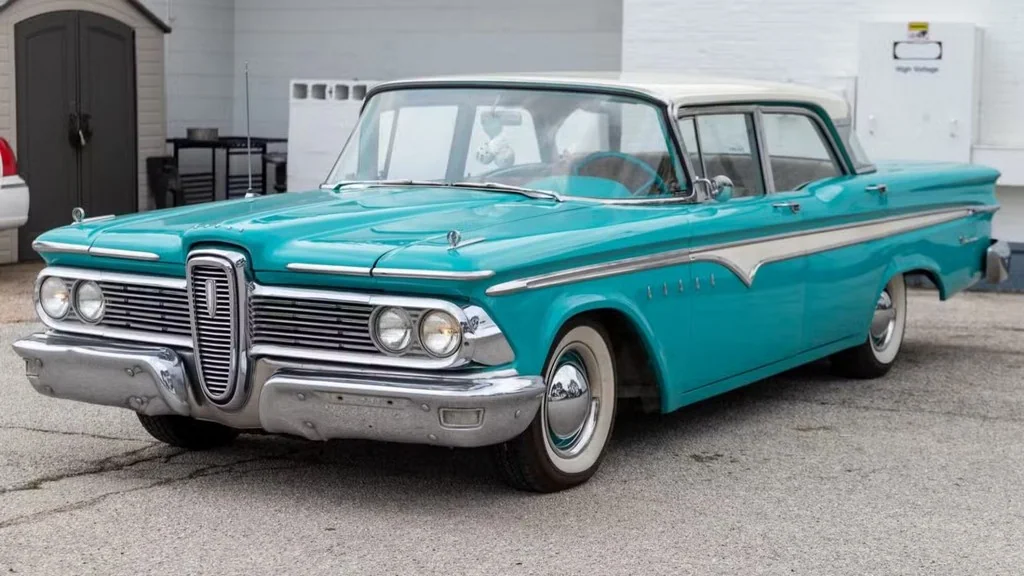
During its short life, the model technically spanned two generations: the original 1958–1959 version and a final 1960 update, after which the Edsel brand itself was discontinued.
Under the hood, buyers could choose from three engines: a base 3.7-liter inline-six, or V8s displacing 4.8 and 5.9 liters. Three transmissions were available: a three-speed manual, a conventional automatic, or the futuristic Teletouch push-button automatic. The latter was memorable not just for its steering-wheel-mounted buttons instead of a traditional gear lever, but for its notorious unreliability. Innovation proved to be the enemy of durability.
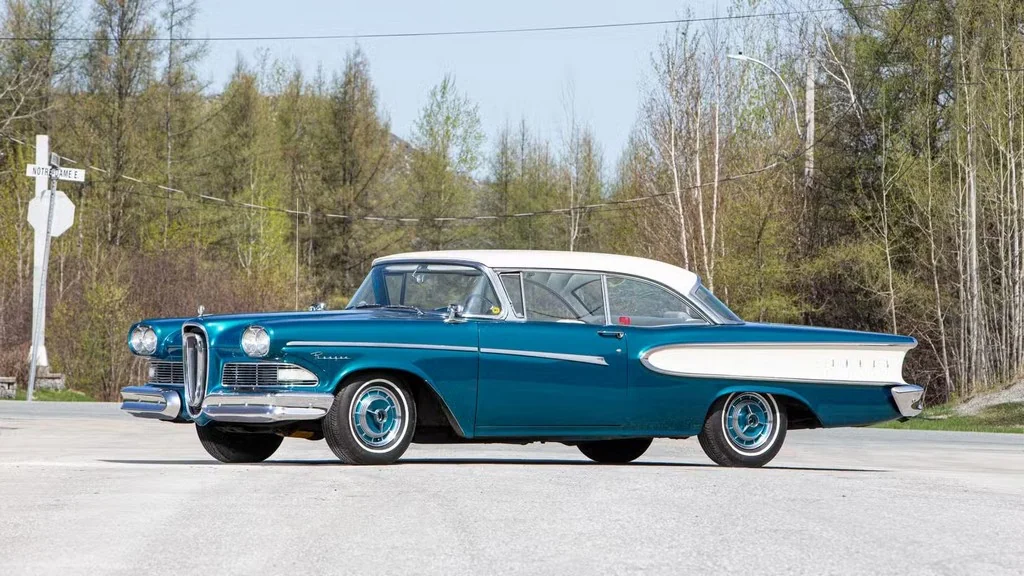
In essence, the Ranger was a rebadged Fairlane, much like its sibling, the Edsel Pacer. The differences were largely cosmetic. The pricier Pacer featured more stainless-steel trim, while the Ranger’s cabin was spartan—even by late-1950s standards. Items such as a heater, air conditioning, radio, or even seat belts were optional extras rather than standard equipment.
A Costly Mistake
The Edsel brand was born out of internal restructuring at Ford. The company wanted a new marque positioned between the mainstream Ford brand and premium Lincoln models. The name “Edsel” was chosen in honor of Edsel Ford, son of Henry Ford—though the Ford family reportedly wasn’t thrilled with the decision.
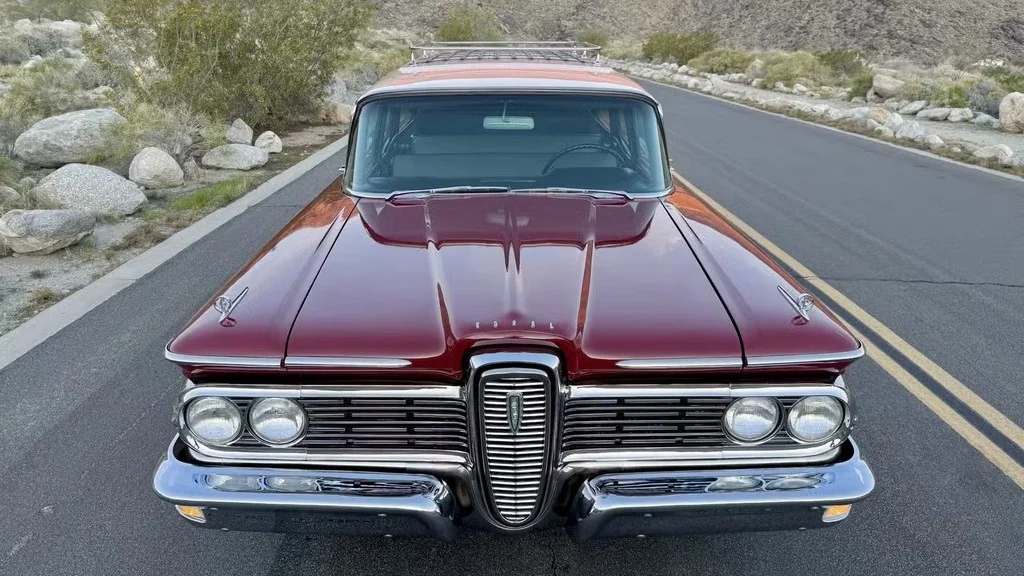
The launch was accompanied by enormous hype: TV specials, celebrity appearances, and a heavily promoted “E-Day” debut. In addition to the Ranger, the Edsel lineup included the Pacer, Corsair, Citation, and station wagons such as the Roundup, Villager, and Bermuda.
Engineers tried to pack the cars with innovations, including a primitive speed-warning system with a dashboard light, a rotating dome-style speedometer, and an array of indicator lights. But the public wasn’t convinced. Buyers found the styling controversial, questioned the build quality, and marketing alone couldn’t save the brand.
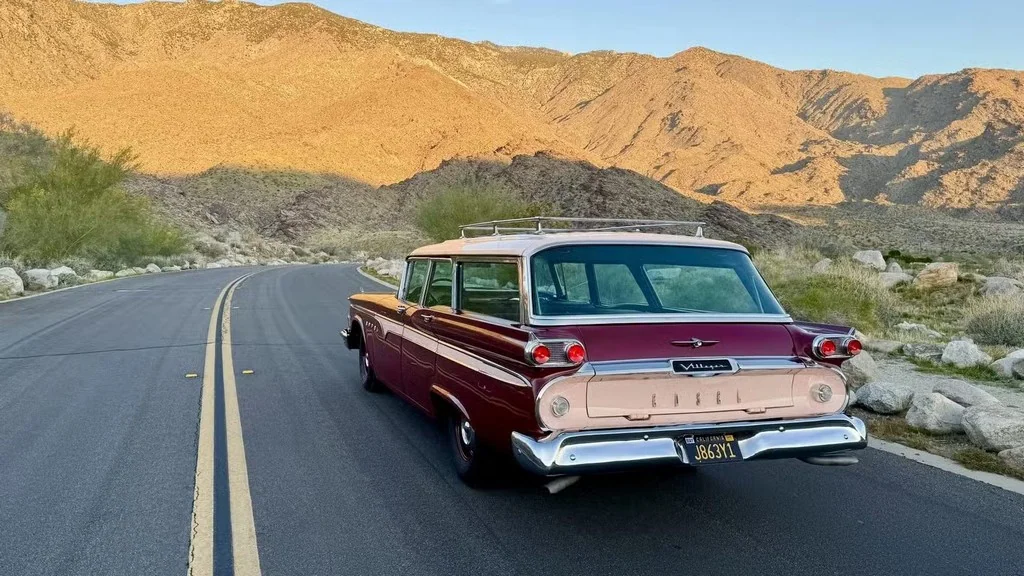
Within a year, production was cut back to just two models—the Ranger and Villager—but it didn’t help. In 1960, Edsel was discontinued after selling roughly 116,000 vehicles in total. Of those, about 21,000 were Rangers.
How the Ranger Badge Moved to Pickups
The Ranger name didn’t disappear for good. In 1965, it was revived as a premium trim level for Ford F-Series pickups. High-end trucks received upgraded trim and additional features under the Ranger designation.
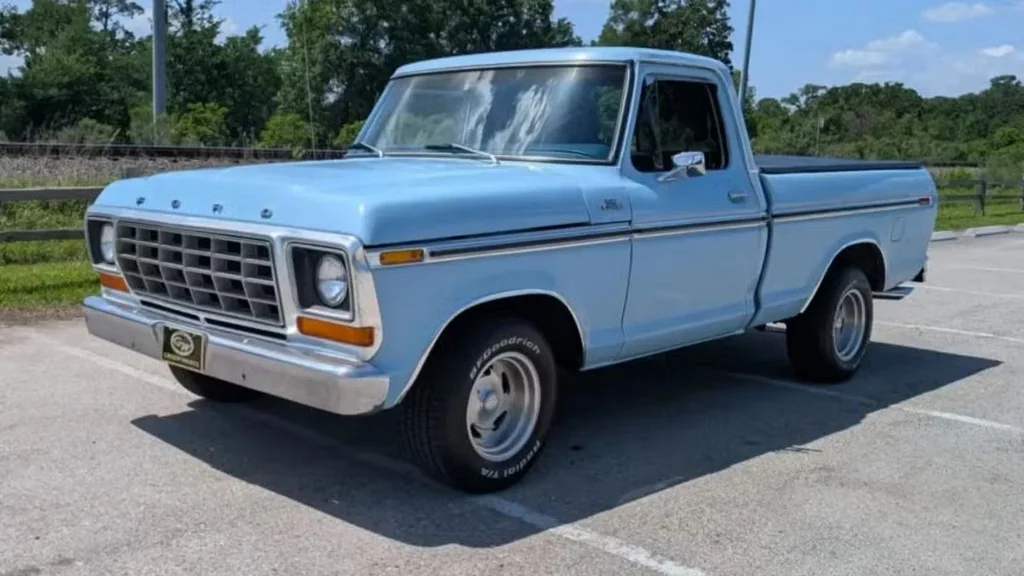
In 1972, the badge appeared on the Ford Bronco as a Ranger trim package, adding carpeted floors, cloth upholstery, body stripes, and wood-style interior accents. The trim-level use of the name continued into the early 1980s.
Then, in 1983, Ranger became a standalone model: the compact Ford Ranger pickup was born. It remained in production for nearly 30 years, ending in 2012. In 2019, the Ranger made a triumphant return to the U.S. market—this time as a midsize pickup. That marked the beginning of the modern chapter of the Ranger story.
The Modern Ranger
The current generation (factory code T6) debuted globally in 2021. The truck was significantly redesigned, with updates to the chassis, suspension tuning, and a slightly longer wheelbase.
Today’s Ranger offers a broad range of powertrains, including turbocharged four-cylinders, V6 engines, diesels in global markets, and even a plug-in hybrid in select regions. Buyers can choose between manual and six- or ten-speed automatic transmissions.
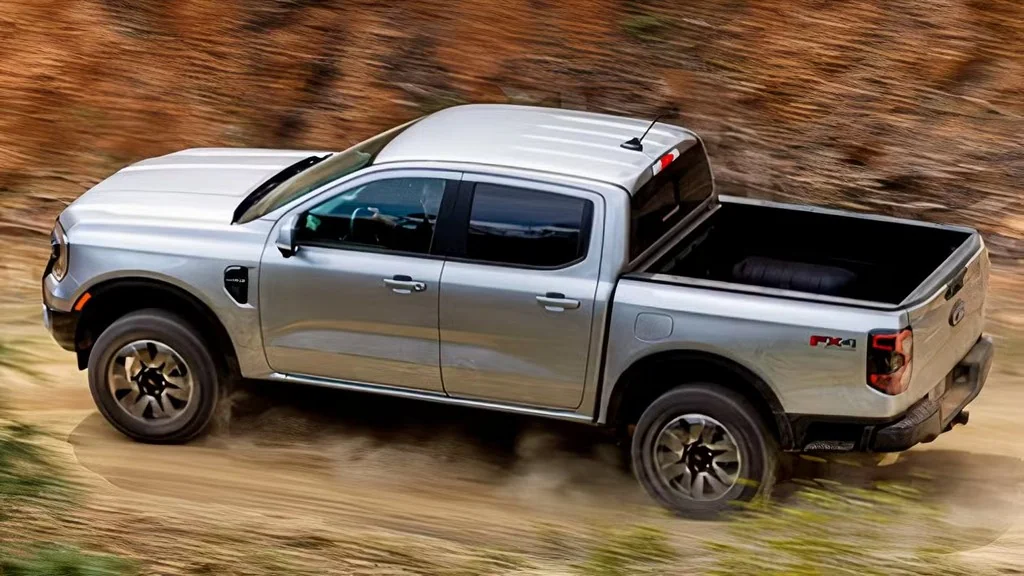
At the top of the lineup sits the high-performance Ford Ranger Raptor. It’s powered by a 3.0-liter EcoBoost V6—the same engine family used in the Ford Bronco Raptor—producing 405 horsepower.
So today, the Ranger name belongs not just to a dependable work truck, but to a genuine performance machine. And that’s certainly a better fate than being a forgotten sedan from the 1950s.
You may also be interested in the news:
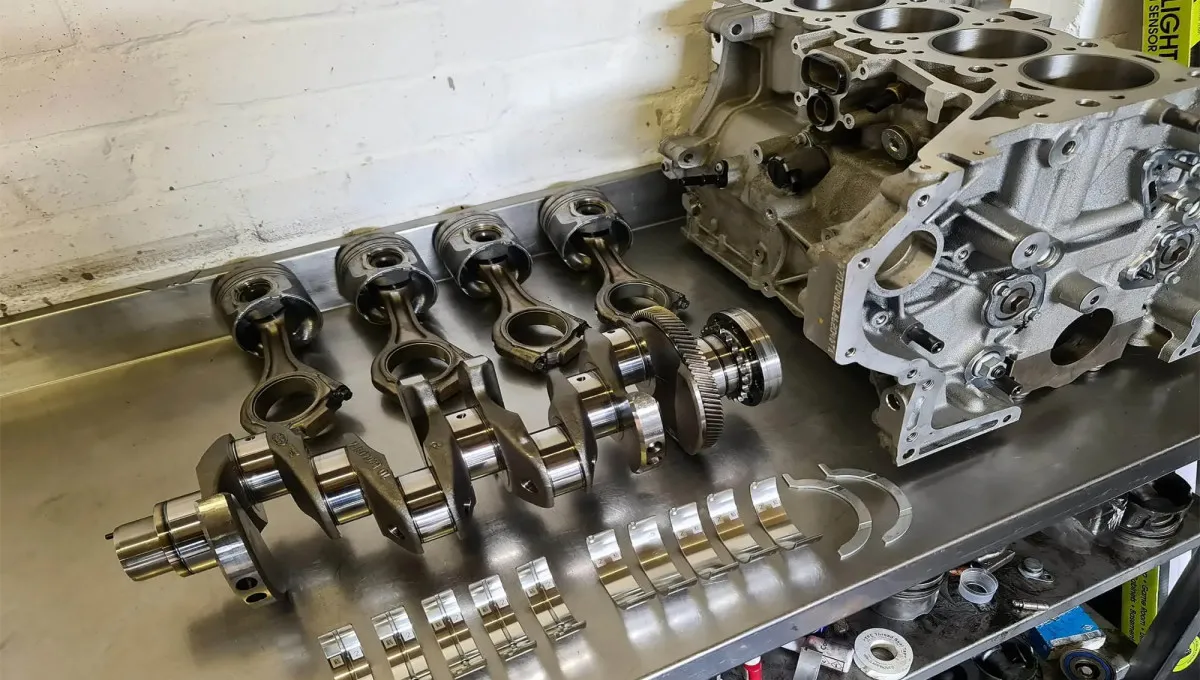
Not Ford, BMW or Audi: Mechanic Names the Car Brand That Almost Never Breaks Down
Auto repair professionals reveal which models rarely suffer major failures and which ones repeatedly end up on the lift.
What Does a Flashing Red Traffic Light Mean? Can You Keep Driving?
Drivers must come to a complete stop at the stop line before deciding whether it is safe to proceed.
5 of the Most Beautiful Chevrolet Cars: Timeless Designs With Stunning Silhouettes
Which Chevrolet models deserve to be called the most beautiful?
Nissan Restarts US-Made Murano, Pathfinder, Frontier Sales in Canada
Nissan resumed Canadian sales of three U.S.-built models, but tariffs keep supply below earlier levels.
2027 Ford Bronco RTR Priced From $50,495—Undercuts Bronco Raptor by $31,500
Ford has set the starting price for the 2027 Bronco RTR, with orders expected to open later this year.