
At Night, Automation Goes Blind from Reflectors. Experts Ran a Night Test of a Reflective Vest
All six cars detected an adult pedestrian wearing a basic reflective vest, but most struggled with someone in standard reflective workwear.
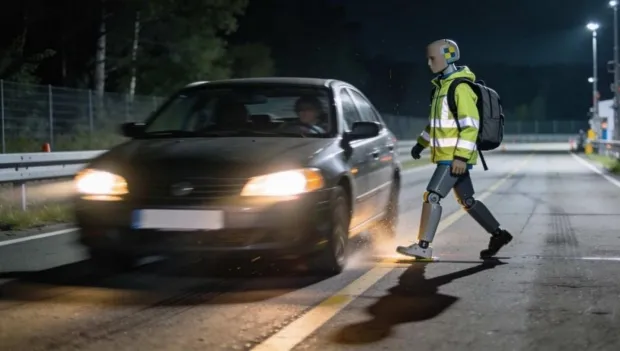
Germany’s ADAC, the world’s largest automobile club, tested six popular models at night and found a shared weakness. All detected an adult pedestrian wearing a basic reflective vest, but almost none adequately handled a person in reflective workwear or a child wearing reflective clothing and a backpack. The problem appears to lie in the software rather than the sensors.
The vehicles tested were the Mercedes-Benz CLA, Tesla Model Y, BYD Seal, Hyundai Tucson, Dacia Duster, and Opel Astra Sports Tourer. Each was evaluated in the dark in three scenarios: an adult dummy wearing a basic safety vest, a person in standard workwear with reflective strips, and a child wearing a reflective jacket and a backpack.
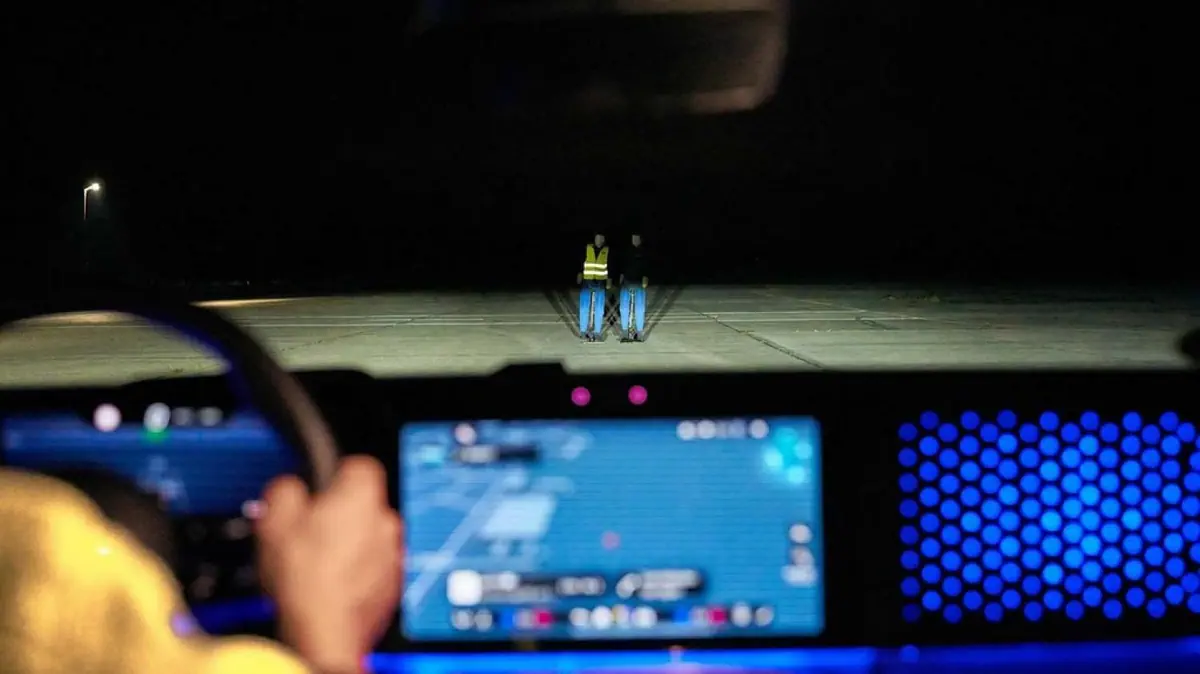
The basic vest posed no problem. All six vehicles detected the pedestrian and stopped in time. Beyond that, the results diverged. Almost every system either failed to detect the reflective workwear—the kind worn by road crews, emergency responders, and police officers—or detected it too late. Braking began too late to prevent a collision. The child scenario revealed another problem. All the vehicles recognized a child in dark clothing and braked, but when the child wore a reflective jacket and a school backpack, few systems responded, and those responses were late. ADAC suggests that reflectors positioned low to the ground may confuse the detection algorithms. The system sees a collection of bright spots but fails to identify them as a person. The Mercedes-Benz was the only vehicle that successfully handled a child in reflective clothing emerging from behind a parked car. Even it struggled with the workwear, however. Its warning came late, and full braking was not enough to avoid a collision. That means the Mercedes should not be treated as a benchmark for detecting reflective clothing, either.
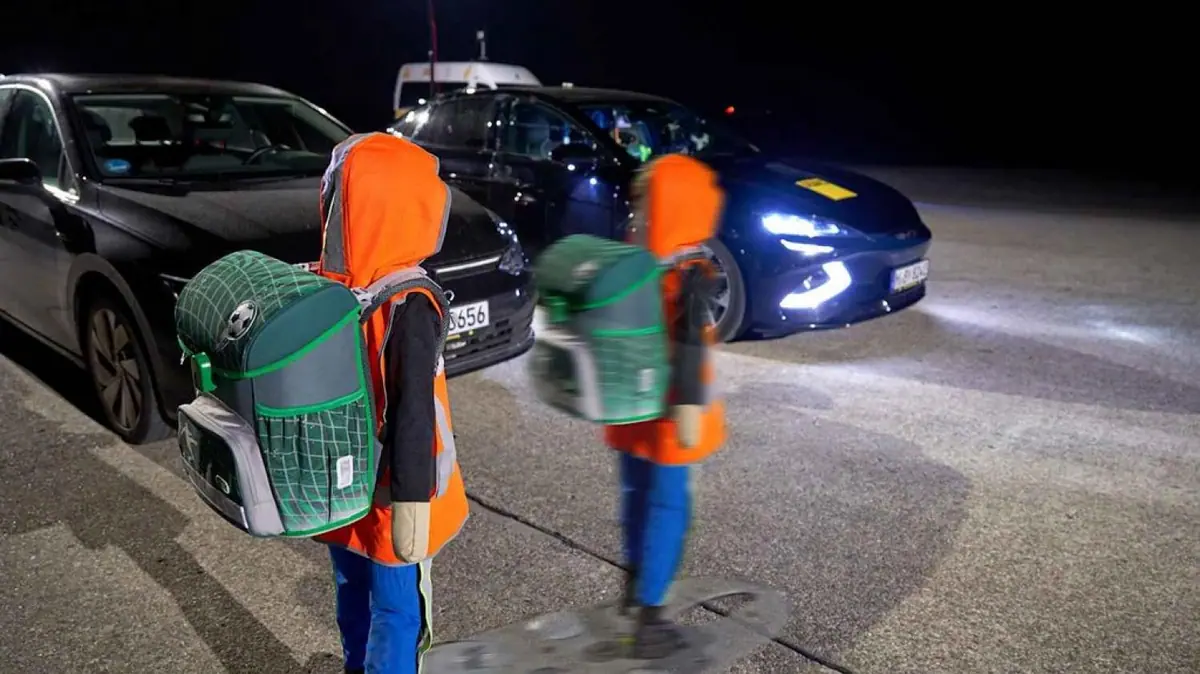
ADAC’s central finding is that the failure stems from difficulty classifying an object, rather than inadequate sensors. In other words, the radar and camera can detect an obstacle, but the software does not always recognize it as a person rather than a road sign. If the algorithms are responsible, a software update could address the problem without replacing the sensors. ADAC has called on manufacturers to do so.
Euro NCAP has tested nighttime pedestrian detection since 2016. Its procedures became more demanding in 2026, with additional scenarios, but different types of clothing are not part of the standard program. ADAC’s independent test therefore exposed a weakness outside the scope of those assessments. For drivers, the results underscore the need to stay alert, especially at night and near roadwork or children carrying backpacks. Automatic emergency braking is a backup, not a substitute for an attentive driver.
You may also be interested in the news:
3 Zodiac Signs That Turn Every Car Ride Into a Full-Blown Karaoke Concert
They don't just listen to music behind the wheel. They put on a concert, and they're their own biggest fans.

Does Extra Weight Matter? How Passengers and Cargo Change a Vehicle's Performance
Let's revisit the theory and put some of it to the test, using real-world driving and instrumented measurements.
The Language of the Road: Which Hand Signals Do American Drivers Still Understand?
Traditional driving hand signals are fading from American roads, but a few old gestures can still help drivers avoid trouble.
Three Zodiac Signs That Cry in the Car to Their Favorite Songs—and You’d Never Know
They know how to hide their tears from everyone. For them, the car is the only place where they can let go.

The Mistake Thousands of Drivers Make: Why You Should Never Let Your Gas Tank Get Too Low
Mechanics explain how driving on empty can damage fuel pumps and injectors, and how much gas to keep.