
Japan Aims for 30% of the Global Chip Market for Robots and Self-Driving Tech by 2040
By 2040, Japan plans to control more than 30% of the worldwide market for chips used in robots and other AI-driven devices.
Japan is kicking off an ambitious push to build up chip production for physical artificial intelligence, with the goal of grabbing a third of the global market by 2040. It’s the kind of move that could shift the worldwide balance of power in robotics and autonomous driving systems.
The country is betting big on reclaiming its old spot as a semiconductor leader. The government just laid out a sweeping strategy to develop chips for physical AI — the sort that goes into robots, self-driving cars, and any machine where AI has to control real-world actions. The target: own 30% of that market by the end of the next decade.
According to Nikkei Asian Review, Prime Minister Sanae Takaichi’s government will roll out an updated science and technology plan in the coming months, and it should get the official stamp by summer. The document calls for an eightfold jump in semiconductor production, all the way to $254 billion a year. A leap that big wouldn’t just help Japan catch up to the U.S. and China — it would let the country go head-to-head in some key areas.
The sharpest focus lands on chips for robotics, a field where Japanese industry has always been tough to beat. Officials are confident the country can bring unique solutions to the table and turn itself into the go-to supplier for robot makers and autonomous driving companies around the world.
Experts expect the global semiconductor market to nearly double, hitting $1.2 trillion by 2035. That kind of growth means the scrap for market share is only going to get more intense, and a well-timed push from a player like Japan could seriously rearrange the furniture.
To get there, Japan is ready to put real money behind the plan. We’re talking subsidies for land to build new fabs, engineering support, incentives for companies knee-deep in AI chip work, and a set of legal reforms to make it easier to secure water, chipmaking gear, and data center capacity.
The government has also flagged 17 priority sectors — artificial intelligence, semiconductors, and robotics are on the list, along with pharma, shipbuilding, medicine, and quantum tech. Long-term roadmaps will be drawn up for 27 specific products and technologies, all meant to lay down a runway for steady technological growth.
If the strategy pans out, Japan won’t just redraw the competitive map. It could spark a new wave of momentum in robotics, autonomous vehicles, and every other field where physical AI ends up calling the shots. And it’s worth remembering that Japan is already a potential frontrunner in the global chip game — the kind of experience that other countries looking for tech independence might want to study closely.
You may also be interested in the news:

Flying Pug: Why Mitsubishi Built a Pajero That Looked Like a London Taxi
In the late 1990s, Mitsubishi introduced one of Japan's most unusual limited-edition SUVs, blending retro British styling with compact off-road capability.

Toyota and Honda Suspend Production Following Earthquake in Japan
Production at several Toyota and Honda plants has been halted after a powerful earthquake disrupted operations and supply chains in Japan.

Toyota Reportedly Preparing a Next-Generation Probox Wagon
Toyota's next Probox is expected to add hybrid power, a TNGA platform, and improved technology by 2028.
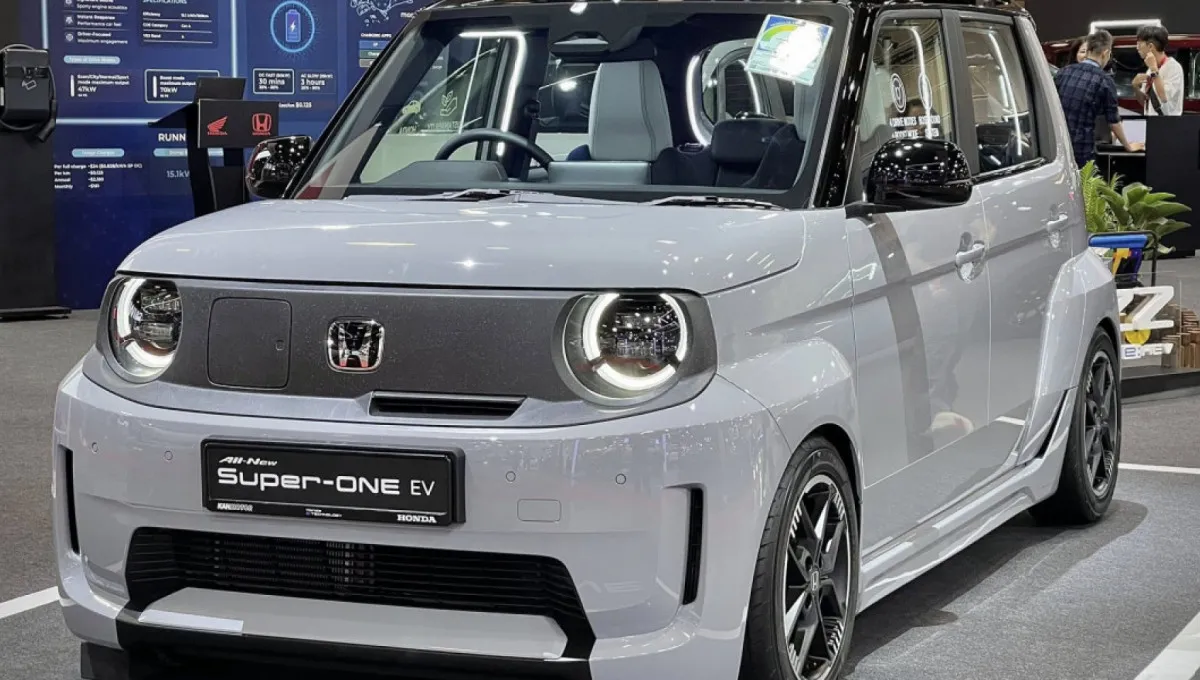
Honda’s New EV Becomes an Instant Hit as Demand Tops Annual Sales Target in Just Two Months
Honda received more than 11,000 orders for the new Super-ONE EV just two months after its Japanese debut.