
How to Open the Hood After the Release Cable Breaks
There's nothing pleasant about discovering that the hood release lever suddenly goes limp and moves freely.
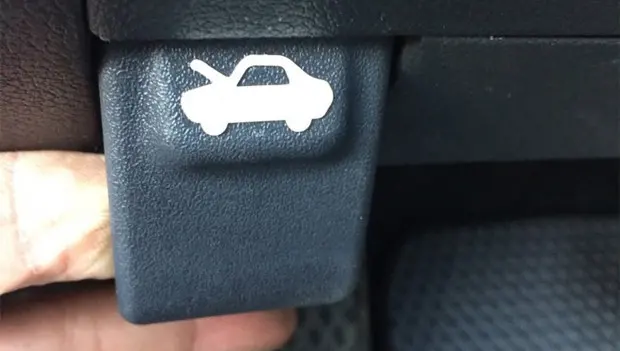
There's nothing pleasant about discovering that the hood release lever suddenly goes limp and moves freely. A broken release cable makes it impossible to perform simple tasks like topping off windshield washer fluid or checking the oil, turning the engine compartment into an inaccessible fortress. The hood latch mechanism remains almost as simple today as it was on cars built decades ago. Understanding how this basic combination of a lever, cable, and spring works can help solve the problem without damaging the body, using nothing more than logic and a few basic tools.
Finding the Weak Link
Before taking any action, determine where the cable broke, as that will dictate the best way to open the hood. If you feel no resistance when pulling the hood release lever inside the cabin, the mechanical connection to the latch has been lost.
Statistically, the cable most often breaks either right at the interior release lever or at the hood latch itself, and less frequently somewhere in the middle due to severe corrosion.
The first step is to inspect the release lever inside the vehicle. If the steel cable end is visible near the pedal assembly, you're in luck, as this is the easiest scenario and doesn't require crawling under the vehicle.
If the Cable Broke Inside the Cabin
If the inspection shows the break occurred inside the cabin, fixing the problem should take no more than five minutes. Carefully remove the plastic trim panel or the release lever near the driver's left foot to reach the point where the cable exits its housing.
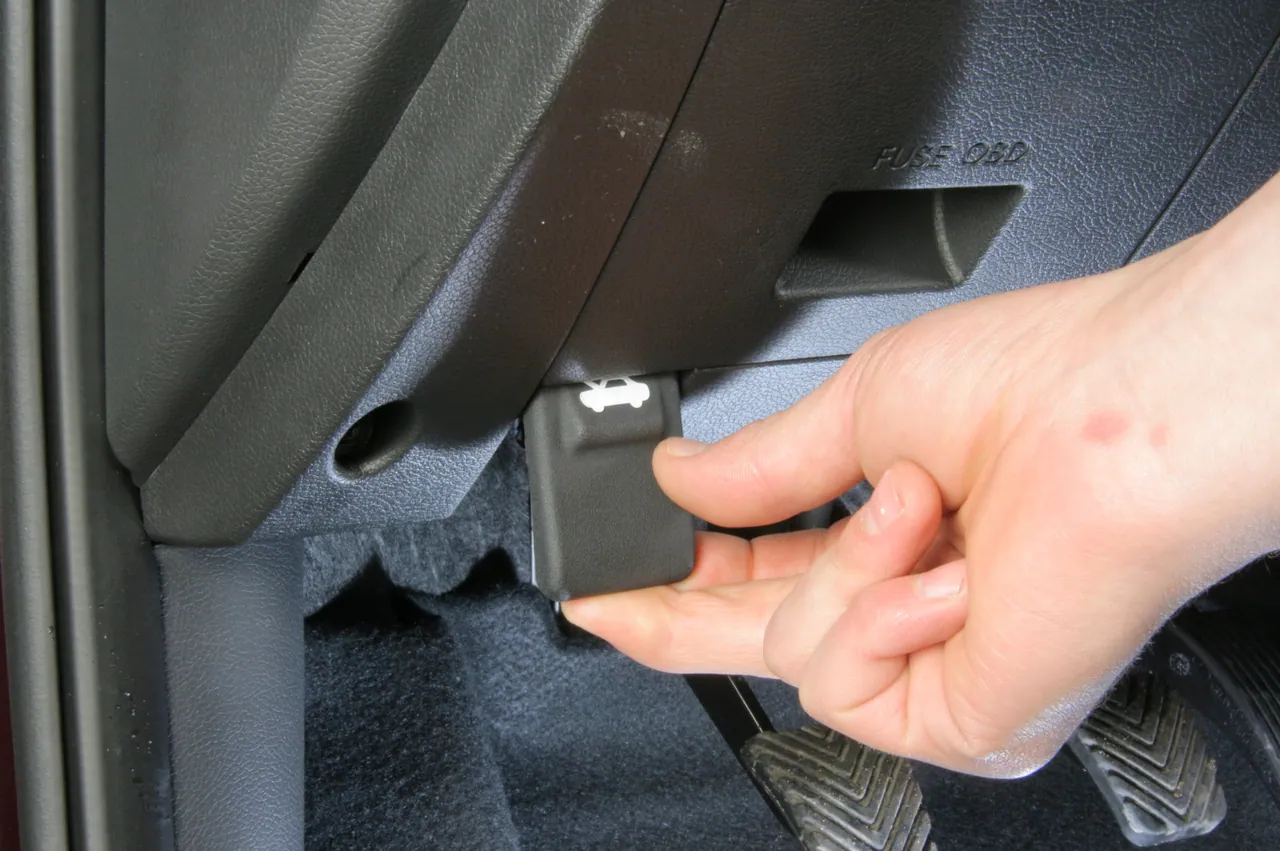
Once you've located the broken cable end, firmly grip it with pliers or wrap it around a screwdriver, then pull it toward you smoothly but firmly. A distinct click from under the hood will signal success. The key is to avoid jerking the cable, which could break the remaining intact strands in a less accessible location.
Working Through the Grille
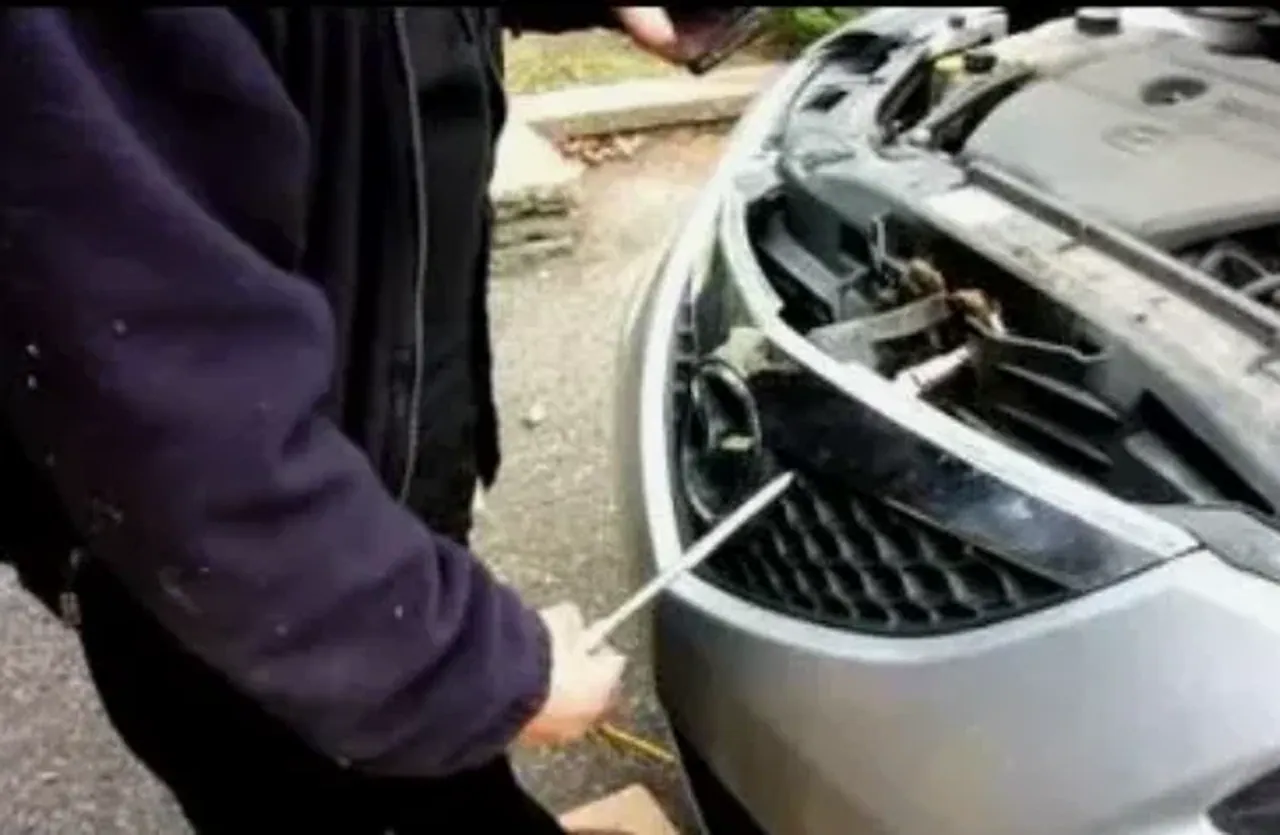
If the cable is intact inside the cabin but the latch doesn't respond, you'll have to approach it through the front grille. This method requires some skill and a long screwdriver or a stiff piece of wire with a hook on the end.
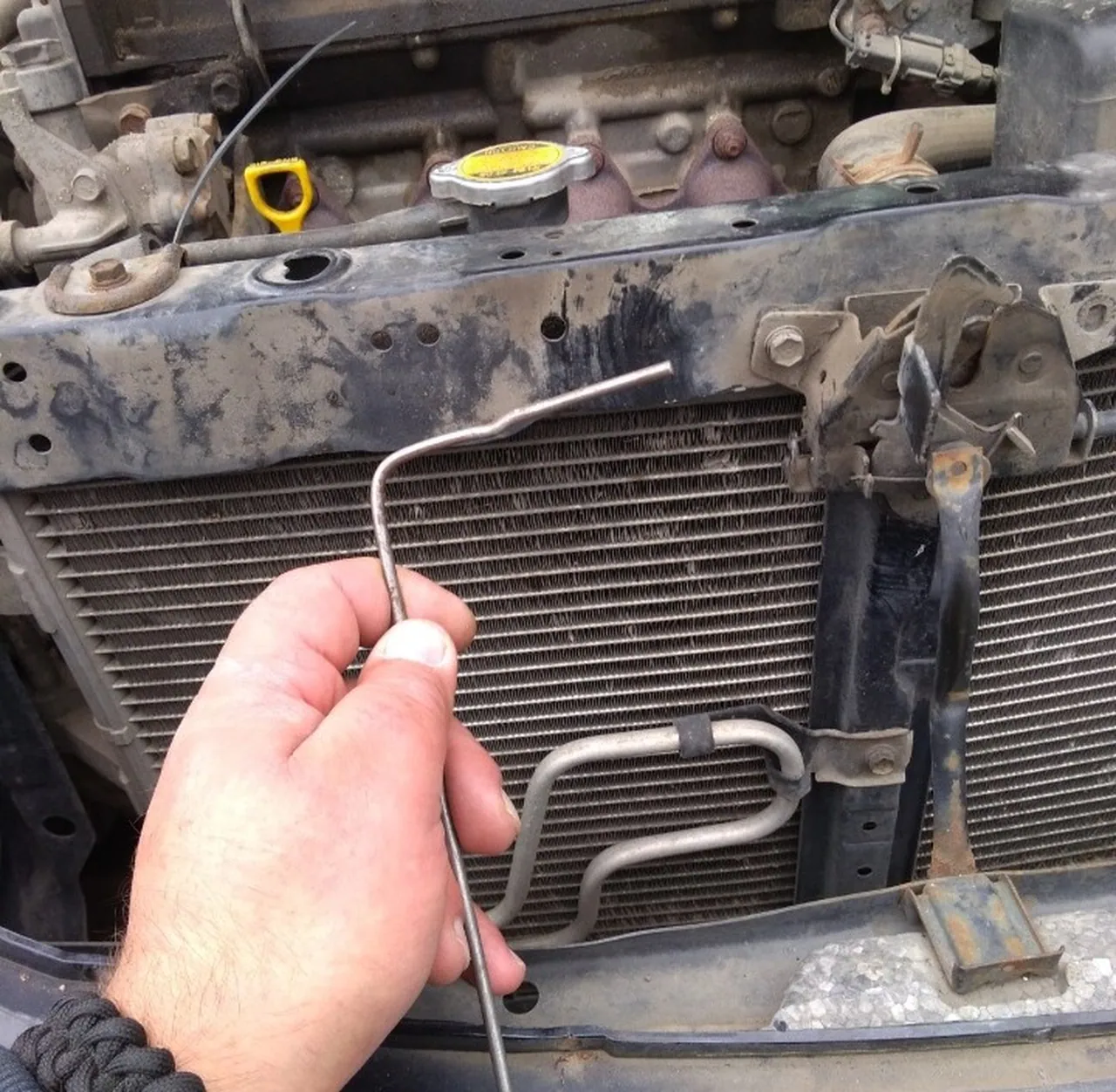
Look through the grille openings, trying to locate the spring-loaded latch tab or the point where the cable enters the latch. Insert the tool through the openings and either move the latch tab to the side or hook the remaining section of the cable and pull it.
To avoid damaging the vehicle's appearance, it's strongly recommended to cover the edges of the grille with painter's tape to protect the paint from accidental scratches caused by the tool.
Access From Below or Through the Fender Liner
If the grille design is too dense or the latch is covered by a protective shield, the remaining option is to access it from underneath the engine compartment or through the wheel well. This method is most effective if you have access to an inspection pit, vehicle ramps, or at least a jack.
After removing the engine splash shield, you'll be able to see the bottom of the hood latch, where its release lever can be pushed with a long metal rod.
Another option is to remove the left front fender liner, behind which the cable routing is located on many imported vehicles. Once you've located the cable housing, make a careful cut in it and pull on the steel cable itself, allowing the hood to be released even if the mechanism is completely jammed.
Electronic Complications and Security Systems
Vehicles equipped with electromechanical hood locks, which are often part of security systems, require special attention. If the hood is locked because the battery is discharged and the standard cable has been replaced with an actuator, you'll need to supply 12 volts to the vehicle's electrical system through the cigarette lighter socket or locate the hidden emergency release cable that professional installers typically conceal inside the cabin or behind the fender liner.
If a complex mechanical anti-theft hood lock with an armored cable fails, it's better not to attempt repairs yourself. These systems are specifically designed to resist tampering and require detailed knowledge of how the particular installer routed and installed the system.
Maintaining the Mechanism
To avoid repeating this experience at a gas station or in freezing weather, the hood latch should be inspected during every scheduled service. The primary cause of cable failure is excessive force on the release lever due to dirt buildup inside the latch or old, hardened lubricant. Regular cleaning and treating the latch with a penetrating lubricant or lithium grease will significantly extend the cable's service life.
If you notice the hood becoming harder to open, don't wait for the cable to break completely. Replace it with a multi-strand steel cable, which offers much greater flexibility and wear resistance than lower-cost alternatives.
You may also be interested in the news:
Your Engine Could Be Warning You: 6 Problems That Can Make a Car Run Rough
Engine problems rarely happen without a reason, and six common issues can cause a car to run poorly.
Changing Your Car’s Filters: How to Do Basic Maintenance Yourself Without Damaging the Engine
Changing the oil, engine air filter and cabin air filter yourself can save money, but small mistakes can cause expensive problems.
That Stuff in Your Trunk Is Costing You More Than You Think—Here’s What to Take Out
Carrying unnecessary cargo can quietly increase fuel use, accelerate wear and create an avoidable safety hazard for drivers and passengers.
Your Headlights Are Fogging Up for a Reason: 4 Causes and 5 Steps to Fix Them
Foggy headlights are not always a sign of damage, but persistent condensation can point to a problem that needs attention.
Why Is Your Car’s Suspension Making a Knocking Noise? 5 Symptoms Every Driver Should Know
Five common suspension noises can point to specific problems, helping drivers narrow the cause before inspection.