
Start/Stop Systems Are Everywhere — But Are They Really Saving You Gas or Wearing Out Your Engine?
Does start-stop technology really save fuel, and does it put extra wear on the engine? Here’s what drivers need to know.
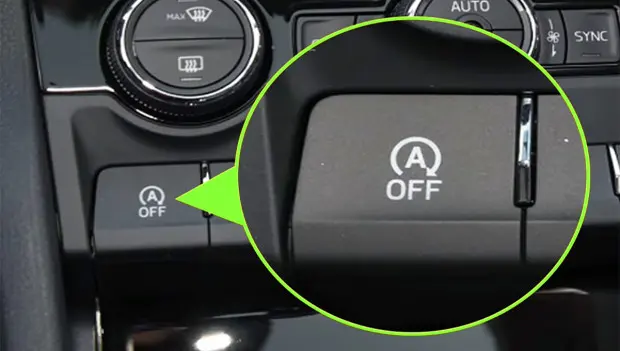
Start-stop technology has become a common feature in modern vehicles, but drivers still can't seem to agree on whether it's actually worth having. Some are happy to save every drop of fuel while sitting in traffic, while others reach for the button to disable the system almost as soon as they start the engine.
The biggest concern among critics is that constantly shutting the engine off and restarting it must eventually destroy the starter, battery, or engine itself. But modern engineering has changed the equation considerably.
Why Those Old Fears Don't Tell the Whole Story
When start-stop systems first began appearing in passenger vehicles, drivers had legitimate reasons to be skeptical. Early versions were sometimes adapted to conventional engines without completely redesigning the components involved. Standard starters and batteries simply weren't designed to handle such a high number of restart cycles, which could accelerate wear.
That's largely a thing of the past.
A modern vehicle equipped with start-stop technology is designed as a complete system. Automakers use reinforced starters engineered for frequent operation, higher-output alternators, and specialized batteries such as AGM or EFB units.
These batteries are designed to handle repeated discharge and recharge cycles without losing capacity as quickly as a conventional battery.
The engine-starting process has also become more sophisticated. The vehicle's electronics can monitor the engine's position and manage fuel injection and ignition during a restart, allowing the engine to fire quickly while reducing unnecessary mechanical stress.
How Much Fuel Can Start-Stop Actually Save?
The big question for most drivers is simple: Does start-stop technology provide meaningful savings?
The answer depends heavily on how and where you drive.
If your daily commute consists mostly of open highways or free-flowing suburban roads, the fuel savings may be barely noticeable. There's little reason for the engine to shut off when you're constantly moving.
Heavy city traffic is a different story.
The system becomes most useful when the vehicle remains stopped for a meaningful amount of time. Long traffic lights, railroad crossings, and extended traffic jams can give the technology more opportunities to reduce fuel consumption.
Depending on the vehicle and driving conditions, start-stop technology can reduce fuel consumption by roughly 5% to 15% in stop-and-go driving. For a typical gasoline engine, that could translate to roughly 0.1 to 0.4 gallons per 100 miles.
Over several thousand miles of urban driving each year, those small savings can eventually add up.
Several factors have the biggest effect on how much fuel the system can save:
- How long the vehicle remains stopped in traffic or at traffic lights
- Outside temperature and engine operating temperature
- How heavily the vehicle's electrical and climate-control systems are being used
What About Wear and Maintenance?
Despite the advances in modern technology, start-stop systems still have an effect on certain components. Some drivers worry particularly about turbochargers or whether frequent shutdowns could cause inadequate lubrication.
Modern engine-management systems are designed to account for these conditions.
The vehicle generally won't shut the engine off if it hasn't reached the appropriate operating temperature. The system can also prevent an automatic shutdown when conditions indicate that additional cooling is needed after demanding driving.
That brings up another consideration: maintenance costs.
Vehicles equipped with start-stop technology typically require more expensive batteries. Replacing an AGM or EFB battery can cost roughly 1.5 to 2 times as much as replacing a conventional flooded lead-acid battery, depending on the vehicle and battery.
If the fuel savings over several years outweigh the additional battery cost, the system can still provide a financial benefit.
Using the wrong inexpensive replacement battery, however, can create problems. A vehicle designed for an AGM or EFB battery may disable the start-stop function or experience premature battery failure if an incompatible battery is installed.
When Should You Turn Start-Stop Off?
There are situations when manually disabling the system makes sense. Drivers may find that having the engine remain running provides a smoother experience under certain conditions.
It can be worth switching the system off in situations such as:
- Stop-and-go traffic where the vehicle moves only a few feet at a time
- Extremely hot or cold weather when the climate-control system needs to operate continuously
- Tight parking maneuvers where the engine repeatedly shuts off and restarts while you're moving back and forth
Start-stop technology is primarily designed to reduce unnecessary fuel consumption and emissions when a vehicle is sitting still. On modern vehicles, the system is engineered with components and software specifically designed to handle frequent engine restarts.
It isn't a magic fuel-saving solution, and the benefit varies dramatically depending on how you drive.
For a driver who spends most of the day on the highway, the savings may be modest. For someone who regularly battles heavy urban traffic, the system can make a more noticeable difference over time.
The key is understanding how the system works, using the correct replacement components, and knowing when it makes sense to switch the feature off.
In other words, start-stop technology isn't necessarily the engine killer some drivers fear. In the right conditions, it's simply another tool designed to make every gallon of fuel go a little farther.
You may also be interested in the news:
3 Signs Your Car Battery Is About to Die — And the Warning Signs Drivers Often Miss
A failing car battery rarely dies without warning, and these three signs can give drivers time to act before getting stranded.
How to Park Close to a Curb Without Scratching Your Bumper: The Two-Mirror Method
How to Park Close to a Curb Without Scratching Your Bumper: The Simple Mirror Trick
Can You Wash Car Floor Mats in a Washing Machine? Experts Have the Answer
Think Twice Before Washing Your Car Floor Mats in the Washing Machine, Experts Warn.
These Used Cars Could Save You Thousands on Repairs, According to Experts
For many drivers, reliability and maintenance costs are just as important as the purchase price when choosing a used car.
YouTube Has a New Problem: AI Is Creating Fake Mechanics Who Look Completely Real
Artificial intelligence is now being used to create convincing fake auto mechanics on YouTube, raising concerns about misleading advice.