
Engineer Hands ChatGPT, Claude, and Grok Control of a Real Car: Here’s What Happened
An American engineer handed several AI models control of a real car, and their driving performance fell short of expectations.
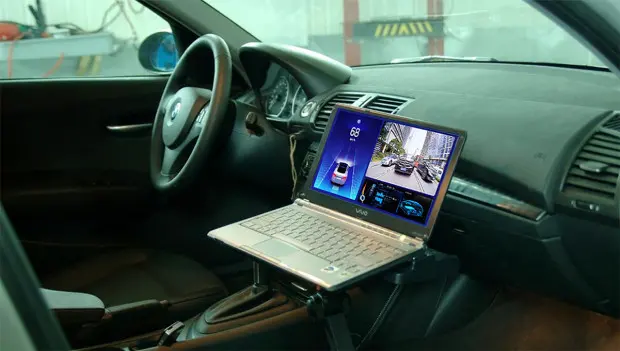
An American engineer decided to give ChatGPT, Claude, and Grok full control of a real car to see whether today's AI models could actually handle driving on their own.
The experiment put four AI systems behind the virtual wheel, including two different versions of ChatGPT. All of them encountered problems, although one model clearly performed better than the others.
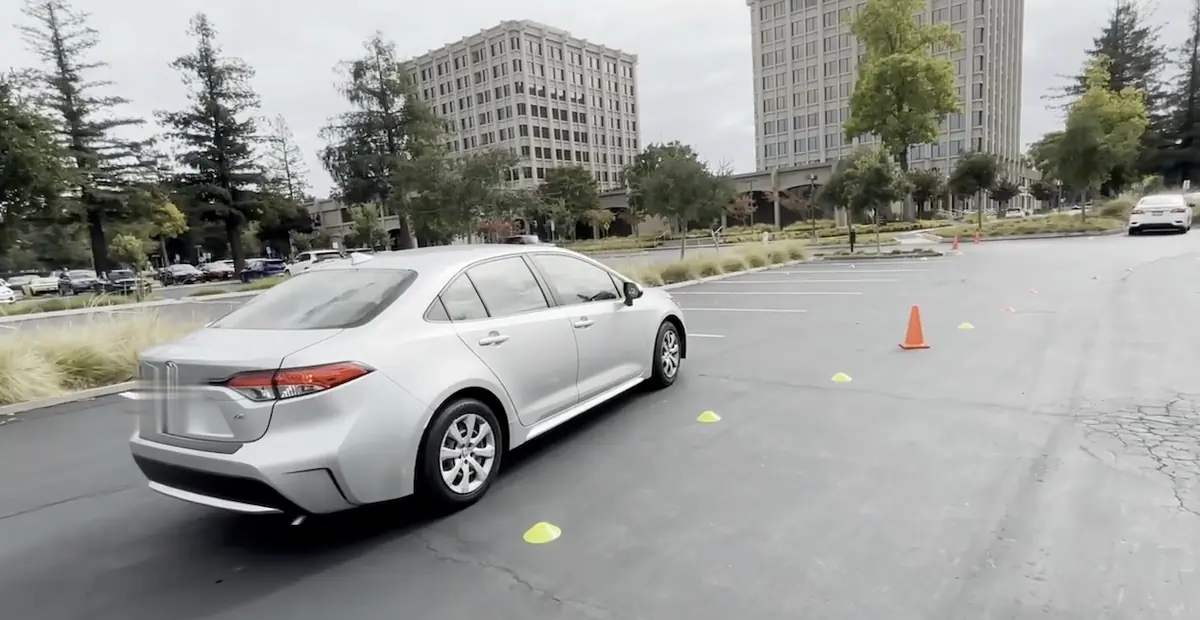
The engineer connected the AI systems directly to the car's steering, throttle, and braking controls and conducted the test in an empty parking lot. Because these AI models were not designed to interpret their surroundings or make split-second braking decisions, he built a system that converted camera sensor data into visual context for each prompt.
The AI systems then responded with text commands specifying steering angle, throttle position, and braking force.
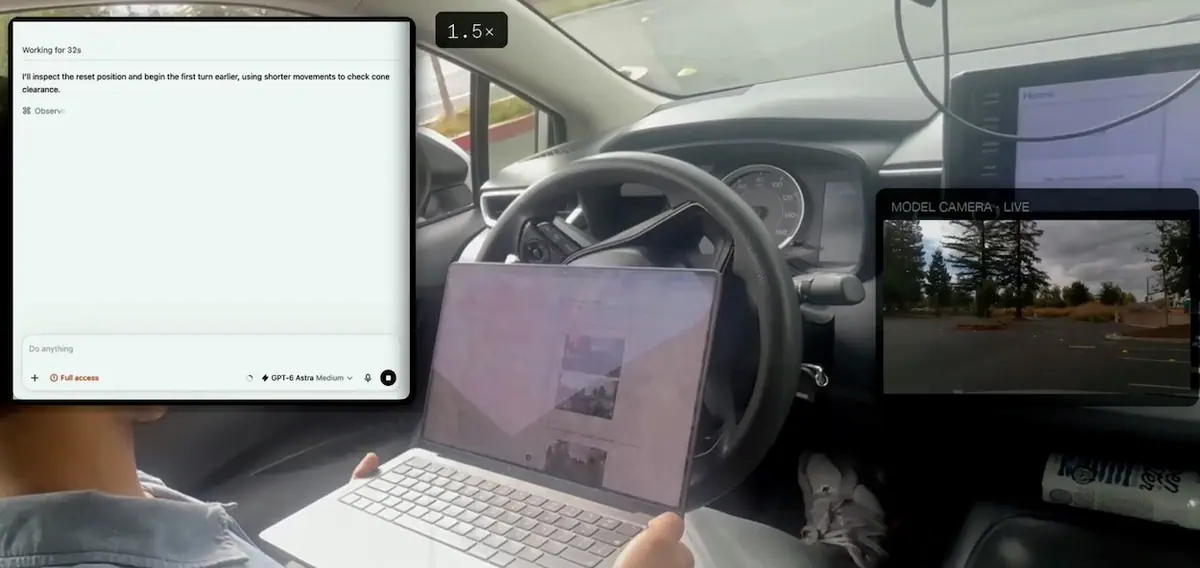
The biggest problem was response time. The AI often made decisions too late to correct the car's path effectively. For example, by the time a steering adjustment of 15 degrees was requested, the car had already drifted significantly off course.
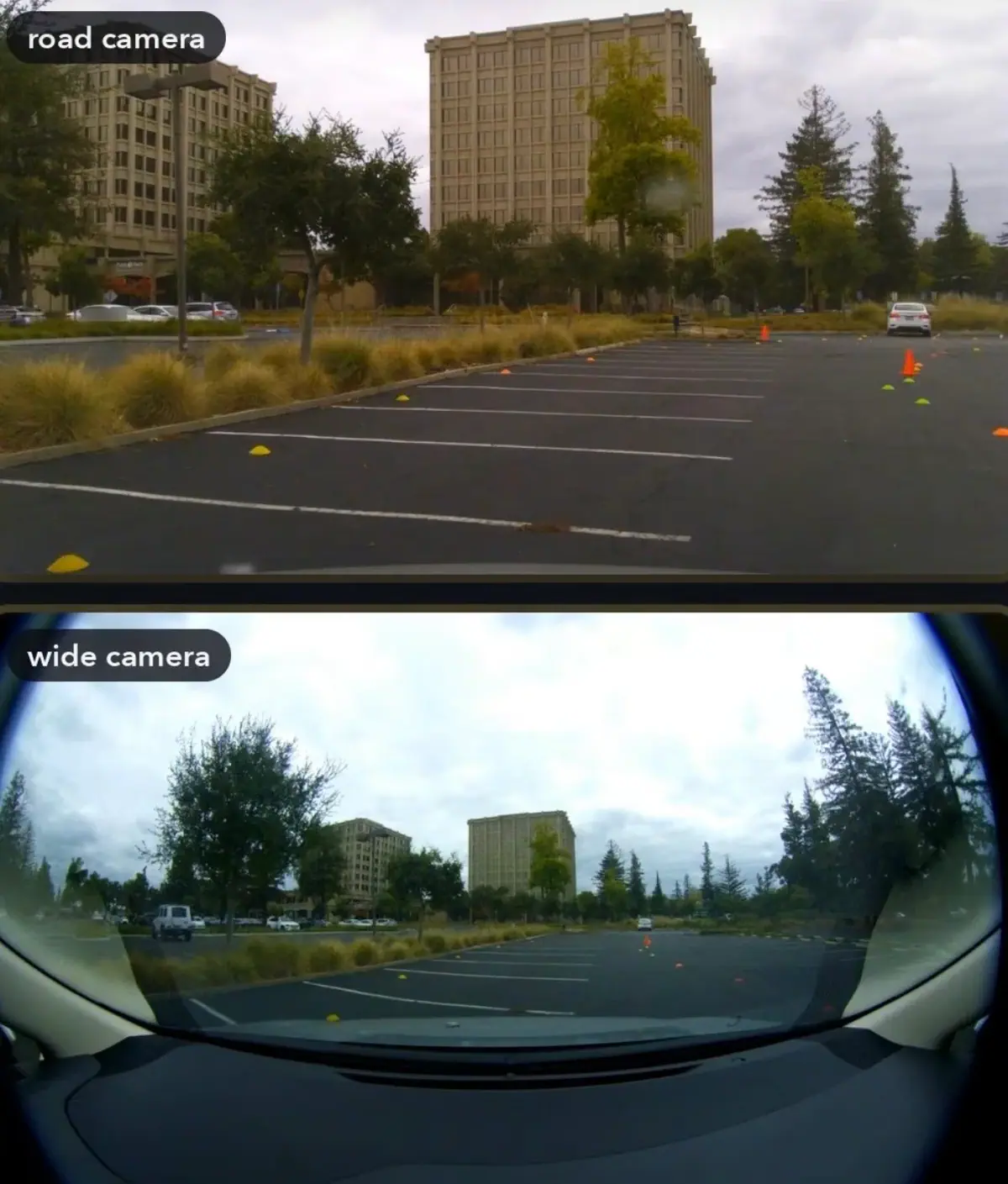
The systems also struggled with spatial awareness. Without a true three-dimensional understanding of their surroundings, they had difficulty judging distances to obstacles.
At times, the AI models even produced contradictory commands. In one example, a system called for 100 percent engine power while simultaneously ordering full braking.
According to the engineer, the latest GPT-6 Astra model performed the best overall, although its response time remained a major limitation.
Grok responded much faster, but its decisions were not accurate or safe enough. Claude performed more like ChatGPT, showing a strong ability to identify potential hazards but reacting too cautiously.
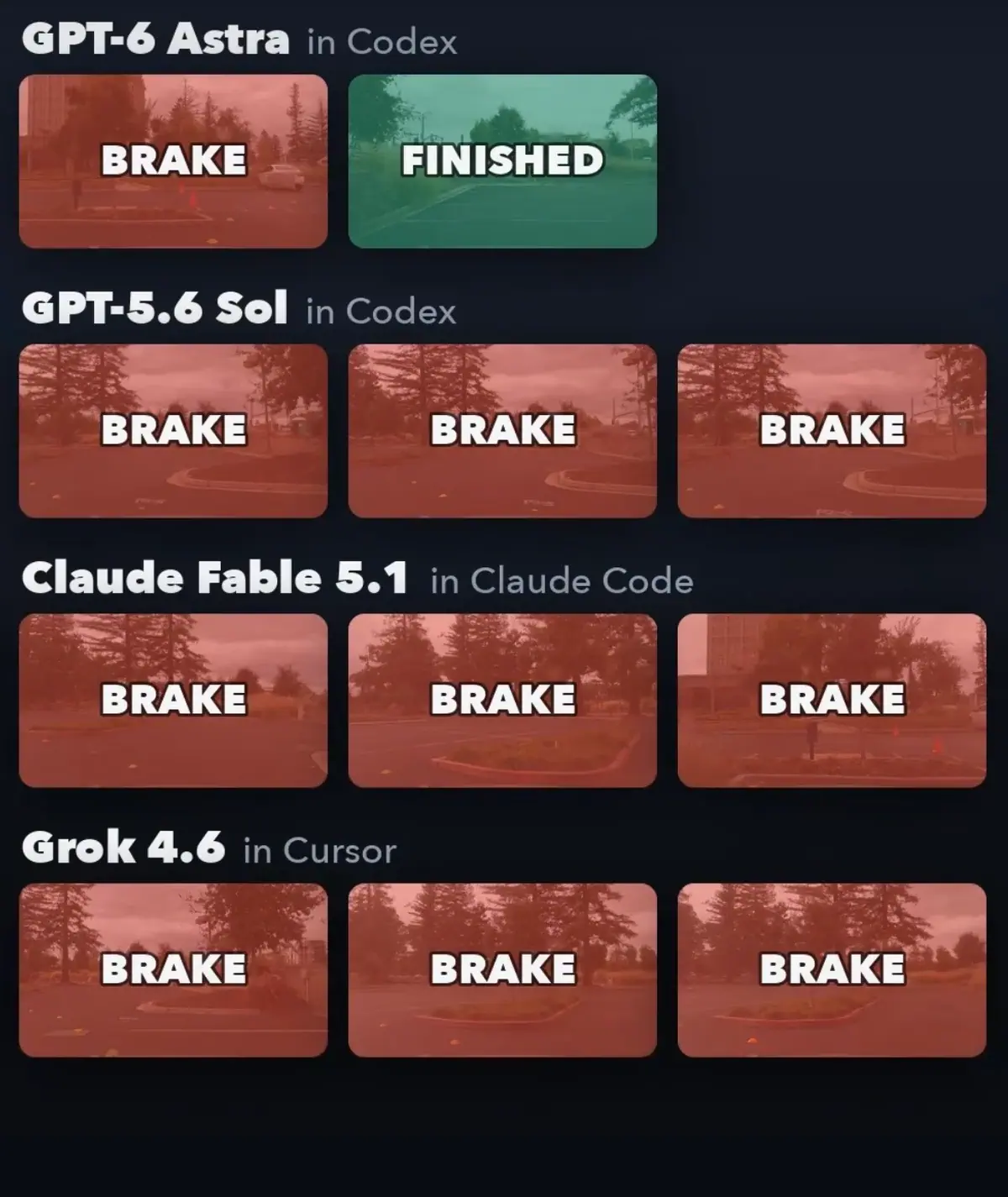
The engineer ultimately named ChatGPT-6 Astra the winner despite an initial failure. On its second attempt, the system completed the route in 5 minutes and 22 seconds after learning from its earlier mistakes.
Claude Fable 5.1 finished 45 percent of the route, while Grok 4.6 stopped at 11 percent. GPT-5.6 Sol managed to complete just 6 percent of the course.
You may also be interested in the news:
Ford Recalls 41,748 Vehicles After Headlights Can Suddenly Lose Critical Functions
Ford is recalling more than 41,000 vehicles after a headlight defect was found to potentially reduce visibility and increase crash risk.
China and U.S. Sales Pressure Volvo Into Major 2026 Financial Reset
The automaker officially revised its financial outlook after weaker Chinese sales and a slower U.S. market recovery.
Updated Honda Civic Type R Arrives in the U.S. at $48,695 With Sharper Handling and More Comfort
Official pricing and specifications have been announced.
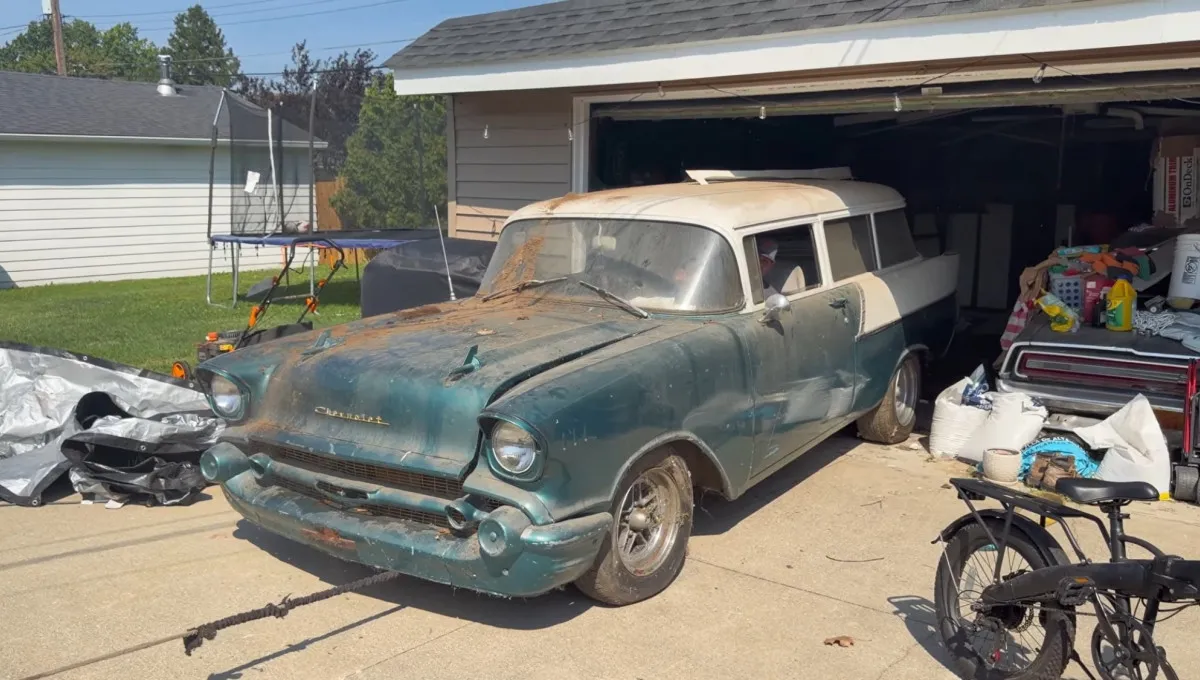
Dad's '57 Chevy Two-Door Wagon Gets First Wash in 30 Years, the Sight Makes Owner Burst Into Tears
A 1957 Chevrolet One-Fifty Handyman sat in a garage for 30 years before its owner’s children arranged a birthday rescue, bringing the classic wagon back to life.
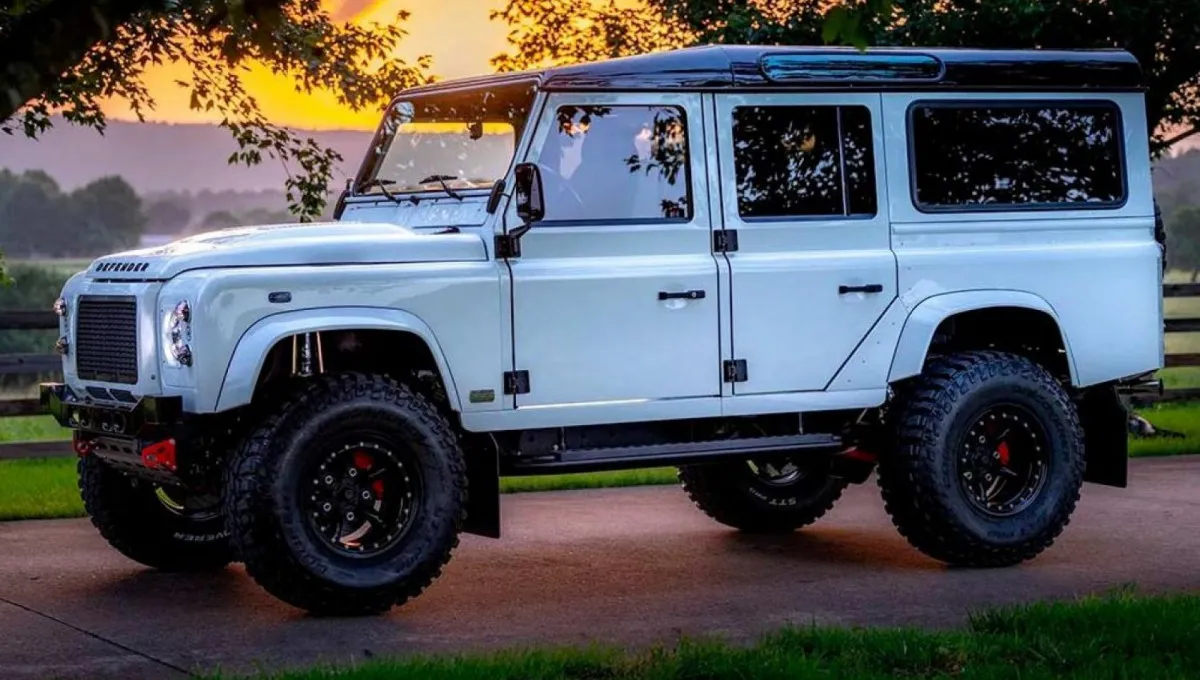
This $403,740 Defender Looks Like a Painting — But the Biggest Surprise Is What’s Under the Hood
An Arkansas-based custom shop recently unveiled a re-engineered classic Land Rover Defender 110 called Vermeer.