
Can You Wash Car Floor Mats in a Washing Machine? Experts Have the Answer
Think Twice Before Washing Your Car Floor Mats in the Washing Machine, Experts Warn.
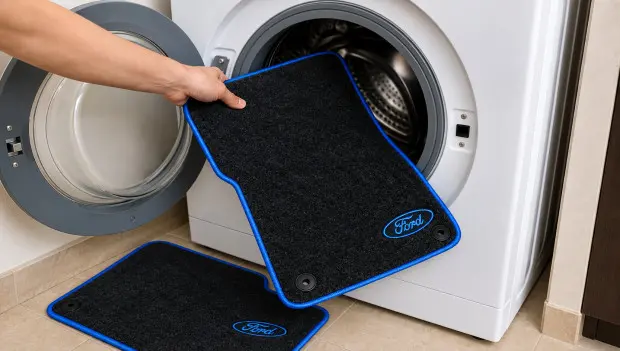
Car floor mats quickly collect dust, sand, dirt, pet hair and grime from shoes, making regular deep cleaning essential.
Throwing dirty floor mats into the washing machine may seem like the easiest solution, but experts say drivers should think twice before doing it.
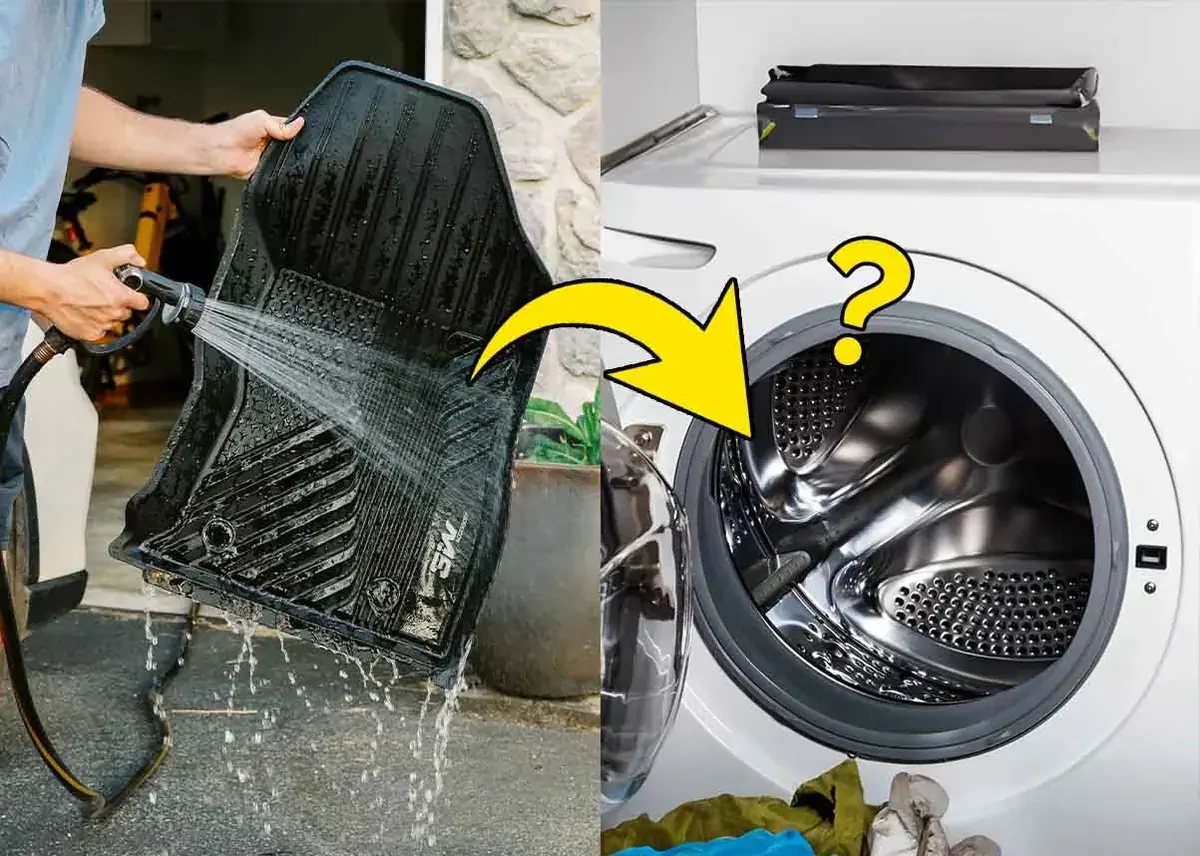
In most cases, automotive floor mats aren't designed to be machine-washed. During a wash cycle, they can become damaged or deformed — and in some cases, they can even cause problems for the washing machine itself.
Why a Washing Machine May Be a Bad Idea
The main advantage of machine washing is obvious: it saves time and eliminates the need for scrubbing by hand. Water and detergent can work their way through fabric, remove fine dust and help get rid of some unpleasant odors.
The problem is that car floor mats aren't ordinary household textiles.
Many are heavier and more rigid than clothes or towels. As they tumble around inside the washer, they can repeatedly slam against the drum and throw it off balance. That can put additional stress on the machine's internal components.
There's another problem that is easy to overlook. Sand, dirt and other larger particles trapped in the mats can end up in the washer's filter or drain system, potentially causing a clog.
The floor mats themselves can also suffer damage. The aggressive movement of a washing machine can:
- deform the mats;
- damage their edges;
- cause cracks in rubber backing;
- break down foam layers;
- separate bonded layers of material.
High water temperatures can be particularly problematic because heat may weaken the adhesive holding different layers of a mat together.
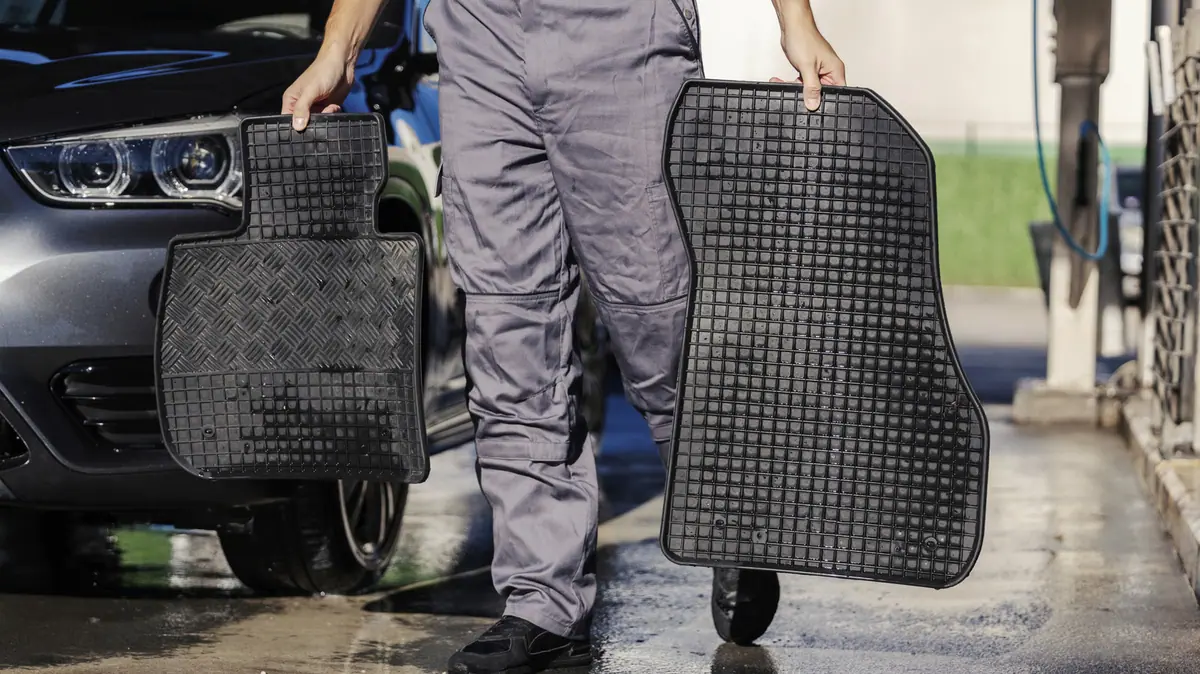
Which Floor Mats Can Sometimes Go in a Washing Machine?
There is one situation in which machine washing may be acceptable: thin, lightweight carpet-style mats without rubber or foam backing.
Even then, drivers should check the care label or the manufacturer's cleaning instructions before putting them in the washer.
If the manufacturer specifically says the mats are not machine-washable, it's best not to experiment.
The more layers, backing materials and inserts a floor mat has, the greater the risk of damaging it during a wash cycle.
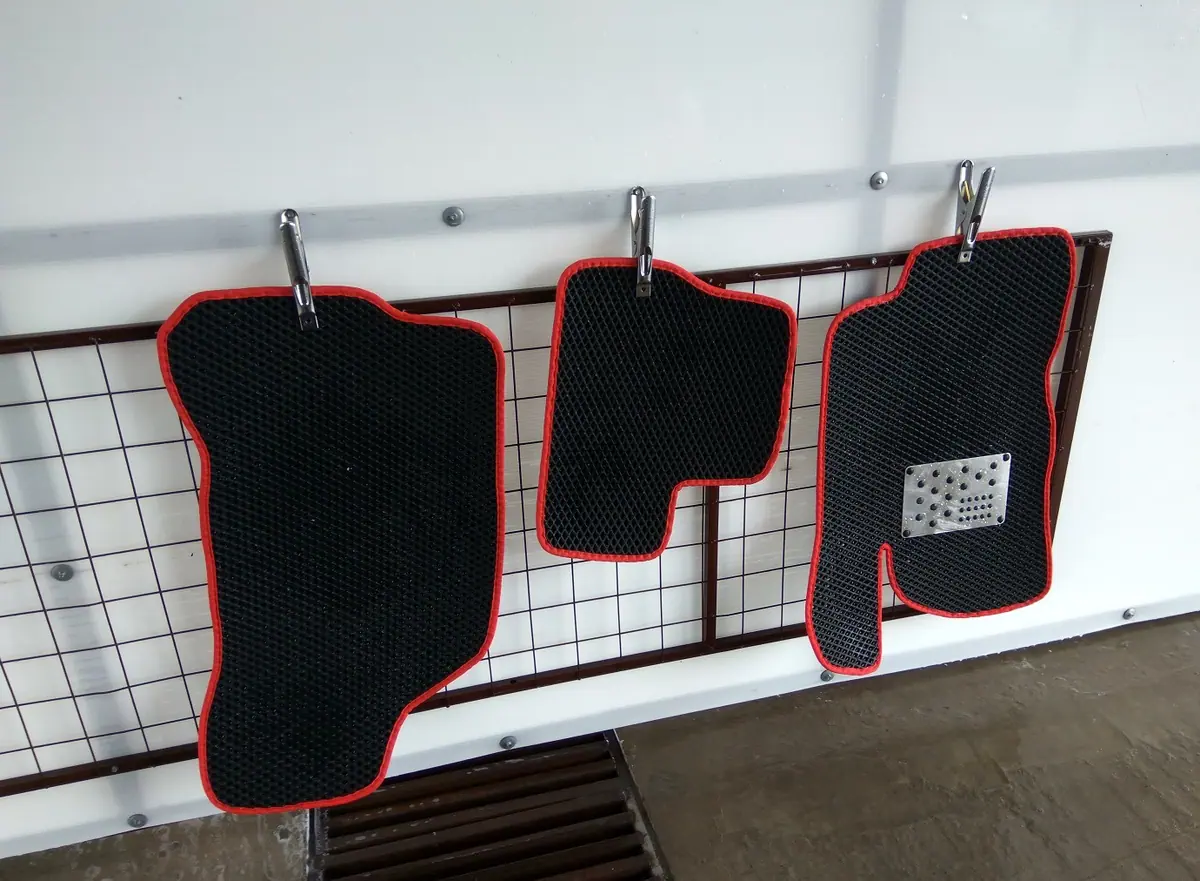
Which Floor Mats Should Never Go in the Washer?
Rubber floor mats, heavy-duty mats and all-weather floor liners generally shouldn't be put in a washing machine.
They're simply too heavy and rigid. They can throw the washer off balance, potentially damage the drum and lose their shape.
Instead, these mats are better cleaned by hand.
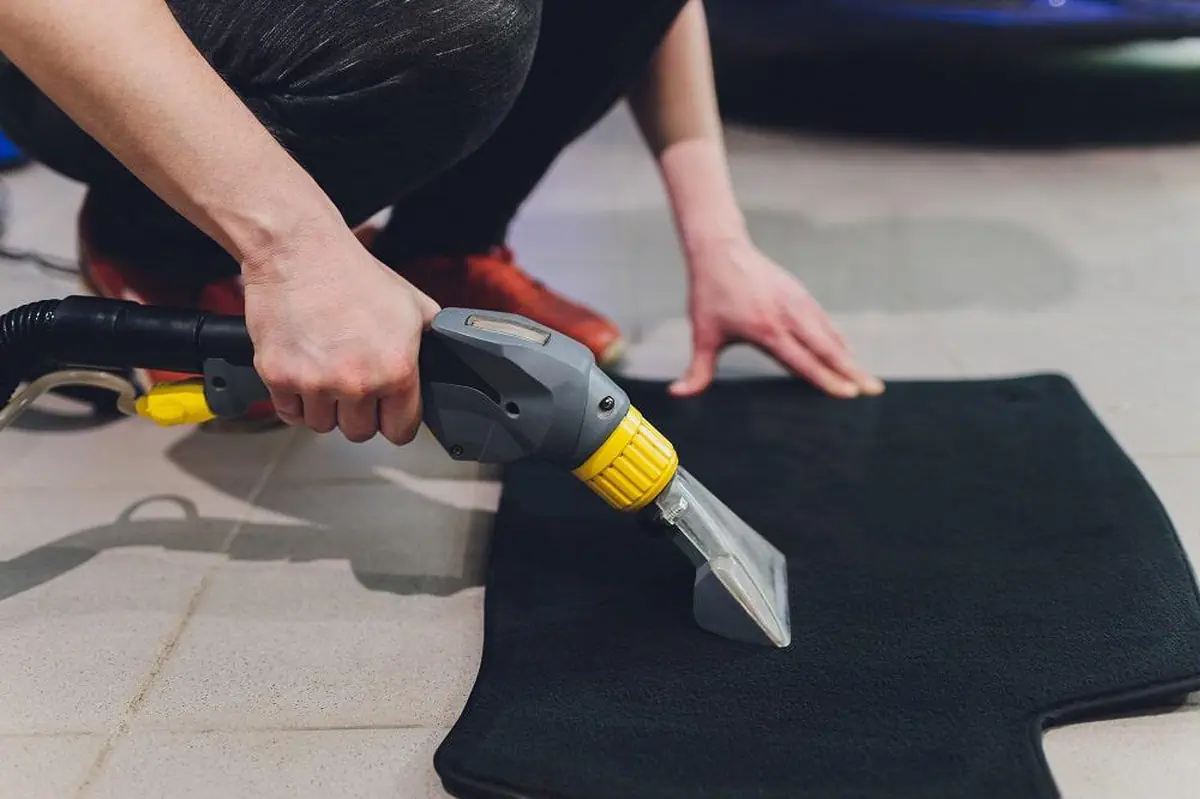
Start by shaking them out thoroughly or vacuuming away loose dirt and sand. Then wash them with water and an appropriate cleaning solution before rinsing and allowing them to dry completely.
In most cases, hand-washing is the safest approach for automotive floor mats. It takes a little more effort, but it can help protect both the mats and your household washing machine.
You may also be interested in the news:
3 Signs Your Car Battery Is About to Die — And the Warning Signs Drivers Often Miss
A failing car battery rarely dies without warning, and these three signs can give drivers time to act before getting stranded.
How to Park Close to a Curb Without Scratching Your Bumper: The Two-Mirror Method
How to Park Close to a Curb Without Scratching Your Bumper: The Simple Mirror Trick
Your Brakes Squeal Every Morning? Here’s When That Noise Is Normal—and When It Could Mean Trouble
That sharp brake squeal first thing in the morning is often harmless—but persistent noise can point to worn or damaged brake components.
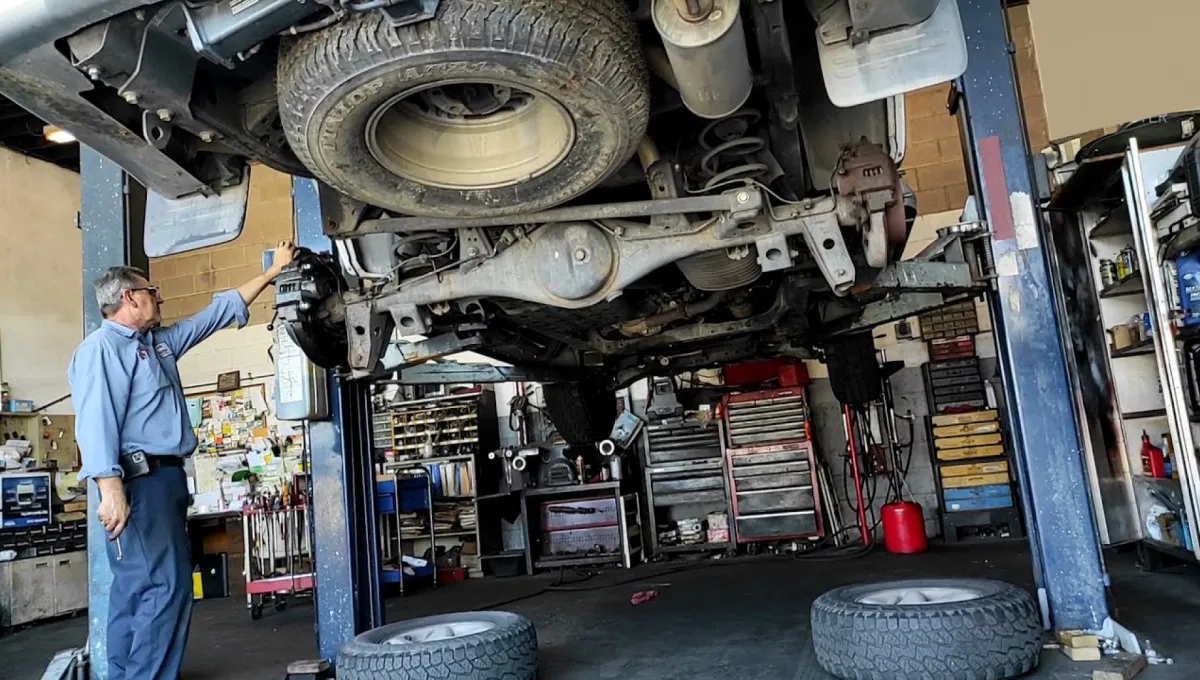
7 Car Repairs Mechanics Secretly Hate Taking on — Here’s Why Shops Say “No”
A mechanic explains why some seemingly routine repairs can become expensive nightmares for both shops and car owners.

Your Car May Be Burning More Gas This Fall — Here’s the Surprising Reason Why
Colder temperatures, longer warm-up times and denser air can all cause your car to use more fuel in the fall.