
Foggy Headlights: Why It Happens and How to Fix It
Fogging headlights are a common issue many car owners run into, especially during wet seasons.
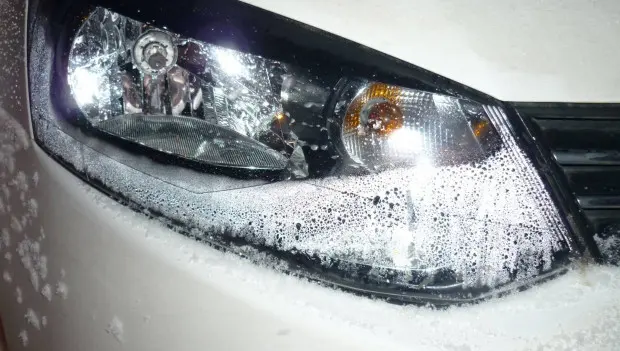
Foggy headlights are a widespread problem that many drivers deal with, particularly in the fall and spring when rain is frequent and humidity is high. The main concern is safety: a headlight filled with condensation doesn’t illuminate the road properly, which can easily create dangerous driving situations. If you notice moisture building up inside your headlights, it’s important to address the issue as soon as possible.
Condensation inside a headlight doesn’t just reduce visibility at night or in poor weather. Over time, it can cause corrosion of the metal components inside the housing. Moisture can also damage expensive bulbs—when water hits a hot bulb, the sudden temperature change may cause the glass to crack or shatter. In some cases, moisture leads to short circuits at the bulb contacts, blowing fuses and, in rare situations, even increasing the risk of an electrical fire.
Main causes of headlight fogging
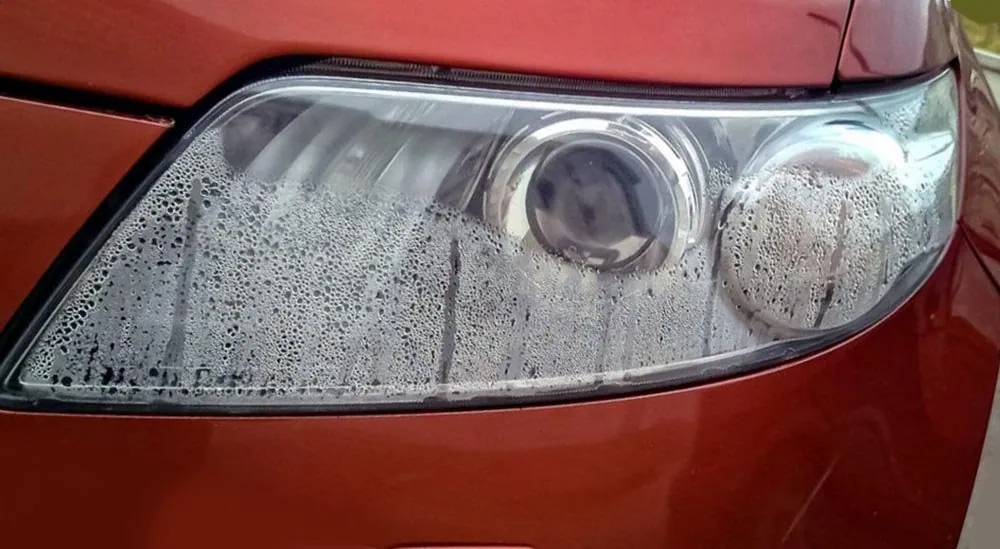
There are several common reasons headlights begin to fog up. One of the most frequent is a design or age-related issue where the headlight assembly gradually loses its seal. Once the housing is no longer airtight, humid air gets inside, and moisture condenses on the inner surfaces of the lens.
Fogging can also appear after minor accidents. Even if the headlight looks fine from the outside, internal seams may be compromised or small cracks may form, allowing damp air to enter the unit.
Another common cause is tiny cracks in the lens itself. These hairline fractures are often hard to see but are enough to break the seal and let moisture in.
In rarer cases, the problem may be linked to a failed headlight leveling system. This mechanism, located inside the headlight, adjusts the beam height based on vehicle load and ride height. When it malfunctions, it can also create pathways for moisture to enter.
Headlights may also start fogging after repairs, especially when low-quality aftermarket replacements are used instead of original parts. Sellers may claim these copies match OEM quality, but in practice they often lack proper sealing, leading to recurring condensation and eventual repair or replacement.
Repair options
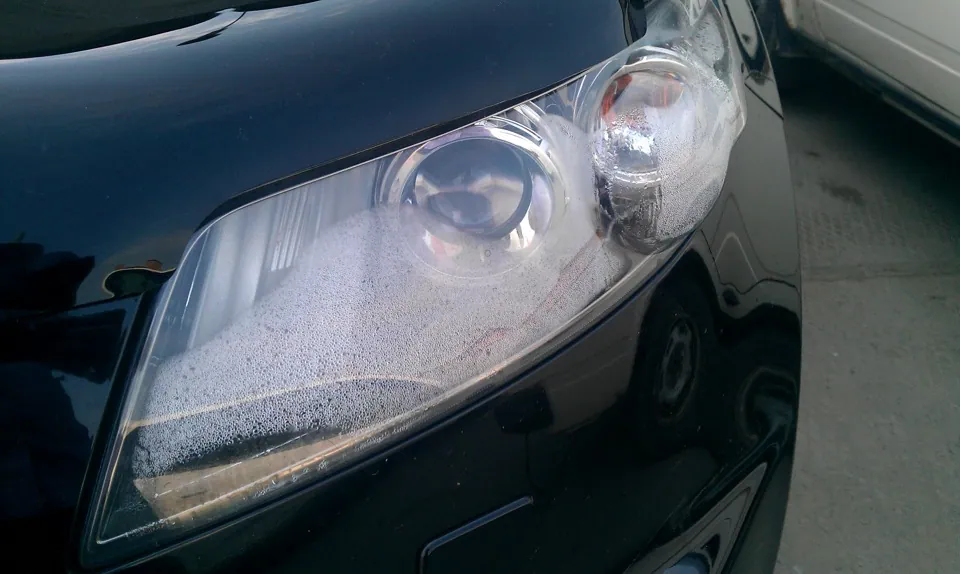
The most reliable solution for persistent headlight fogging is replacement, ideally with high-quality original parts. However, even used OEM headlights can be expensive, which is why many owners try to repair foggy units instead of replacing them outright.
As part of a basic repair, the headlight needs to be thoroughly dried. This can often be done without removing it from the car by taking out the bulb and carefully using a hair dryer to evaporate all moisture inside the housing.
Once the headlight is dry, sealing the joints is the next step. A clear automotive sealant should be applied to all seams to prevent humid air from entering through gaps or weakened connections.
If condensation is caused by a loose bulb fit, adding a plastic or rubber gasket can help. Over time, these seals can harden and lose elasticity, which is a common reason headlights begin to fog in the first place.
When the source of the leak is hard to find, the headlight may need to be removed. A common diagnostic method involves submerging the housing in water and gently forcing air inside through the bulb opening. Escaping air bubbles will reveal the damaged area. After that, the headlight must be dried again and the leak properly sealed.
If the lens itself is cracked, repairs become more complicated. In some cases, a matching replacement lens can be sourced from a salvage yard, but often the only practical solution is replacing the entire headlight, either new or used. Very small cracks can sometimes be temporarily sealed with protective film, but this is only a short-term fix. Larger cracks usually mean the headlight needs to be replaced altogether.
You may also be interested in the news:
Why Experienced Drivers Put Socks on Their Car Mirrors in Fall: The Clever Trick Explained
An old pair of socks can help reduce frost buildup on your side mirrors overnight, saving time on cold mornings when every minute counts.
How to Clean Your Windshield Without Streaks: Experts Recommend This Simple DIY Mix
The secret to a streak-free windshield comes down to the right cleaning solution, two microfiber cloths, and the proper drying technique.

Why Some Drivers Keep Bay Leaves in Their Cars — It’s Not Just About Superstition
Can a common kitchen spice help repel bugs, freshen your car’s interior, or even help you relax behind the wheel?
Cold Weather Can Leave You Stranded — 5 Things Every Driver Should Have in Their Car
The first hard freeze can catch drivers off guard. Here's what to keep in your vehicle and how to prepare your battery, tires, and fluids for colder weather.
Hidden Key Fob Trick: Open All Your Car Windows With One Button
An auto mechanic explains how drivers can remotely open and close car windows using a key fob, provided the vehicle has the right hardware.