
Ford Patents New Adaptive Bumper Designed to Better Protect Cars and Pedestrians
Ford’s new “smart” bumper concept changes stiffness during impact, potentially reducing damage, repair costs, and pedestrian injuries.
Most modern car bumpers are engineered to react the same way in every collision, whether it’s a minor parking lot tap or a much harder crash. That long-standing limitation appears to be exactly what pushed Ford Motor Company to develop a completely new approach.
The automaker recently filed patent application No. 20260131749, outlining a new adaptive bumper system designed to behave differently depending on crash severity. Ford describes the technology as a “nonlinear spring” setup, and the idea behind it is surprisingly clever.
In simple terms, the bumper becomes stiffer as impact forces increase.
The outer section of the bumper uses softer materials capable of absorbing lighter hits, while deeper structural layers gradually become stronger and more resistant under heavier loads. That means small impacts can be cushioned more gently, while major crashes still receive the rigidity needed to protect the vehicle’s structure.
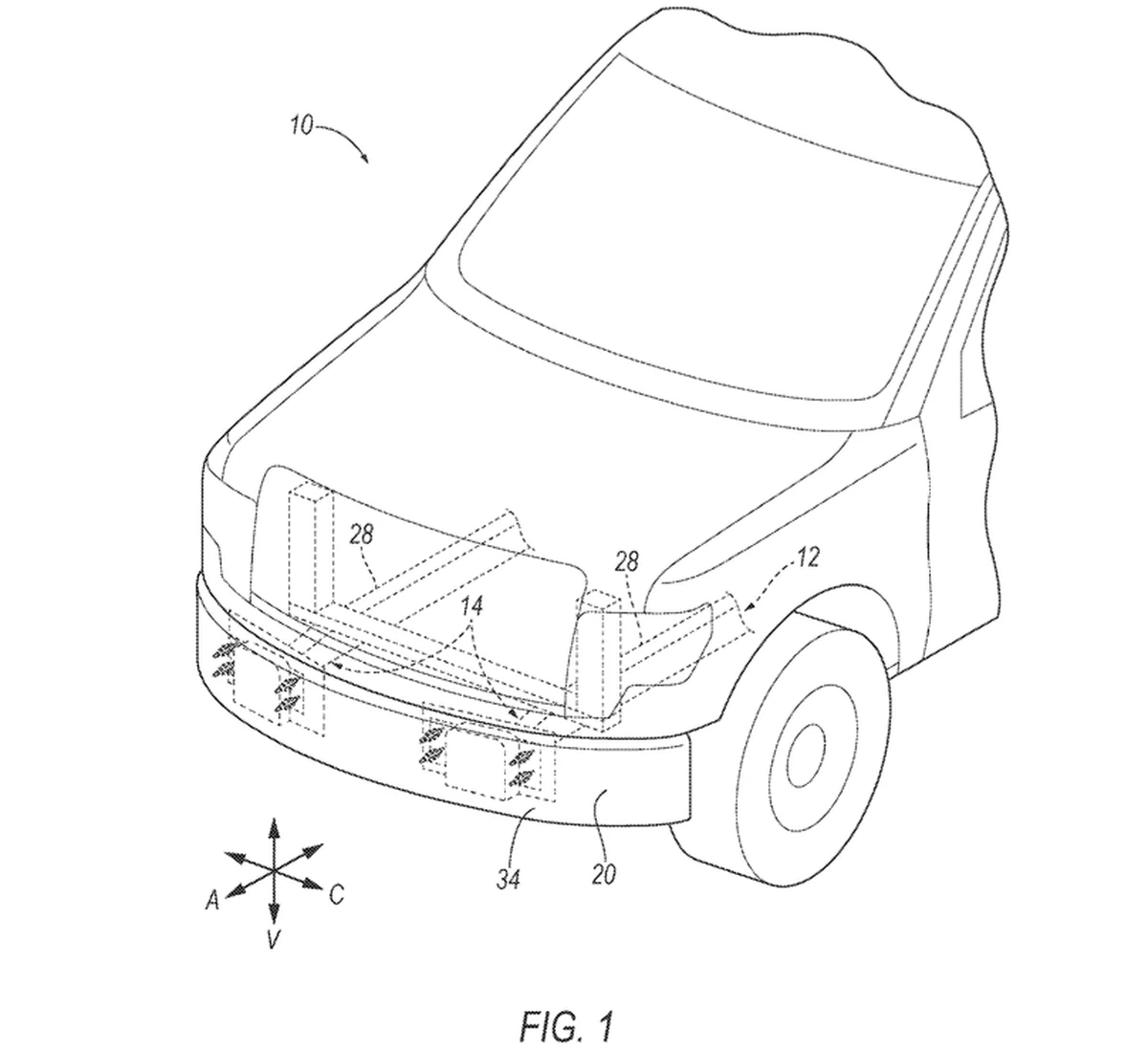
Traditional bumpers typically rely on foam absorbers, metal reinforcement beams, and fixed mounting brackets. The problem is that those components usually deform in one pre-determined way, regardless of collision intensity.
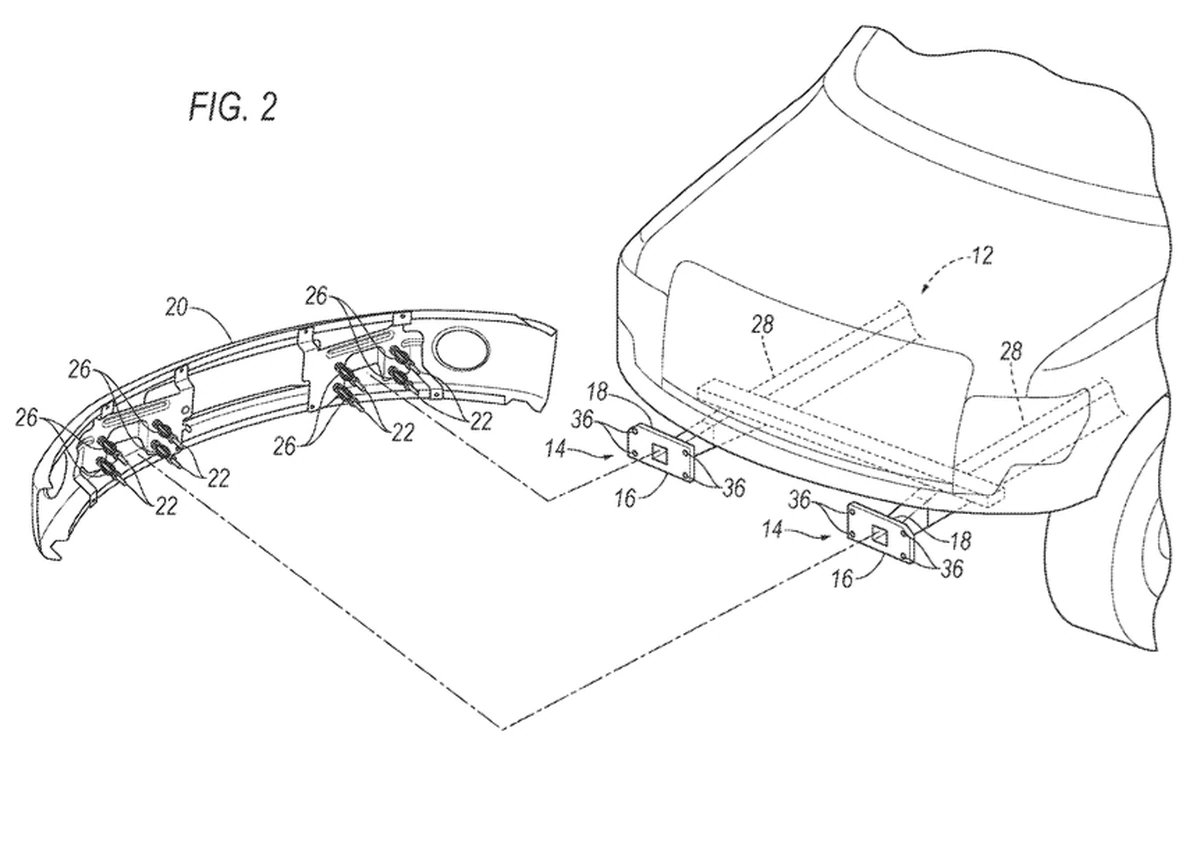
Ford’s new concept adds extra spring-based mechanisms between the bumper itself and the vehicle frame. Those components allow the front end to react differently depending on how much force is involved.
Patent drawings show several possible designs. Some versions use curved metal springs, others rely on rods and brackets, while certain configurations include coil springs. The curved elements are especially interesting because they compress softly at first but gradually become harder to deform as pressure increases.
Ford also specifically mentions pedestrian safety in the filing.
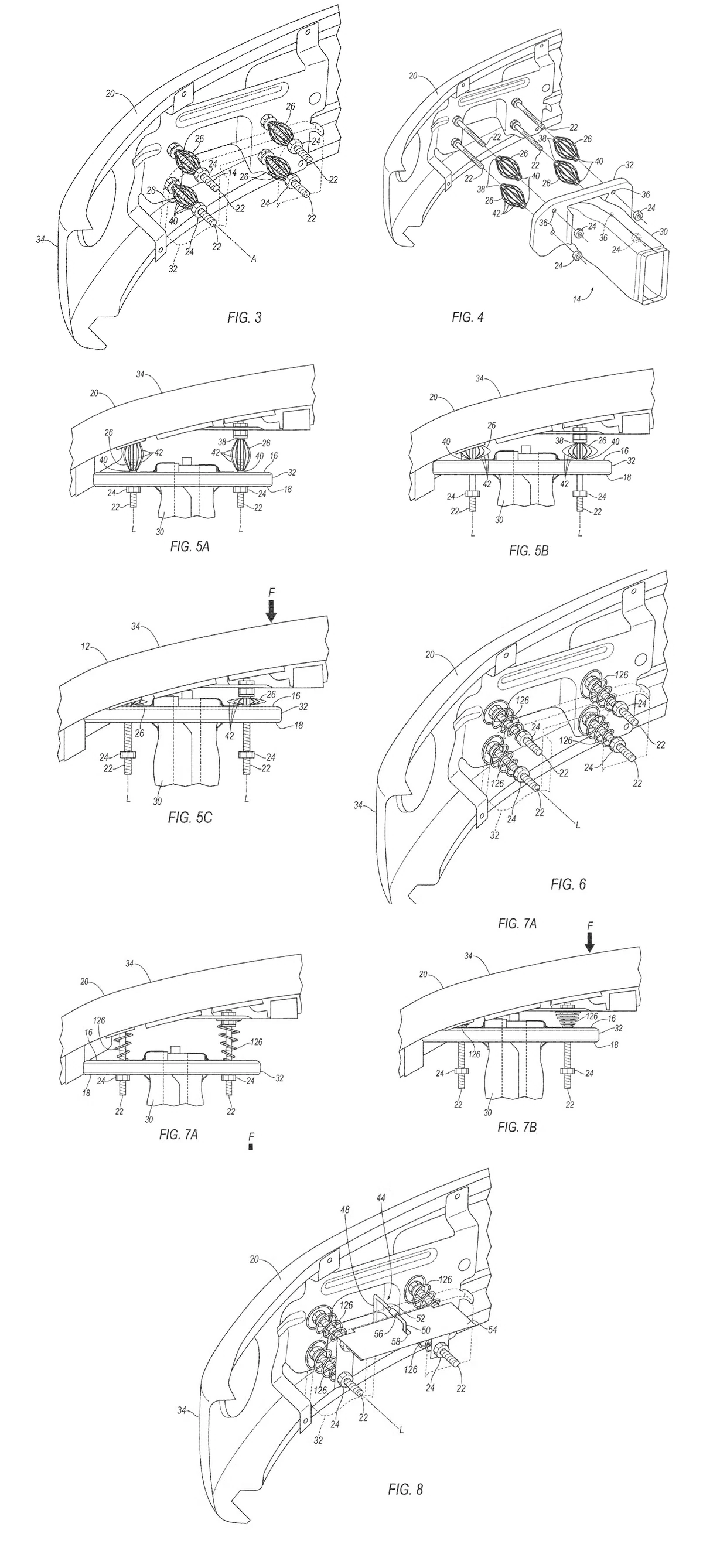
The company says softer initial impact zones could help reduce injuries to pedestrians — especially lower-leg injuries commonly seen in urban accidents. At the same time, the adaptive structure could redirect crash energy away from expensive internal components, potentially lowering repair costs in smaller collisions.
Of course, filing a patent doesn’t guarantee the technology will ever make production vehicles. Automakers submit experimental patents all the time, and many never reach dealerships.
Still, the filing itself sends a pretty clear message: Ford is actively investing in next-generation passive safety systems as crash-test standards and global safety regulations continue evolving.
And if this adaptive bumper eventually reaches real-world vehicles, it could change the way automakers balance pedestrian protection, repair costs, and crash performance altogether.
You may also be interested in the news:
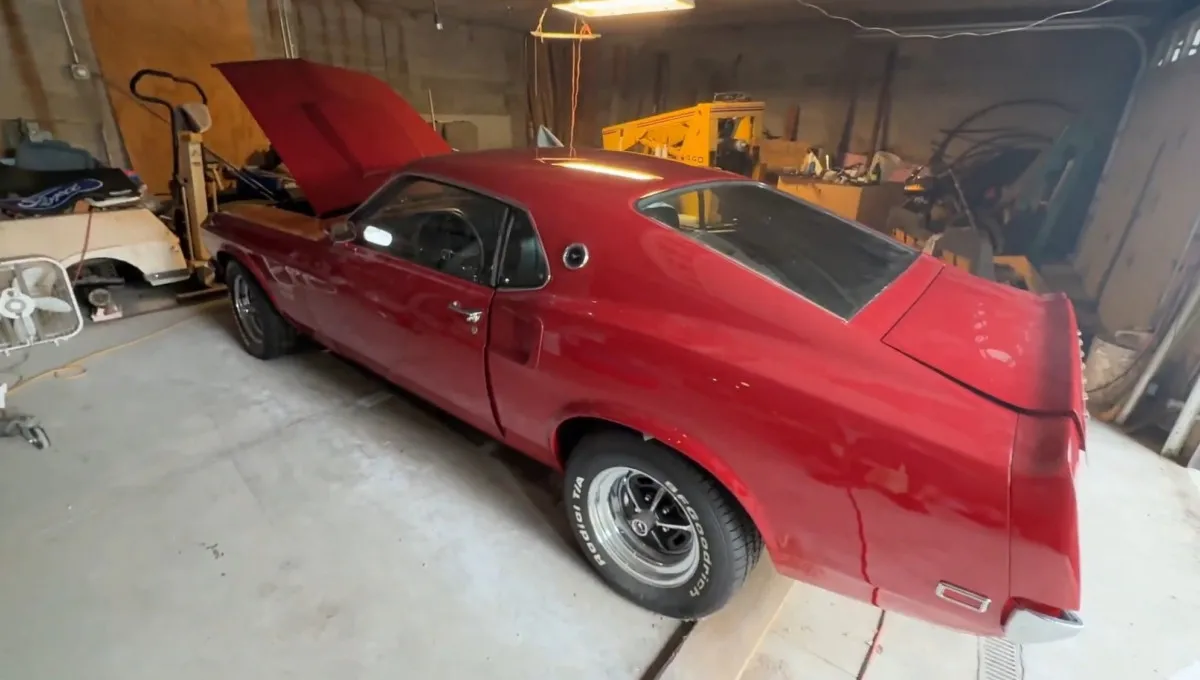
Late Owner’s 1969 Ford Mustang Boss 429 Sat Hidden in a Wisconsin Garage for Years
A rare 1969 Boss 429 emerged from a Wisconsin garage after years hidden beneath a dusty cover.
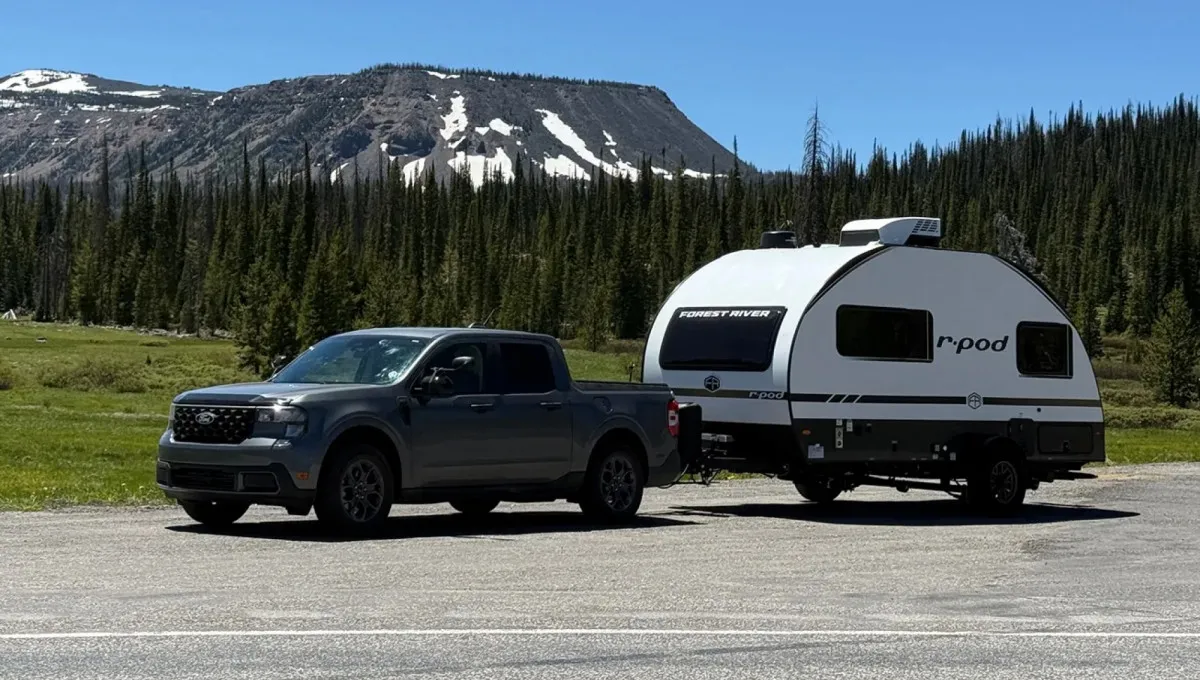
A Ford Maverick Towed a 3,200-Pound Camper 6,500 Miles—Then Wyoming Winds Changed Everything
A Ford Maverick hauled a 3,200-pound camper across 6,500 miles, with Wyoming winds causing concern.
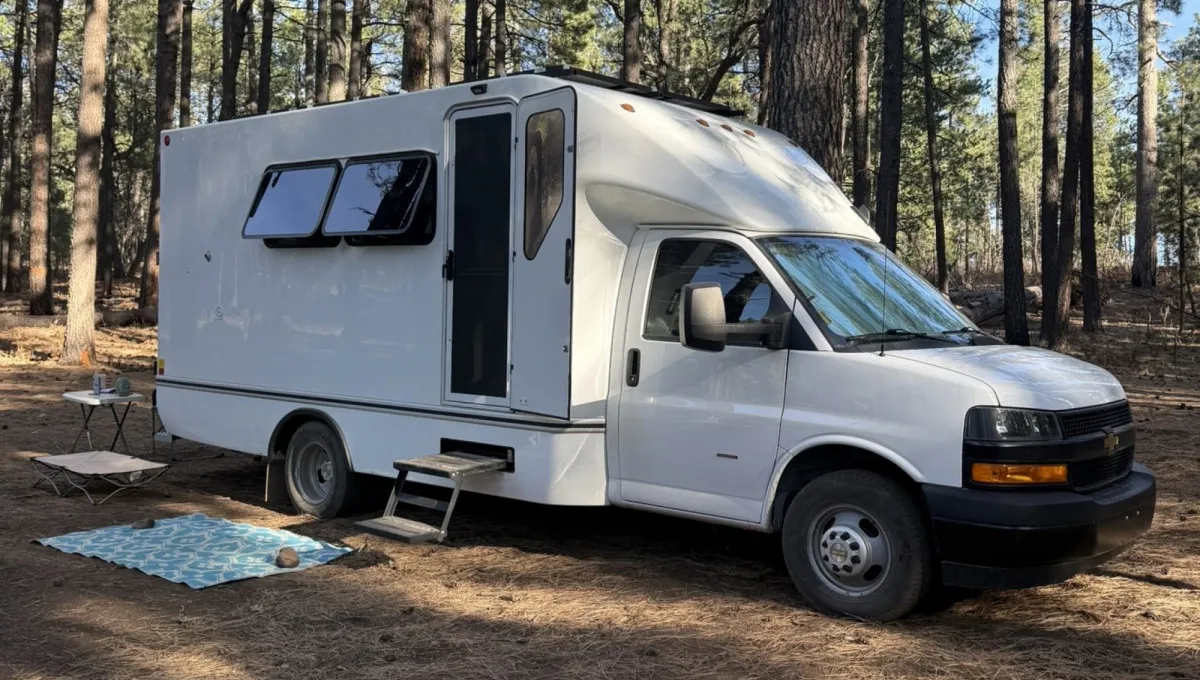
Chevrolet Express Unicell Conversion Combines Tiny-Home Comfort With a 23-Foot Mobile Layout
This Chevrolet Express G3500 combines tiny-home comfort, off-grid capability, and spacious living in a custom fiberglass body.
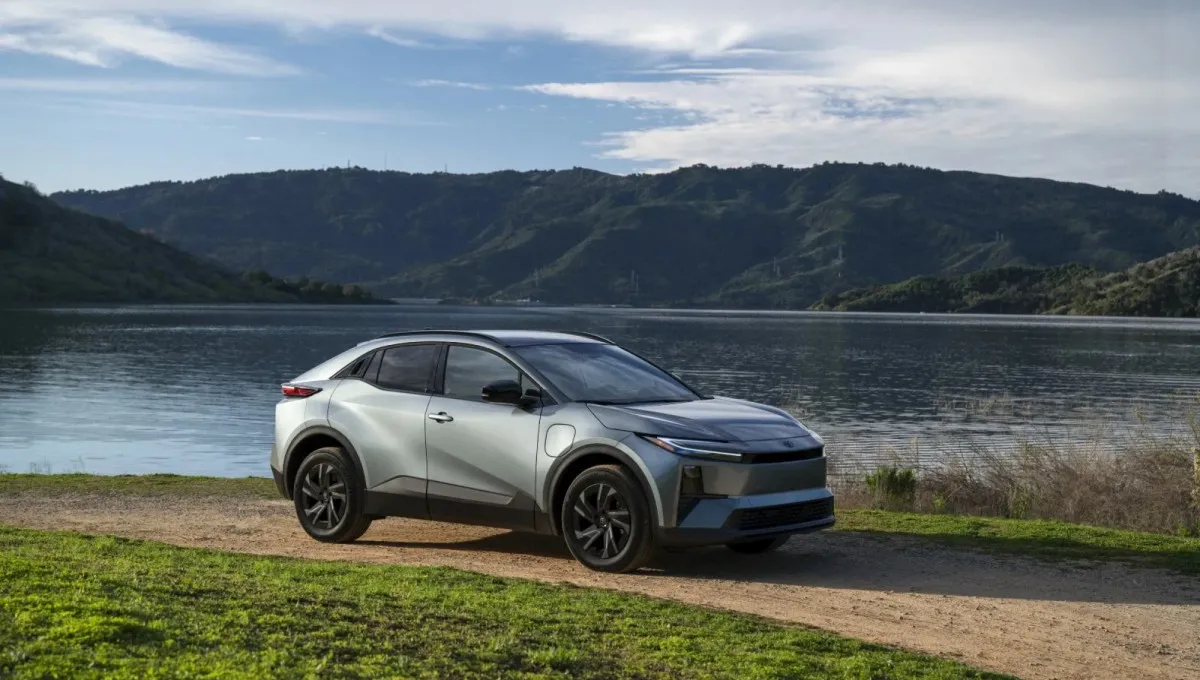
Americans Are Turning Away From EVs — And Hybrids Are Taking Their Place
U.S. EV registrations fell 31% in July as hybrid demand surged and federal tax credits expired.
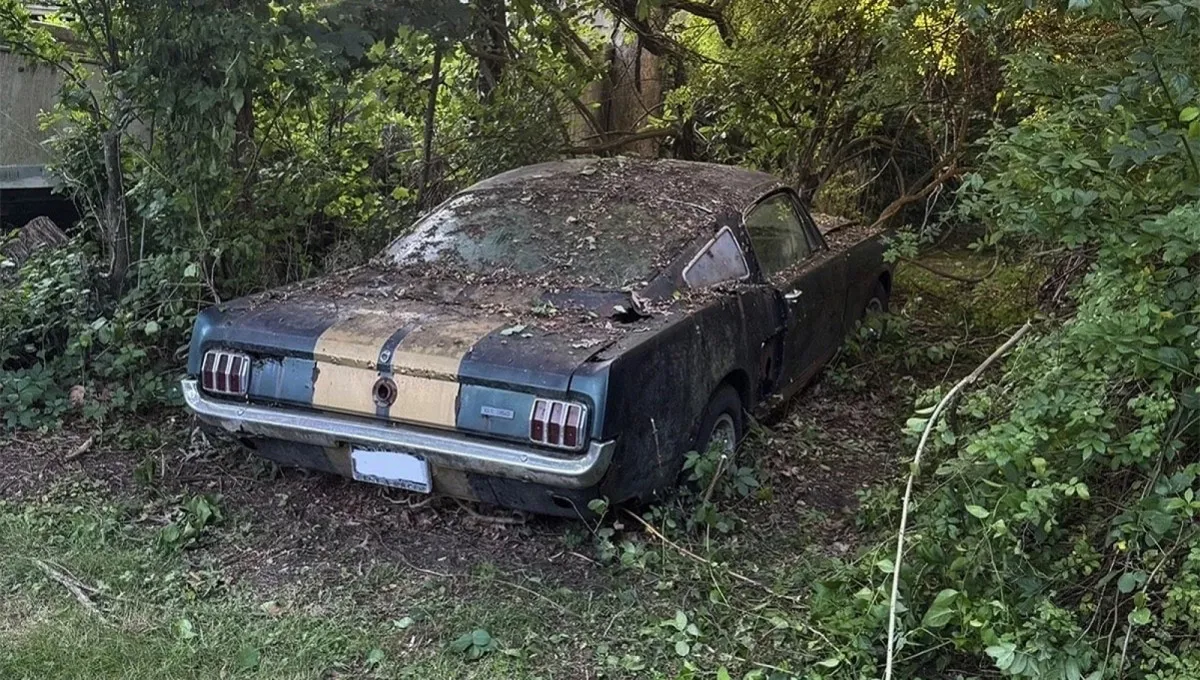
This Shelby-Style 1966 Mustang Was Left to Rot—and Someone Still Wants $15,000 for It
This 1966 Mustang looks like it spent decades outdoors after being transformed into a Shelby clone, and now needs saving.