
Faster Than Everything but the Corvette: The Forgotten American Muscle Car That Beat the Pontiac GTO
Who remembers American Motors Corporation today? Very, very few people do.
American Motors Corporation, the fourth-largest automaker in America at the time, was formed in May 1954 through the merger of two struggling companies, Nash and Hudson. The idea was simple: find a way to survive alongside Detroit’s Big Three — GM, Ford and Chrysler.
Did it work? That depends on how you look at it.
On one hand, American Motors Corporation, better known as AMC, survived all the way into the 1990s. But its nearly half-century history was hardly a story of smooth sailing. Unlike the companies in the Big Three, AMC wasn’t so much thriving as constantly fighting to stay alive. It had far less money to work with than its larger rivals, which meant smaller development and advertising budgets. As a result, AMC’s cars often succeeded not because the company had the resources to make them great, but in spite of its limitations.
One of AMC’s undeniable hits was the Rambler, a compact by American standards that gave the company a chance to establish itself in the market.
The Rambler debuted for the 1950 model year and was initially sold under the Nash brand. Eventually, Rambler would become a separate marque within the company’s lineup.
The timing couldn’t have been better. During the 1950s, particularly in the second half of the decade, Americans were becoming increasingly interested in imported compact cars, most notably the Volkswagen Beetle. At the same time, the enormous cars coming from Detroit’s Big Three were beginning to wear out their welcome with some buyers.
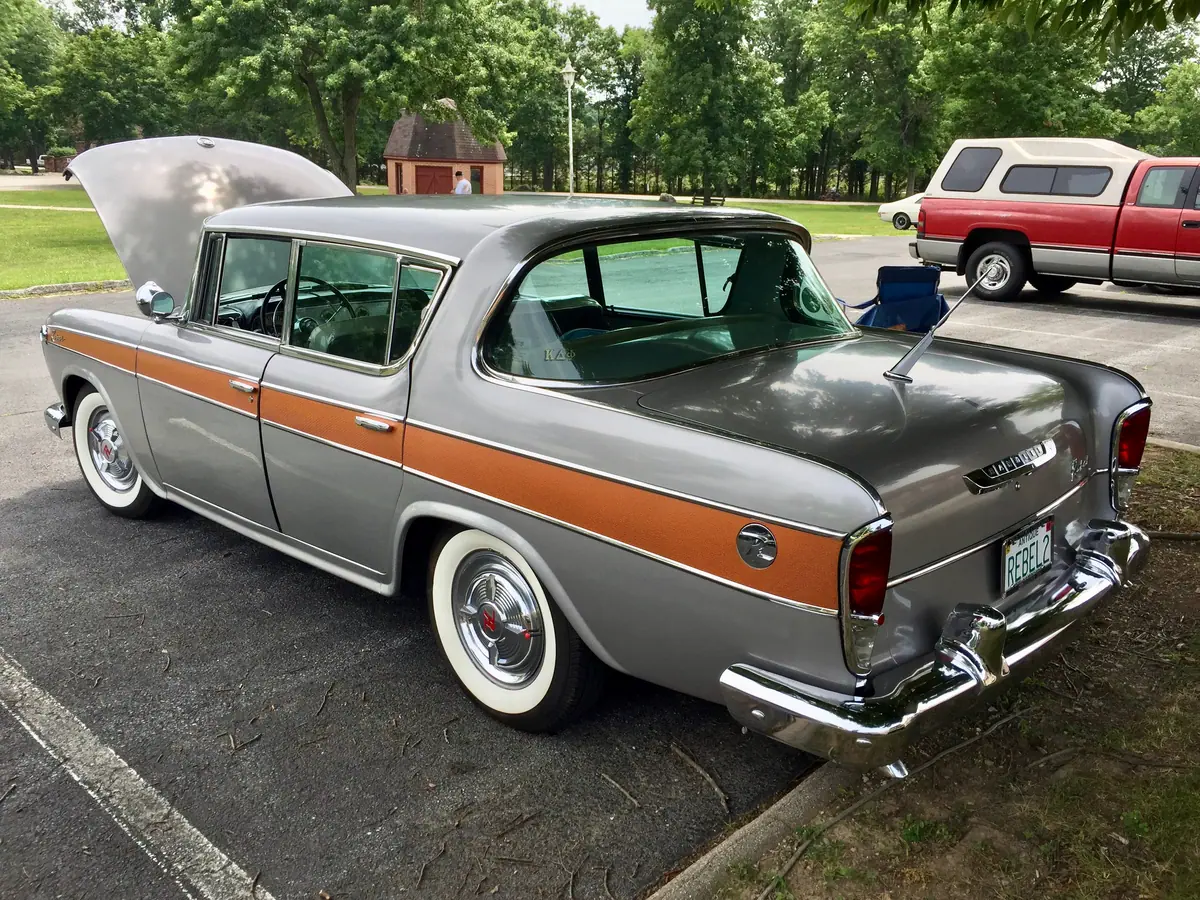
The Rambler offered a compelling middle ground. It appealed to Americans who didn’t need a six-meter-long car just to run to the grocery store, but weren’t ready to squeeze themselves into the tiny cabin of a German Beetle, either.
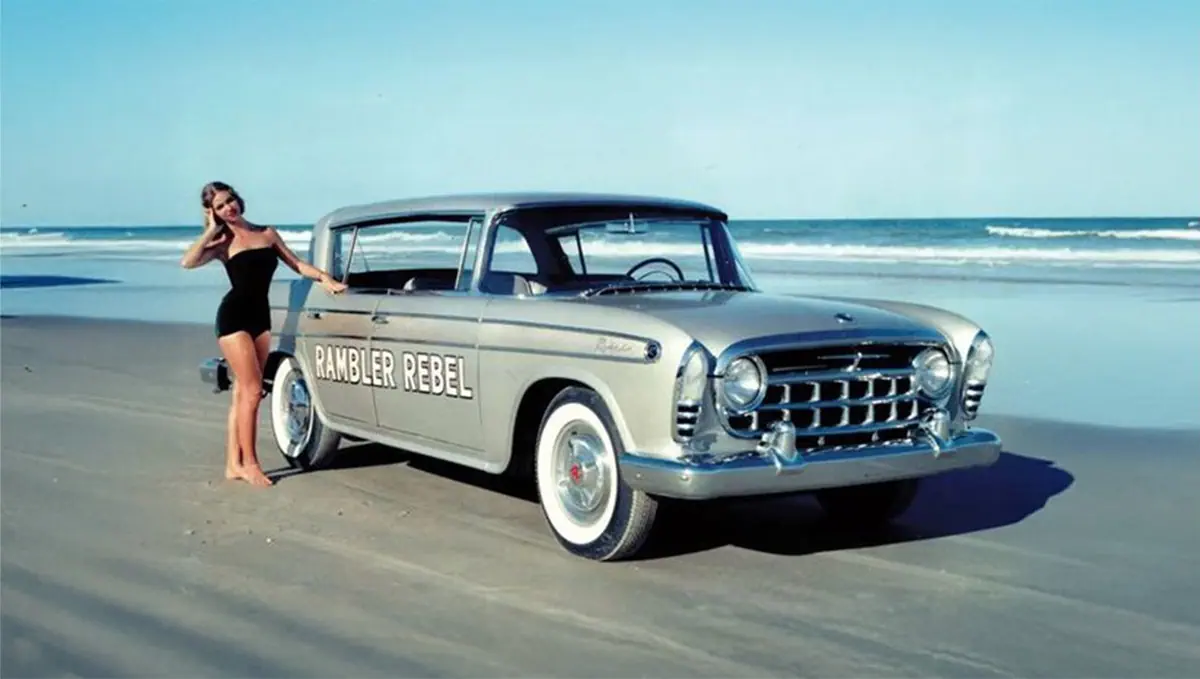
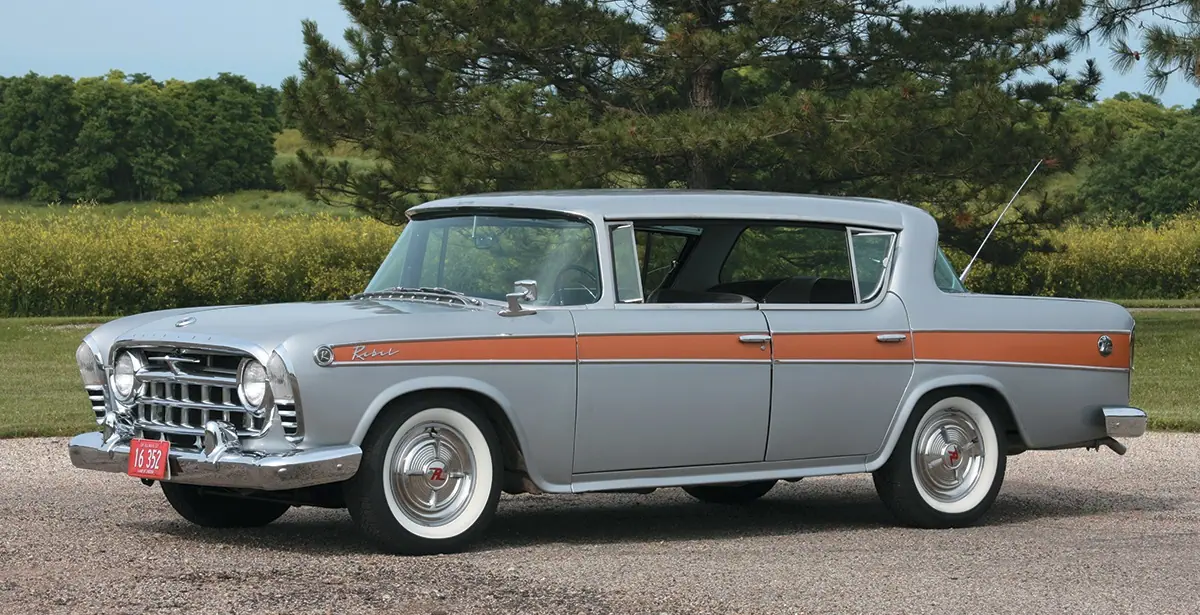
Of course, the Rambler was only a compact by American standards. Take the 1957 model: with a 108-inch wheelbase and an overall length of about 191 inches, it would be considered a midsize or even near-luxury sedan by modern standards. Back then, however, it was classified as a midsize car.
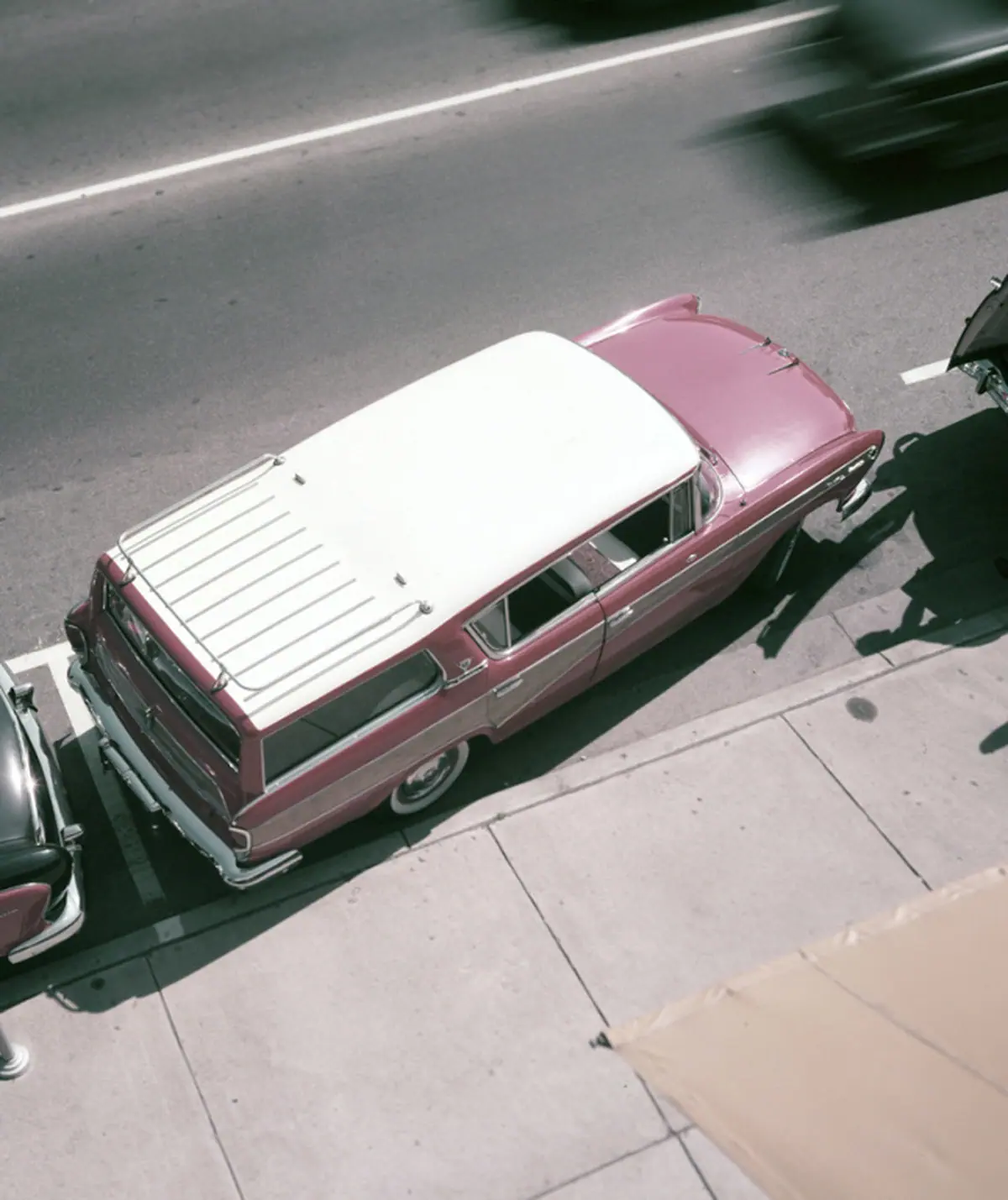
The Rambler was offered in several body styles and became popular enough to give AMC a foothold in a market niche that larger automakers had largely overlooked.
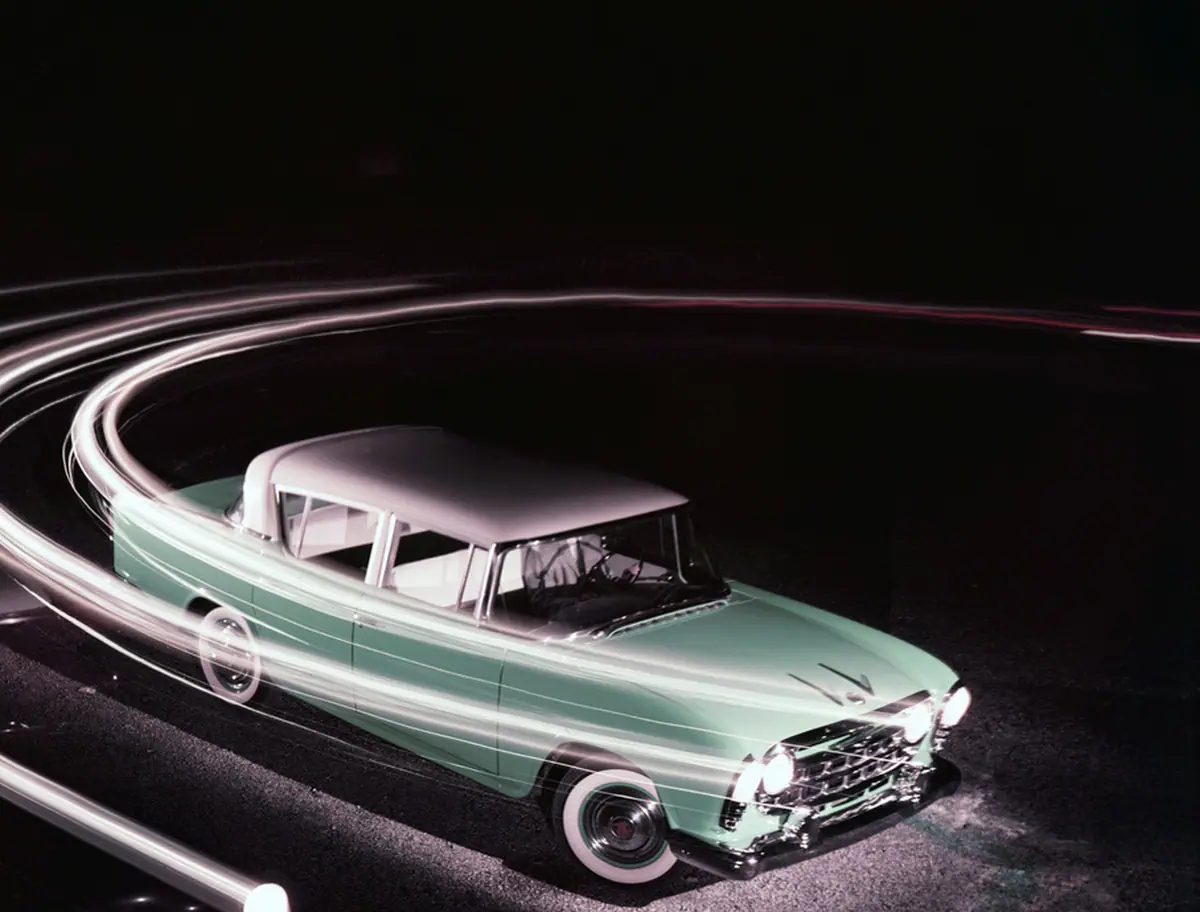
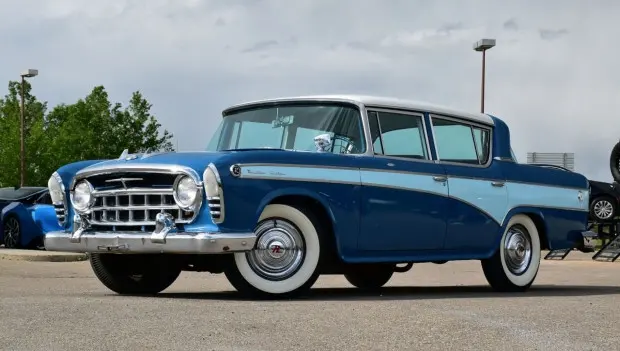
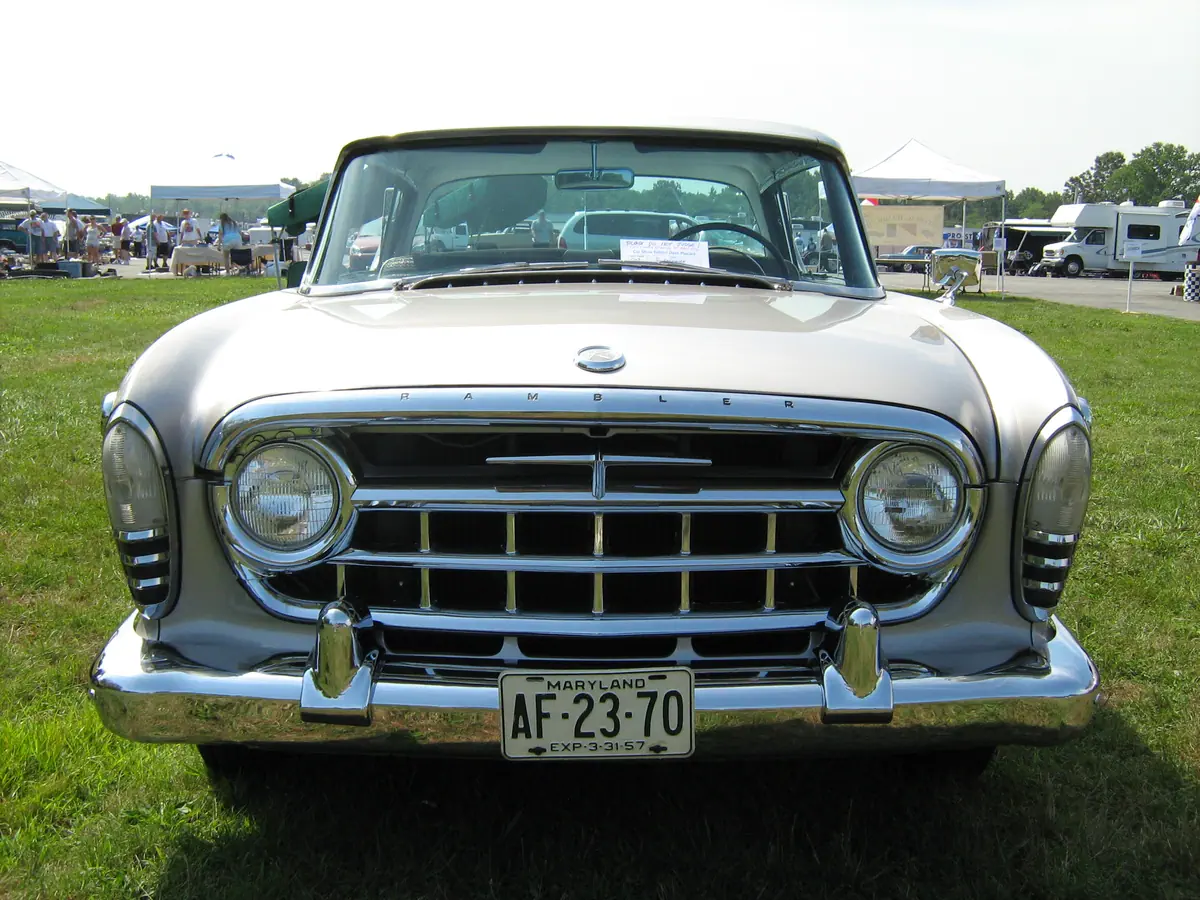
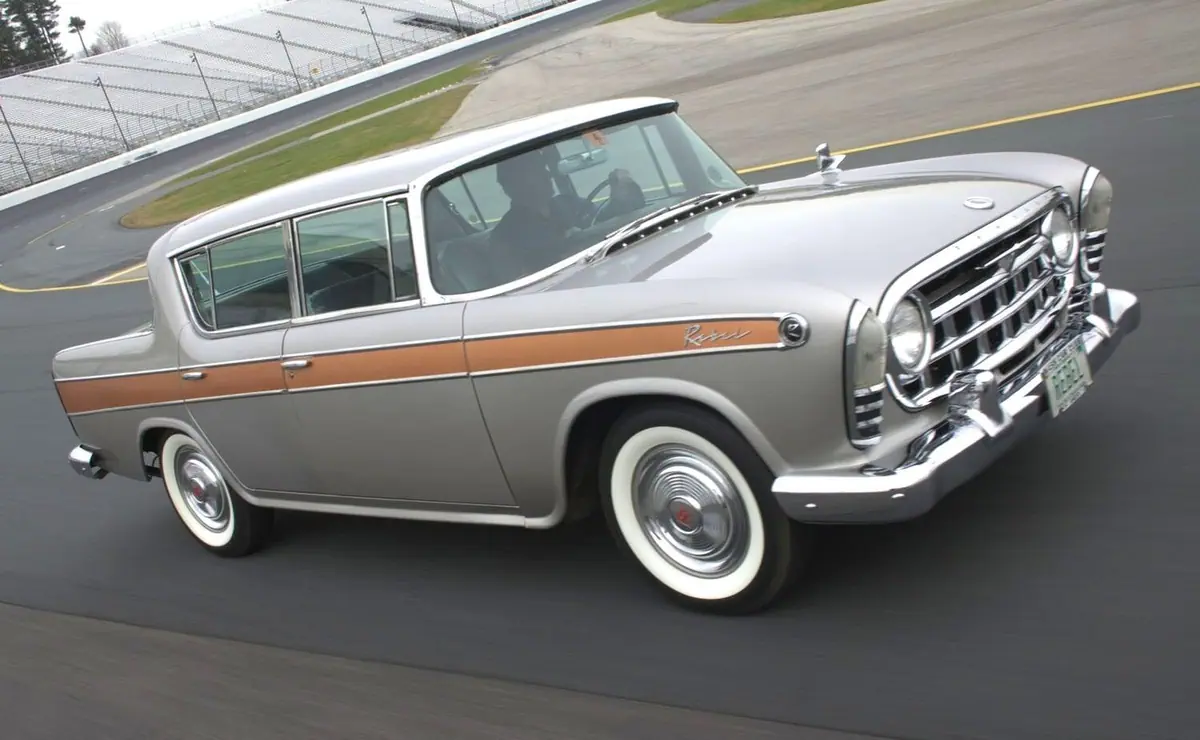
But the most remarkable chapter in the Rambler story came when it entered the history books as a performance car. That happened with the 1957 Rambler Rebel.
AMC took a four-door hardtop sedan and dropped in an engine from the full-size Nash Ambassador. The result was a relatively small car powered by a 327-cubic-inch V8 producing 259 horsepower.
That was serious firepower for a midsize car in 1957. The Rebel could sprint from 0 to 60 mph in just 7.5 seconds — an astonishing figure for the second half of the 1950s.
During a test for its April 1957 issue, Motor Trend discovered something even more surprising: the only car on the market that could outrun the Rambler Rebel V8 was the new Chevrolet Corvette equipped with fuel injection.
Among four-door sedans, meanwhile, the Rebel had no equal in 1957 when it came to acceleration. AMC engineers were even considering a fuel-injected version of the V8 producing nearly 290 horsepower. Electrical problems, however, eventually brought those experiments to an end.
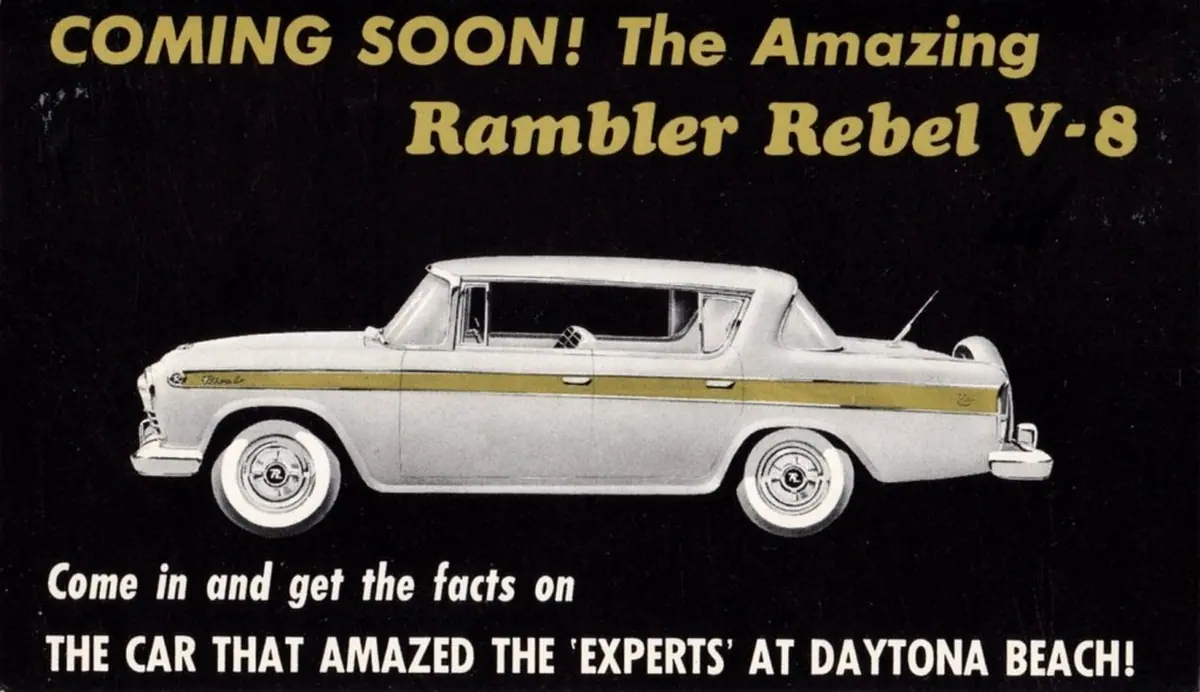
In hindsight, there is a strong argument that the 1957 Rambler Rebel V8 deserves to be considered the true ancestor of the American muscle car.
Its formula was essentially the same one that would make the Pontiac GTO famous years later: take a powerful engine from a full-size car and put it into a midsize chassis. John DeLorean and Pete Estes would turn that basic idea into a cultural phenomenon in the 1960s.
Unfortunately, almost nobody remembers the 1957 Rebel today.
Production was limited to just 1,500 cars, and AMC once again missed out on a share of the recognition it had earned. The company had built a car that could embarrass virtually every sedan on the road and outrun almost everything except a fuel-injected Corvette — years before the Pontiac GTO made the same basic formula famous.
The Rebel had the performance. It simply didn't have the publicity or the production numbers to become a legend.
You may also be interested in the news:

These 8 Cars Went Over 1 Million Miles — They Just Don’t Build Them Like They Used To
Some cars outlast generations of owners, proving that careful maintenance and durable engineering can deliver extraordinary mileage.
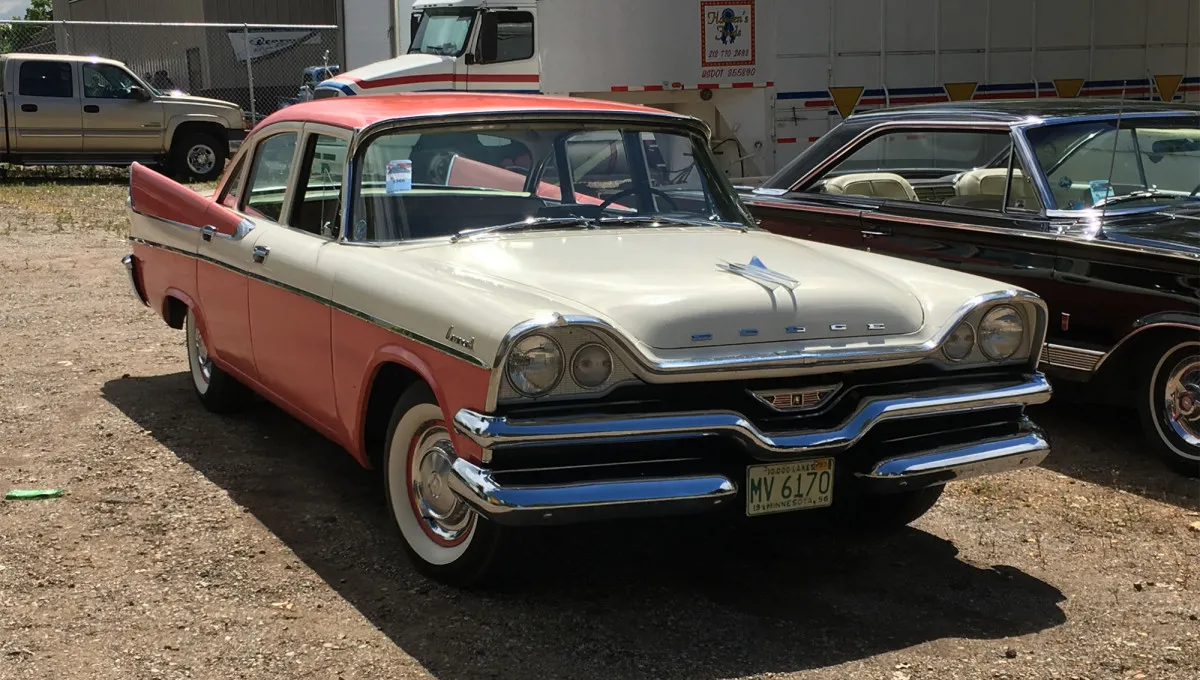
The 1957 Dodge: How “Autodynamics” Shaped One of Detroit’s Boldest Designs
The 1957 Dodge Looked Like a Dream Car, but Its Biggest Flaw Was Hiding Beneath the Surface.
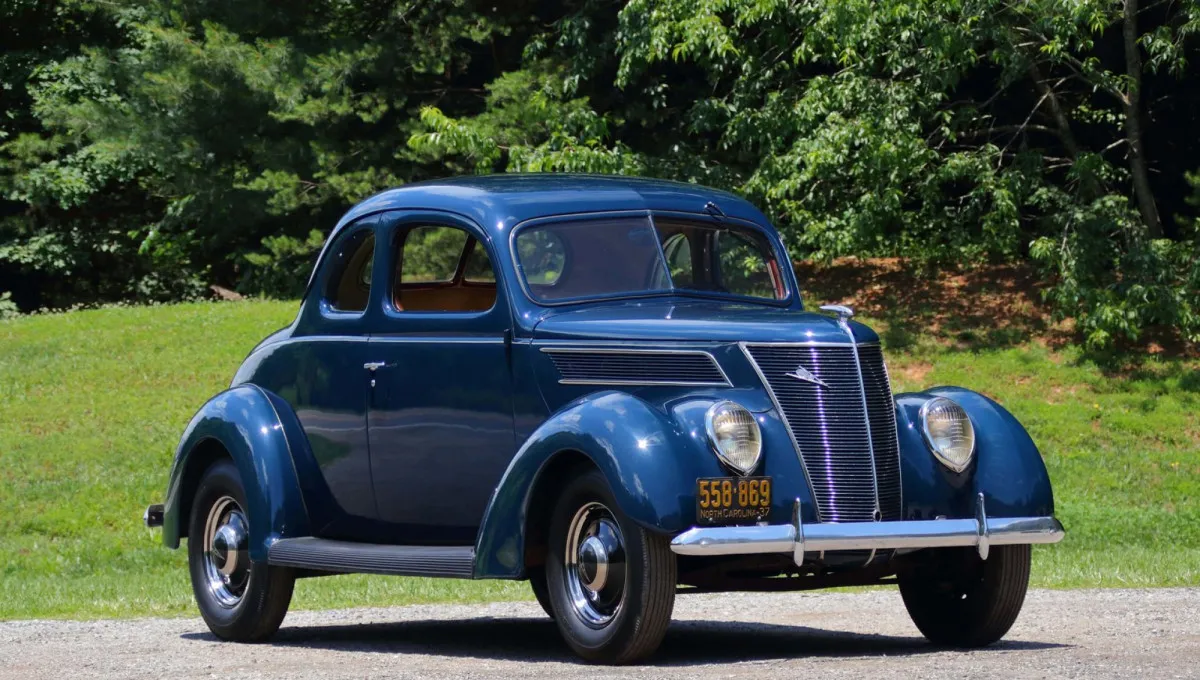
The 1937 Ford Was a Quality Car at an Affordable Price — Here’s What Made It Stand Out
The 1937 Ford featured several major changes and improvements. Let’s take a closer look.

Two Ferrari F40s Spotted on Google Maps Turn Out to Be Pontiac Fiero Replicas
Two Ferrari F40 lookalikes spotted on Google Maps in Spain turned out to be replicas built on an American sports car.
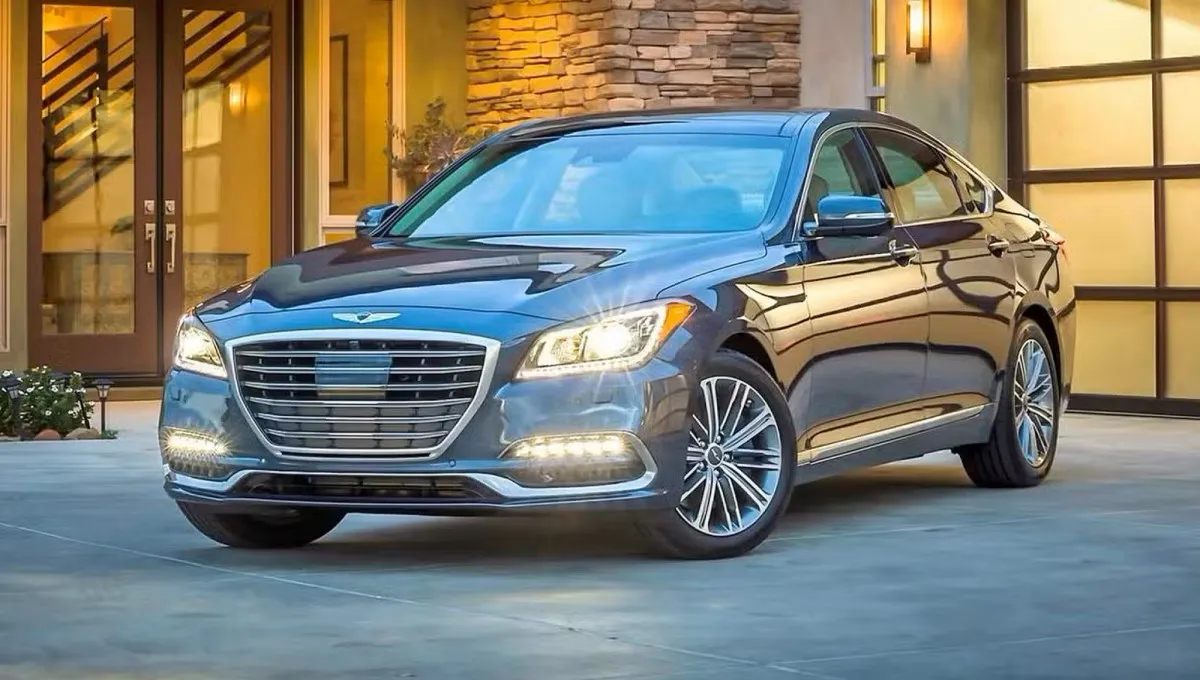
Hyundai Recalls Nearly 95,000 Genesis Sedans Over Fire Risk From Power Seats
Hyundai is recalling 94,622 Genesis sedans after a faulty power seat switch was linked to overheating and potential vehicle fires.