
10 Concept Cars From the 20th Century That Look Like They Came From the Future
From futuristic cockpits to rocket-inspired bodies, these 10 vintage concept cars pushed design boundaries and still look spectacular today.
Automakers have long used concept cars to showcase their vision of the future and introduce cutting-edge technology. But technology is only part of the story. To capture the public’s imagination and attract potential buyers, designers have also created bold, breathtaking shapes that look unlike anything else on the road. These 10 concept cars from the 20th century remain remarkable examples of automotive design, even decades after their debut.
1. Alfa Romeo B.A.T. 5 (1953)
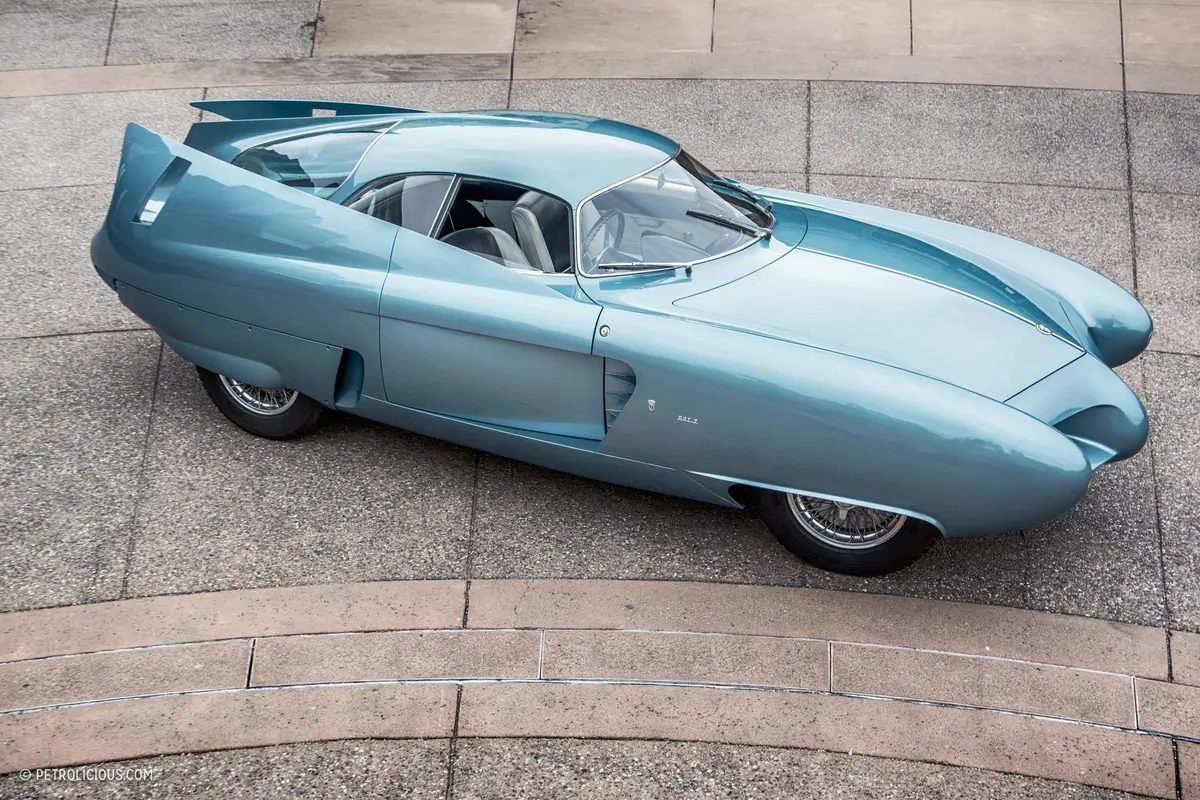
Designer Franco Scaglione was tasked with creating a car based on the Alfa Romeo 1900 C chassis that combined improved aerodynamics with a striking, futuristic appearance.
Built using aluminum, the car weighed just 2,425 pounds. Its sculpted body featured sweeping curves, large inward-curving rear fins, a teardrop-shaped cabin, and streamlined wheel covers. Every element contributed to its distinctive aerodynamic profile, making the B.A.T. 5 one of the most eye-catching designs of its era.
2. Ford FX-Atmos (1954)
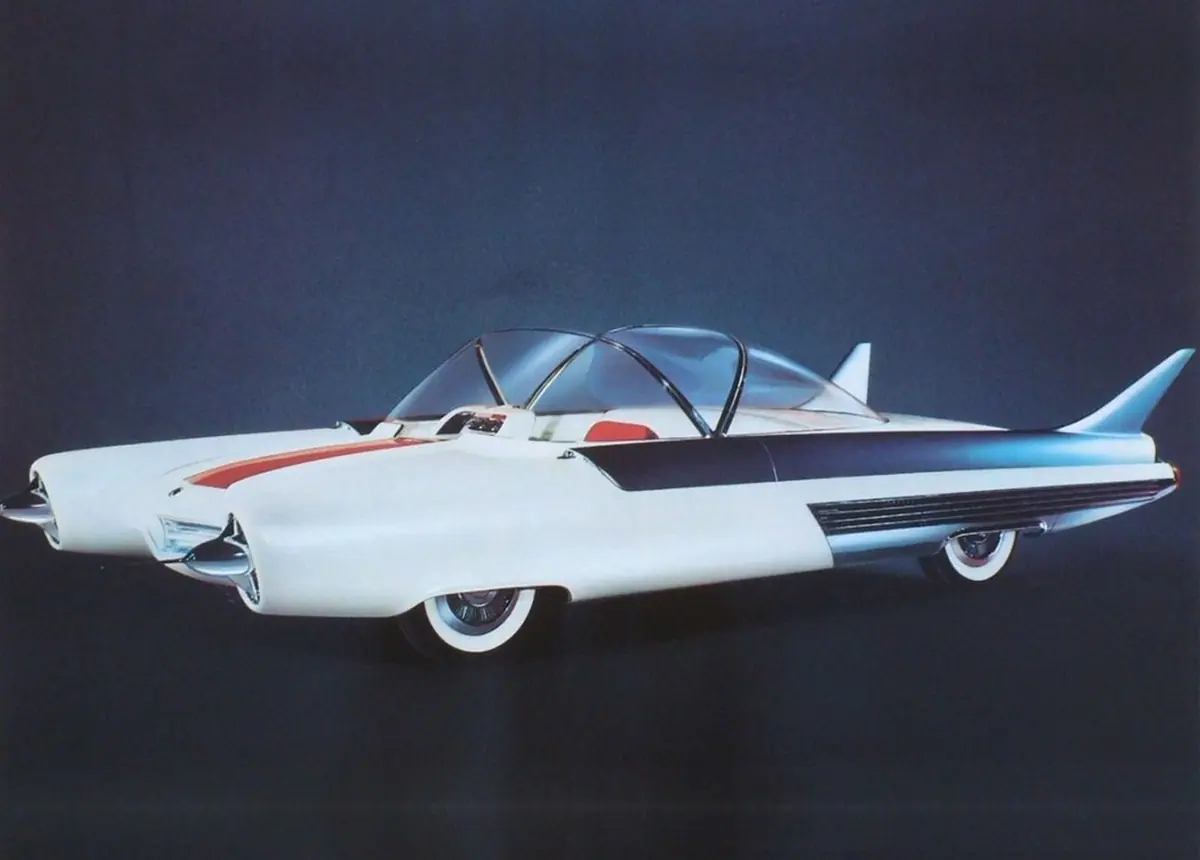
The Ford FX-Atmos stood out with its jet aircraft-inspired styling and ambitious technological ideas. Rather than relying on a conventional gasoline engine, the concept imagined a car powered by a compact nuclear reactor.
Its jet-age design included antenna-like extensions above the headlights, forward-facing air intakes, and a transparent canopy. The futuristic theme extended into the cockpit, where joystick controls replaced a traditional steering wheel. A radar system was also envisioned to feed information to a display on the dashboard.
3. Pontiac Bonneville Special (1954)
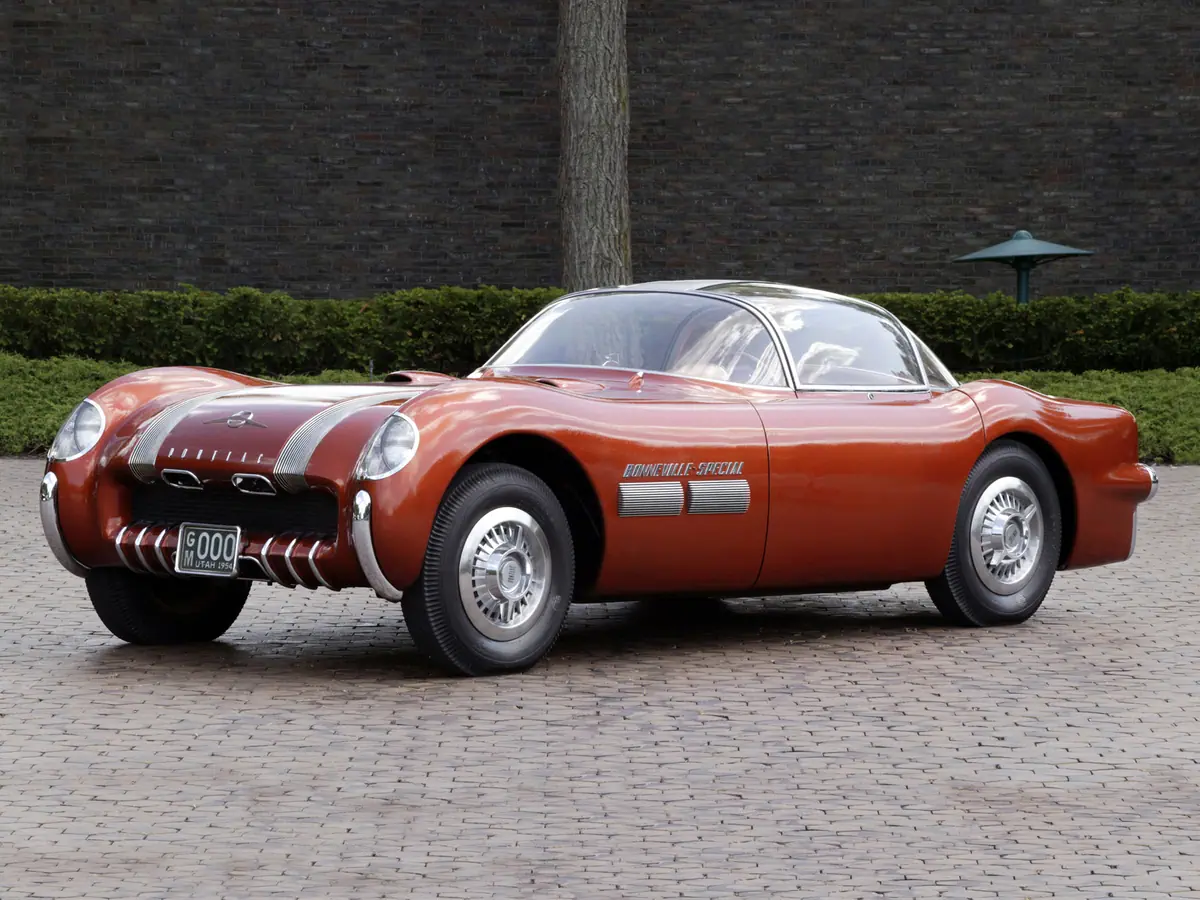
Pontiac's Bonneville Special captured the excitement of the jet age and the dawn of the Space Race. Designed by Harley Earl, the sports car was hand-built in just two examples.
Its rocket-inspired body featured a recessed circular compartment for the spare tire, while prominent tail fins framed a rear section resembling a rocket nozzle. The aircraft-style bubble roof was made from transparent Plexiglas and flowed into the upper sections of the gullwing doors, giving the car an appearance straight out of a science-fiction movie.
4. Ghia Gilda Streamline X Coupe (1955)
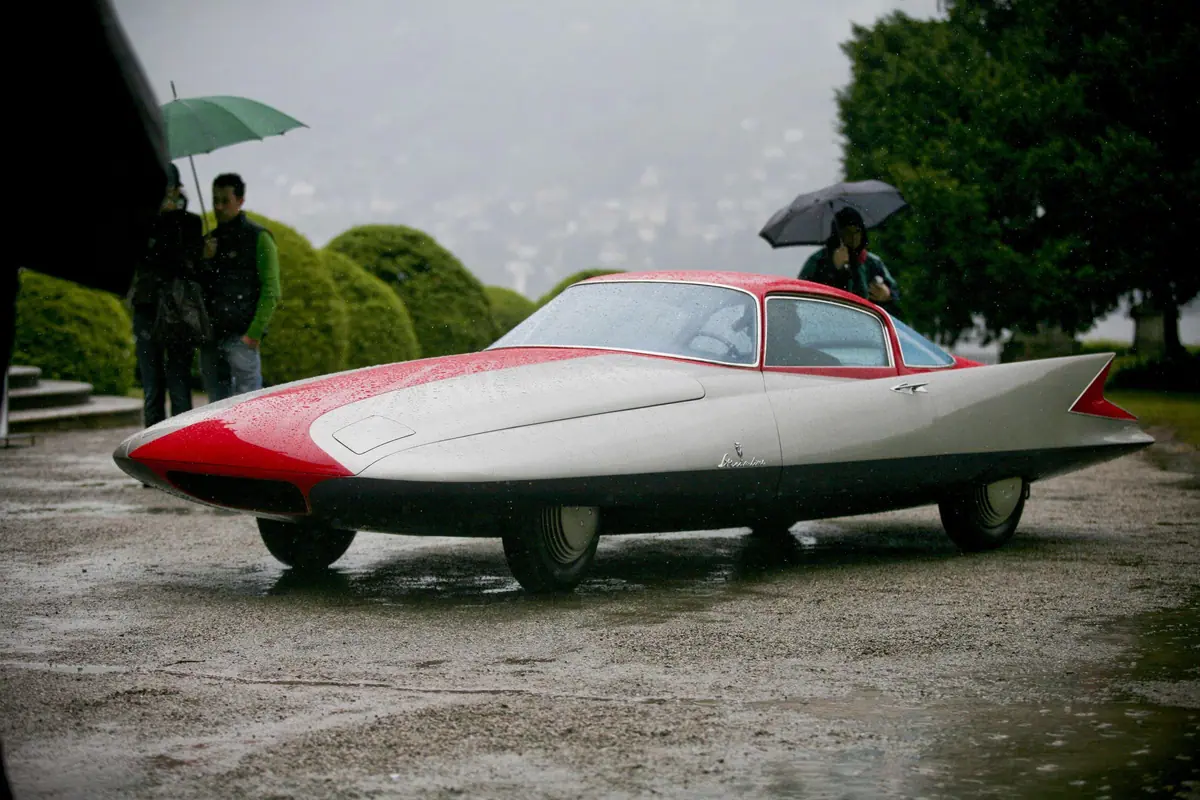
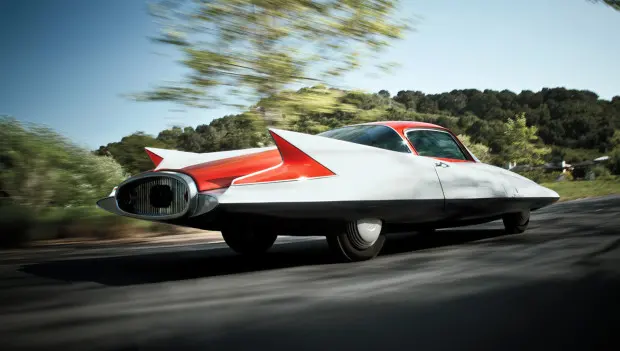
Ghia engineer Giovanni Savonuzzi developed this concept coupe around the idea of a car shaped like a rocket. Its enormous tail fins began near the front of the body and extended toward the rear, creating an unmistakable silhouette.
The body featured a two-tone paint scheme, contrasted by dark lower bodywork and wheels. With its streamlined shape and dramatic proportions, the Gilda Streamline was reportedly designed with a top speed of 140 mph in mind, an extraordinary target for a concept car of the period.
5. Buick Centurion XP-301 (1956)
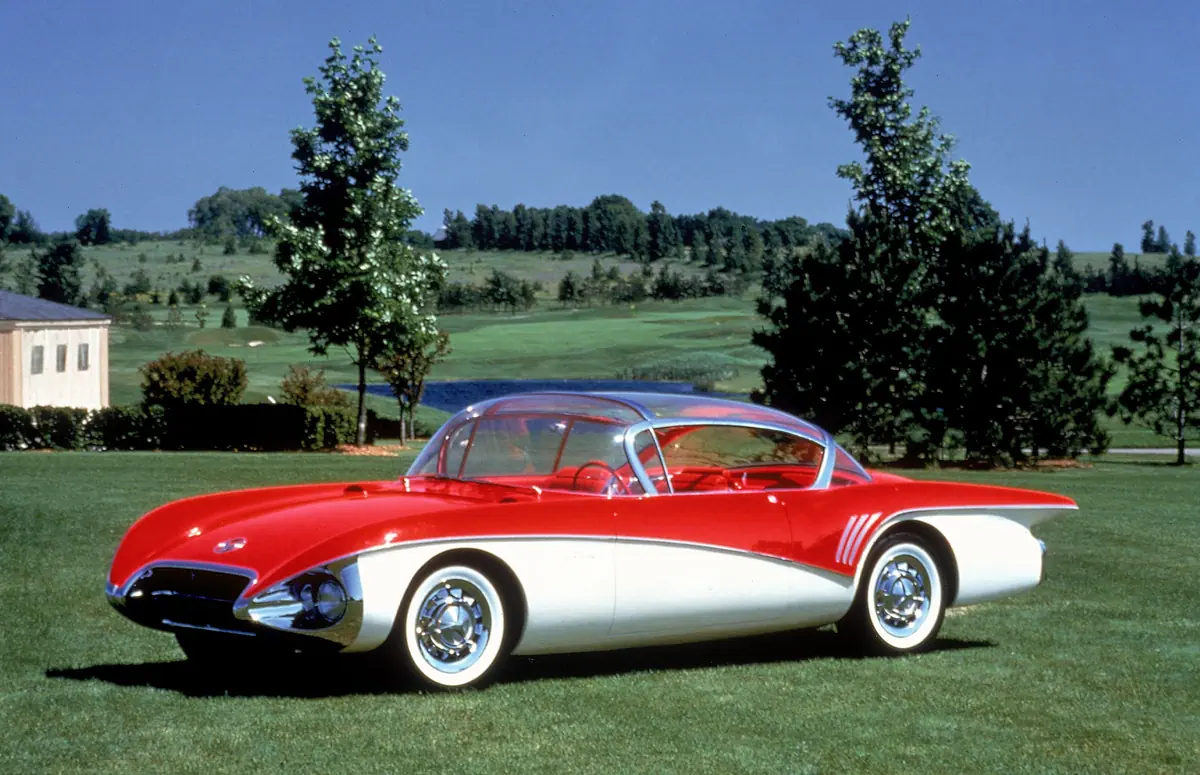
The Buick Centurion XP-301 combined elegant aerodynamics with futuristic details. Its fiberglass body featured flowing lines, a transparent plastic bubble canopy, and a distinctive rear section shaped like a bat's wings, complete with sweeping tail fins.
One of its most intriguing features was a rearview camera system that eliminated the conventional rearview mirror. A camera mounted where the trunk would normally be transmitted images to a screen on the dashboard. The concept also featured a centrally mounted steering control, a digital clock, and a luxurious interior upholstered in rich red leather.
6. Chrysler Turboflite (1961)
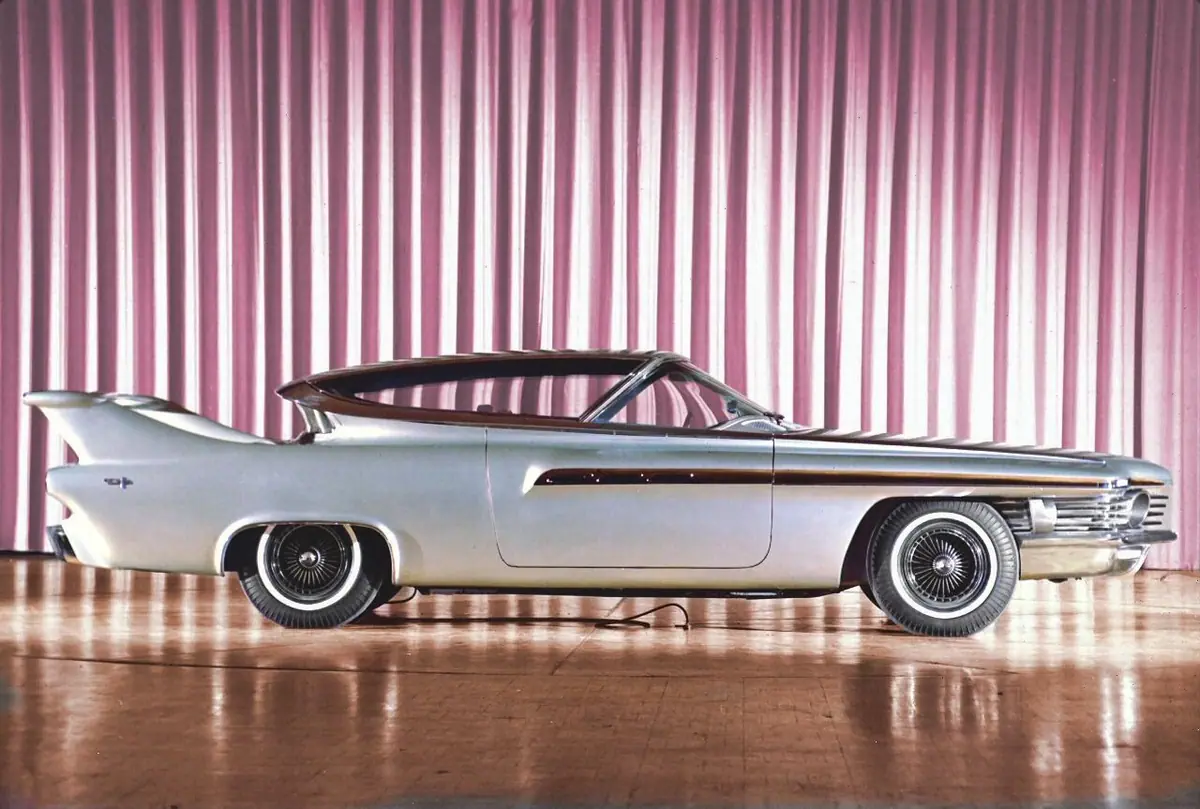
The Chrysler Turboflite looked decades ahead of its time. Designed by Maury Baldwin, the concept featured a dramatic transparent fiberglass canopy integrated with a panoramic windshield.
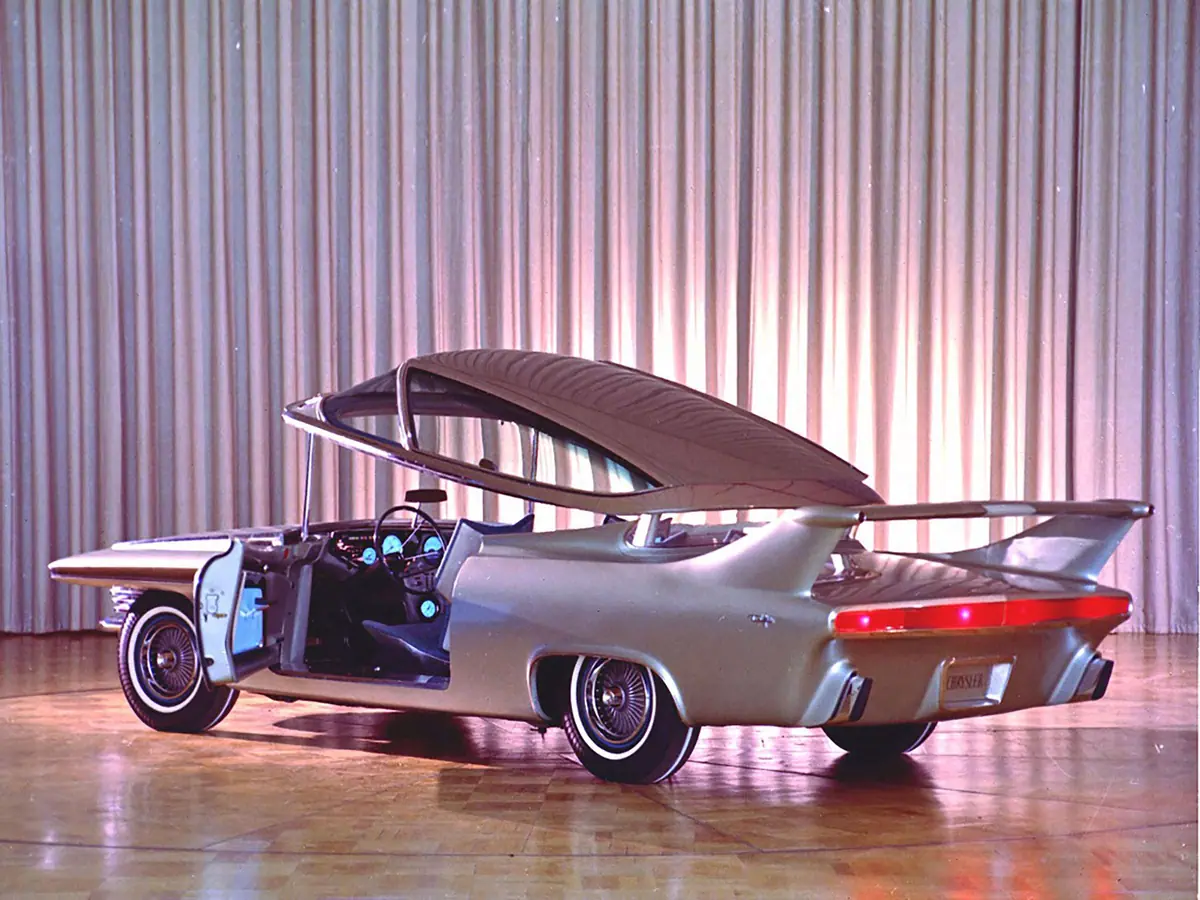
Opening the doors raised the entire canopy, creating an unusually open entrance to the cabin. Its oversized tail fins were connected by a crosspiece that could rotate to function as an aerodynamic air brake. Together, these elements formed a massive rear wing that gave the Turboflite its unmistakable futuristic appearance.
7. Ford Aurora (1964)
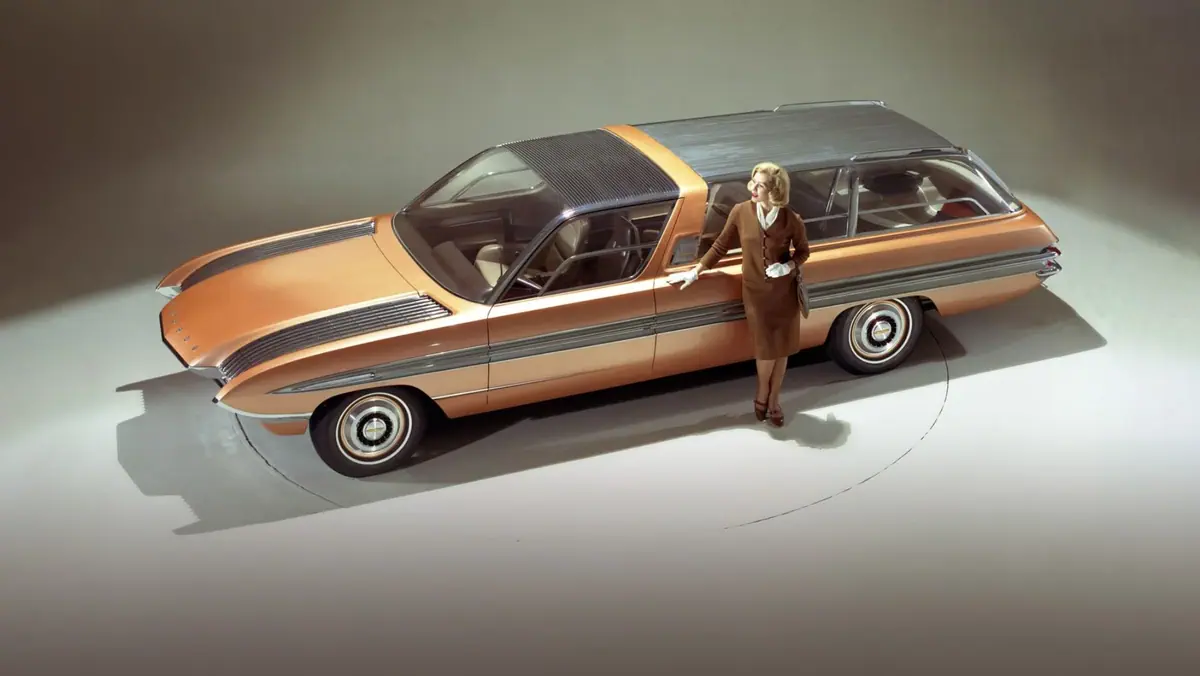
The Ford Aurora focused on passenger comfort in a way that anticipated modern family vehicles. Its roof included a panel that could switch from transparent to opaque, shielding occupants from direct sunlight.
The nine-passenger station wagon featured three rows of seating. A comfortable semicircular sofa occupied the second row, while the rear-facing third row was separated by a glass partition and intended for children. The unusual layout transformed the cabin into a more social, lounge-like space rather than a conventional car interior.
8. Buick Century Cruiser (1969)
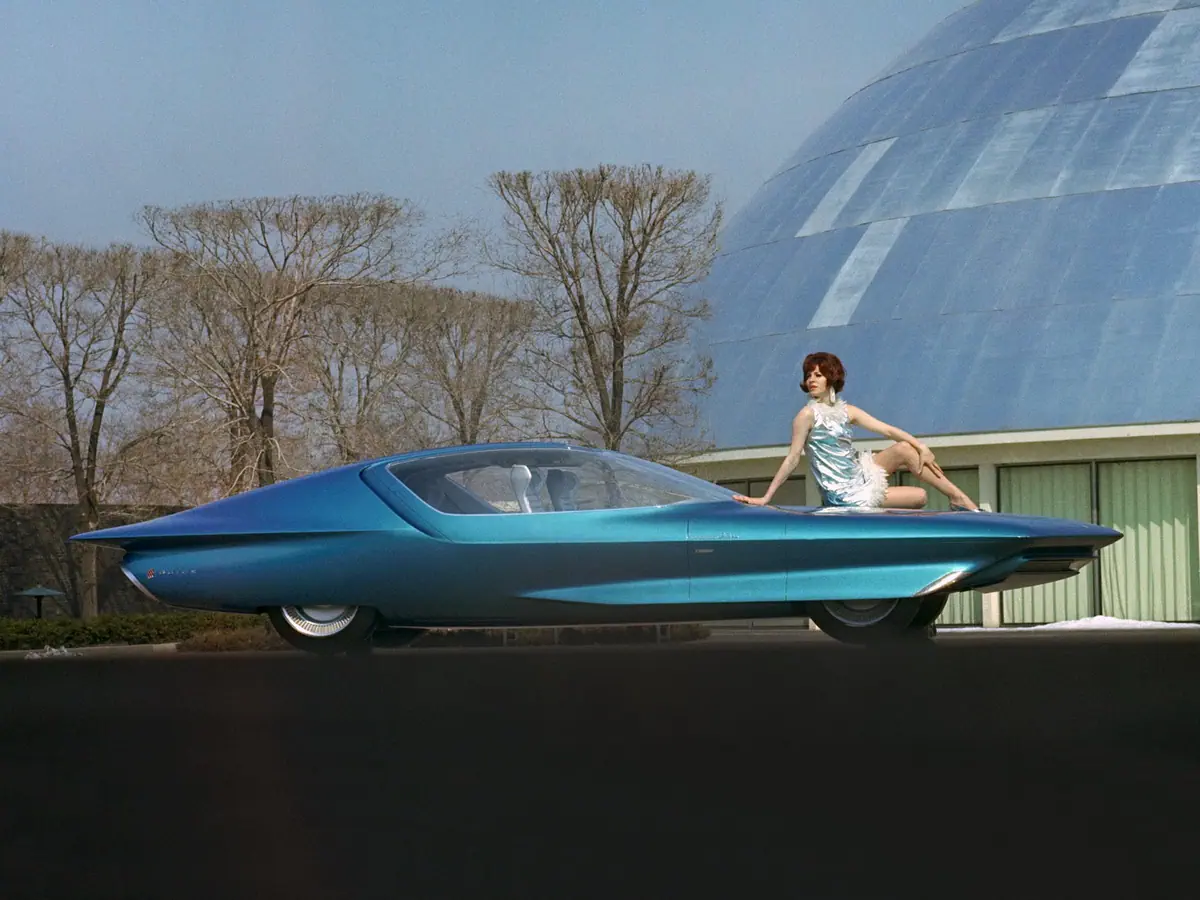
The Buick Century Cruiser imagined a future in which cars would travel along automated highways without requiring drivers to steer. Instead of a traditional driving environment, the concept offered a comfortable lounge on wheels.
Its cabin featured ergonomically shaped swivel seats, a refrigerator, a retractable table, and a television. To select a destination, occupants would insert a punched card containing a programmed route into a slot in the vehicle. The system reflected an ambitious vision of automated transportation decades before self-driving cars became a major focus of the automotive industry.
9. Chevrolet Astro III (1969)
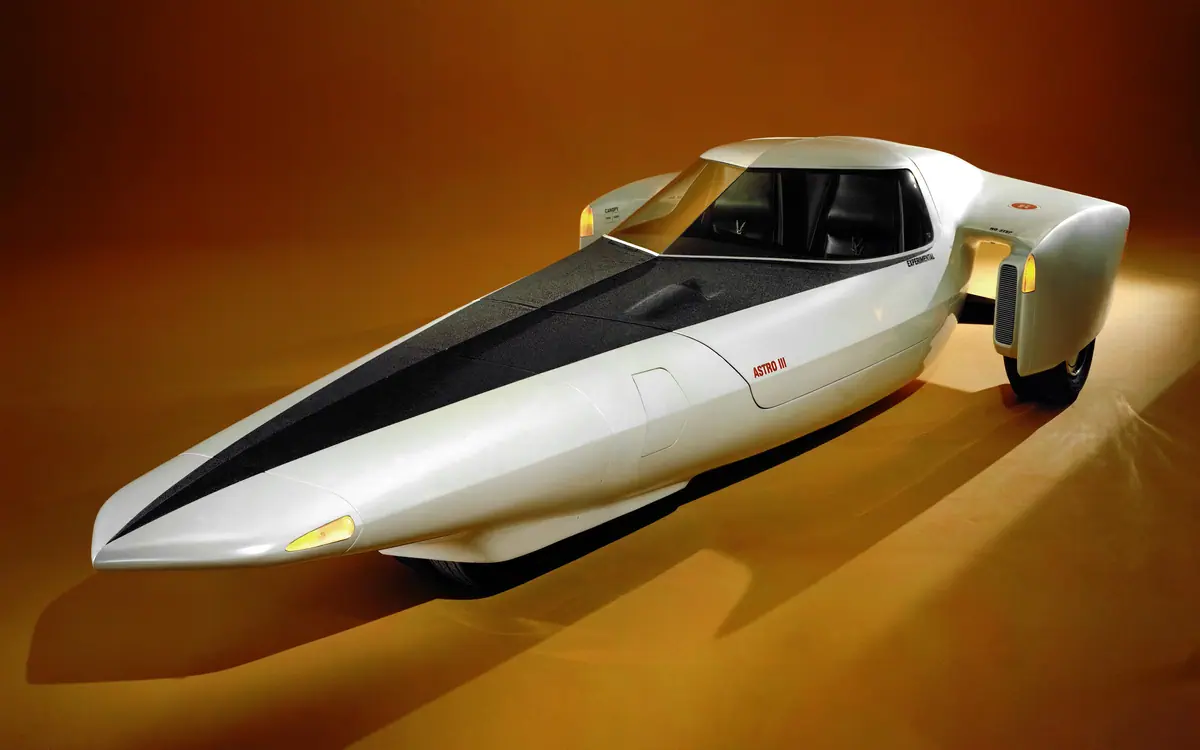
The Chevrolet Astro III looked more like a jet aircraft than a conventional automobile. Its sharply tapered black-and-white fiberglass body evoked the nose of the Concorde supersonic airliner, while its unusual proportions emphasized speed and futuristic engineering.
Although the concept had four wheels, its front wheels were positioned extremely close together, creating the visual effect of an aircraft's tricycle landing gear. A joystick replaced the conventional steering wheel. The widely separated rear drive wheels sat beneath the rear fins, resembling aircraft turbines and reinforcing the jet-inspired design.
10. Autobianchi Runabout (1969)
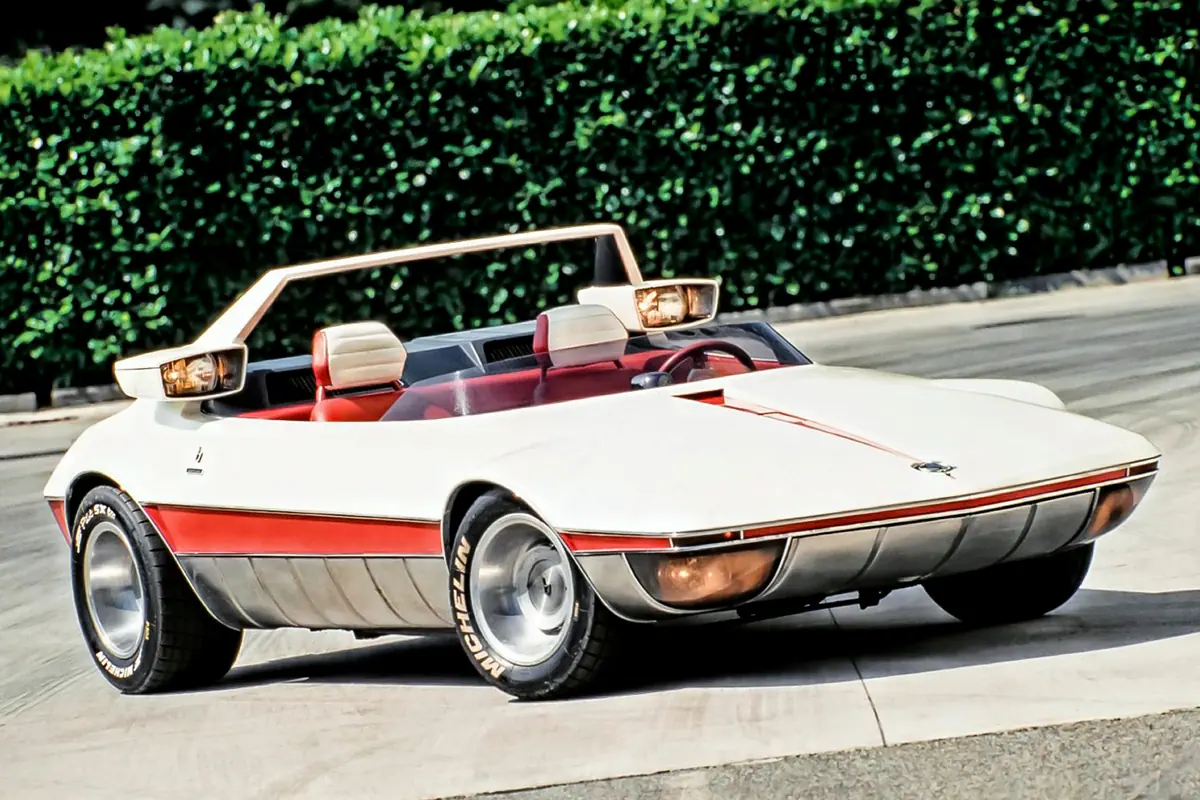
Designed by Marcello Gandini, the Autobianchi Runabout drew inspiration from the high-speed powerboats popular in the late 1960s. Its long front overhang, short rear section, and nearly flat wheel arches gave it the proportions of a racing boat on wheels.
The wheels sat deeply beneath the bodywork, while the low, open cockpit reinforced its nautical character. Like a real speedboat, the Runabout had no doors for either the driver or passenger. The result was a playful, unconventional concept that demonstrated how automotive design could draw inspiration from the world beyond the road.
You may also be interested in the news:
“Are You Sure It’s Chinese?” Who Really Builds China’s Car Engines
Who Really Develops China’s Car Engines?

What Does the 99% Patch Mean to Bikers? The History Behind the Motorcycle Symbol
The 99% biker label separates everyday motorcycle enthusiasts from outlaw culture, carrying a message rooted in American motorcycle history.
Elegance for Everyone: How Chevrolet Made Its 1960 Cars Stand Out
Chevrolet toned down its extravagant 1959 styling for 1960, bringing a more refined look to its affordable full-size cars.
More Than a Car! More Than a Truck! The 1957 Ford Ranchero
The 1957 Ford Ranchero launched a new kind of American vehicle, blending passenger-car styling with pickup-truck utility years before the segment took off.
Pontiac's 1970 GTO Had a Wild Exhaust Option—Only 233 Cars Got It
Pontiac offered an unusual exhaust system for the 1970 GTO, but the factory option didn't last long.