
Elegance for Everyone: How Chevrolet Made Its 1960 Cars Stand Out
Chevrolet toned down its extravagant 1959 styling for 1960, bringing a more refined look to its affordable full-size cars.
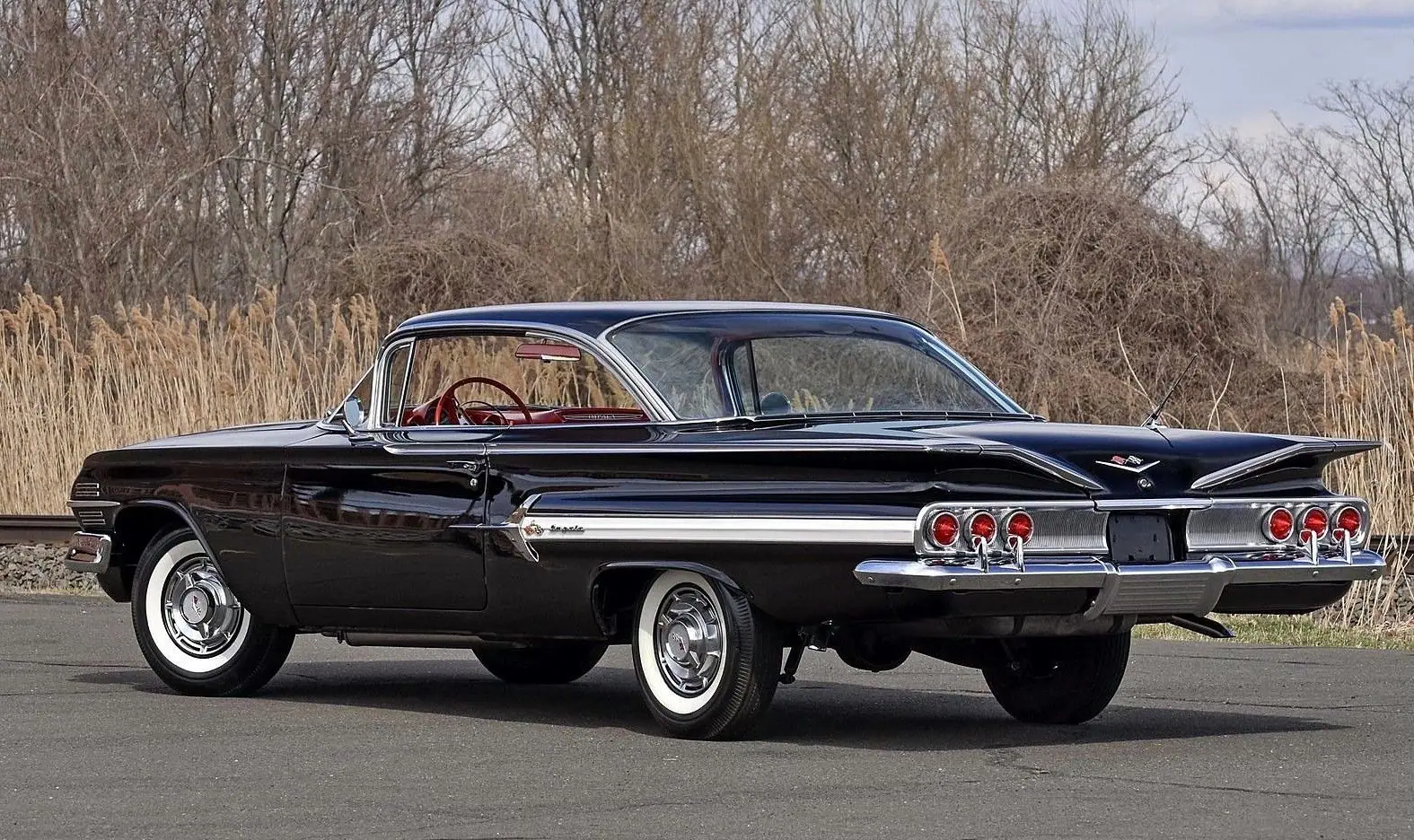
In 1960, Chevrolet set out to bring a touch of elegance to the affordable-car market. Its slogan captured the mission in four words: “Elegance for Everyone.”
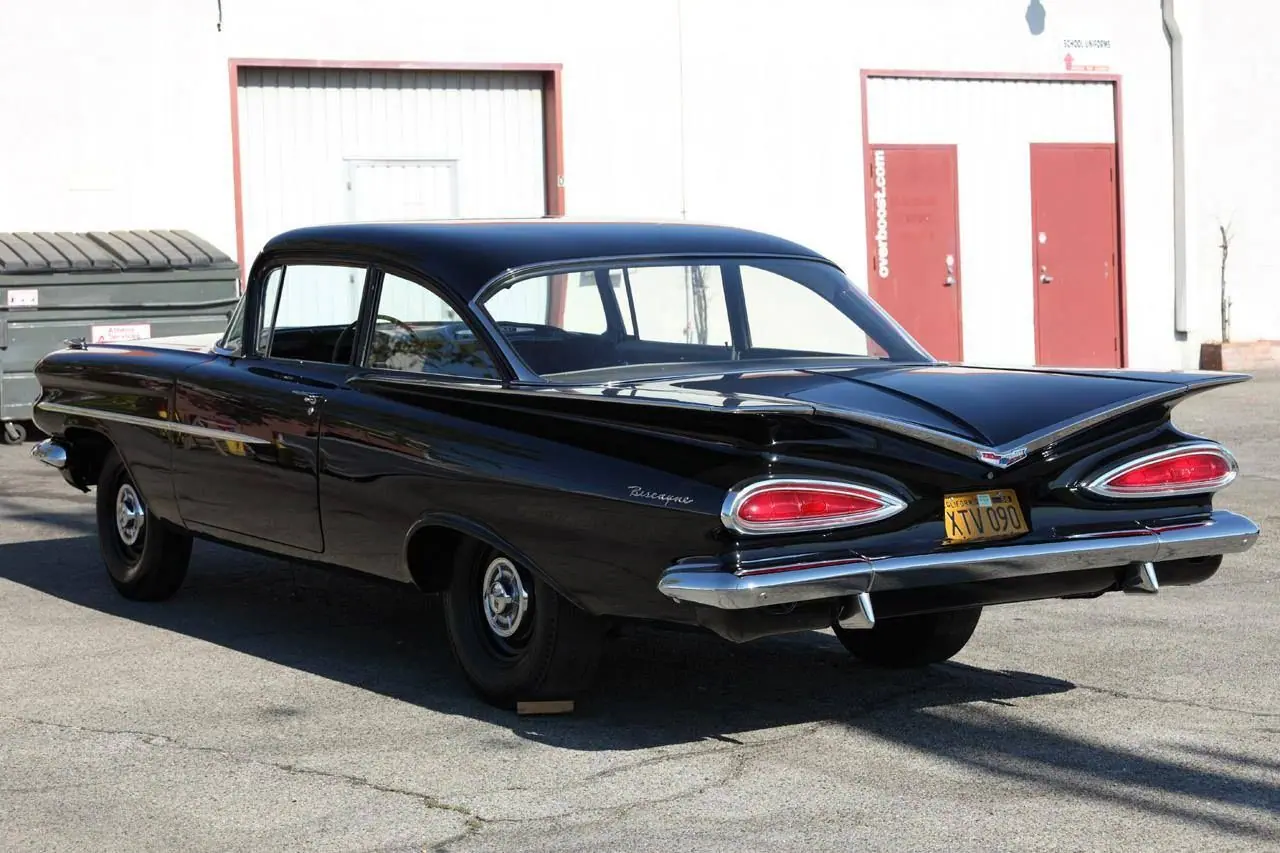
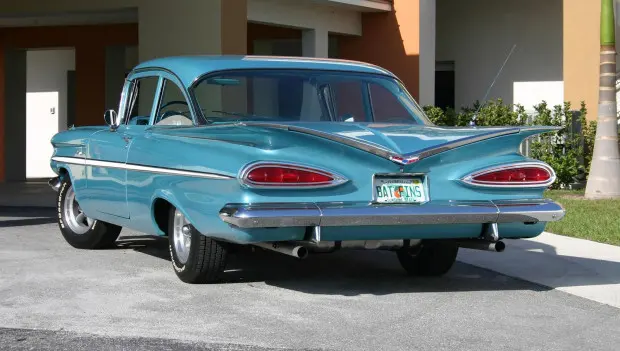
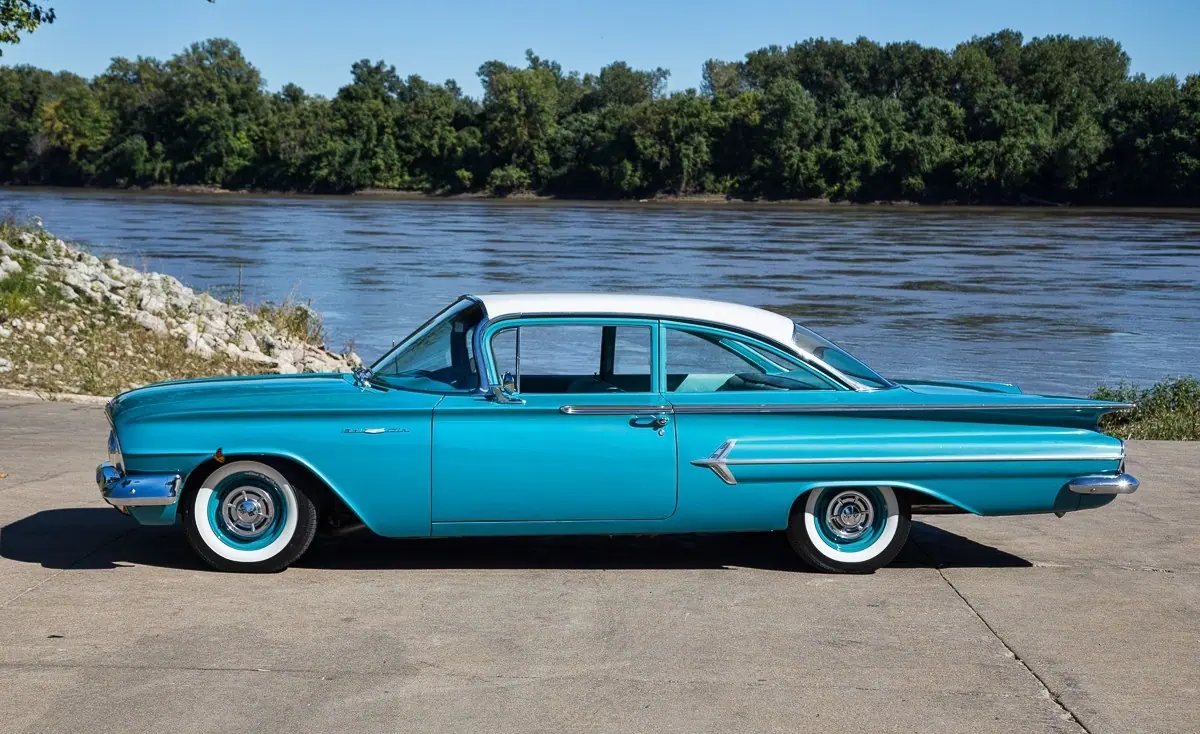
The 1959 Chevrolet lineup arguably featured the most flamboyant styling ever seen from General Motors. But automotive fashion was shifting, and the 1960 models took a more restrained approach. The dramatic excess gave way to cleaner lines and a more sophisticated appearance.
Clare MacKichan, who headed Chevrolet's styling studio from 1953 to 1962, recalled the thinking behind the changes years later: “We didn't want to give up the fins completely, so we made this change in the rear, making the fender flatter and more angular.”
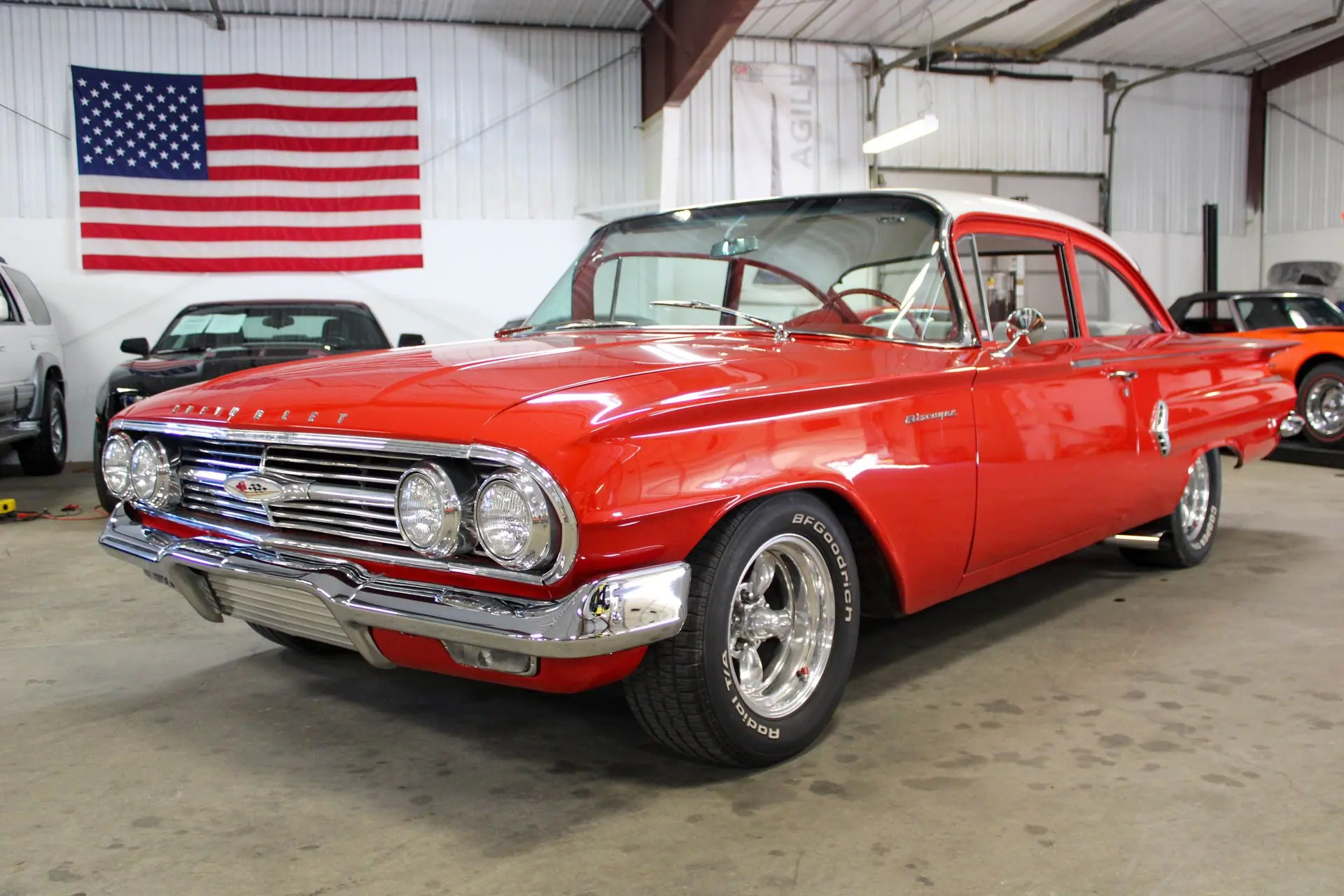
Up front, the prominent brow-like features of the 1959 models disappeared, replaced by a simpler oval grille flanked by four headlights.
Chevrolet retained the 1959 model's X-frame chassis for 1960, along with its 119-inch wheelbase. Overall length and width changed by only fractions of an inch. Nearly every exterior body panel, however, was new, with the glass being the main exception.
During this period, all five GM divisions shared the same basic body structure. Designers had to find distinctive ways to give each brand its own identity while working within that common framework.
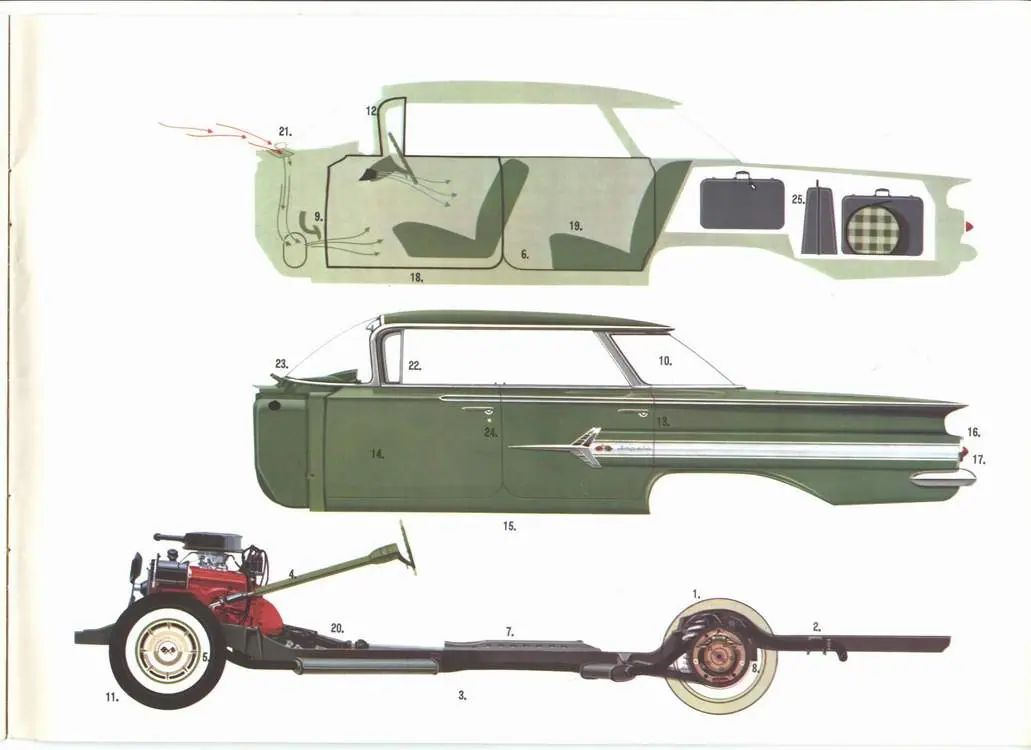
The 1960 powertrain lineup remained largely unchanged, although two 283-cubic-inch fuel-injected engines were dropped from Chevrolet passenger cars and reserved exclusively for the Corvette.
The most powerful available V-8 was the Super Torque Thrust Special, a 348-cubic-inch W-series engine equipped with three two-barrel carburetors. With an 11.25:1 compression ratio, it produced 335 horsepower.
Buyers could choose from five transmissions: Powerglide, Turboglide, a four-speed Borg-Warner manual, a three-speed manual, or a three-speed manual with overdrive.
Chevrolet's familiar trim hierarchy also remained firmly in place. The Biscayne served as the entry-level model, the Bel Air occupied the middle of the lineup, and the Impala sat at the top. That basic arrangement would continue for years.
The Biscayne was available only as a two-door or four-door pillared sedan. Buyers looking for a pillarless hardtop had to step up to the Bel Air or Impala.
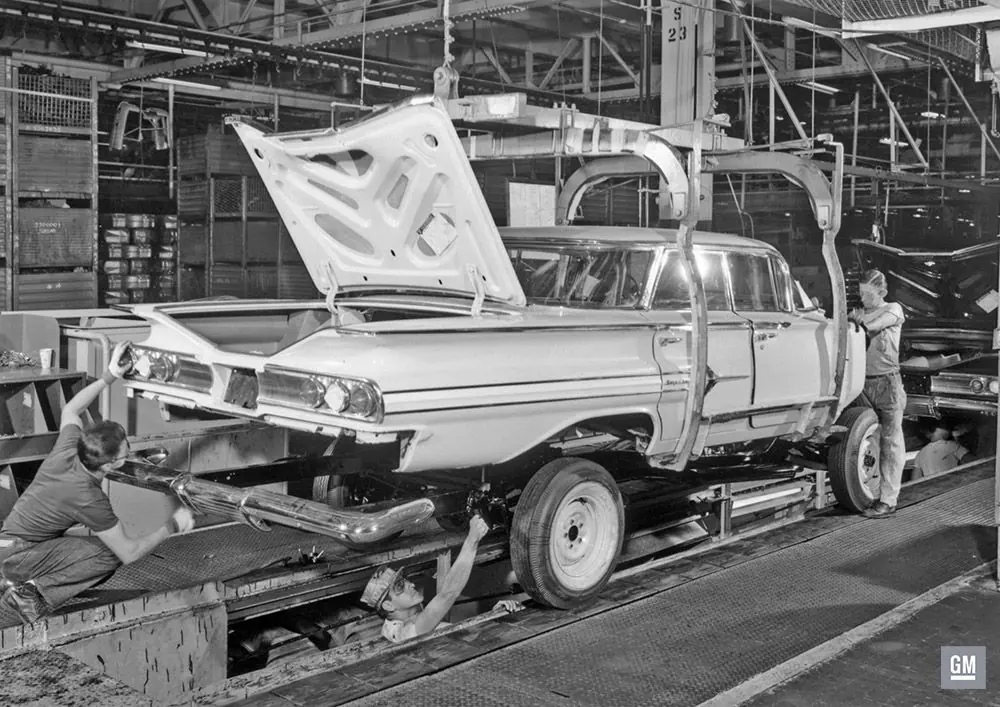
Chevrolet's four-door hardtops featured a flat roofline in 1960, a design GM called the Flying Wing. It was the final year Chevrolet offered these cars, which the company marketed as Sport Sedans.
Chevrolet produced more than 1.65 million vehicles for the 1960 model year, outselling GM's other four automotive divisions combined. The Impala led the way, with production exceeding 440,000 cars, followed by the Bel Air and Biscayne.
The lineup also included the Corvette and the newly introduced Corvair. Although the Corvette accounted for a relatively small share of total production, the Corvair contributed another 250,000 vehicles in its debut year.
Chevrolet's range would expand further in the years ahead. The Chevy II arrived in 1962, followed by the Chevelle in 1964 and the Camaro in 1967. As these new models gained ground, full-size cars gradually began to account for a smaller share of Chevrolet's business.
You may also be interested in the news:

Invisible Cows and a 17.3 MPH Speed Limit? 4 of America's Strangest Road Signs
From invisible cows to alien highways, these unusual American road signs turn ordinary drives into unforgettable roadside surprises.
More Than a Car! More Than a Truck! The 1957 Ford Ranchero
The 1957 Ford Ranchero launched a new kind of American vehicle, blending passenger-car styling with pickup-truck utility years before the segment took off.
Pontiac's 1970 GTO Had a Wild Exhaust Option—Only 233 Cars Got It
Pontiac offered an unusual exhaust system for the 1970 GTO, but the factory option didn't last long.
Chrysler's Aluminum Slant 6 Engine: The Lightweight Experiment of 1961–1963
Chrysler built more than 50,000 cars with an aluminum-block Slant 6 before production challenges brought the project to an end.
1959 Chevy Impala Parked in a Farm Begs for Restoration As Owner Decides To Let It Go
This 1959 Chevrolet Impala has landed online with one big mission: it must convince a skilled restoration guy to give it a second chance