
The New Hyundai Tucson Is Official: Hybrid Targets Up to 42 MPG
Hyundai has unveiled the next-generation Tucson with Art of Steel styling, updated hybrid powertrains and new technology.
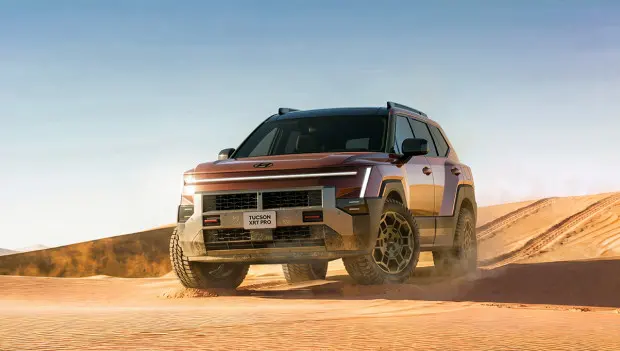
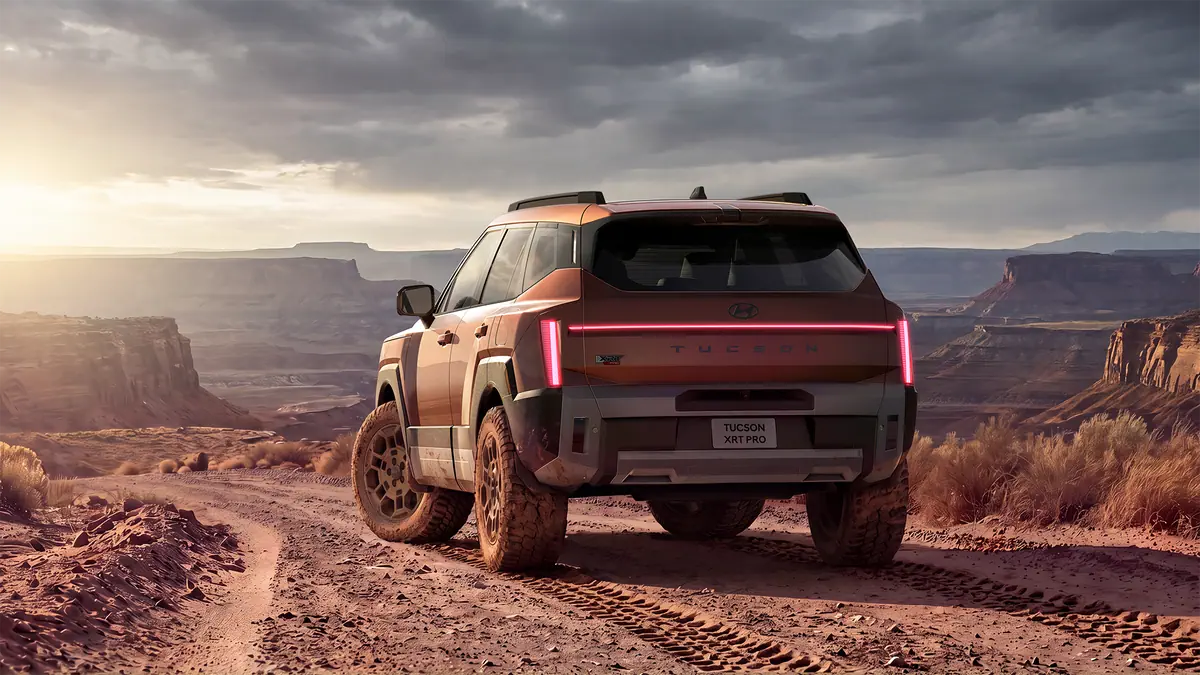
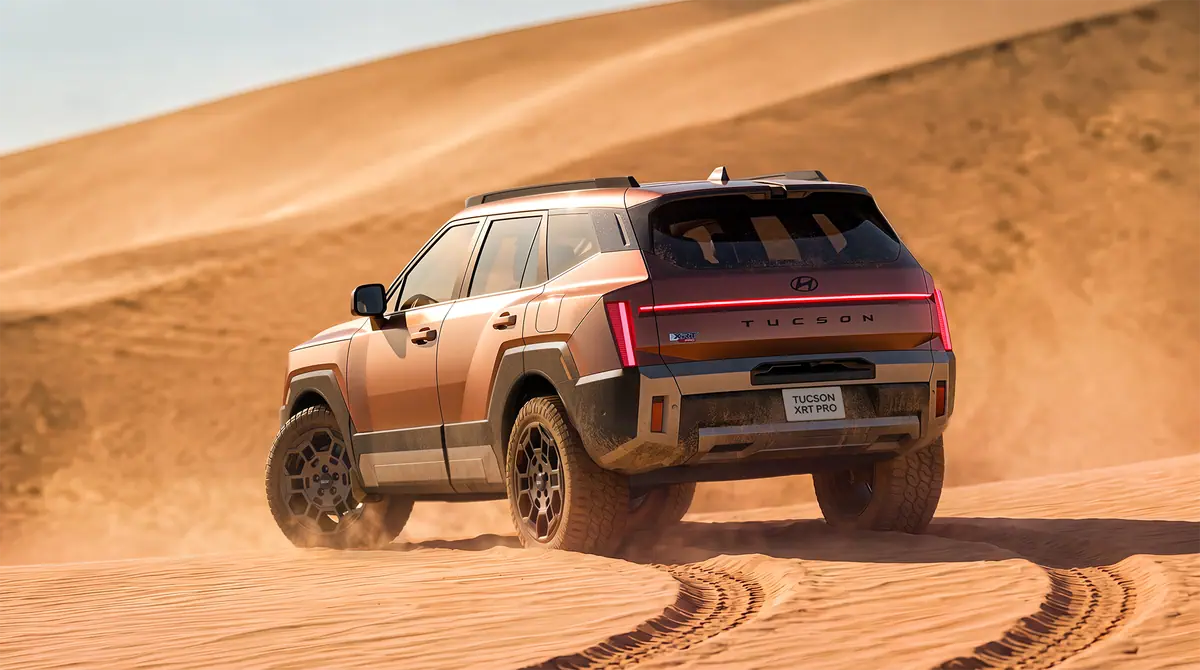
Hyundai has unveiled the next-generation Tucson, introducing its new Art of Steel design language, updated hybrid powertrains and the Pleos Connect infotainment system with Gleo AI features. Alongside the standard crossover, Hyundai also introduced the off-road-focused Tucson XRT PRO, which gets 8.3 inches of ground clearance and a new Smart Terrain Assist system.
A New Look Built Around Hyundai's Art of Steel Design
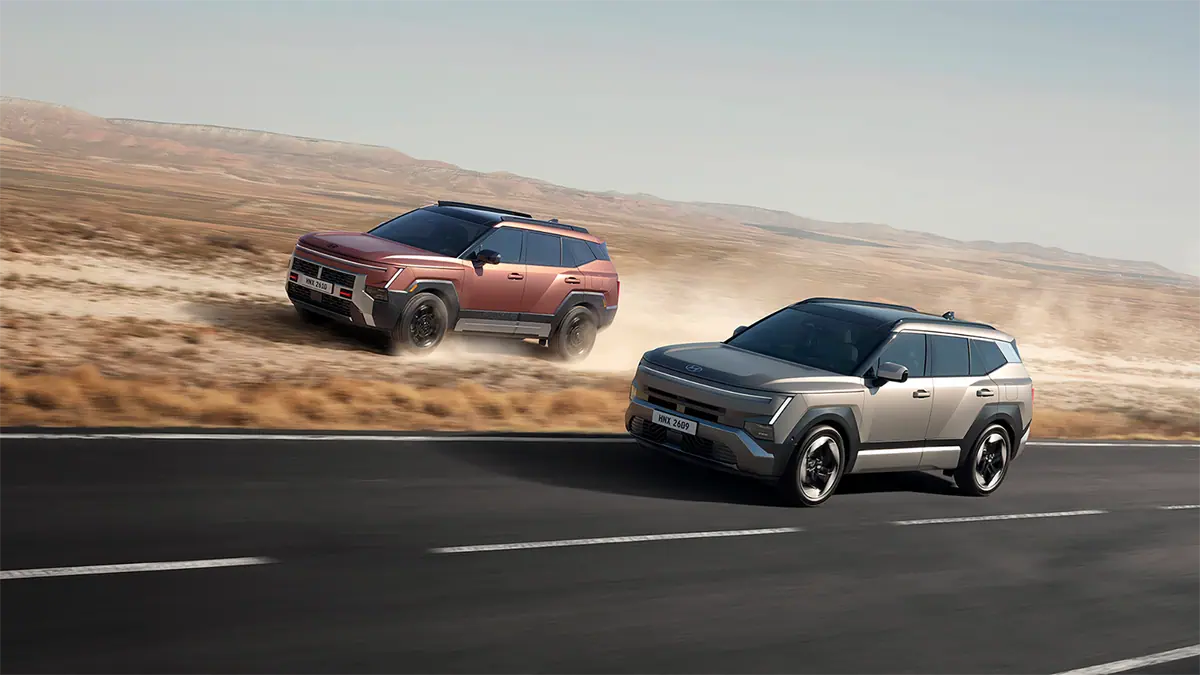
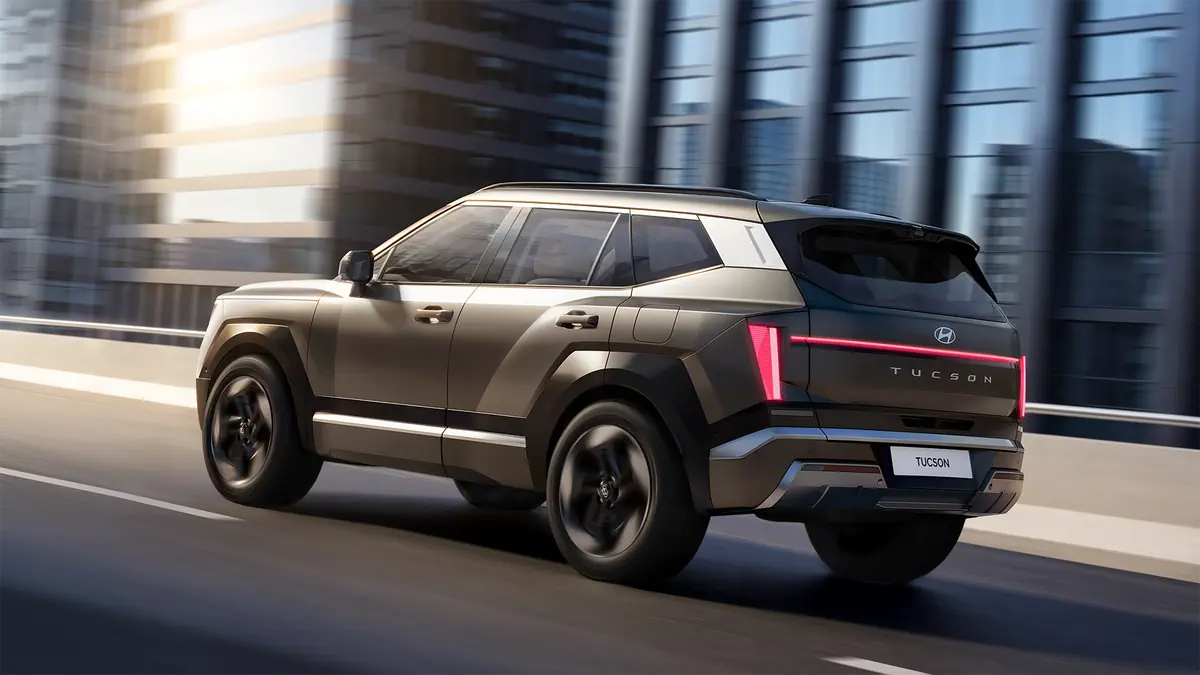
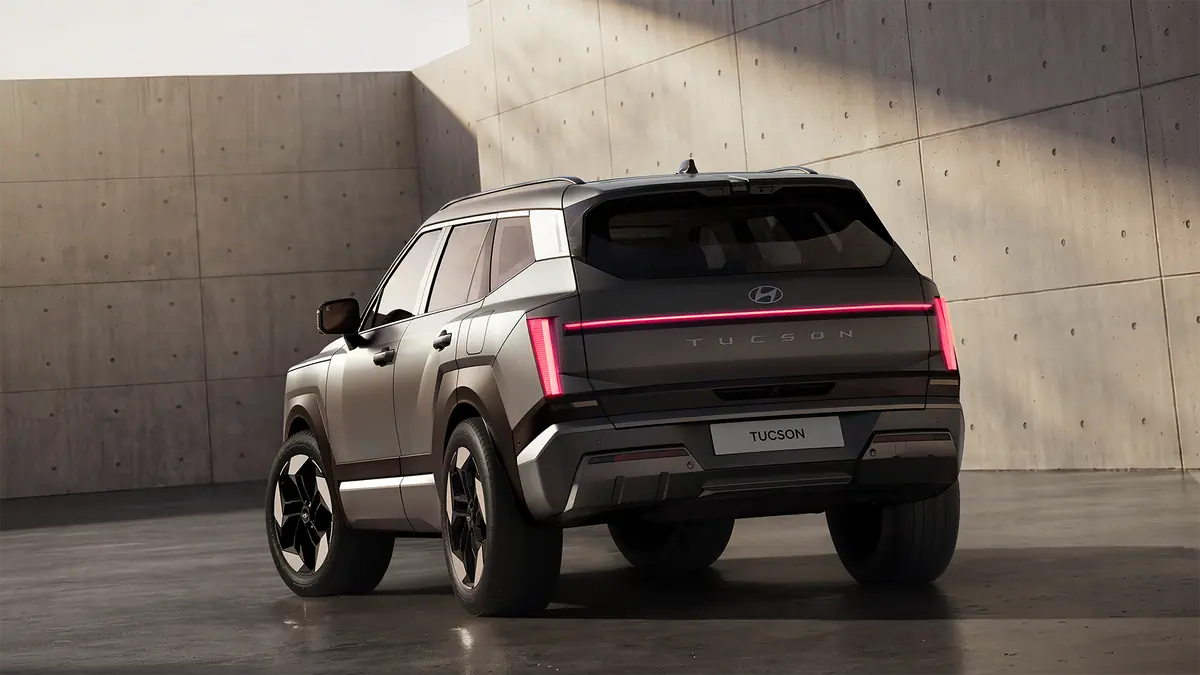
The new Tucson was developed around Hyundai's Art of Steel design philosophy, which emphasizes geometric shapes, pronounced wheel arches and a muscular overall stance. Hyundai says the design is intended to combine a sense of physical strength with modern technology.
The long-wheelbase version headed for the U.S. market measures 185 inches long, 75 inches wide and 66.3 inches tall. Compared with the outgoing model, the new Tucson is 2.4 inches longer, 1.6 inches wider and 0.8 inch taller. Its wheelbase has also grown by 1.2 inches to 109.6 inches.
The front end was designed with pedestrian protection requirements in mind. Hyundai also increased the door opening angle from 73 to 83 degrees, making it easier to get in and out.
Several new exterior colors are available, including Ranger Green Pearl, Kodiak Blue Pearl, Driftwood Gray Metallic and Red Rock Orange Pearl. Some of the finishes are designed to change their appearance depending on the lighting conditions.
New Lighting Uses 25,600 Individual LED Pixels
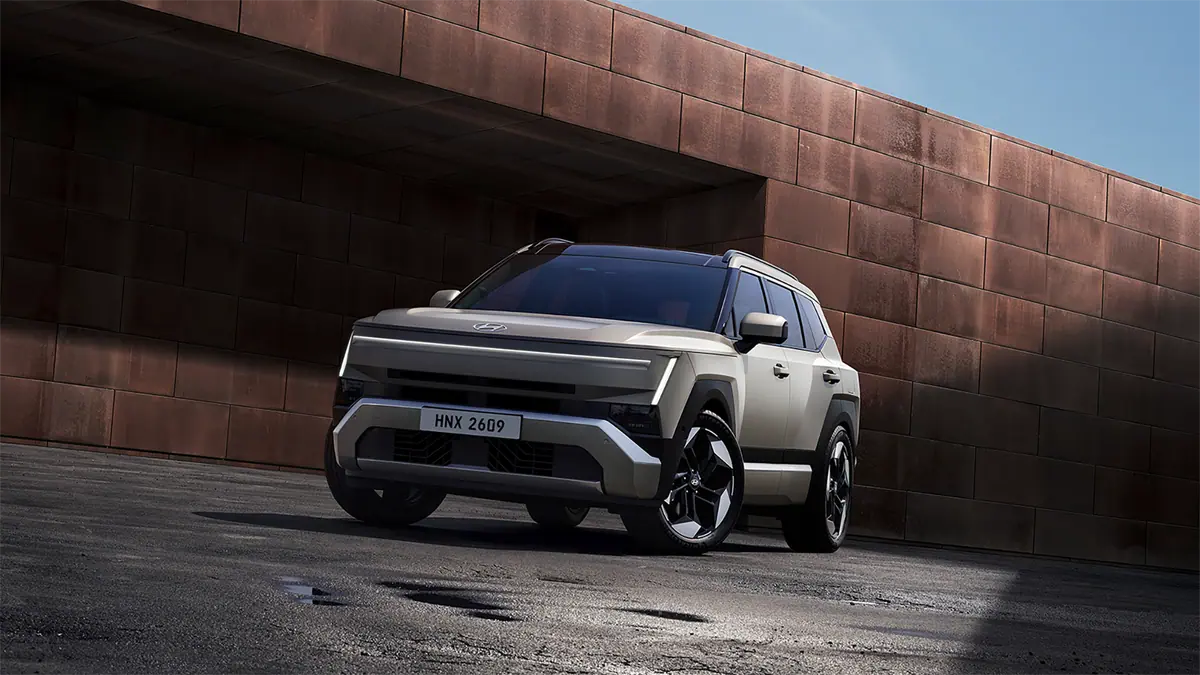
The new Tucson features Hyundai's H-Edge lighting signature up front. It combines indirect central illumination with contour elements that visually widen the vehicle's front end. At the rear, Prism Rear Lamps use a three-dimensional design intended to emphasize the body's shape and create a more intricate lighting pattern.
Certain trim levels can be equipped with Micro Pixel Lighting, which uses 25,600 individual LED pixels. The system can precisely shape the light beam, provide directional illumination in rainy conditions and create dynamic welcome and farewell lighting sequences.
LED headlights and taillights are standard equipment, while Micro Pixel Lighting is available as an option.
A Roomier Cabin With More Comfort Features
The new Tucson's interior follows a functional minimalist approach. The dashboard uses a two-level layout, with a horizontal upper section forming the main visual line and an open storage area below it.
Hyundai has also retained physical buttons for frequently used climate and audio functions, reducing the need for drivers to navigate menus on a touchscreen. A slim 9.9-inch display sits in front of the driver, while the transmission selector has been moved to the steering column.
Depending on the trim, the infotainment system uses either a 17-inch or 12.9-inch center display. Two 15-watt wireless charging pads, three-zone climate control and Multi-Air Mode are also available. The latter distributes air through primary, secondary and lower vents to reduce direct airflow toward occupants.
The front seats can be equipped with an optional Ergo Motion system featuring pneumatic support elements and massage functions. Relaxation Comfort Seats are also available and can recline at the push of a button while the vehicle is parked.
Another available feature is heated metallic glass. Hyundai says the system can completely defrost the glass in about 15 minutes while rejecting up to 60% of solar energy during hot weather, helping reduce cabin temperatures.
Acoustic glass can also be fitted to the rear doors, a feature that remains uncommon in this segment.
The New Tucson Hybrid Targets Up to 42 MPG
One of the biggest changes is Hyundai's new Next-Generation Hybrid System. For the North American market, the automaker is targeting fuel economy of approximately 42 mpg.
The U.S.-spec hybrid produces a combined 233 horsepower. The Korean-market version is rated at 245 horsepower. Hyundai estimates that the hybrid can accelerate from 0 to 60 mph in about 8.5 seconds.
The E-Traction system, available on hybrid models, manages torque distribution while cornering to help reduce wheel slip and improve vehicle stability.
Another new feature is HEV Stay Mode. It allows the climate control system, heater, audio system and device charging to operate while the engine is switched off, providing additional comfort during stops.
Gas-powered versions will be offered with 1.6-liter T-GDI and 2.0-liter MPI engines. In North American specification, the 1.6-liter turbocharged engine produces 184 horsepower and is paired with an eight-speed automatic transmission. Other powertrain and transmission combinations will vary by market and configuration.
Tucson Plug-In Hybrid Offers Up to 50 Miles of Electric Range
The Hyundai Tucson Plug-in Hybrid combines a 1.6-liter turbocharged gasoline engine with a hybrid system for a combined 292 horsepower.
Its 17.1-kWh battery provides a claimed electric driving range of up to 50 miles. The onboard charger has a maximum output of 7.2 kW.
All of the new Tucson's powertrains feature an integrated electric water pump. Hyundai says the combined cooling system reduces component weight while improving heat management.
Pleos Connect and Gleo AI Add New Digital Features
The new Tucson is among Hyundai's models to receive the Pleos Connect infotainment platform, which is based on Android Automotive OS.
The interface supports gesture controls, including moving on-screen elements with three fingers, along with an expanded full-screen mode. The system can integrate third-party services for entertainment, work and gaming without requiring smartphone screen mirroring.
At the center of the digital system is Gleo AI, a voice assistant designed to understand natural language and use the context of a driver's requests.
For example, a driver could ask the system to find a scenic route with parking available within a 30-minute drive. Hyundai is also adding over-the-air software updates, allowing certain vehicle functions to evolve after the vehicle has been purchased.
New Safety Technology Comes to the Tucson
The new Tucson makes extensive use of hot-stamped high-strength steel in its body structure. Reinforced center pillars and a multi-point energy distribution structure are designed to increase body rigidity and help protect occupants during a crash.
Electronic safety features include the In-Cabin Monitoring Unit, which monitors eye movement and signs of driver fatigue.
Child Presence Detection and Rear Occupant Alert can warn drivers about the possible presence of children or animals in the cabin after the vehicle has been parked.
The Tucson also offers traffic-sign recognition with speed-limit information, adaptive cruise control using navigation data, and assistance features designed for highway and urban driving.
Tucson XRT PRO Gets 8.3 Inches of Ground Clearance
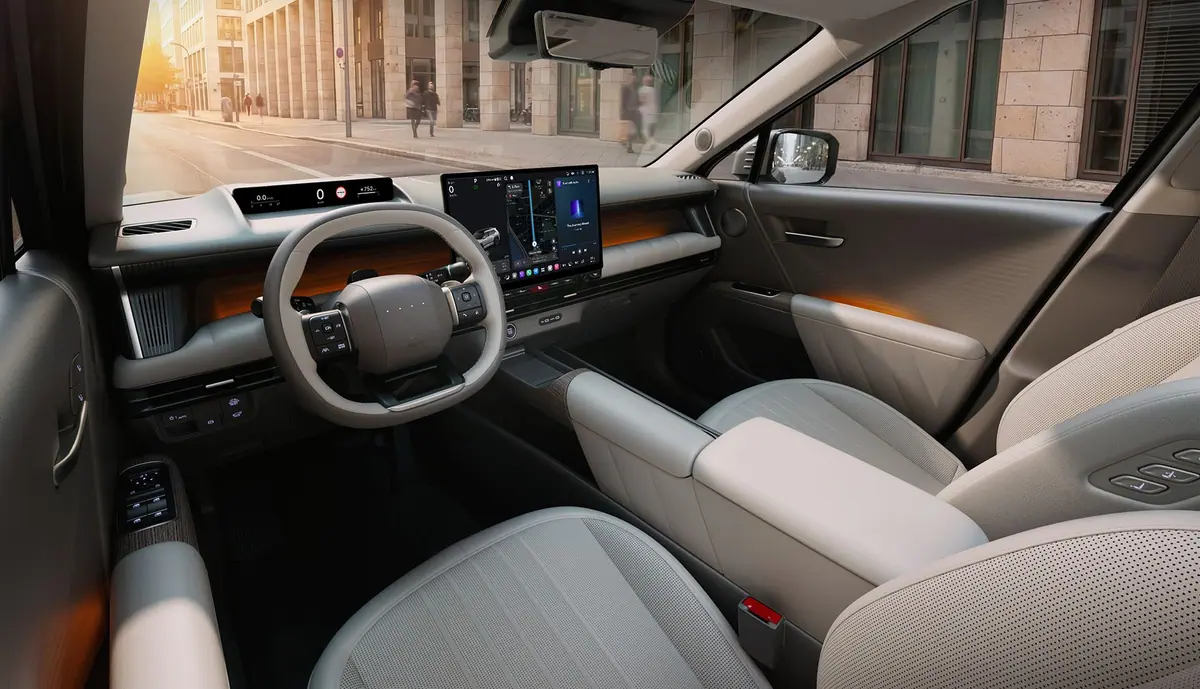
Alongside the standard Tucson, Hyundai introduced the Tucson XRT PRO, designed for drivers who plan to venture beyond paved roads.
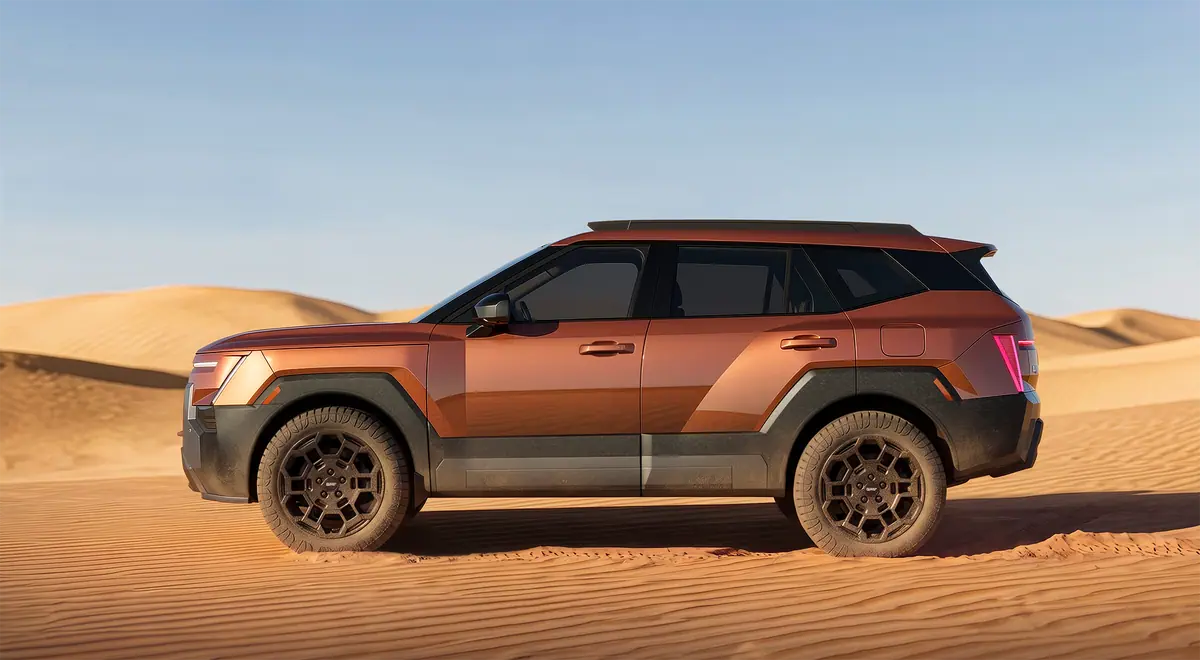
The XRT PRO comes with all-wheel drive, off-road tires, protective body components, front tow hooks and increased ground clearance. At 8.3 inches, the XRT PRO sits about 1.2 inches higher off the ground than the standard Tucson.
The biggest technological addition is Smart Terrain Assist, or STA, which Hyundai describes as its first system of this type. It analyzes available traction and wheel slip and uses green, orange and red indicators to show the difficulty of the terrain.
Target Speed Control can maintain a selected speed between 1.2 and 15.5 mph, automatically managing acceleration and braking on loose surfaces.
Additional features include Memory Reversing Assist, which records the vehicle's path at speeds of up to 19 mph and can help retrace that route in reverse. Ground View Monitor provides a view of the area in front of and underneath the vehicle.
For towing, Trailer Reverse Assist helps the driver control the vehicle while backing up with a trailer. In North America, the all-wheel-drive Tucson Hybrid can tow up to 3,000 pounds.
You may also be interested in the news:
Japan’s Most Fuel-Efficient Cars of 2026 Revealed, With Toyota Taking Eight of the Top 10
Toyota dominates Japan’s 2026 fuel-economy rankings, taking eight of the top 10 spots with hybrid models.
This Jeep SUV Looks Familiar, But What’s Underneath Turns It Into a Serious Off-Road Machine
A legendary SUV is back with a serious off-road package designed for rocks, mud, deep water and rough terrain.
Updated Honda Civic Type R Arrives in the U.S. at $48,695 With Sharper Handling and More Comfort
Official pricing and specifications have been announced.
The New Range Rover Sport Electric Is Here: Two Motors, 550 HP and Virtual AWD
The new electric SUV combines two motors, serious off-road capability and the premium comfort expected from Range Rover.
This Is the New BMW 3 Series. Here’s Everything You Need to Know
About six months after the electric i3 debuted, BMW unveiled its new gasoline-powered 3 Series.