
Not Everyone Will Love It, but It’s a Fascinating Camper for True Travelers: the Hyundai Staria Camper
This is a real home on wheels — the all-electric Staria Camper, based on the Staria Electric.
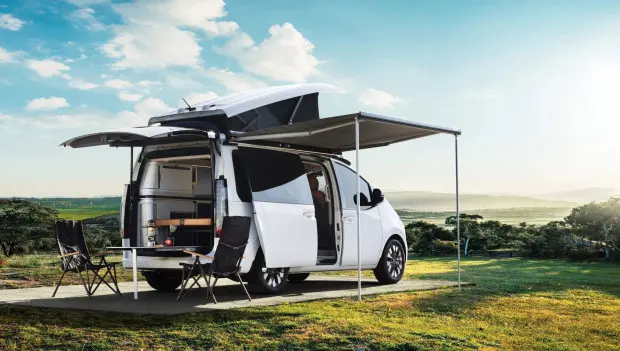
At the Caravan, Motor und Touristik show in Stuttgart, Hyundai unveiled a concept that’s bound to spark wanderlust in anyone who values freedom and travel. It’s a true home on wheels — the electric Staria Camper, built on the Staria Electric platform.
Hyundai says outright that if there’s enough customer interest, the concept could move to production relatively quickly. For now, engineers and designers are closely studying feedback from travelers and camping enthusiasts across Europe.
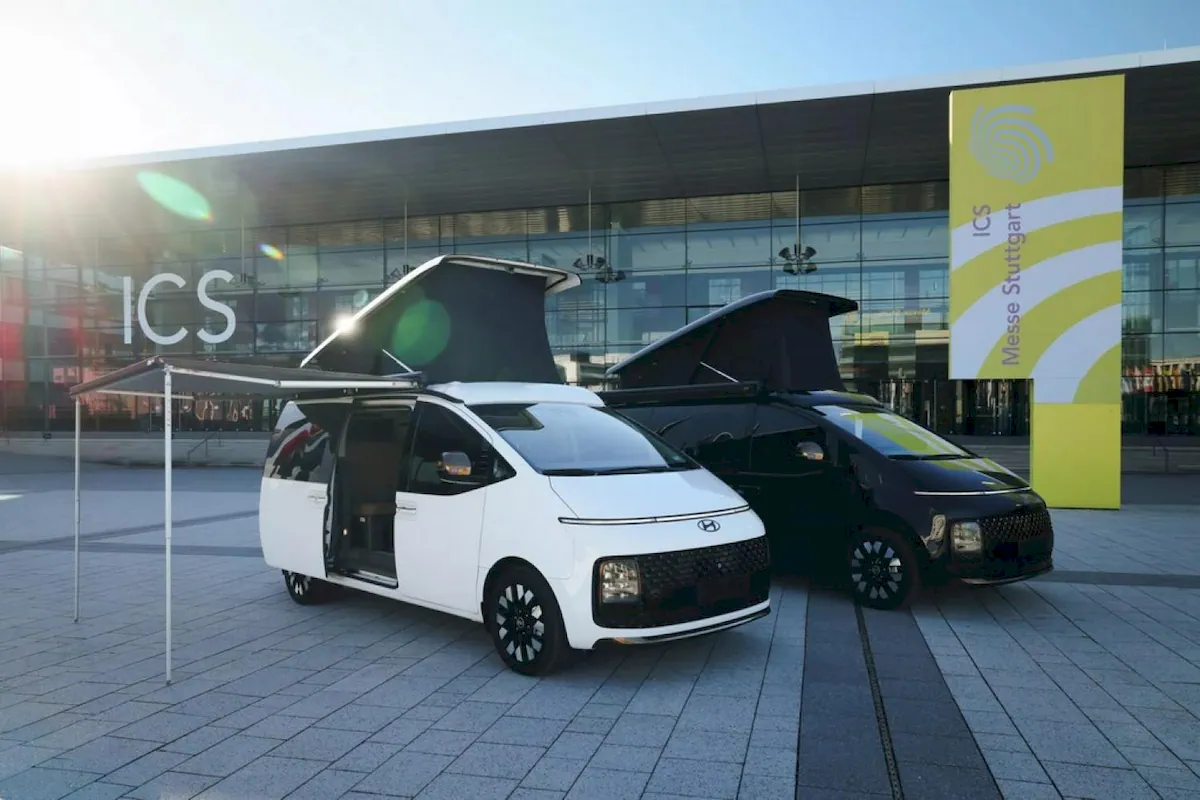
At first glance, the Staria Camper looks like a stylish, unconventional van. Its futuristic design — often compared to a spaceship — remains largely intact. But its true purpose is revealed in the details. A specially designed power-operated pop-up roof is seamlessly integrated into the body, creating extra interior space while also reducing wind noise and drag on the highway. Mounted on the roof is a 520-watt solar panel, providing an onboard power source for off-grid travel. On a sunny day, it can generate up to 2.6 kWh of electricity — enough to recharge onboard batteries or power key systems.
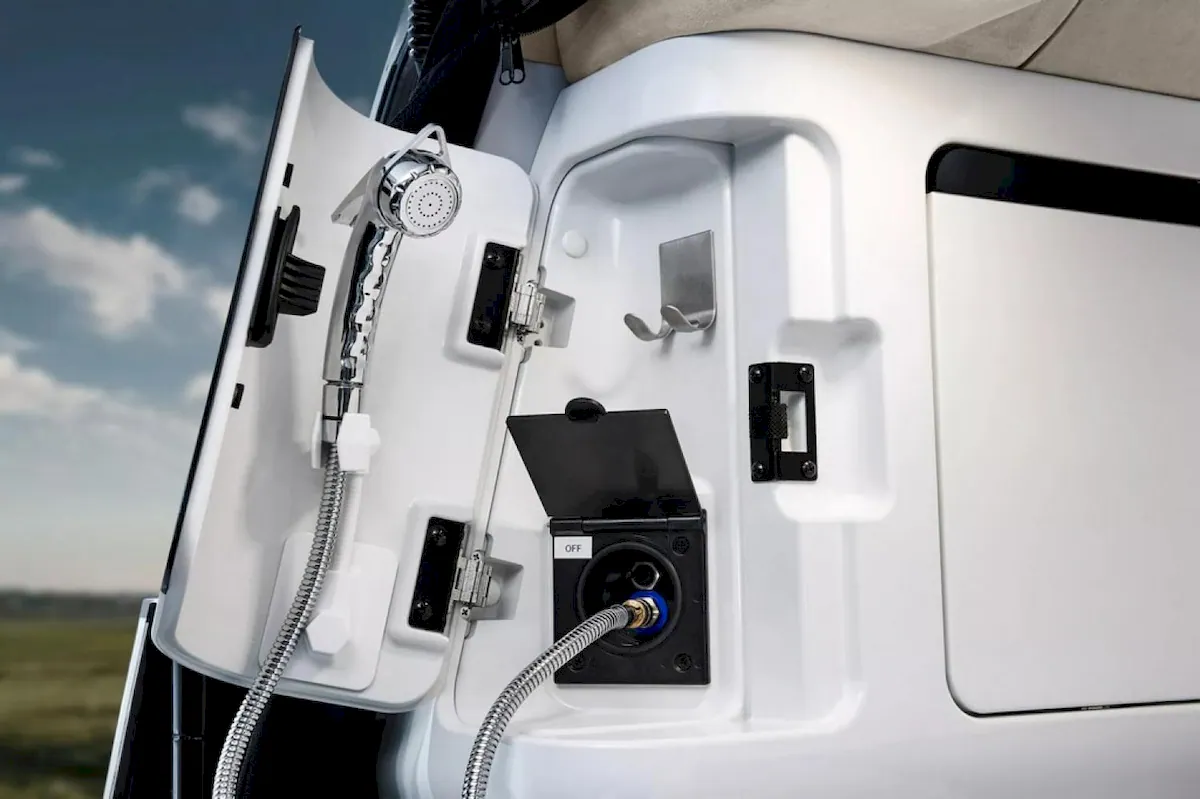
Another standout feature is smart glass in the rear cabin. With a single tap on a touchscreen, the glass turns opaque, offering instant privacy at camp. The glass also improves UV protection and helps reduce outside noise. Around the back, near the taillight, are hidden hookups for external water and power connections.
An Interior Designed Down to the Last Detail
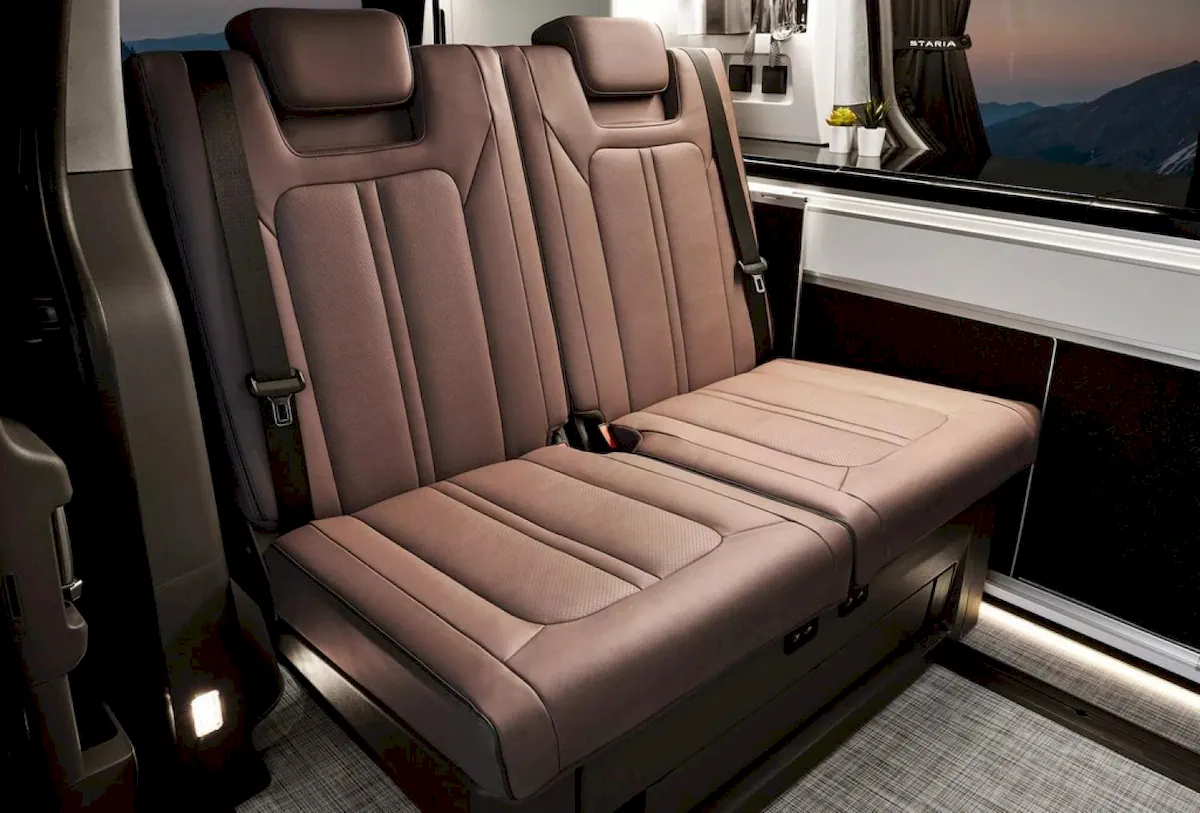
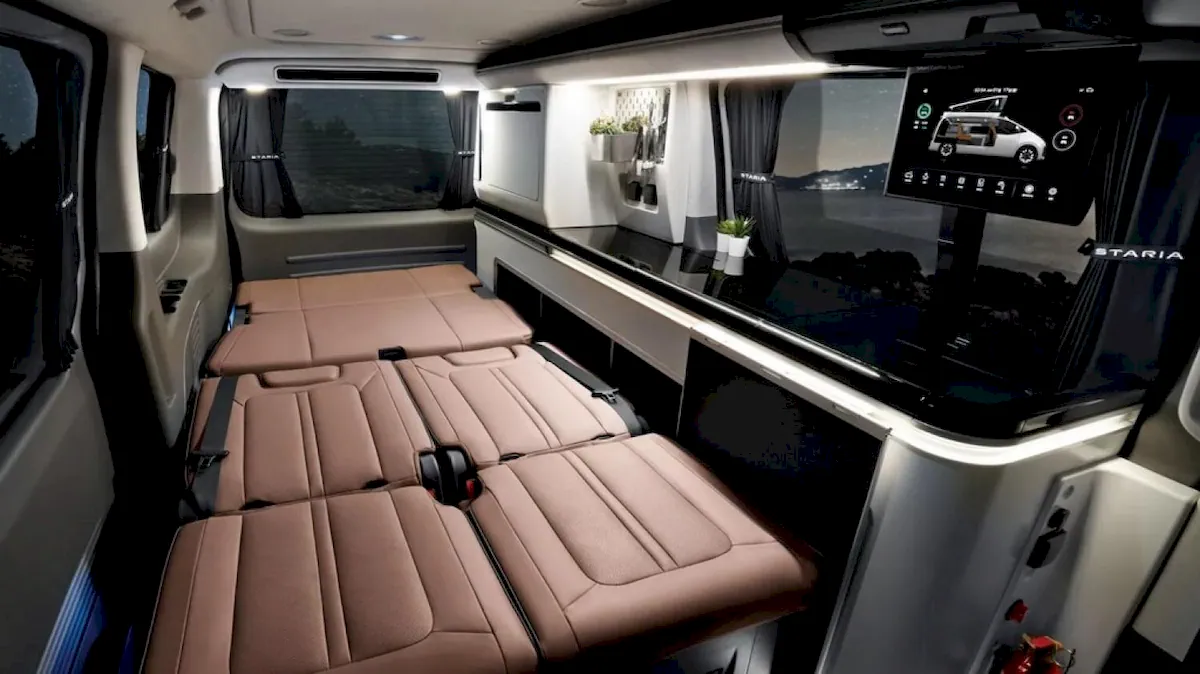
Inside, the concept quickly transforms into a cozy living space. It starts with two comfortable front seats that rotate 180 degrees, creating a lounge area. The second and third rows fold flat at the push of a button, turning the cabin into a full-size double bed.
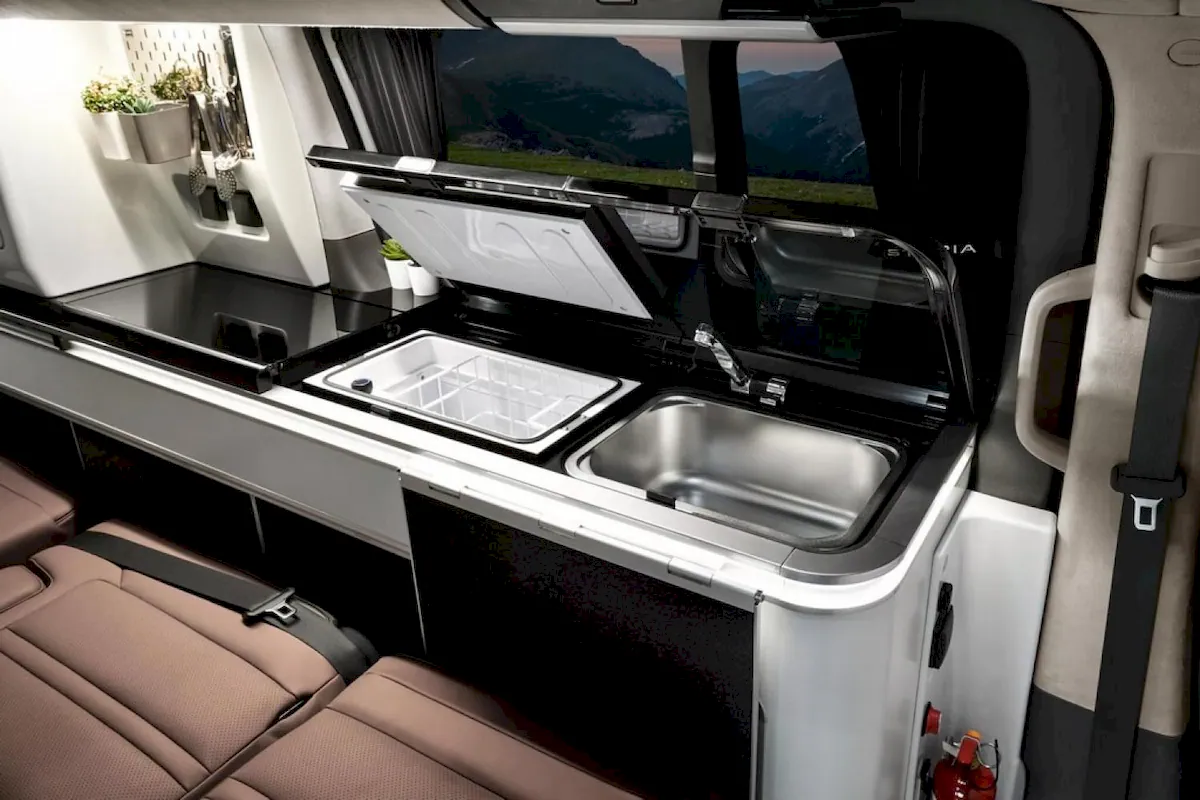
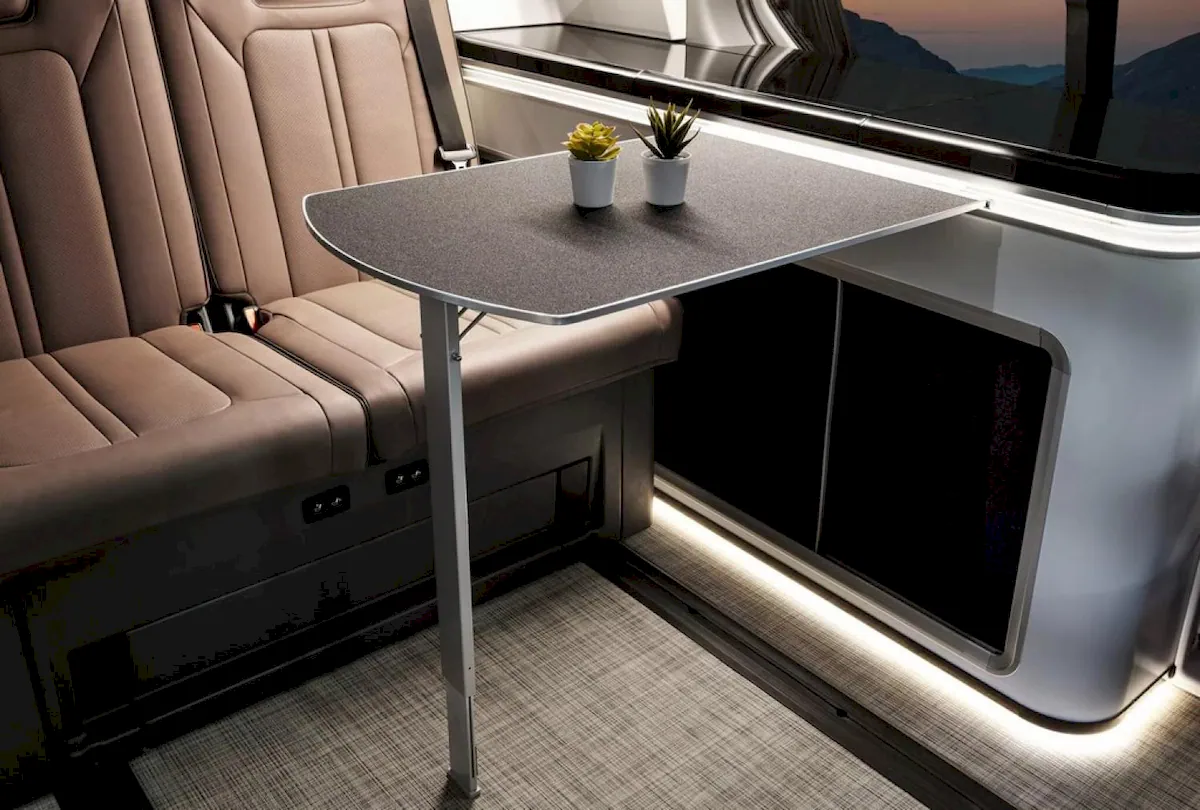
Along one side runs a functional galley module with an integrated sink and a compact 36-liter refrigerator (about 1.3 cubic feet), powered by the solar system. Travelers also get a folding table, thoughtfully designed storage solutions, and ambient lighting that sets the mood.
Hyundai didn’t forget about life off the grid. A pull-out shower is built into the rear door, and an efficient climate-control system can keep the cabin warm during chilly nights.
Electric Powertrain and Range
If the concept gets the green light, the production version would be built on the fully electric Staria. It’s expected to carry over the advanced electric drivetrain: a 218-horsepower electric motor paired with an 84-kWh battery. Hyundai estimates a driving range of up to 400 km (about 250 miles) on a single charge under the WLTP cycle.
Fast DC charging would allow the battery to go from 10% to 80% in around 20 minutes, making it one of the longest-range and quickest-charging electric campers in its class.
What Happens Next
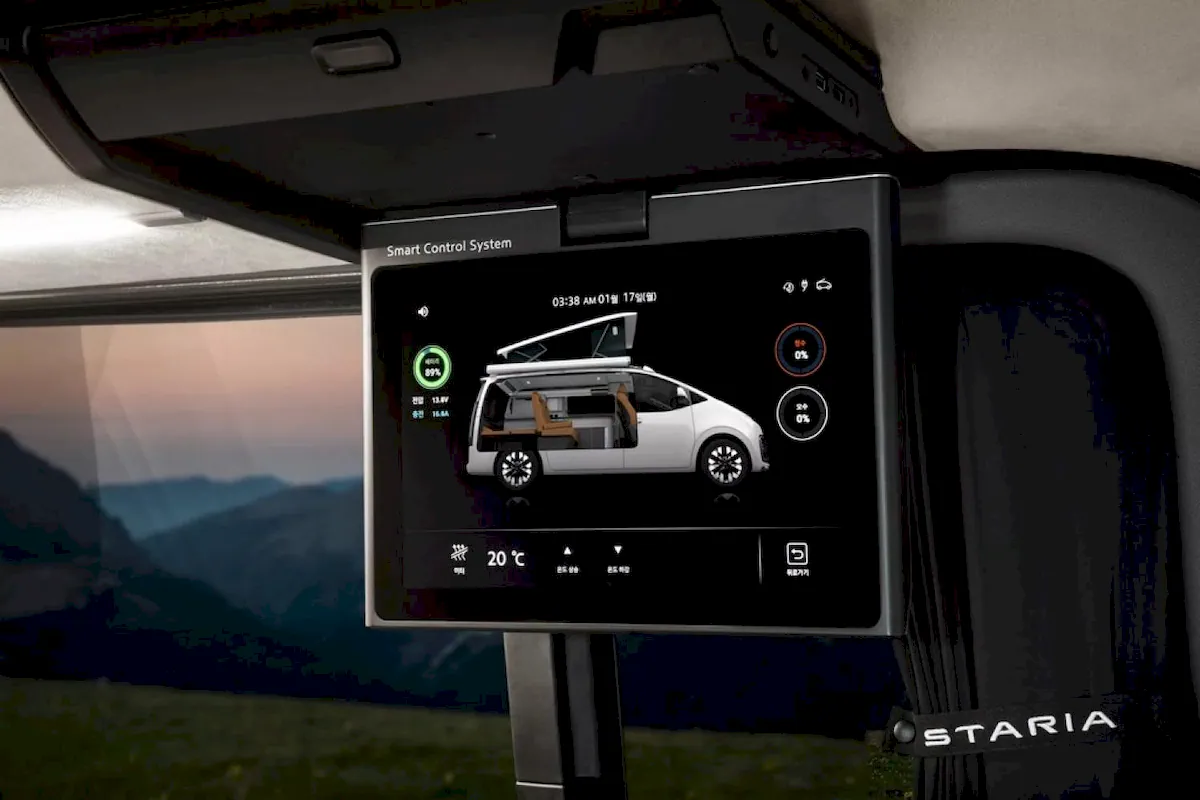
The future of the Staria Camper now depends on feedback from auto show visitors — and online surveys Hyundai is actively collecting. If interest proves strong, travelers could soon get a truly modern, eco-friendly, and thoughtfully designed electric camper, built for those who value freedom and comfort wherever the road takes them.
You may also be interested in the news:
Honda Is Developing a System That Charges EVs While They Drive
Honda plans to begin testing wireless charging technology for electric vehicles on the move later this year.
Hyundai Recalls Nearly 95,000 Genesis Sedans Over Fire Risk From Power Seats
Hyundai is recalling 94,622 Genesis sedans after a faulty power seat switch was linked to overheating and potential vehicle fires.
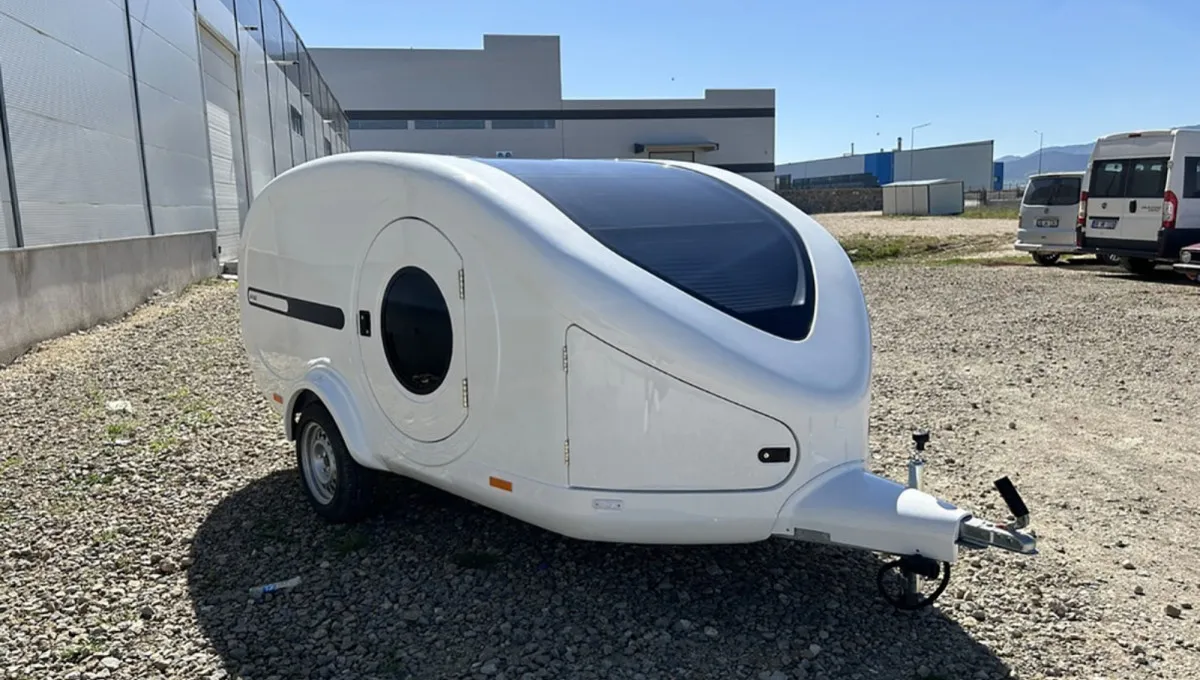
This Tiny Fiberglass Camper Weighs Just 1,146 Pounds—and It’s Built for Two
The Ayaz Smart combines a lightweight fiberglass shell, a two-person interior, and upgrade potential in an affordable travel trailer.
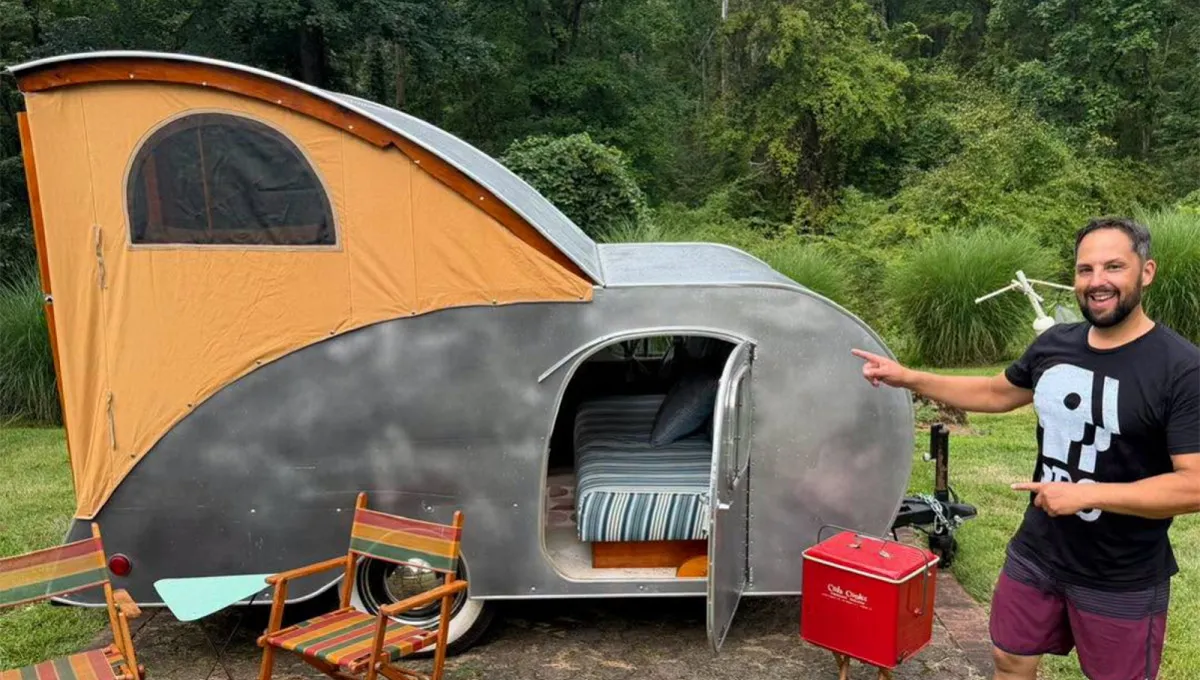
The Ultimate Teardrop Trailer: This 1947 Kamp Master Still Holds Its Own After All These Years
Lightweight and very compact, this teardrop trailer is a complete solution with sleeping for two, a lounge, a kitchen, storage, and full standing height
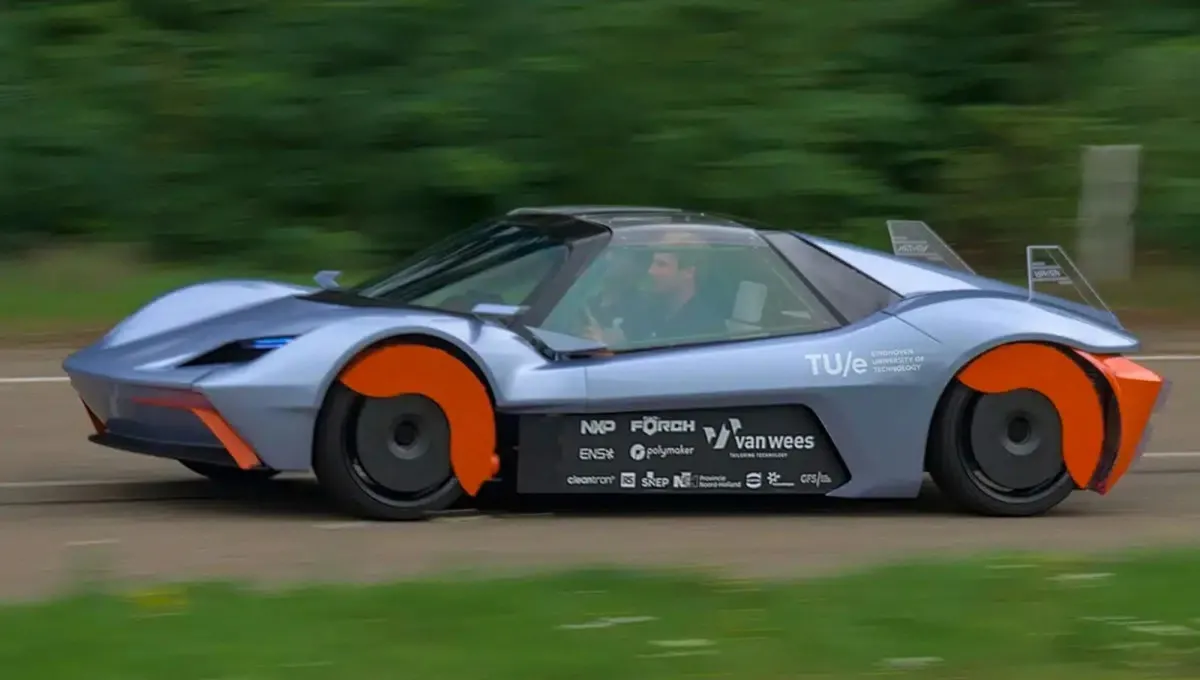
Students Develop an Electric Car That Captures Tire and Brake Dust
A student-built electric concept aims to reduce road pollution by collecting microscopic particles released by tires and brakes.