
Poplar Fluff Sparks Massive Fire, Destroys 20 Brand-New Geely EVs in China
A seemingly harmless cleanup attempt ended with dozens of new electric vehicles destroyed.

An unusual fire in northeastern China has left 20 brand-new electric vehicles destroyed after what authorities say began with burning poplar fluff.
The incident occurred on May 30 in the Ganjingzi District of Dalian, where a 74-year-old local resident allegedly ignited a pile of accumulated poplar fluff in an attempt to clear the area. What started as a small fire quickly escalated into a major blaze after strong winds carried the flames toward a nearby vehicle storage lot.
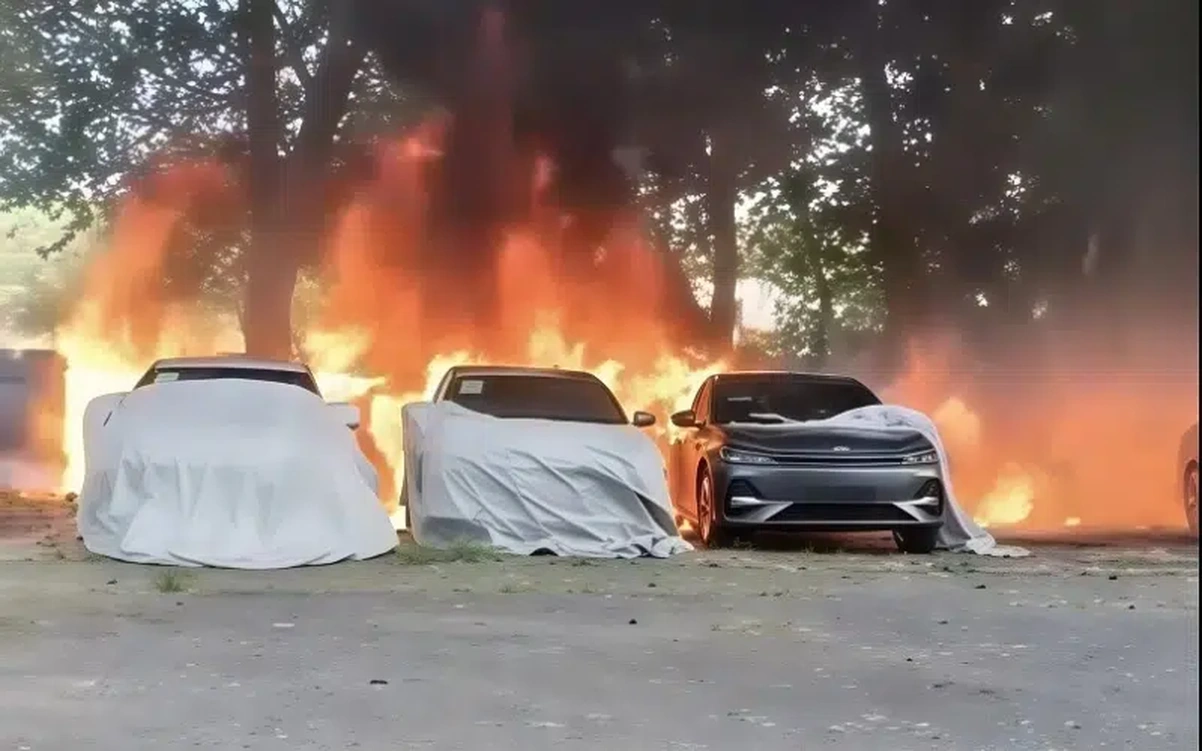
Videos shared by witnesses show dozens of vehicles engulfed in flames while thick black smoke rose above the parking area. Firefighters and police responded quickly, and no injuries were reported. The property damage, however, was substantial.
According to investigators, the man, identified only by his surname Wang, noticed large amounts of poplar fluff collecting near walkways and a sports field. Believing he could safely remove it, he used a lighter to set it on fire. Within moments, gusting winds spread the flames across the surrounding area, eventually reaching a parking lot filled with newly manufactured vehicles awaiting delivery.

Authorities have already taken criminal action against the suspect, and the investigation remains ongoing.
Officials have not publicly identified the make or model of the destroyed vehicles. They have only confirmed that 20 new-energy vehicles waiting to be delivered to customers were damaged or destroyed.
However, photos from the scene strongly suggest that many of the vehicles were Geely Galaxy A7 sedans. Images taken after the fire reveal body shapes, lighting signatures, and styling details that closely resemble Geely's recently introduced model.

The cars were reportedly being stored at a distribution facility before shipment to customers. Following the fire, many were reduced to little more than burned metal frames.
The incident has once again highlighted a seasonal problem that affects northern China every spring and early summer. Poplar fluff accumulates rapidly along roads, parking lots, residential neighborhoods, and public spaces.
What makes the material particularly dangerous is its highly flammable nature. The fibers contain natural oils and can ignite from even a small spark. During dry and windy conditions, flames can spread extrmely quickly, jumping from one location to another and threatening vehicles, vegetation, and nearby structures.
Because of that risk, Chinese fire officials regularly advise residents never to use open flames to remove poplar fluff. Instead, authorities recommend sweeping, watering, or mechanically removing accumulations.
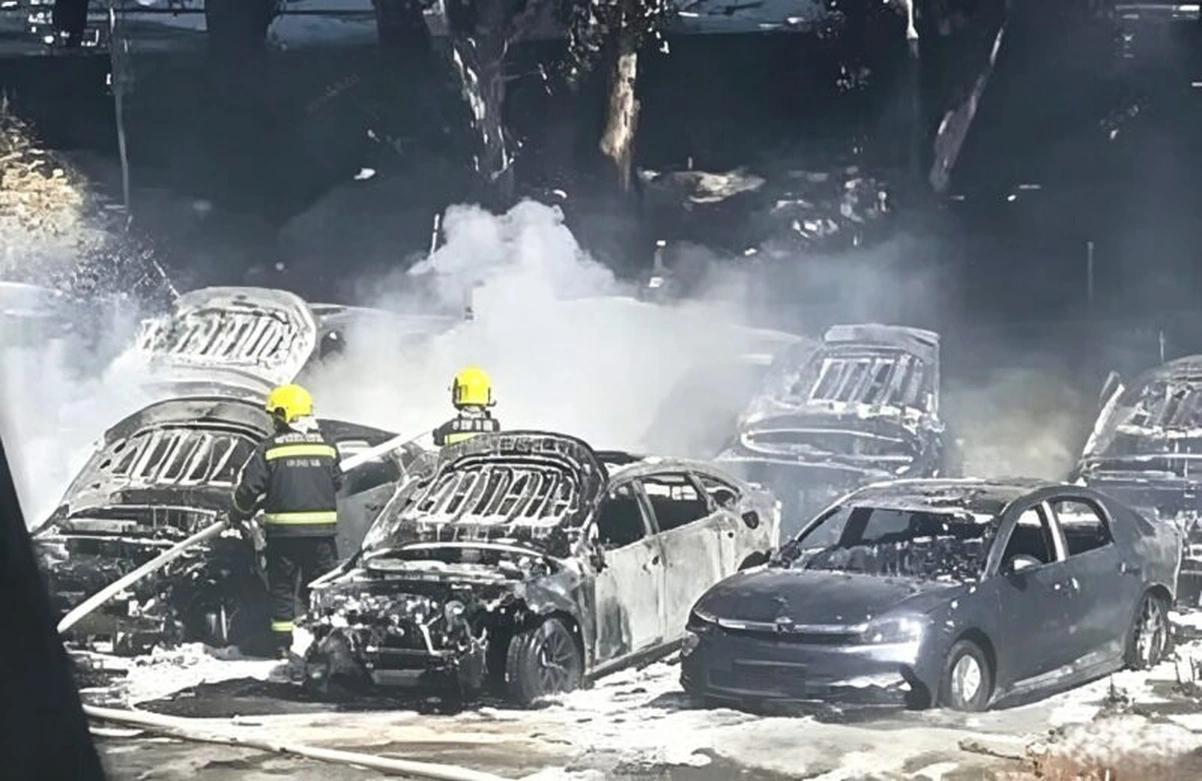
Importantly, investigators have already determined that this fire originated from an external source rather than a vehicle defect. That distinction separates the Dalian incident from several widely publicized EV fires that have attracted attention in China this year.
One notable case involved a Wuling Binguo hatchback that caught fire during the May holiday period. Earlier this year, Xiaomi was also forced to release telemetry data after a fire involving its SU7 sedan generated widespread discussion online.
In the case of the Geely Galaxy A7, authorities say there is currently no evidence pointing to a battery failure or mechanical malfunction. Instead, investigators believe human error was entirely responsible.
The event also demonstrates the risks associated with storing large numbers of vehicles in one location, especially when combustible materials are present nearby.
Chinese legal experts suggest the suspect could face charges related to negligent handling of fire. Depending on the final findings and the total amount of damage, penalties could range from a short detention period to a prison sentence.
For Geely Galaxy, the timing is less than ideal. According to China EV DataTracker, the brand sold 62,933 vehicles in China during April 2026, a decline of 14.2% compared with the same month a year earlier.
At this stage, it remains unclear whether the destroyed vehicles were intended for local customers or for delivery elsewhere in China. Officials have not released additional details regarding their final destination.
What is clear is that a few moments of poor judgement resulted in millions of dollars worth of damage and wiped out an entire lot of brand-new EVs before a single customer ever had the chance to drive one home.
You may also be interested in the news:
“Are You Sure It’s Chinese?” Who Really Builds China’s Car Engines
Who Really Develops China’s Car Engines?
U.S. Officials Demand Ford Cut Its Technology Ties With China
U.S. Transportation Secretary Sean Duffy urged Ford to end partnerships with Chinese companies over technology and national security concerns.
China’s Auto Industry Faces Chip Crisis as AI Boom Drives Up Costs and Creates Shortages
Chinese automakers are facing a sharp increase in chip prices as semiconductor shortages threaten vehicle production.
Dreame Shuts Down Automotive Business and Winds Down Starry Sky Project
Dreame’s automotive venture is being wound down after just one year, following sweeping layoffs and a rapid retreat from the industry.
Geely Solid-State Batteries With 500 Wh/kg Density Will Hit the Road in 2027
Geely plans to begin pilot testing solid-state batteries in vehicles from Zeekr, Volvo, and Polestar in 2027.