
We Know What the Button Behind Your Gas Pedal Does — And It's Even Found in Manual-Transmission Cars
Modern cars are packed with hidden features, and one small button behind the accelerator pedal can serve a surprisingly important purpose.
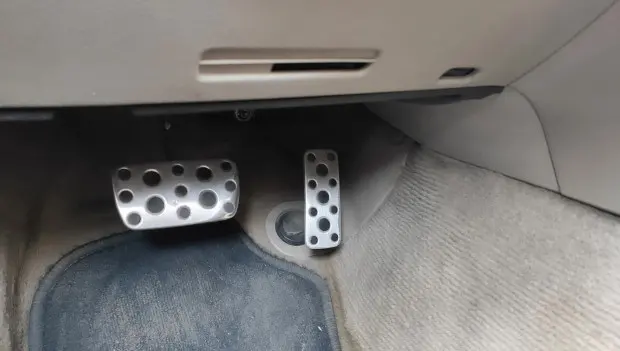
Any modern vehicle is a complicated machine filled with features and components that can leave even knowledgeable drivers scratching their heads. Automakers have steadily added more technology designed to improve safety, comfort and performance, sometimes placing controls where you would least expect them.
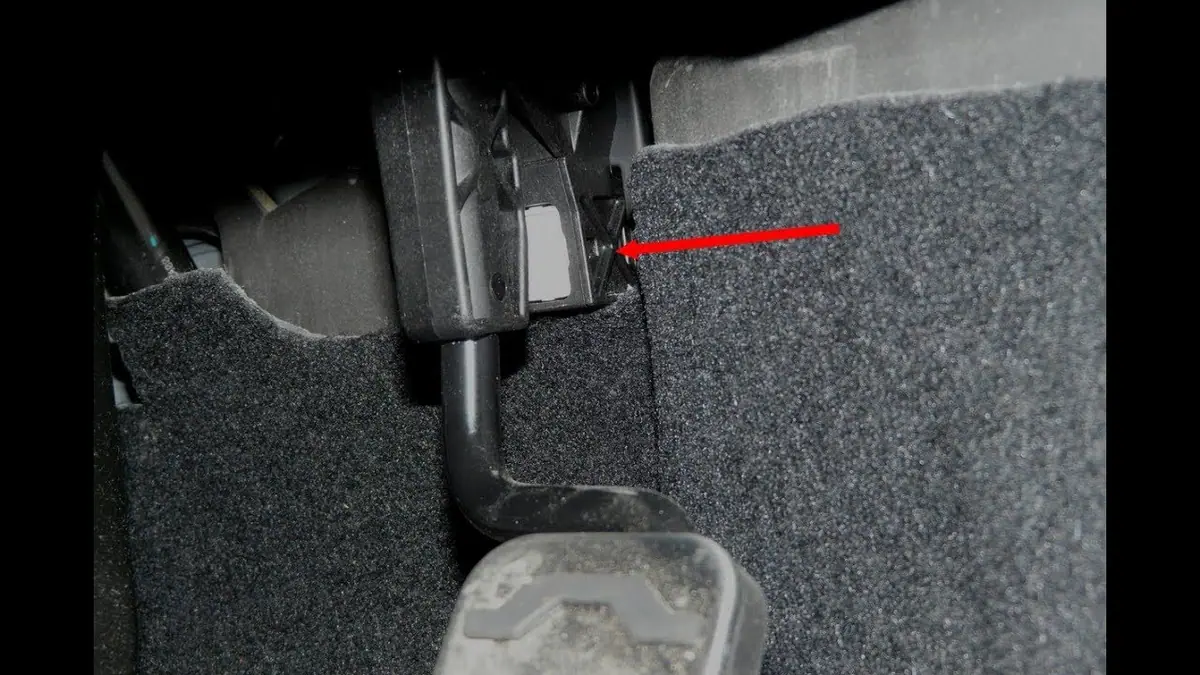
One example is a small button located directly behind the accelerator pedal.
Naturally, that raises an obvious question: What exactly is it doing there?
Interestingly, the switch can be found in vehicles with both automatic and manual transmissions. Its specific purpose depends on how the vehicle was engineered and how its engine and transmission systems were designed to work together. And despite its somewhat mysterious location, the button itself is hardly a new invention.
The basic idea dates back several decades. In older vehicles, the switch was often hidden from the driver's view and was mainly known to technicians. In many applications, it serves as an activator for a special operating mode that allows the powertrain to deliver maximum output.
The result can be a noticeable increase in acceleration.
In vehicles equipped with an automatic transmission, the switch is commonly associated with the kickdown function. When the driver pushes the accelerator pedal all the way to the floor, the switch tells the transmission that maximum acceleration is required.
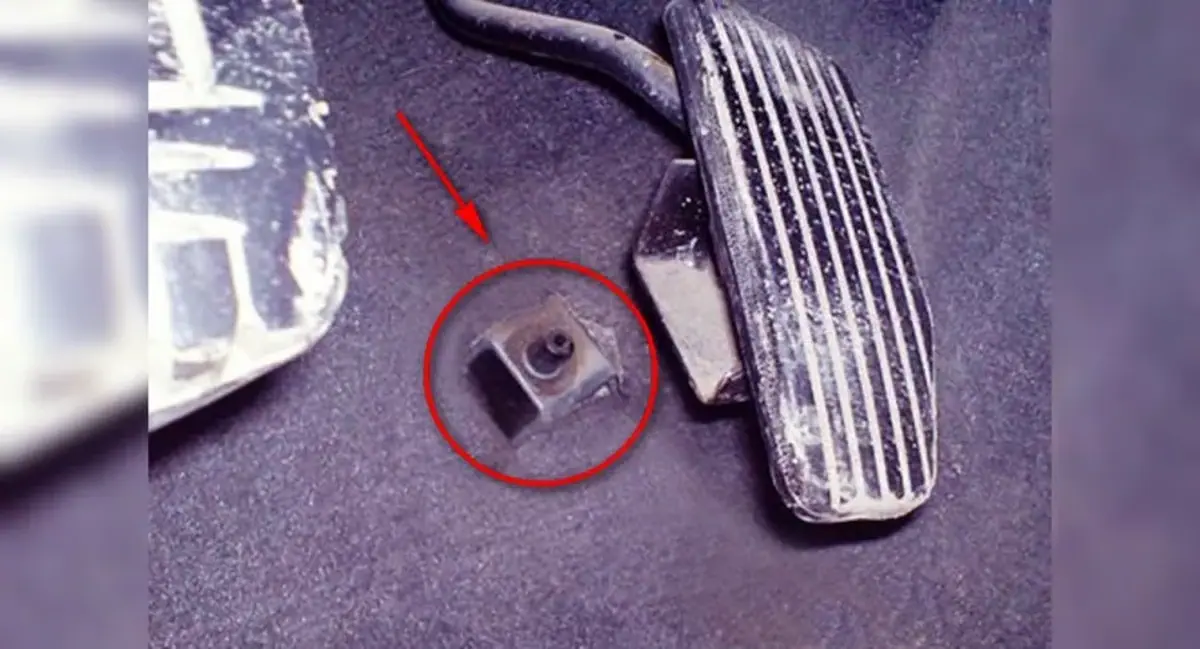
That can cause the transmission to immediately downshift, allowing the engine to move into a higher-RPM range and produce more power. Instead of continuing to accelerate at a relatively modest rate in a higher gear, the vehicle quickly finds the gear that provides the strongest response.
German automakers were among those that popularized this approach decades ago. The idea was simple: pressing the accelerator beyond its normal range would give the driver access to the engine's maximum available performance when it was needed.
The feature can be particularly useful when a driver needs a quick burst of acceleration. Passing another vehicle on a two-lane highway is a good example. A decisive downshift can provide the additional power needed to complete the maneuver more quickly.
But there's an interesting detail that raises another question: Why do some cars with manual transmissions also have a button behind the accelerator pedal?
In that case, the answer is considerably simpler.
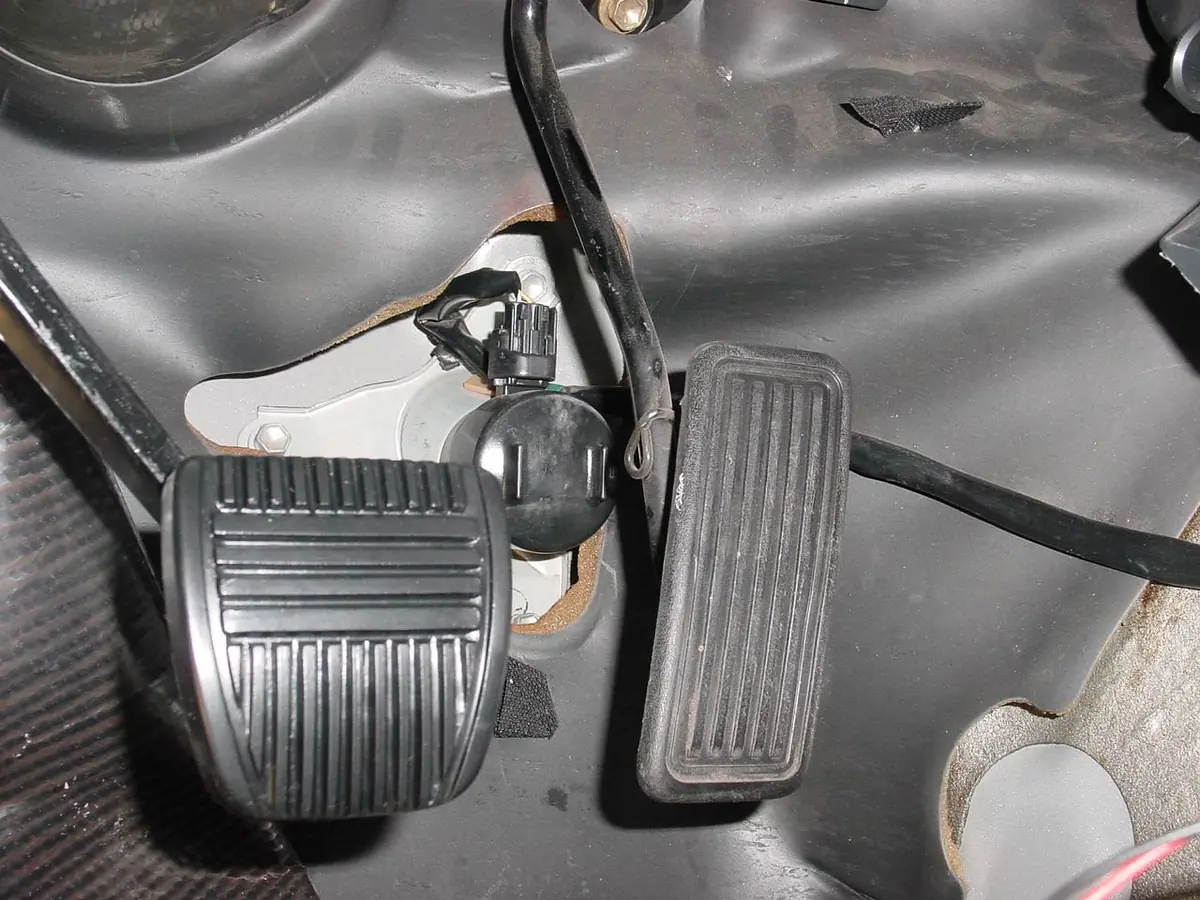
On a manual-transmission vehicle, the switch may not actually be connected to a kickdown function at all. In many cases, its presence is simply the result of manufacturing commonality.
Automakers often use the same body components and pedal assemblies across different versions of a vehicle. When a car enters production, the assembly process may not yet be divided according to the exact engine and transmission combination it will receive. Those decisions and installations can happen later in the production process.
As a result, a vehicle equipped with a manual transmission can end up with the same accelerator-pedal assembly—and the same switch—as a version equipped with an automatic transmission.
In other applications, the switch can serve a different purpose altogether. Depending on the vehicle's design, it may temporarily disable certain systems, such as air conditioning, when maximum engine performance is requested.
That can free up some engine power that would otherwise be used to drive accessories. The effect is generally modest, but it can still improve throttle response under certain conditions.
There is one important reason not to use the kickdown function unnecessarily, however.
When the switch is activated, the engine and transmission are effectively being asked to deliver their strongest available performance. That's useful when you genuinely need rapid acceleration, but repeatedly driving the powertrain at its limits can contribute to additional wear over time.
So the next time your accelerator pedal clicks as you push it all the way down, you'll know that the sound isn't necessarily a sign of something going wrong. In many vehicles, that little button is there for a very specific reason: to tell the car that you want everything it has.
You may also be interested in the news:

It Confuses Many Drivers: What Does the Road Sign With a Thumbs-Up Mean?
This unusual sign appears near highway entrances, tunnels and other locations where roadside stops can create serious safety hazards.

The Worst Cars in the World: A History of Automotive Failures and Disappointments
The auto industry has produced countless groundbreaking models, but some cars became infamous for all the wrong reasons.

Flooded Honda NSX Sells for $52,100 in Japan
A 1991 Honda NSX that went underwater sold at auction for an astonishing price.

Crazy Studebaker: The 75 mm Gun Motor Carriage T27
The Studebaker T27 was an ambitious American attempt to build a low-profile, highly mobile tank destroyer before the concept was ready.
