
Blind-Spot Monitoring Mirrors: Why Drivers Still Don't Trust Them in 2026
Blind-spot monitoring is nearly everywhere, yet drivers still stick cheap convex mirrors onto their side mirrors. Here's why.
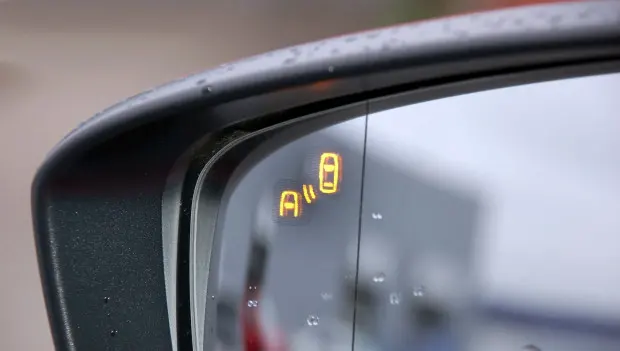
The problem seems like one modern electronics should have solved by now. Yet in 2026, thousands of drivers around the world are still sticking cheap little convex mirrors from online retailers onto their side mirrors. Why?
Blind spots are almost as old as the automobile itself. Back in 1911, British racing driver Dorothy Levitt suggested using mirrors on cars to see what was happening behind them. More than a century later, automakers still haven't found a way to give drivers a perfect view. Instead, they offer expensive electronic systems and increasingly clever mirror designs. The debates playing out on automotive forums in 2026 offer a telling look at just how effective those solutions really are.
Electronics vs. the Old-School Method
Modern technologies such as blind-spot monitoring systems are often presented as the answer to the problem. But real-world experience suggests that even in 2026, drivers can't always rely on them.
Owners of new pickup trucks, for example, complain that the warning light built into the side mirror can be difficult to see in bright sunlight. Others report false alerts in rain or snow, with sensors apparently detecting water or other conditions and triggering repeated warnings. Instead of providing useful information, the system can end up blinking like a Christmas tree and becoming another distraction.

Faced with those frustrations, more drivers—particularly owners of body-on-frame SUVs and pickup trucks—are reaching a simple conclusion: mechanical optics can be more dependable than electronics.
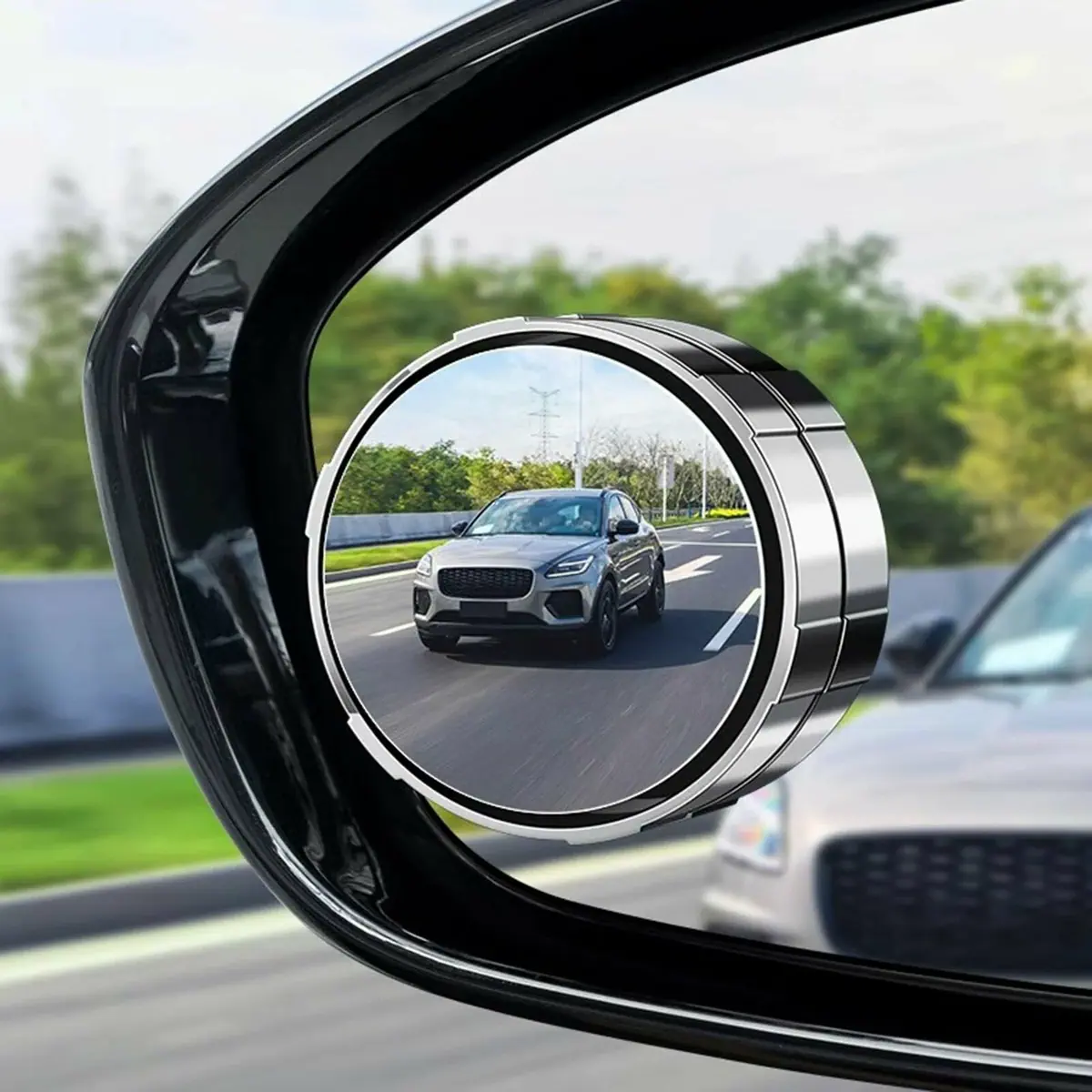
That's where cheap, effective solutions come in: small stick-on convex mirrors. Online forums are full of arguments over the best approach. Some drivers insist the problem can be solved simply by adjusting the factory mirrors correctly, with eliminating the vehicle's own side from the field of view being the top priority. Others swear they can't live without their little convex "spotter" mirrors.
Interestingly, some drivers even say they disable electronic blind-spot monitoring and rely almost entirely on their eyes and properly adjusted mirrors.
Aspheric Mirrors and Low-Cost Alternatives
Looking for a middle ground, many drivers turn to aspheric mirrors. They have long been common in the U.S. and Europe, but they aren't necessarily standard equipment even on expensive vehicles.
In 2026, replacing factory mirror glass with aftermarket aspheric glass has become an increasingly popular upgrade. Bloggers and forum users regularly share their experiences with kits sold through Amazon and eBay. Some offer a dramatically wider field of view and even integrated turn-signal indicators.
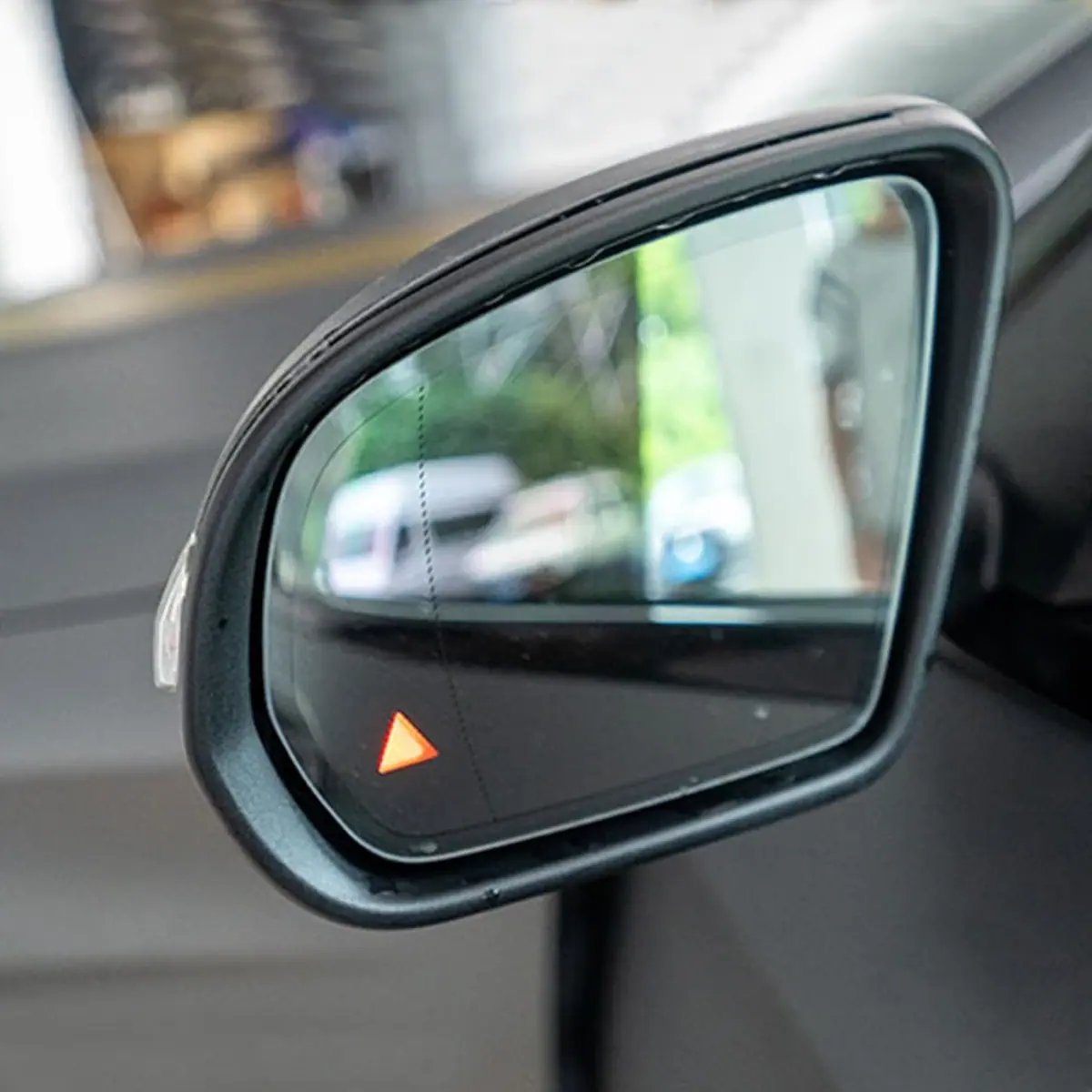
The catch is installation. Adding the electronics can turn what looks like a simple mirror replacement into a surprisingly complicated project, while build quality can vary considerably from one kit to another.
SUV owners also point out that switching from flat mirror glass to convex glass can significantly expand the field of view—sometimes by 30% to 40%. That's particularly useful when monitoring blind spots both on the trail and in everyday city driving. And the cost of such an aftermarket upgrade can be far lower than paying a dealer for a factory blind-spot monitoring system.
An Invention More Than a Century Old
There's an interesting irony here. By returning to convex mirror glass, today's drivers are essentially revisiting an idea that dates back more than a century. A 1914 patent described using a combination of flat and convex surfaces to expand a driver's field of view, long before automakers began experimenting with additional mirror sections.
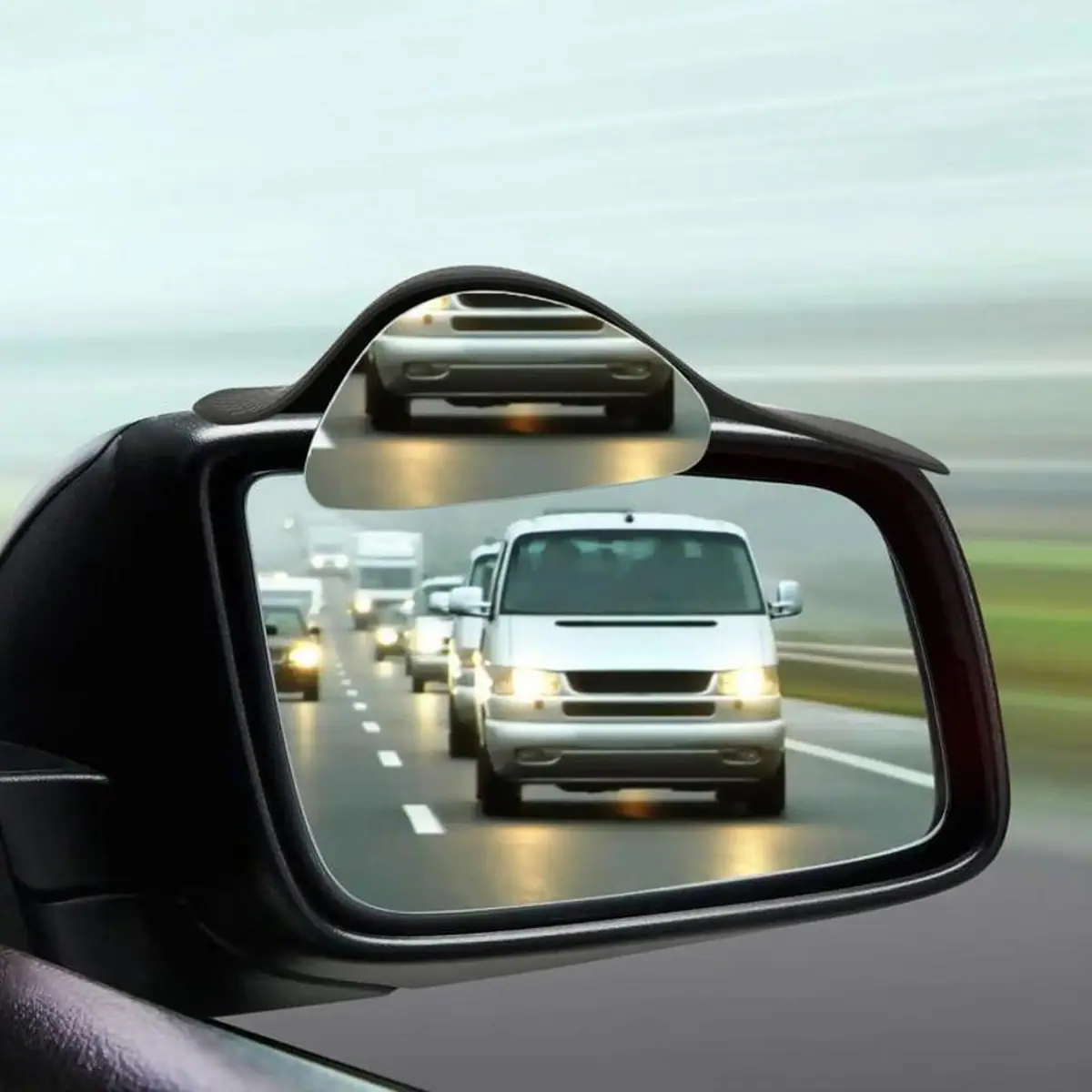
General Motors experimented with secondary mirror areas in the upper corners of primary mirror glass during the 1980s. Ford adopted similar approaches more widely in the 2000s, but even those solutions couldn't provide a complete picture.
The first patent specifically covering an electronic blind-spot monitoring system was issued in 1995 to engineers at Eaton Corporation. At the time, the technology relied on ultrasonic sensors designed for trucks. Yet three decades later, electronic systems still haven't convinced every driver to abandon the old-fashioned convex mirror.
That leaves us with an amusing paradox in 2026: high-tech automotive engineering is sometimes sending drivers back to solutions rooted in the last century.
Electronic blind-spot monitoring is convenient, and modern systems can certainly improve situational awareness. But when it comes to a driver's sense of security, simple physics—and an inexpensive convex mirror stuck to the glass—can still have an advantage over a collection of costly sensors.
You may also be interested in the news:

This Land Rover Is So Low It Nearly Scrapes the Road — And It Runs on VW Beetle Hardware
It looks like a classic Land Rover Series III, but this radically lowered custom hides a very different mechanical setup underneath.
Not Ford, BMW or Audi: Mechanic Names the Car Brand That Almost Never Breaks Down
Auto repair professionals reveal which models rarely suffer major failures and which ones repeatedly end up on the lift.

What Does a Flashing Red Traffic Light Mean? Can You Keep Driving?
Drivers must come to a complete stop at the stop line before deciding whether it is safe to proceed.
Why You Should Check a Tire’s Manufacturing Date Before Buying
Tire buyers should check more than size, tread, and brand because rubber changes with age, even without visible wear.

Your Car Sat for a Few Days and Won’t Start: What Could Be Draining the Battery
Your car can sit for days and still drain its battery, even when everything appears switched off.