
Chevrolet Put a Corvette V8 in Its Strange Retro Pickup, but It Still Couldn't Save the SSR
Chevrolet's unusual SSR combined classic hot-rod styling, a folding hardtop, and Corvette power, but buyers never came around.
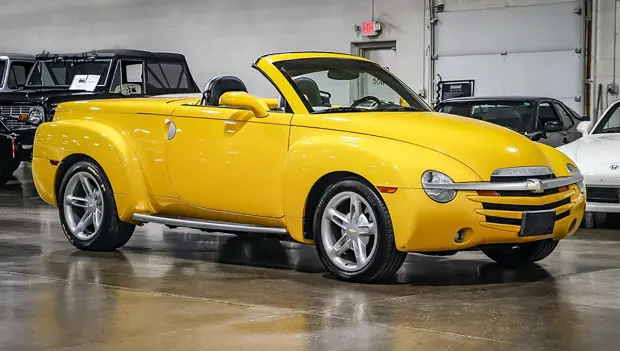
Automotive history is full of concept cars that draw crowds at auto shows before disappearing into design studio archives. The public admires their bold styling, journalists write about the future, and a few months later, the automaker explains why building such a vehicle for production simply isn't practical.
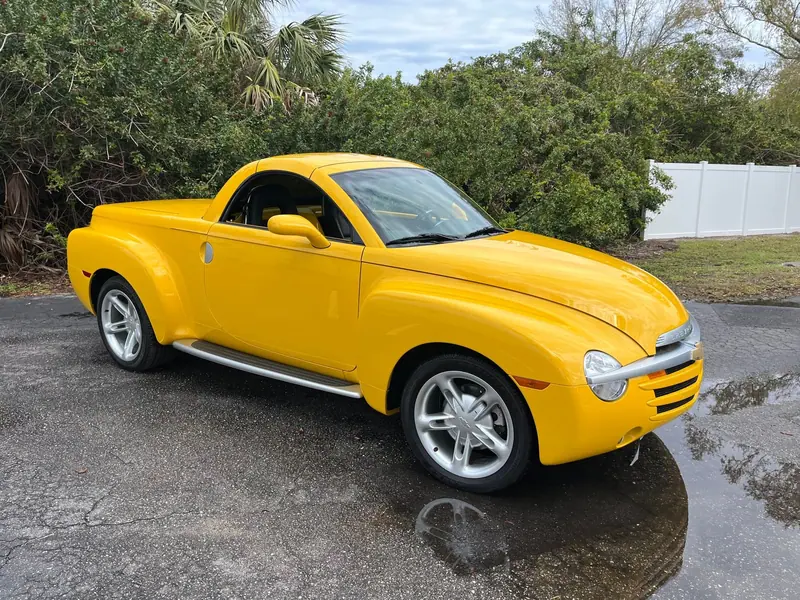
The Chevrolet SSR followed almost the opposite path. General Motors unveiled a vehicle so unusual that public reaction effectively pushed the company toward putting it into production. Yet just a few years later, Chevrolet had to pull the plug without coming close to its original expectations.
At first glance, the explanation seems simple: Chevrolet built a pickup that was too strange and too expensive. But that's not entirely fair. The SSR was never supposed to be an ordinary pickup in the first place. Its creators deliberately avoided turning it into a truck for hauling boats, snowmobiles, or construction materials. They were building something people would drive for fun. That decision helped bring the SSR to life, but ultimately limited the number of buyers willing to take one home.
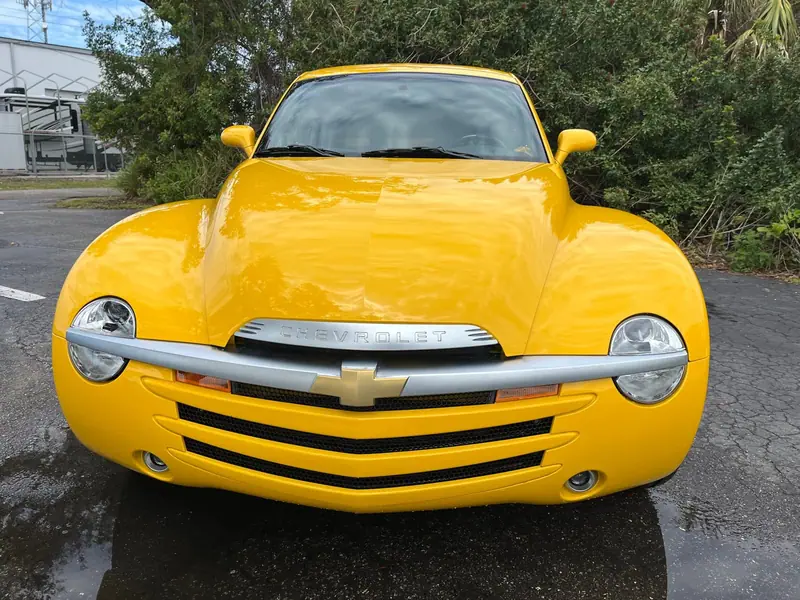
A Roadster Wearing a Pickup Body
The SSR story didn't begin with an attempt to find a use for an existing platform or create another practical work truck. By July 1999, Chevrolet designers were already developing an unusual vehicle that would combine America's hot-rod tradition with the styling of classic pickups.
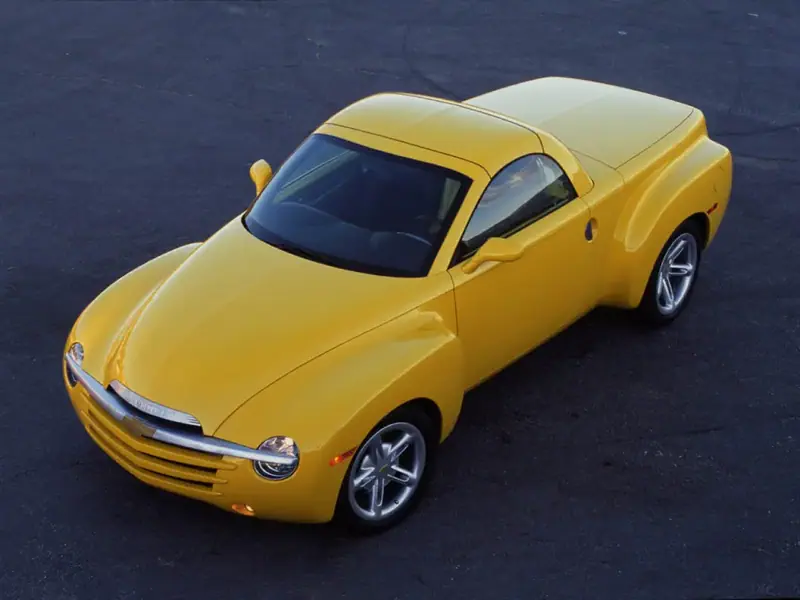
The design effort was led by Ed Welburn, who headed GM's Corporate Brand Character Center.
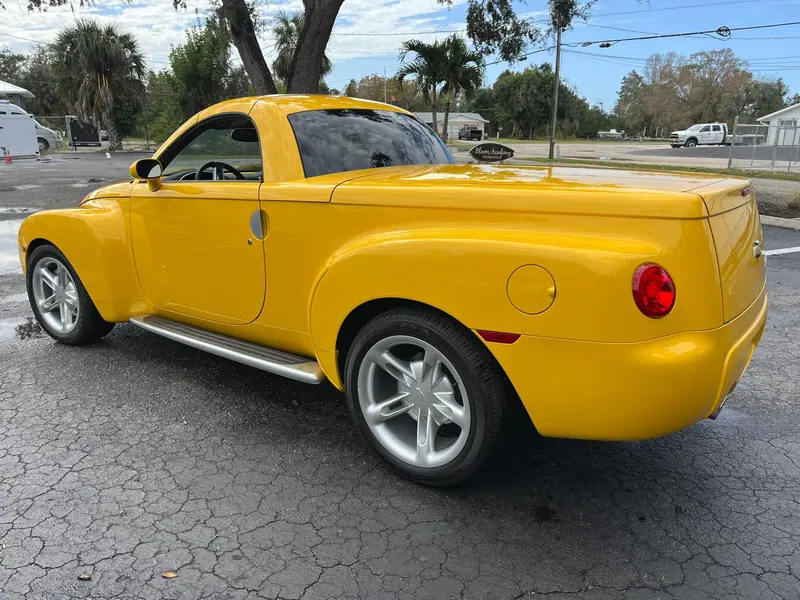
The eventual inspiration came from the 1953 Chevrolet pickup, part of the postwar Advanced Design generation. The SSR borrowed its rounded fenders, massive hood, distinctive horizontal grille, and overall shape. Rather than faithfully recreating an old truck, designers took several recognizable elements and reworked them into something that looked like a modern custom build straight from a factory showroom.
One interesting detail was that, according to Welburn, the exterior and interior design work was done digitally from the beginning. This was an unusual approach for GM at the time. Designers used computer modeling not only to develop body surfaces but also to work through numerous engineering details.
Welburn believed digital design didn't have to produce something cold or emotionless. The SSR was supposed to prove exactly that.
Chevrolet unveiled the concept at the North American International Auto Show in Detroit in January 2000. The company expected a strong reaction, but the response went well beyond that. The SSR immediately became one of the show's most talked-about vehicles.
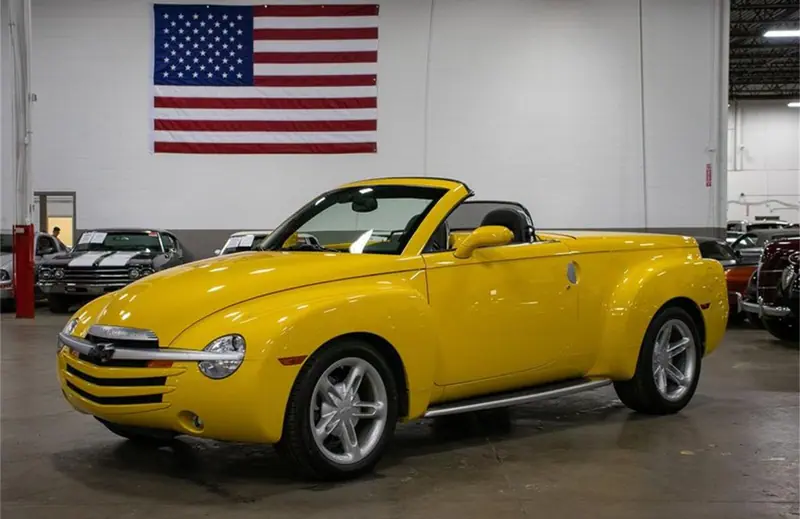
It wasn't difficult to understand why. The concept combined a pickup silhouette, an open-air roadster layout, a V8 engine, and a retractable metal hardtop.
More importantly, visitors didn't just think the SSR was an entertaining show car. They wanted to see it on the road.
In August 2000, GM chairman Rick Wagoner approved the project. The company also confirmed that the production version would remain remarkably close to the concept.
Welburn later recalled that someone involved in the project suggested making the vehicle capable of hauling personal watercraft and snowmobiles. He opposed the idea. Chevrolet already had plenty of vehicles designed to carry cargo. The SSR, in his view, was supposed to be something people simply enjoyed driving.
That distinction explains almost everything about the truck. Judged as a work pickup, its bed was almost laughably small. Viewed as an open-air roadster with a little cargo space behind the seats, the layout made considerably more sense.
Chevrolet hadn't really built a useless truck. It had given an unusual roadster the shape of a pickup. The problem was that the market wasn't necessarily interested in making that distinction.
The Production Model Looked Familiar, but Everything Underneath Changed
In September 2000, Ward's Auto reported that the project had received approval and was expected to reach showrooms in late 2002.
The technical foundation was still being worked out. The original concept used the compact Chevrolet S-10 pickup platform, but GM considered other options for the production vehicle.
The final SSR used a body-on-frame architecture from GM's GMT360 family, shared with vehicles such as the Chevrolet TrailBlazer and GMC Envoy.
For the automaker, this was a practical decision. Developing an entirely new platform for a low-volume specialty vehicle would have been expensive. Using existing components and engineering solutions helped keep development costs under control.
There was a downside, though. The SSR was heavy. Its curb weight approached 4,760 pounds, a substantial figure for a vehicle marketed as a sporty roadster.
The body itself was just as unusual. Behind the two seats sat a shallow cargo compartment that could function as a tiny pickup bed or additional storage space.
The most impressive engineering feature was above the occupants. An electrically operated folding hardtop disappeared into a dedicated compartment between the cabin and cargo area. Unlike a conventional removable roof, it didn't need to be taken off and stored somewhere. With the push of a button, the SSR transformed from a closed vehicle into a convertible.
That system helped define the truck's character. It made the SSR genuinely different, but it also required space and complicated the packaging. The cargo bed couldn't become a full-size pickup bed, and the vehicle remained strictly a two-seater.
From a practical standpoint, those were serious limitations. From an auto show standpoint, they made the SSR almost perfect.
Chevrolet managed to preserve much of the concept's appearance. Although some metallic decorative elements were replaced with more conventional plastic components, the production vehicle remained remarkably close to the original show car.
The 2003 Chevrolet SSR arrived with a starting MSRP of $41,995, including destination. That put it in the territory of well-equipped sports cars rather than conventional midsize pickups.
Chevrolet wasn't targeting mainstream truck buyers. The SSR was an image vehicle, designed to attract attention and demonstrate that the company could still build something unexpected.
The first 25 production vehicles were part of a special Signature Series program. Each received its own promotional journey, with photographs, autographs, publications, and memorabilia collected along the way. The materials were eventually presented to the vehicle's buyer, giving each example a personal story.
The SSR also appeared at promotional events and served as the pace car for the 2003 Indianapolis 500.
Chevrolet made sure people saw it. But attention at an auto show and on a racetrack didn't necessarily mean customers were ready to spend more than $40,000 at a dealership.
The Biggest Problem Was Under the Hood
The original SSR came with a 5.3-liter Vortec V8 producing approximately 300 horsepower, paired with a four-speed automatic transmission.
That was respectable for a conventional pickup. For a vehicle whose name stood for Super Sport Roadster, it was considerably less impressive.
With a curb weight approaching 4,760 pounds, the SSR needed more muscle. Real-world tests put its 0-60 mph acceleration time at just over seven seconds.
The contradiction was obvious. Its styling promised a hot rod, the V8 sounded the part, and the folding roof created the atmosphere of an expensive specialty car. But the performance didn't quite match the image.
The SSR was a comfortable cruiser rather than the aggressive American performance machine its appearance suggested.
Its body-on-frame construction and considerable weight also reminded drivers that this wasn't a Corvette wearing a pickup body. It was built around an SUV-based architecture adapted for a completely different purpose.
That didn't necessarily make the SSR a bad vehicle. The problem was that expectations created by its styling, name, and price were considerably higher than what the early versions delivered.
The price made things even harder. For $41,995, buyers got a vehicle that couldn't do much of the work expected from a traditional pickup, wasn't as quick as a proper sports car, and offered seating for just two.
Its strongest selling points were emotional: unusual styling, a V8, an open roof, and exclusivity. That's a difficult combination to sell when the price starts above $40,000.
By December 2003, reports were already circulating about large numbers of unsold SSRs sitting at dealerships. By late 2004, Car and Driver reported that dealer inventory had reached approximately 300 days' supply.
Chevrolet sold 9,648 SSRs in 2004, considerably fewer than the company had hoped.
Perhaps that exposed the project's biggest weakness. Plenty of people liked the concept, but owning one required a very specific combination of interests. Buyers needed to want an American V8, accept two seats, have little need for a real truck bed, appreciate a folding metal roof, and be willing to spend sports-car money.
There simply weren't enough people who checked all those boxes.
Chevrolet Finally Turned the SSR Into a Real Hot Rod
The most important changes arrived for the 2005 model year.
Instead of limiting the update to cosmetic details, Chevrolet made a major change under the hood. The SSR received the 6.0-liter LS2 V8, the same basic engine used in the C6 Chevrolet Corvette and Pontiac GTO.
Output jumped to 390 horsepower and 405 lb-ft of torque.
For the first time, buyers could also order a six-speed Tremec manual transmission. Until then, the SSR had been available exclusively with a four-speed automatic.
Now the vehicle had the engine and transmission combination that its styling had promised from the beginning.
The improvements went beyond the powertrain. Engineers reinforced the frame, revised the spring and shock absorber tuning, and updated the engine mounts and suspension bushings. Additional crossmembers and structural reinforcements improved chassis rigidity.
These changes addressed criticism of the early models, which had been faulted not only for their lack of acceleration but also for their behavior over rough pavement.
The results were significant.
In MotorTrend testing, the 2005 SSR with the manual transmission accelerated from 0 to 60 mph in just 5.3 seconds and covered the quarter-mile in approximately 13.8 seconds.
That was a completely different performance level. The SSR could finally back up its aggressive appearance with serious acceleration.
MotorTrend also noted that the price increase was relatively small, amounting to less than $500 compared with the previous model.
It created an unusual situation: Chevrolet had made the SSR considerably better, but customers weren't suddenly lining up to buy one.
Sales fell to approximately 7,300 units in 2005, down from the previous year.
For 2006, Chevrolet made another small powertrain update. The automatic version produced 395 horsepower, while the manual version reached 400 horsepower.
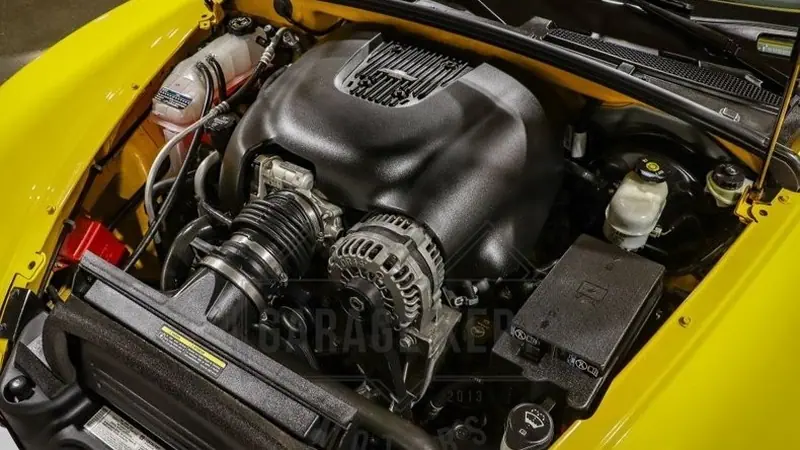
That was the highest output in the SSR's production history.
But even 400 horsepower couldn't solve the vehicle's biggest problem. The SSR was no longer a fresh novelty, and its market niche hadn't grown enough to justify continued production.
There's something very automotive about this story. Sometimes an automaker releases a vehicle that initially feels like a compromise, only to gradually turn it into what enthusiasts wanted all along.
But the market doesn't have to wait for engineers to finish refining the original idea. Someone who wanted a powerful, quick SSR in 2003 could simply buy something else. By 2005, Chevrolet had a much better truck, but it couldn't automatically bring back the interest that had disappeared.
Production Ended, but the Idea Never Really Disappeared
In November 2005, General Motors announced plans to close the Lansing Craft Center, where the SSR was assembled.
Production officially ended on March 17, 2006.
Approximately 24,000 vehicles were built during the SSR's production run. Depending on the source and counting method, reported totals range from 24,150 to 24,180 units.
For a vehicle that initially generated so much excitement, that was a relatively modest result.
Still, calling the SSR a failed attempt at building a pickup misses the point.
It demonstrated that a major automaker could take an almost show-car-level design and bring it to production without losing its most distinctive features. Chevrolet really did build a retro-styled vehicle with a folding metal hardtop, body-on-frame construction, and a V8.
The company also resisted the temptation to turn it into something more conventional just to attract a wider audience.
In a way, the SSR was almost too faithful to its original concept. It wasn't a practical work truck, it never became a true sports car, and it couldn't compete with ordinary convertibles when it came to everyday usability.
What it offered instead was something much harder to measure with a specification sheet: a rare combination of styling, sound, mechanical character, and open-air driving.
In that respect, the SSR makes more sense alongside other niche American vehicles of its era, such as the Plymouth Prowler and retro Ford Thunderbird, than alongside the Silverado or Colorado.
These vehicles weren't bought because they offered a rational advantage over everything else in the showroom. People bought them because they wanted something different.
That's also why interest in the SSR hasn't disappeared.
Rarity alone doesn't make a vehicle valuable, but the SSR has something else going for it: it was genuinely unusual, even by the standards of the American automotive industry.
Later models equipped with the LS2 and manual transmission are particularly interesting because they combine the original concept's extravagant styling with considerably more serious performance.
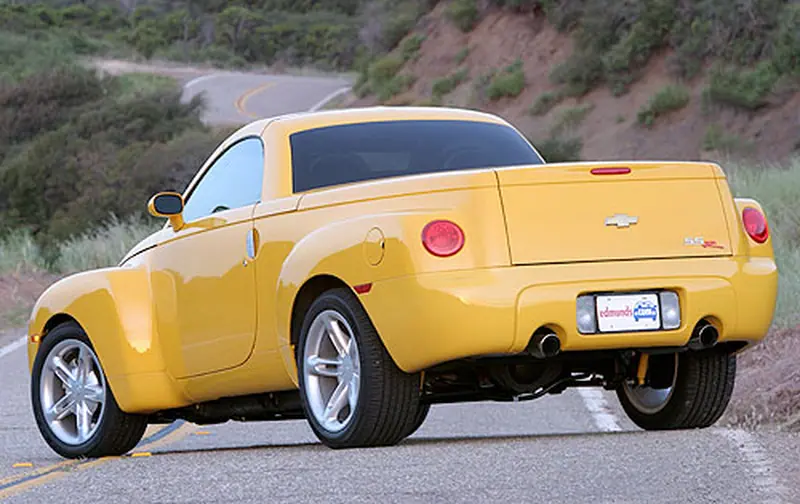
That brings us to a specific 2006 yellow SSR recently advertised by Garage Kept Motors.
The vehicle has fewer than 37,000 miles on the odometer, and the asking price is $39,900.
That's no longer the price of a new pickup. It's what someone is being asked to pay for a rare configuration, condition, and a vehicle with a personality unlike almost anything else Chevrolet has built.
The seller claims that only 46 examples share this particular combination of equipment and paint color. That figure would need independent factory production records to be considered confirmed, so it shouldn't be treated as established fact without documentation.
Even without that claim, the SSR remains rare enough to stand out among more familiar collectible Chevrolets.
Back in early 2000, the public saw the concept and effectively told Chevrolet to build it. The company listened.
Then it discovered that wanting to see a vehicle and wanting to own one are two very different things.
Still, the SSR made it to the production line looking remarkably close to what its designers had originally imagined.
In the automotive world, that's not a bad way to leave a mark.
You may also be interested in the news:
Hyundai Confirms New U.S. Elantra as Limited-Run Ioniq 6 N Nears Launch
Hyundai plans a redesigned Elantra for 2027 and a hybrid for the 2028 model year.
Tesla Cybercab Costs $29,990—and Comes With Strict Ownership Limits
A privately owned, self-driving Tesla Cybercab costs $29,990, but ownership comes with significant restrictions.
In the US, They Developed a Lightweight Living Capsule for Pickups and Trailers
Camper travel has grown steadily in popularity in recent years, and more companies in the segment are developing new products.
They Named 5 V8 Cars Capable of Covering More Than 250,000 Miles
These five vehicles with V8 engines have the potential to exceed 250,000 miles.
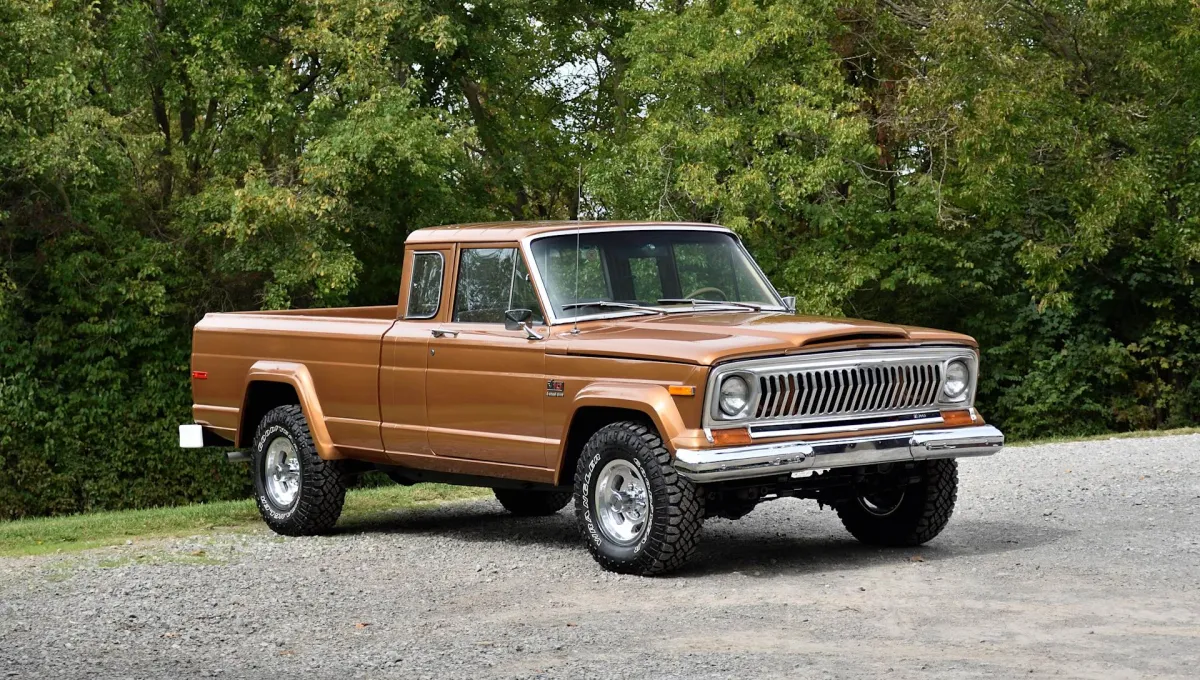
One-Off 1977 Jeep J10 Extended-Cab Prototype Heads to Its First Auction
Jeep's extended-cab J10 prototype escaped destruction and will reach auction after decades with one family.