
Why Some Modern Cars Have More Than 10 Airbags
Why do some modern cars have more than 10 airbags?
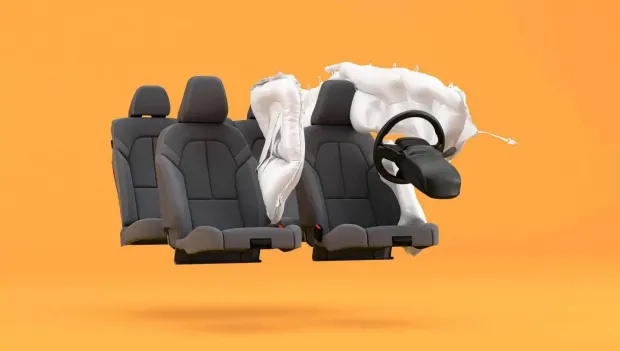
Look inside a modern car, and you'll find that airbags are no longer limited to the steering wheel and dashboard. Depending on the model, they may be built into the seats, along the roof, below the dashboard, and even between the front occupants. Some cars have more than 10 airbags. But that growing count is about more than an impressive number on a spec sheet.
Early airbag systems focused primarily on protecting the driver and front passenger in frontal collisions. Over time, automakers began addressing other crash scenarios. Side impacts are particularly dangerous because there is much less space between occupants and the outside of the vehicle. That led to side-impact airbags designed to protect the chest, pelvis, and head.
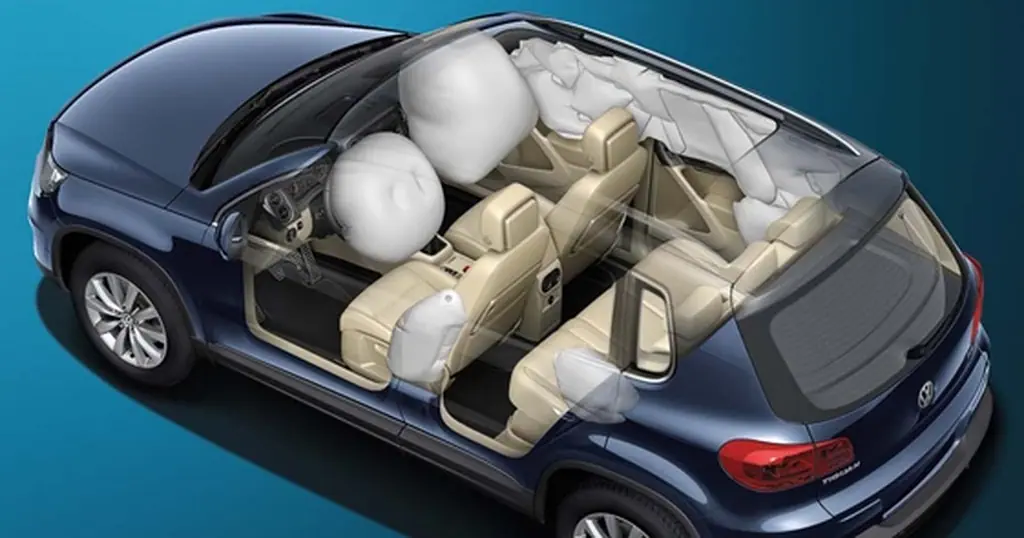
Each airbag has a specific job
Modern cars use several types of airbags. Front airbags are housed in the steering wheel and dashboard to protect the head and chest. Side airbags are typically built into the seats or doors, while curtain airbags deploy along the windows, providing additional head protection and reducing the risk of occupants being ejected during a crash or rollover.
There are also knee airbags, which help control the position of the lower body during a frontal collision, and center airbags, which deploy between the front seats to help keep occupants from striking each other. Some models have additional airbags for rear-seat occupants. Certain manufacturers also use seat belts with an inflatable section that helps distribute crash forces more evenly.
Side-impact protection has been one of the main reasons for the increase in airbag counts. Unlike the front and rear of a vehicle, doors offer less space to absorb crash energy. That makes an additional protective cushion between an occupant and the vehicle's structure especially important.
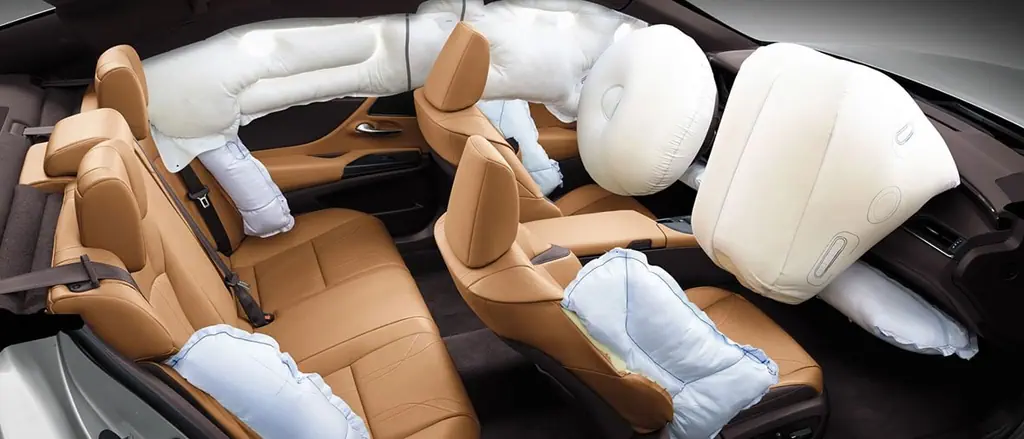
Modern systems don't simply deploy every airbag at once
The number of airbags is only one part of a vehicle's safety system. Electronic control units analyze sensor data to determine the severity and direction of an impact, along with other conditions. Some vehicles also account for seat position, seat belt use, and occupant weight. This allows the system to activate only the airbags needed for a particular situation.
According to the National Highway Traffic Safety Administration (NHTSA), airbags typically inflate in less than 1/20 of a second. They do not deploy in every crash: deployment depends on the nature and direction of the collision and the vehicle's specific system settings. A side impact or rollover, for example, may trigger the curtain airbags without deploying the front airbags.
Why seat belts remain essential
Despite advances in technology, airbags do not replace seat belts; they work together. A seat belt holds an occupant in the proper position, while an airbag cushions the impact and reduces the risk of contact with hard interior surfaces. Without a seat belt, an occupant may be too close to an airbag as it deploys, increasing the risk of injury.
Children younger than 13 are also advised to ride in the rear seats. Rear-facing child safety seats must never be placed in front of an active front passenger airbag.
The large number of airbags in some modern cars reflects the effort to protect occupants in different types of crashes, from frontal and side impacts to rollovers. Each additional airbag addresses a particular scenario, and the effectiveness of the overall system depends not just on the airbag count, but also on properly functioning electronics and seat belt use.
You may also be interested in the news:
Hemi Beyond the Highway: Tanks, Sirens, and Other Unlikely Machines
Chrysler’s Hemi usually brings muscle cars and pickups to mind, but over the decades, it has also found work in Antarctic snowcats, fighter aircraft, tanks, and even a carousel.

The Winter Trick Every Driver Should Know: Kitty Litter in the Trunk
Sand, salt, or cat litter: What can help tires find traction on a slippery road? Here’s a look at an unusual addition to a winter emergency kit.
Windshield Freezes Every Morning — This Mechanic’s Trick Helps You De-Ice It Faste
Is frost leaving your car windows covered in ice? A few simple steps can make morning cleanup easier and help keep ice from forming.
Car Windows Will Stop Fogging Up — Here’s the Mistake Almost Every Driver Makes
Car windows constantly fogging up? Experts explain how to set the heat, when to turn off recirculation, and why the cabin air filter matters.
5 Car Engines Capable of Covering More Than 220,000 Miles
These five engines have the potential to reach roughly 217,000 miles or more.