
Hemi Beyond the Highway: Tanks, Sirens, and Other Unlikely Machines
Chrysler’s Hemi usually brings muscle cars and pickups to mind, but over the decades, it has also found work in Antarctic snowcats, fighter aircraft, tanks, and even a carousel.
Chrysler’s Hemi usually brings muscle cars and pickups to mind, but over the decades, it has also found work in Antarctic snowcats, fighter aircraft, tanks, and even a carousel. And that is hardly the full list of unusual things engineers have done with the famous V8.
The Hemi story did not begin with road cars. In the late 1930s, the U.S. Army needed a powerful, compact aircraft engine. Chrysler received a development contract in 1941. Engineers joined two inverted V8s, taking power from the middle of the assembly through a reduction gearbox. The result was a 36.4-liter V16.
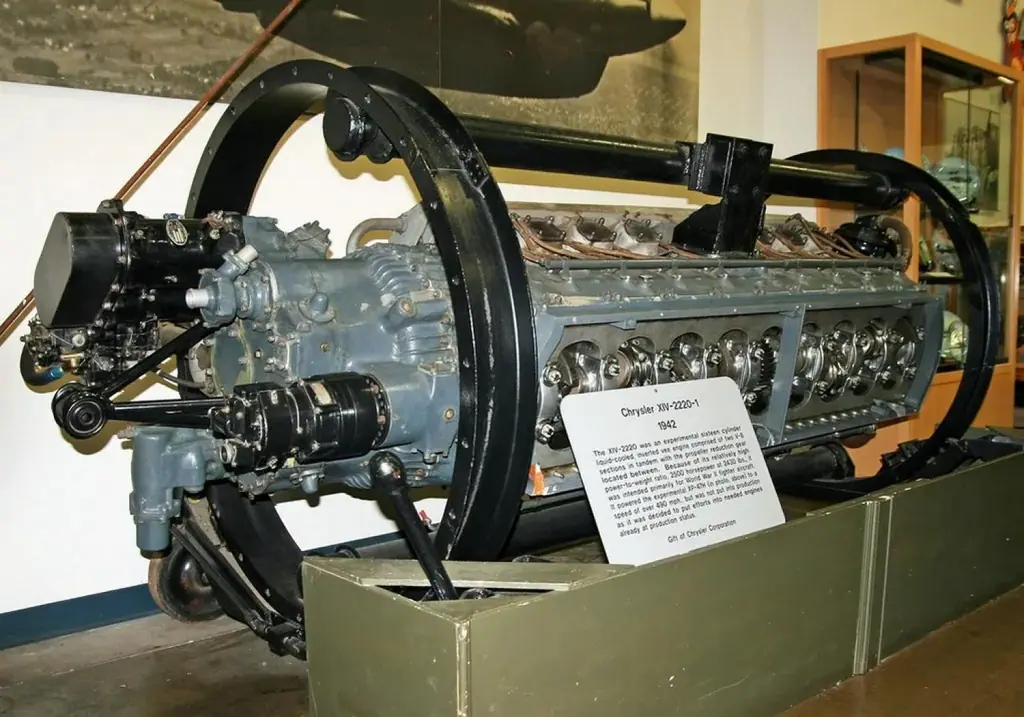
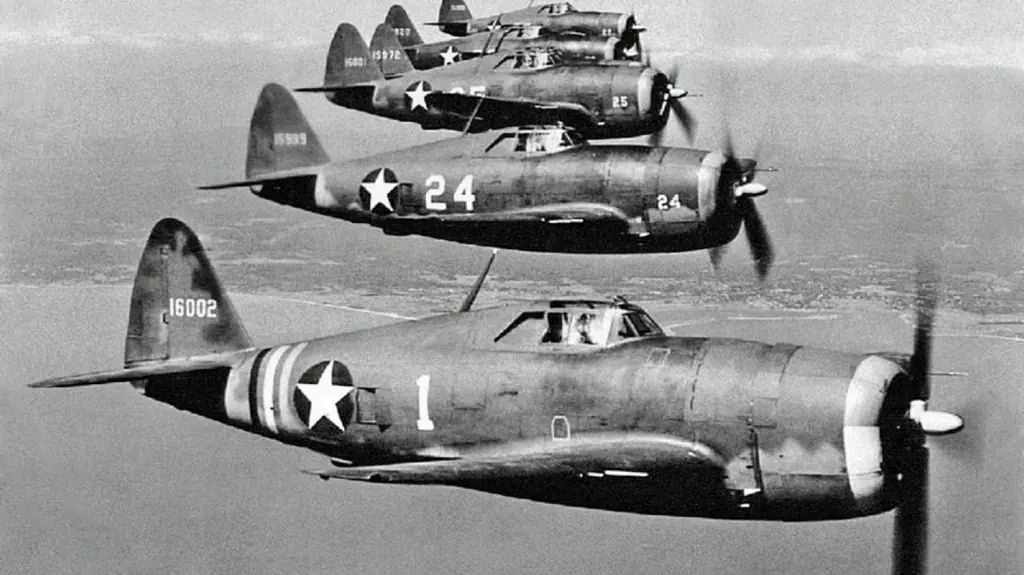
This engine introduced the signature hemispherical combustion chamber with a centrally located spark plug. It was tested in a modified Republic P-47 Thunderbolt, which first flew in July 1945. But the war ended, the jet age was arriving, and the program was canceled. The first Hemi was finished before it really got started, though it had demonstrated the potential of the hemispherical chamber.
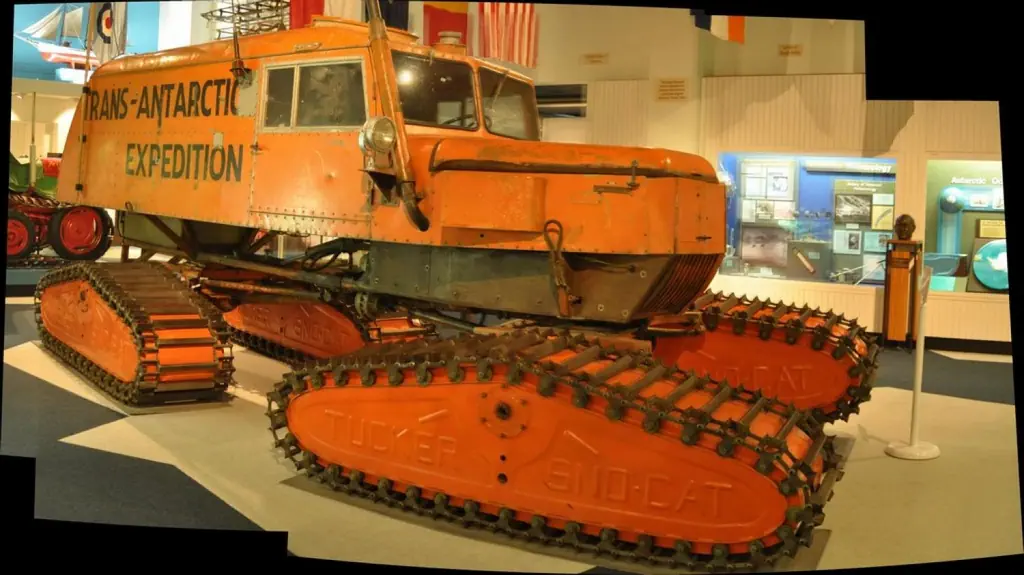
Other applications followed. During the 1950s and 1960s, Tucker Sno-Cats—four-track vehicles built for deep snow—used industrial Hemi engines displacing 5.4 and 6.4 liters. These were not attention-seeking engine swaps: The machines needed substantial pulling power to do their jobs. One Sno-Cat, named Rock N Roll, took part in the Trans-Antarctic Expedition and is still displayed at Tucker’s factory in Medford, Oregon. The base Model 473 made about 180 horsepower and had a top speed of 15 mph, dropping to roughly half that while towing a loaded trailer. Here, the Hemi was working equipment, not a showpiece.

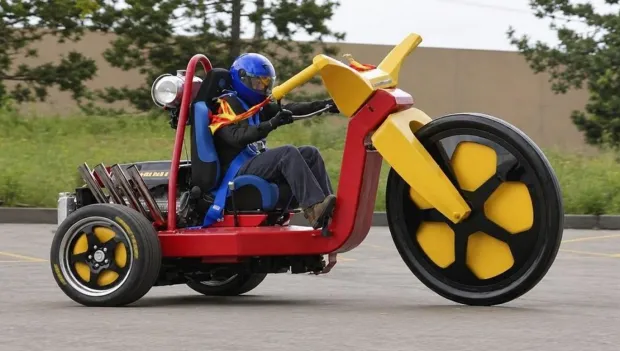
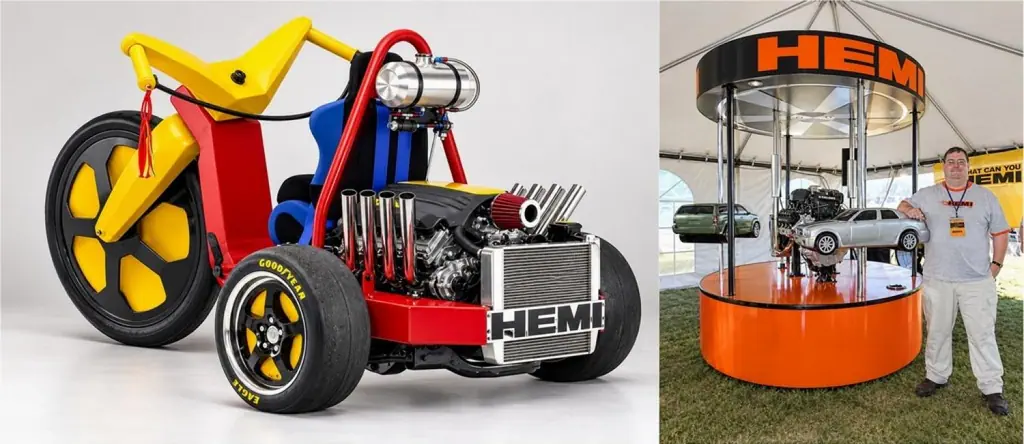
In 2005, Chrysler launched the What Can You Hemi? contest, asking enthusiasts to dream up outlandish uses for its 5.7-liter engine. Winners had the chance to see their ideas built. Among the finalists was the Hemi Shredder, an industrial shredder capable of chewing through stacks of paper, CDs, and phone books.

Another finalist, the Hemi-Go-Round, was a V8-powered carousel. Its roughly 22-foot-diameter platform spun at up to eight revolutions per minute—twice the speed of a conventional carousel. The grand prize, however, went to Marcus Braun of Vancouver for the Hemi Trike: a three-wheeled giant with a 48-inch front wheel, 18-inch Goodyear slicks at the rear, and the same 345-hp V8.
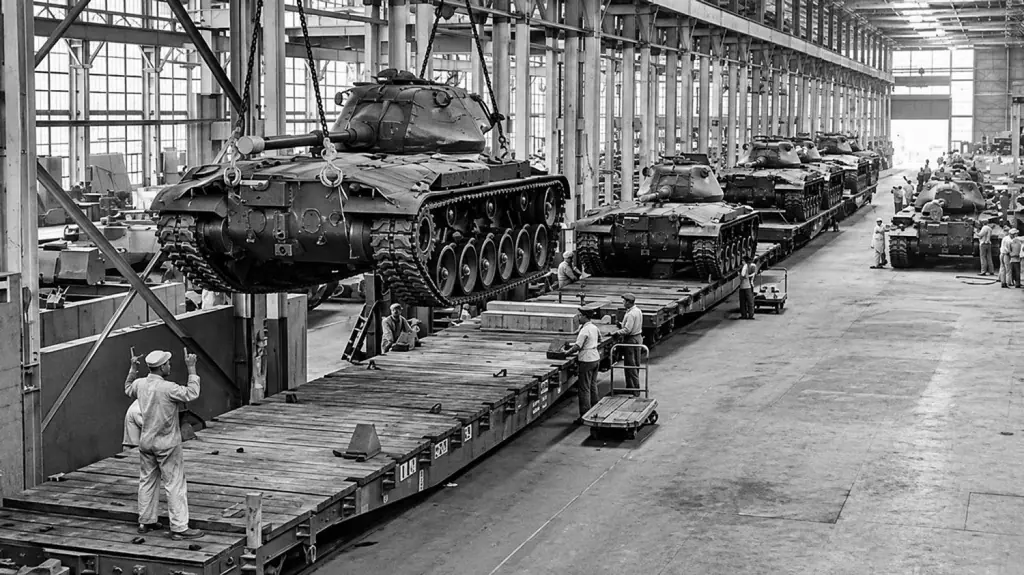
If a carousel sounds relatively harmless, consider a tank. The M47 Patton used a Continental AV-1790, a 29-liter, air-cooled gasoline V12 with hemispherical combustion chambers. Developed by Continental with Chrysler, it was a relative of the celebrated Hemi. Output was about 810 horsepower, and the tank weighed nearly 110,000 pounds.
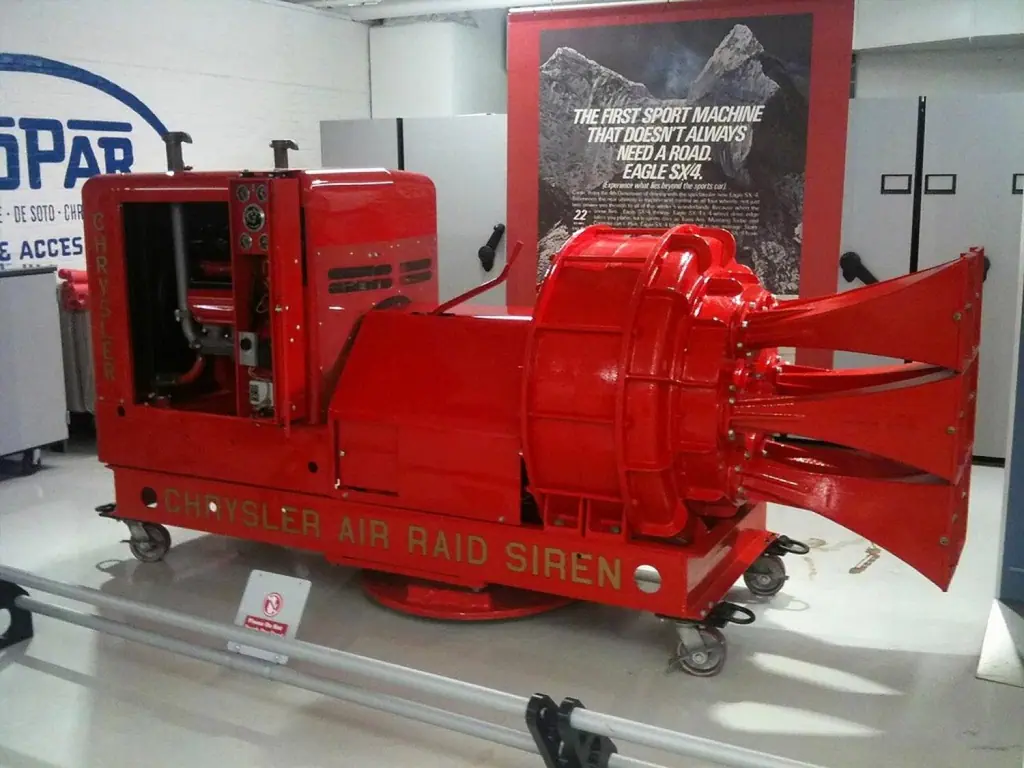
From tanks, the next stop is an air-raid siren. Built from 1952 through 1957, the Chrysler Air Raid Siren, nicknamed the “Big Red Whistle,” carried a 180-hp, 5.4-liter FirePower Hemi. It produced 138 decibels at about 100 feet and could be heard across more than 15 square miles. About 350 were built, and some remained in service into the late 1970s. This Hemi did not need to move to make itself heard.
Then there were projects built simply to draw a crowd. George Barris, creator of the television Batmobile, built the Hard Hat Hauler, a full-size version of an MPC model kit. Based on a 1923 Ford Model T roadster, it wore an enormous construction hard hat that took more than 300 hours of handwork to make.
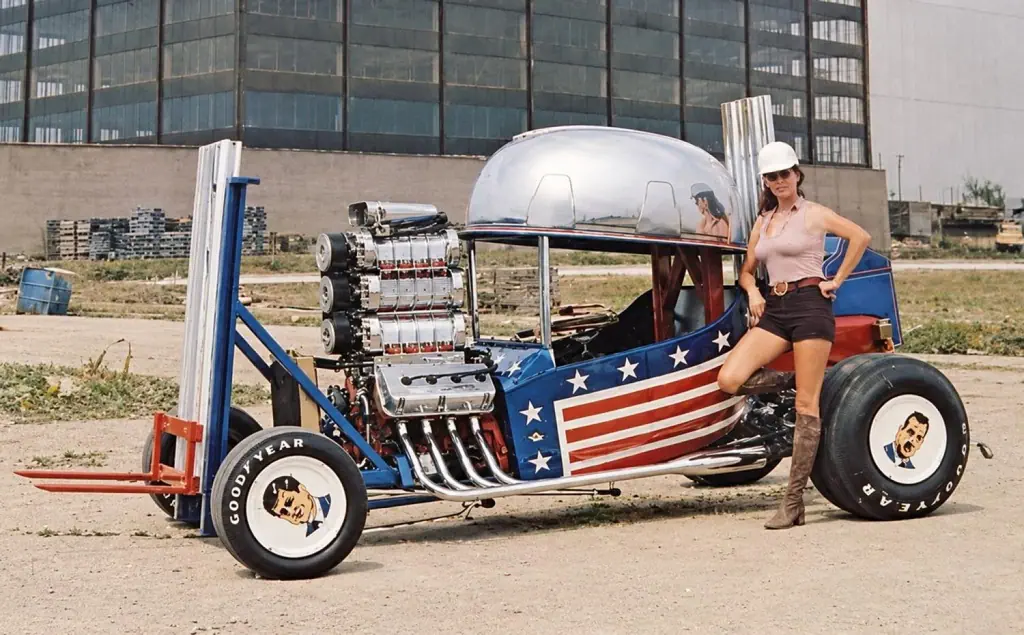
Beneath it sat a roughly 500-hp Chrysler Hemi with three GMC 6-71 superchargers. Fred Vosk went further in the 1980s with the SuperBike: a motorcycle carrying a 30.5-cubic-inch (500cc) Hemi, twin turbochargers, nitrous oxide injection, and a wide, 20-inch Goodyear rear slick. The motorcycle first appeared at a Pepsi promotional show and later starred in Vosk’s self-published comic book. Hemi engines also went hydroplane racing. In 1970, the Atlas Van Lines U-29 received a pair of supercharged V8s, but the Allison and Merlin aircraft engines proved stronger competitors, and the experiment ended after a few races.
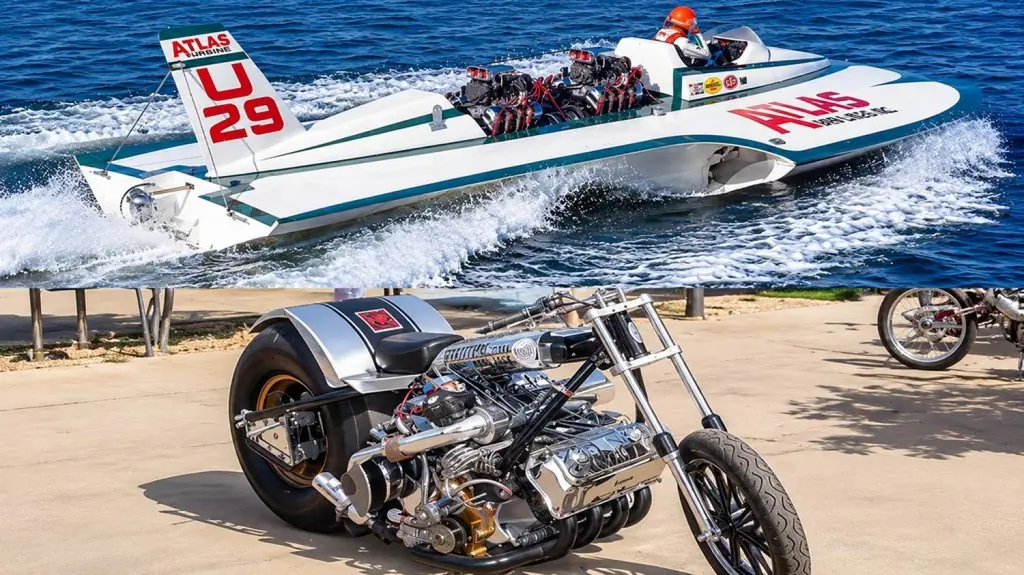
The Hemi found its way into machines that demanded serious power—or simply needed to make an impression. A tank, a siren, a snowcat, and a carousel are hardly the obvious applications for an engine now so closely associated with drag racing. Yet these unusual machines show how widely the hemispherical combustion chamber could be applied, through wars, economic downturns, and the wild ideas of inventive builders.
You may also be interested in the news:
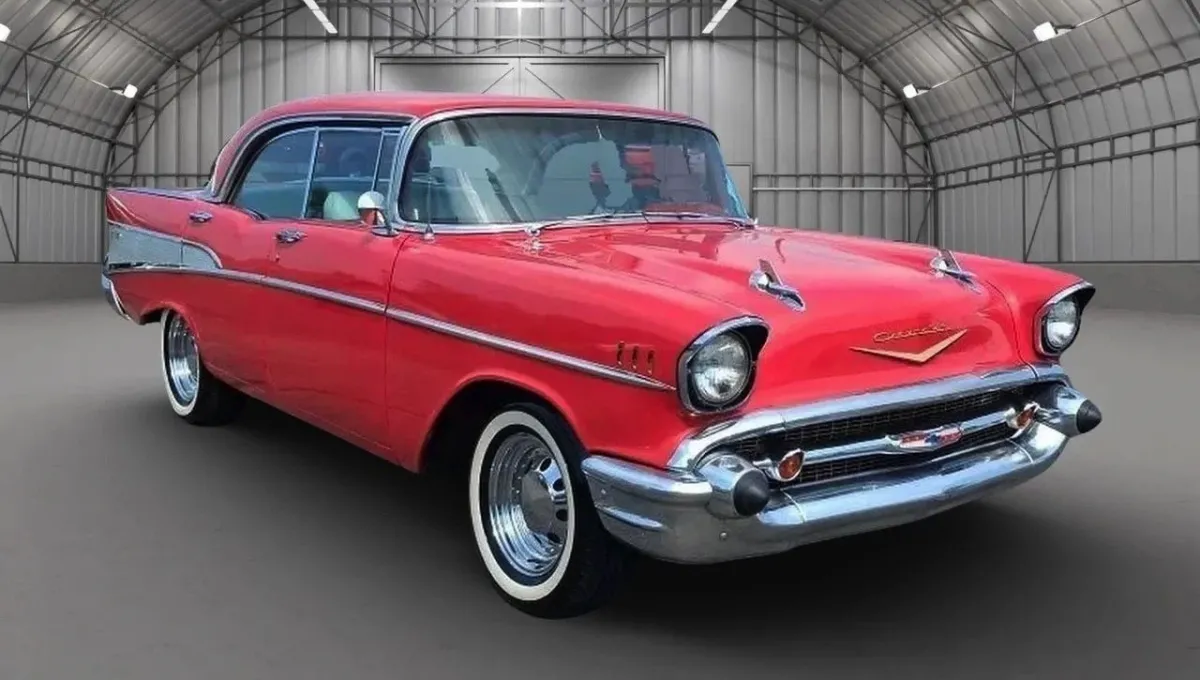
Restored 1957 Chevrolet Bel Air Sedan Listed for $33,500
An Illinois seller is asking $33,500 for a restored 1957 Chevrolet Bel Air four-door sedan.

The Winter Trick Every Driver Should Know: Kitty Litter in the Trunk
Sand, salt, or cat litter: What can help tires find traction on a slippery road? Here’s a look at an unusual addition to a winter emergency kit.
Hyundai and Kia Theta II Engines Named Among the Least Reliable Four-Cylinders
Modern Hyundai vehicles are generally considered reliable and long-lasting. Many rack up six-figure mileage without major mechanical problems.
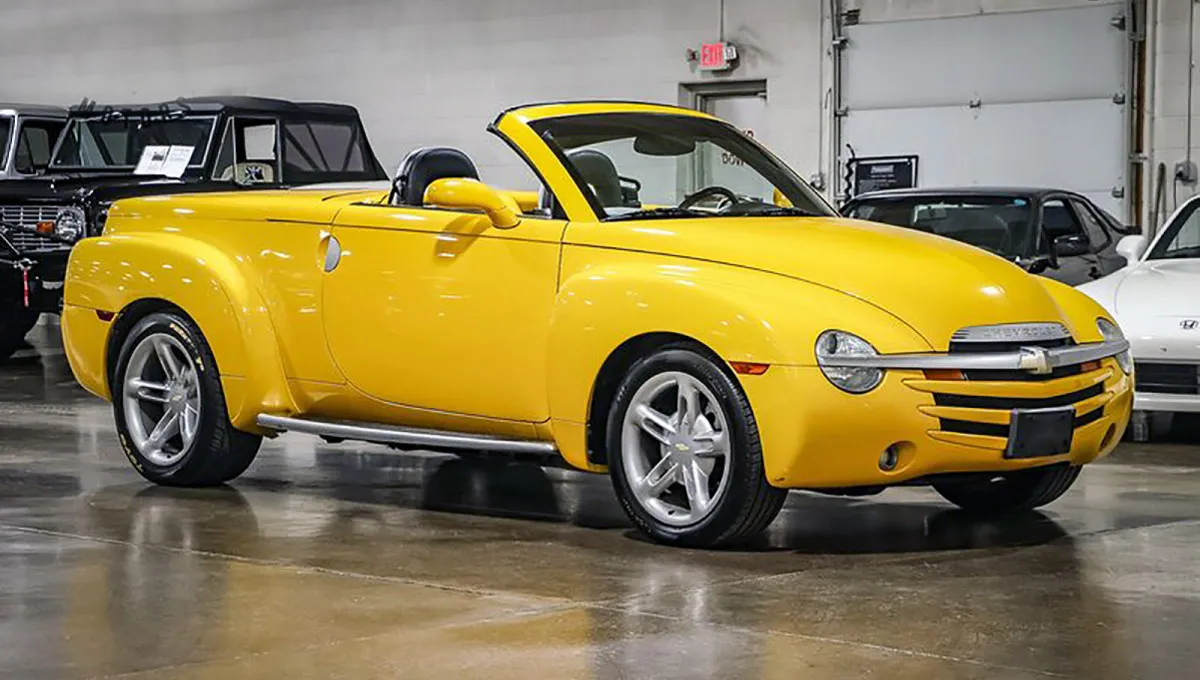
Chevrolet Put a Corvette V8 in Its Strange Retro Pickup, but It Still Couldn't Save the SSR
Chevrolet's unusual SSR combined classic hot-rod styling, a folding hardtop, and Corvette power, but buyers never came around.