
Pac-Man on Wheels: Meet the ‘Motorcycle Man’ Freaking Out America
After wrecking his electric bike, inventor Jake Carlini rebuilt it into a bizarre yet functional motorcycle suit that literally turns his body into the machine.
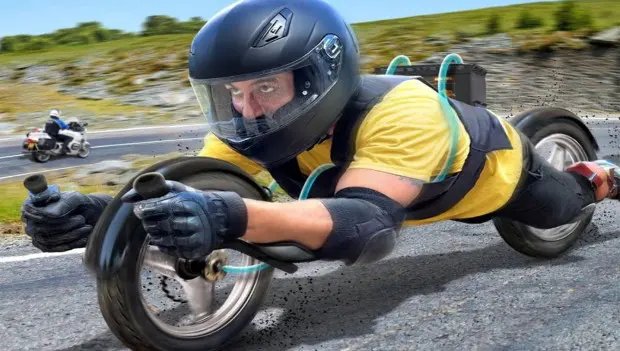
Inventor and YouTuber Jake Carlini has transformed a wrecked electric bike into something truly unconventional — a wearable motorcycle suit that allows him to ride while lying almost flat, in a planking position. After his original bike was destroyed in a crash, Carlini salvaged key components — the rear-hub motor and battery — and decided to reimagine the concept entirely. Instead of rebuilding the traditional frame, he attached the motor directly to his lower legs using painter’s stilt straps, essentially turning his legs into the drivetrain itself.
To support the heavy battery, he reinforced a vest, modifying it to hold wiring and electrical connectors. Without a standard fork or handlebars, Carlini had to rethink steering and balance from the ground up. He built a compact front rig equipped with aero bars, armrest pads, and small pegs so he could distribute his weight and guide the bike’s direction. The throttle and digital display from the original e-bike were repurposed, with wiring neatly routed along his arms and into the vest.
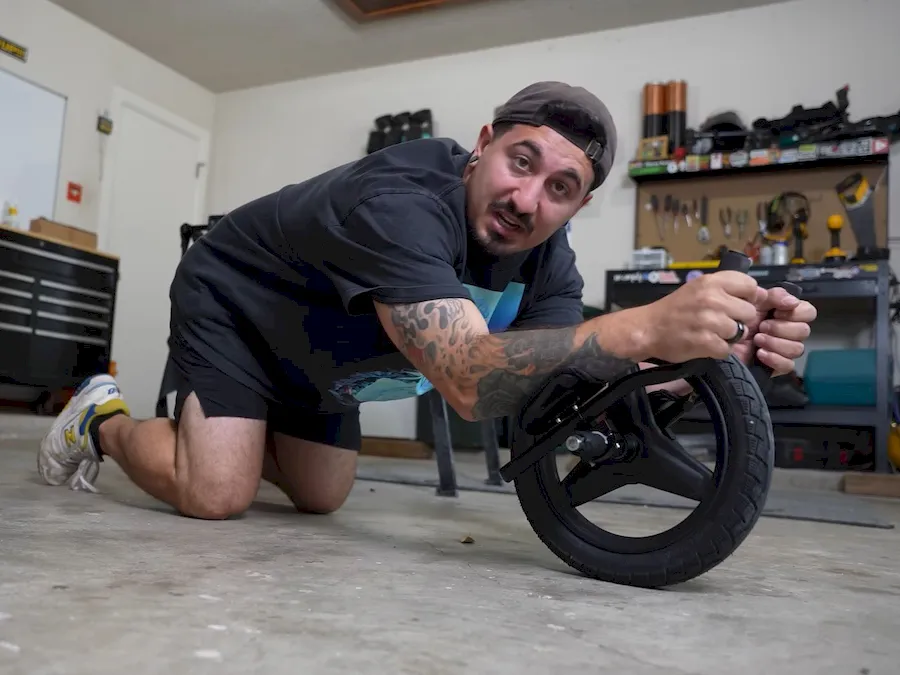
The finished creation looks like a cybernetic fusion of rider and machine — an exoskeleton made of straps, metal, and glowing cables. During test runs, Carlini reached speeds of over 20 mph, relying on precise strap tension, core strength, and balance to stay upright. He fine-tuned the setup, adjusting the leg alignment and arm supports to stabilize the ride while keeping himself level with the road. The project relies almost entirely on reused parts: the motor, battery, throttle, and display, plus common workshop items like straps, screws, adhesive, and fabric.
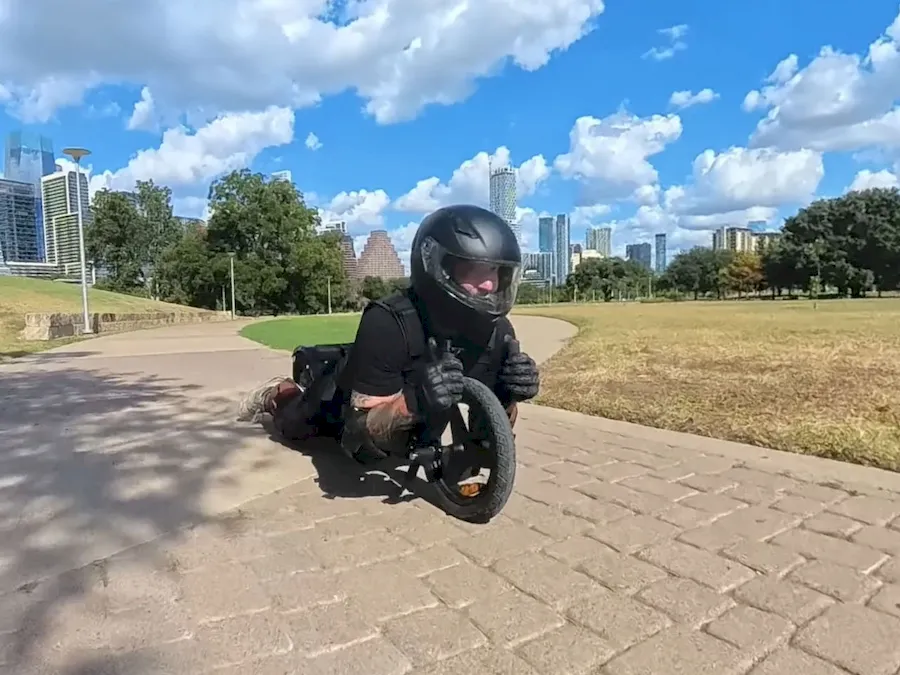
What makes this build remarkable isn’t just the novelty — it’s the way it merges human and machine. The rider doesn’t sit on a bike; he becomes it. It’s not a practical commuter solution, but a striking experiment in personal mobility and creative reuse. The project raises fascinating questions about how we define vehicles, wearables, and the very idea of riding itself.
Safety, of course, remains a concern. Taking this contraption onto busy streets would be a risky move, given limited visibility and exposure. Still, as a proof of concept, it shows how mobility could evolve toward body-integrated designs — where the human form and machine function work as one. In an era of electric innovation and wearable tech, Carlini’s creation stands out as both a daring invention and a glimpse into what future transportation might look like.
You may also be interested in the news:

Hyundai Recalls Nearly 95,000 Genesis Sedans Over Fire Risk From Power Seats
Hyundai is recalling 94,622 Genesis sedans after a faulty power seat switch was linked to overheating and potential vehicle fires.

2027 Ram 1500 Rumble Bee: Pricing, Options and How to Build Yours
The 777-HP Ram Rumble Bee Is Coming — But You Can Buy the New Hemi Truck Now
“Are You Sure It’s Chinese?” Who Really Builds China’s Car Engines
Who Really Develops China’s Car Engines?
Why Experienced Drivers Still Warn Against Buying a Used Car With a CVT
CVTs offer smooth acceleration and good fuel economy, but expensive repairs and durability concerns make used models risky.
2026 Ram 1500 Recall: 16K Trucks May Have Faulty Tire Pressure Sensors
Ram is recalling 16,385 model-year 2026 Ram 1500 trucks