
Catch Me If You Can: Legendary American Police Cars That Could Outrun Almost Anyone
For decades, American automakers have built more than just police cars—they've created genuine weapons on wheels for the men and women who enforce the law.
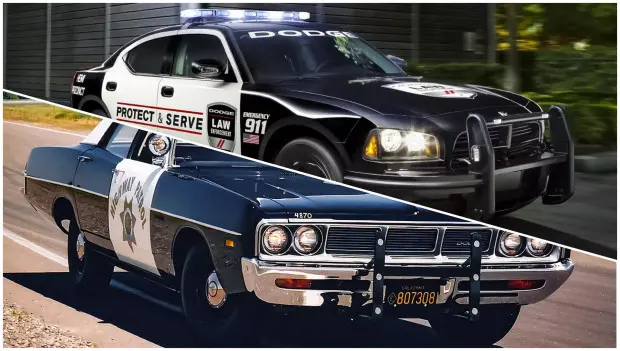
For decades, American automakers have built more than just police cars—they've created genuine weapons on wheels for the men and women who enforce the law. More often than not, these were modified versions of ordinary production cars, but with the kind of performance and hardware that left conventional sedans and coupes in the dust.
We've rounded up some of the fastest and most powerful police cars ever to patrol American roads. It's a surprisingly diverse group, too. And that's part of what makes America's automotive history so much fun: a police department's fleet could include everything from heavy-duty sedans and pony cars to full-size pickups.
So why aren't there any flashy Porsches or Lamborghinis that occasionally make headlines wearing police colors? Simple. We're not talking about one-off exotics or publicity stunts. These are cars that actually spent years in service, patrolling roads and regularly chasing down drivers who thought they could outrun the law.
Dodge Polara Pursuit — The Beginning of the Era
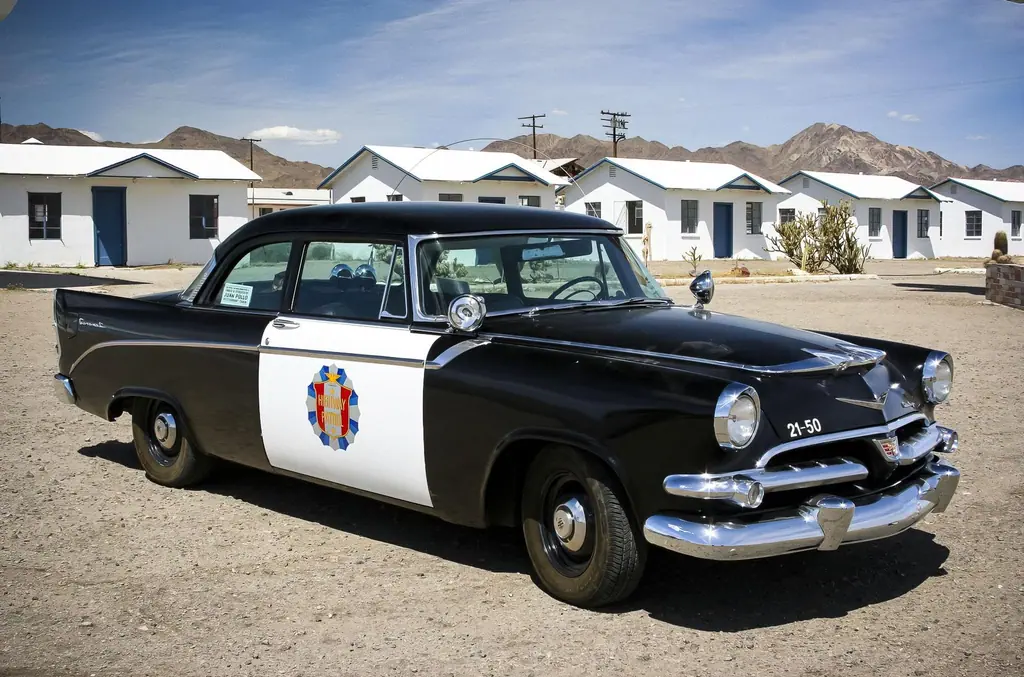
On June 29, 1956, President Dwight D. Eisenhower signed the Federal-Aid Highway Act, setting America on the path toward a massive interstate highway network. The country was about to get roughly 41,000 miles of modern highways. Around the same time, Chrysler introduced the Dodge Coronet 230 Pursuit, one of the first factory-built police versions of a production sedan.
A decade later, muscle cars with massive V8s were flying down those highways, and law enforcement was ready to fight back. Enter the Dodge Polara Pursuit, a genuine monster on wheels. By 1966, the police package had reached its peak.
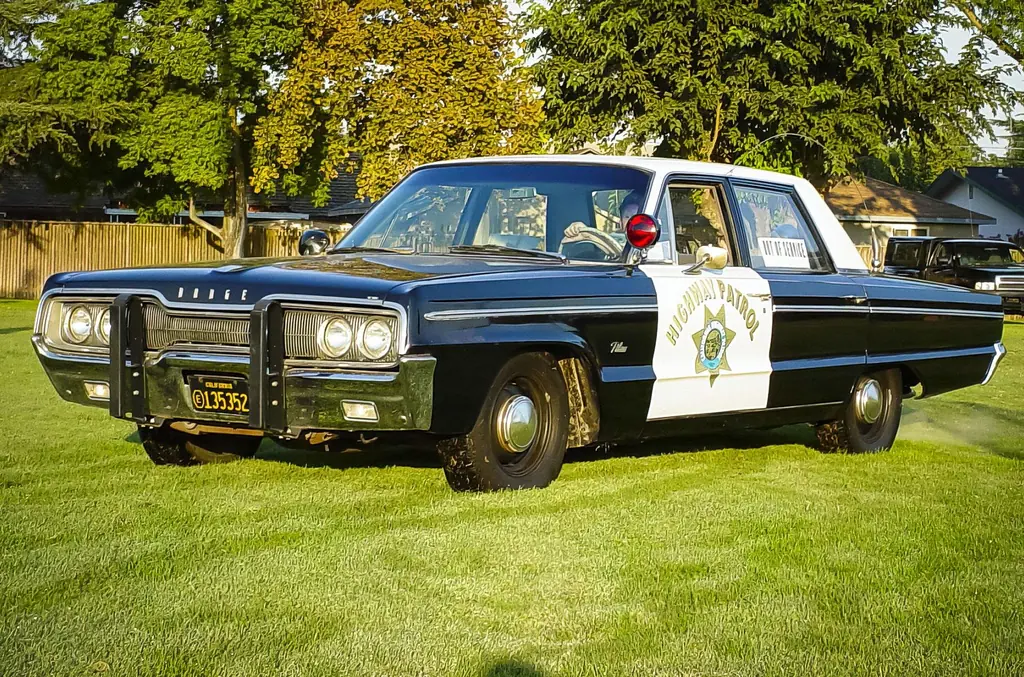
Picture a young American with Vietnam looming just a week away. There's a thin steering wheel in his hands, a long hood stretching out ahead, and more than 300 horsepower under his right foot. All he wants is rock 'n' roll and speed. Then he buries the throttle—and suddenly a police Polara appears in the rearview mirror. There isn't much chance of getting away.
The 426-cubic-inch V8 produced 370 hp and 480 lb-ft of torque, turning the enormous sedan into something resembling a sports car by the standards of the day. A milder 383-cubic-inch version with 335 hp could hit 60 mph in 7.7 seconds.
By 1967, the top engine was making 380 hp, and that's when the California Highway Patrol put the cars through a serious series of tests. The requirements were brutal: at least 82 mph through the quarter-mile, 112 mph at the one-mile mark and nearly 124 mph by the second mile. Braking and handling were also part of the evaluation.
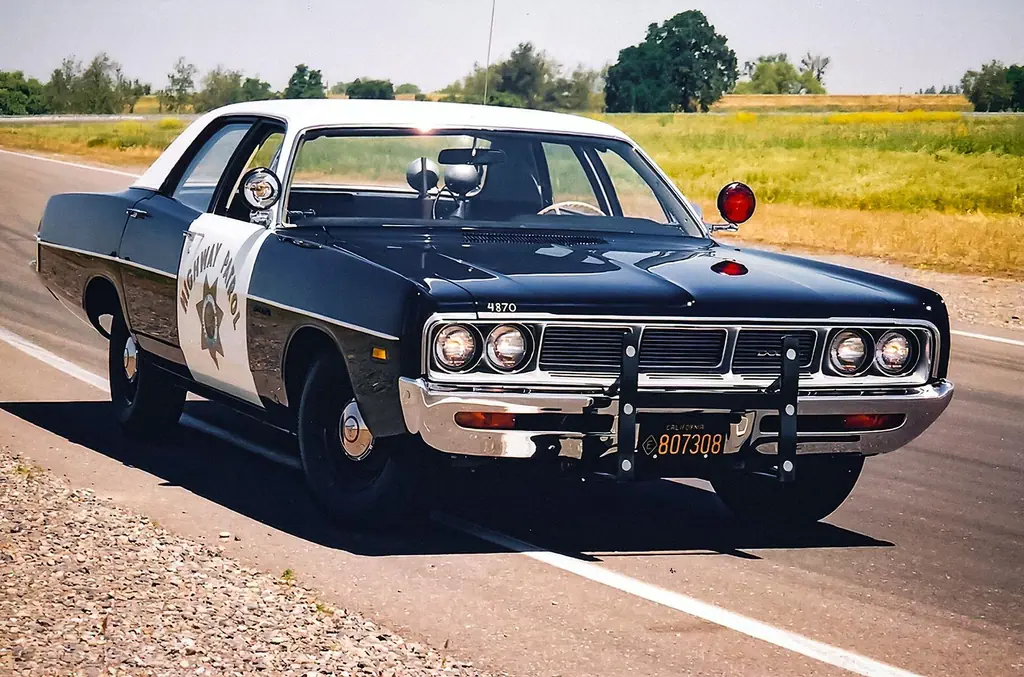
Sergeant Robert Phillips, who oversaw the testing, noted that the Dodge outperformed competitors from Mercury and Oldsmobile. One Polara reportedly reached 147 mph, a speed its rivals couldn't match.
The 1969 model went even further: 380 hp, a three-speed manual transmission, a 0-to-60-mph time of 6.3 seconds and a top speed of 150 mph. Those figures were recorded at Chrysler's Michigan test track.
Chevrolet Caprice 9C1 — A Big Sedan With a Big Attitude
A police sedan capable of comparable performance wouldn't appear again until the 1990s. From 1994 through 1996, GM offered the Chevrolet Caprice 9C1 with the 5.7-liter LT1 V8.
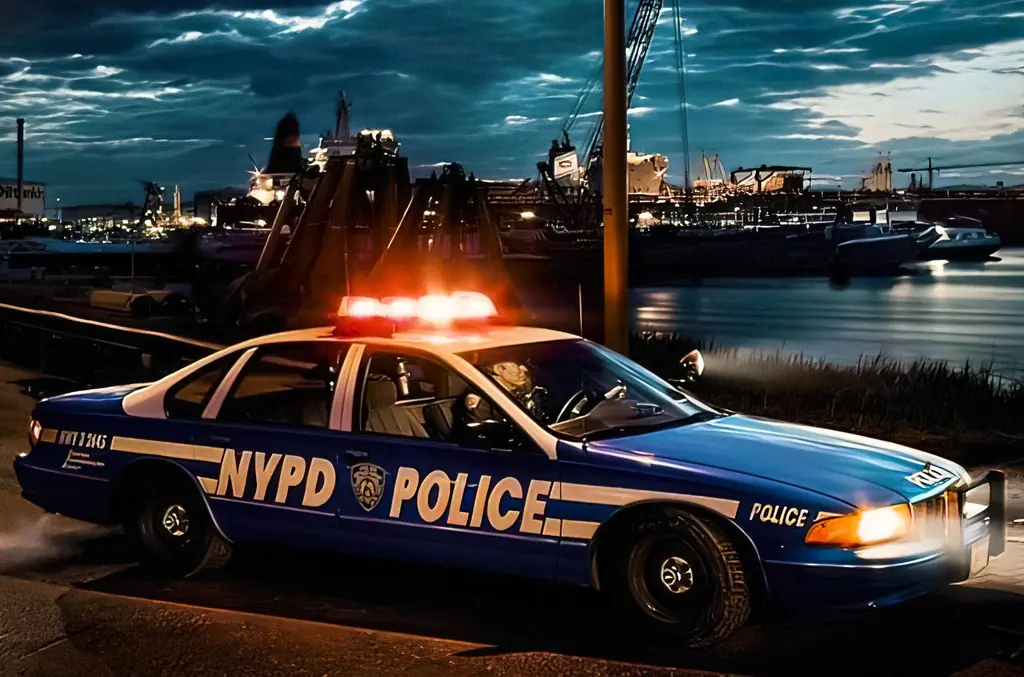
The engine is sometimes incorrectly described as a "Corvette engine." The police and civilian versions used in the Caprice, Impala SS, Buick Roadmaster and Cadillac Fleetwood had their own specification, including cast-iron cylinder heads and a different camshaft, producing 264 hp. Corvettes and the Camaro-based F-body cars of the era used aluminum heads and more aggressive engine calibrations.
The 9C1's acceleration numbers are still debated. Enthusiasts on forums such as impalassforum.com report 0-to-60-mph times ranging from 6.5 to 7.4 seconds, depending on the tires and driver. The quickest versions could reportedly reach around 149 mph.
And remember, this was a huge sedan. At the time, the Ford Crown Victoria was considered the quintessential police car—but nobody bought one for its outright speed.
The 9C1 also received a long list of upgrades designed specifically for police duty: heavy-duty suspension components, silicone hoses and additional cooling capacity, including a dedicated transmission cooler. Everything was engineered to survive the punishment of continuous patrol and pursuit work.
Chevrolet Camaro B4C — A Pony Car Goes to Work
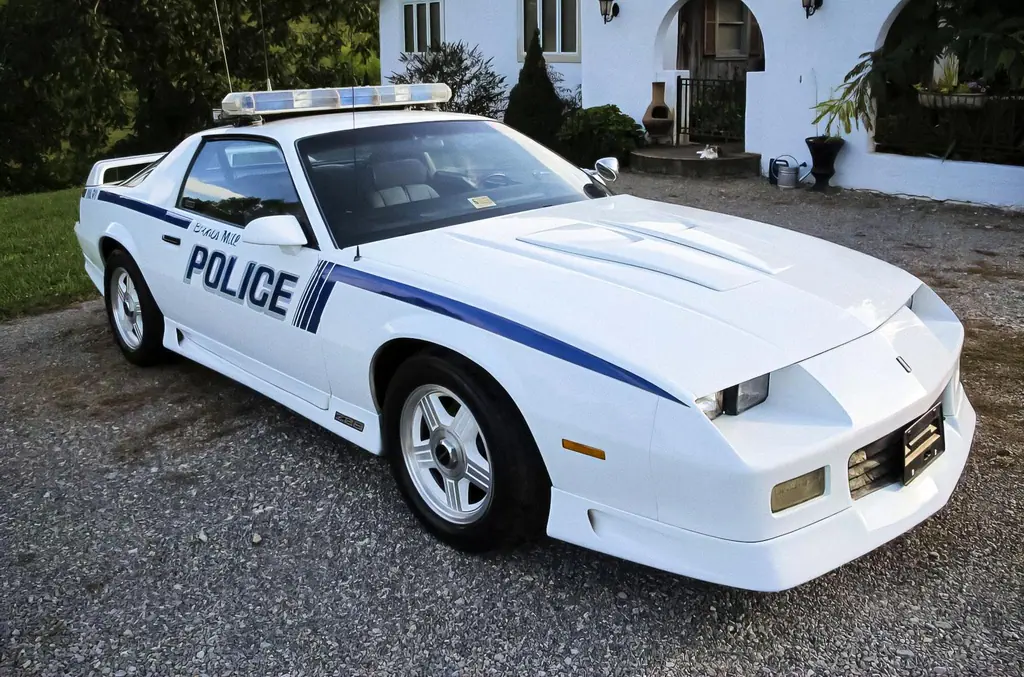
California police agencies began testing the Camaro as early as the 1970s, but those experiments didn't lead anywhere. The real police Camaro arrived in 1991, when Chevrolet created the B4C Special Service Package based on the third-generation Camaro.
Under the hood was either a 5.0-liter or 5.7-liter V8, producing up to 248 hp.
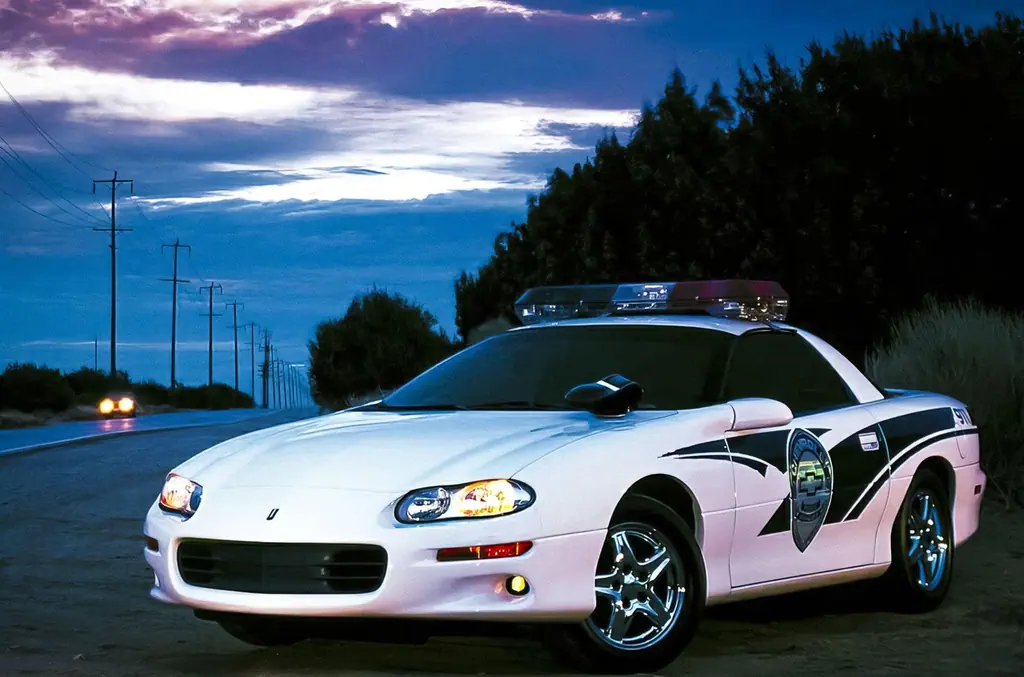
The fourth-generation Camaro arrived in 1993 with the LT1 V8. By 1998, the lineup had moved to the all-aluminum LS1, producing 314 hp in the police application.
According to testing by Michigan State Police and the Los Angeles Police Department, these coupes could hit 60 mph in about 5.8 seconds and reach 159 mph. By late-1990s standards, that was serious performance.
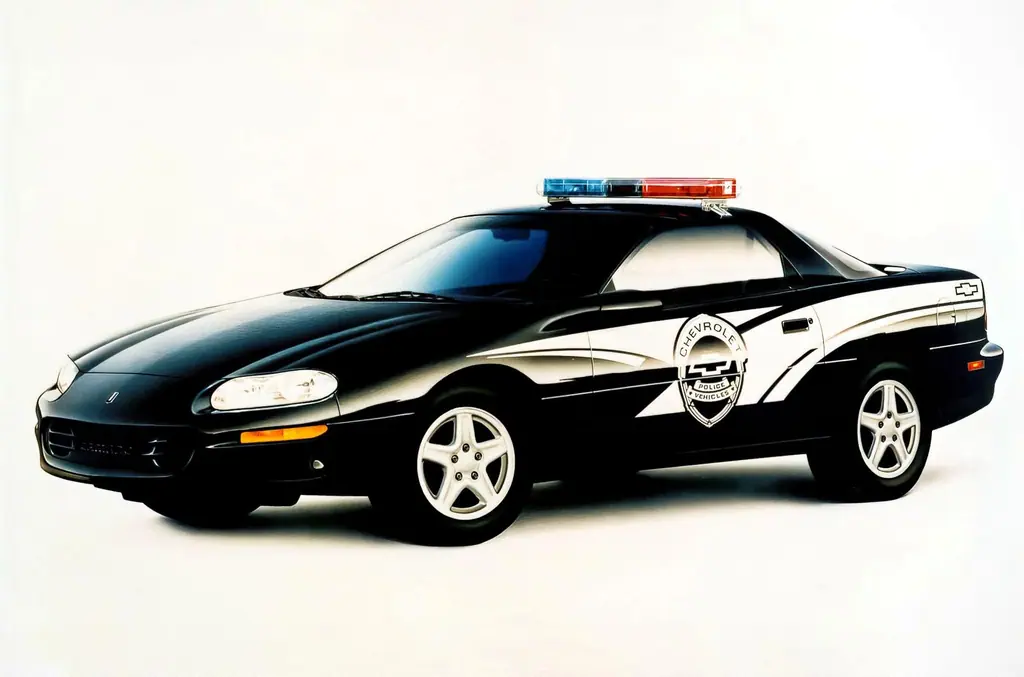
Like other purpose-built police vehicles, the B4C received heavy-duty suspension components, upgraded cooling systems and a 140-amp alternator. Manual-transmission cars used a 3.42:1 final-drive ratio, while automatics used 3.23:1 gearing.
Production numbers were relatively small. According to enthusiasts at thirdgen.org, 1,181 third-generation B4C Camaros were built. In 2002, the final model year, production dropped to just 708 cars.
Chevrolet Caprice PPV — An Australian Connection
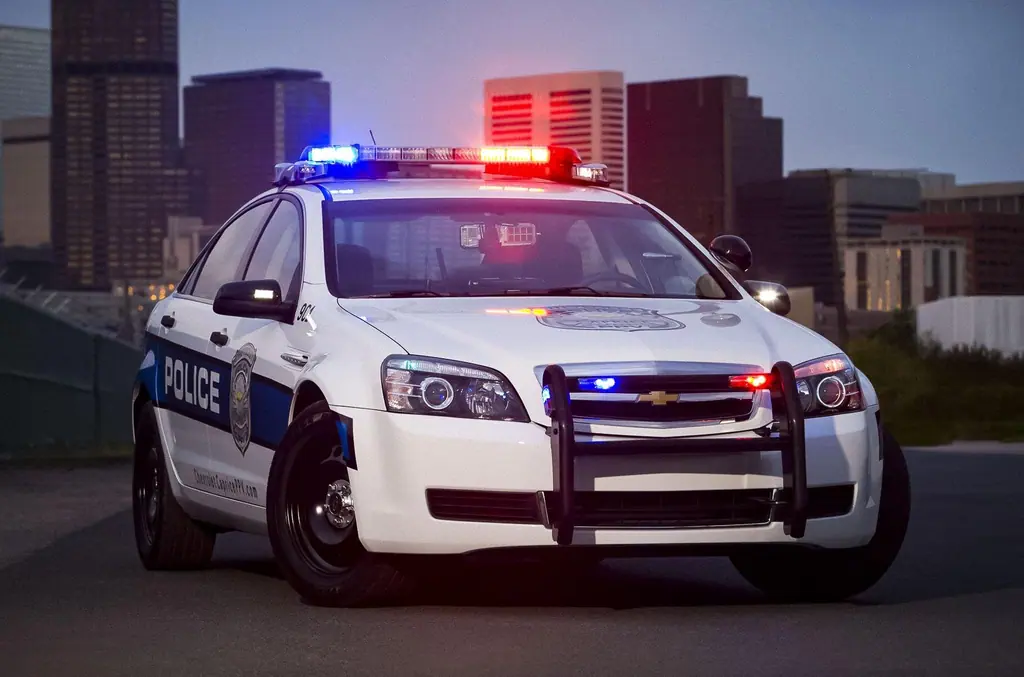
In 2009, Chevrolet introduced the Caprice PPV as a spiritual successor to the classic American Caprice. In reality, though, it was an Australian-built Holden underneath the Chevrolet badges.
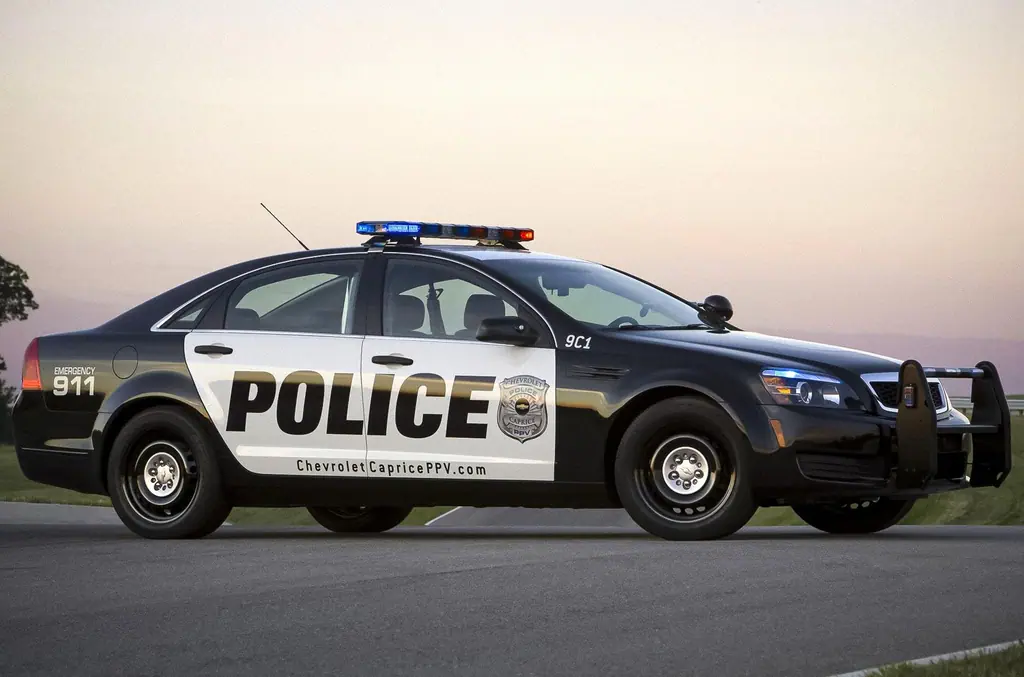
It looked like a fairly conventional full-size sedan, but the hardware told a different story: rear-wheel drive, a longitudinally mounted engine and, most importantly, a 6.0-liter V8 producing 360 hp and 384 lb-ft of torque.
The 0-to-60-mph run took roughly six seconds.
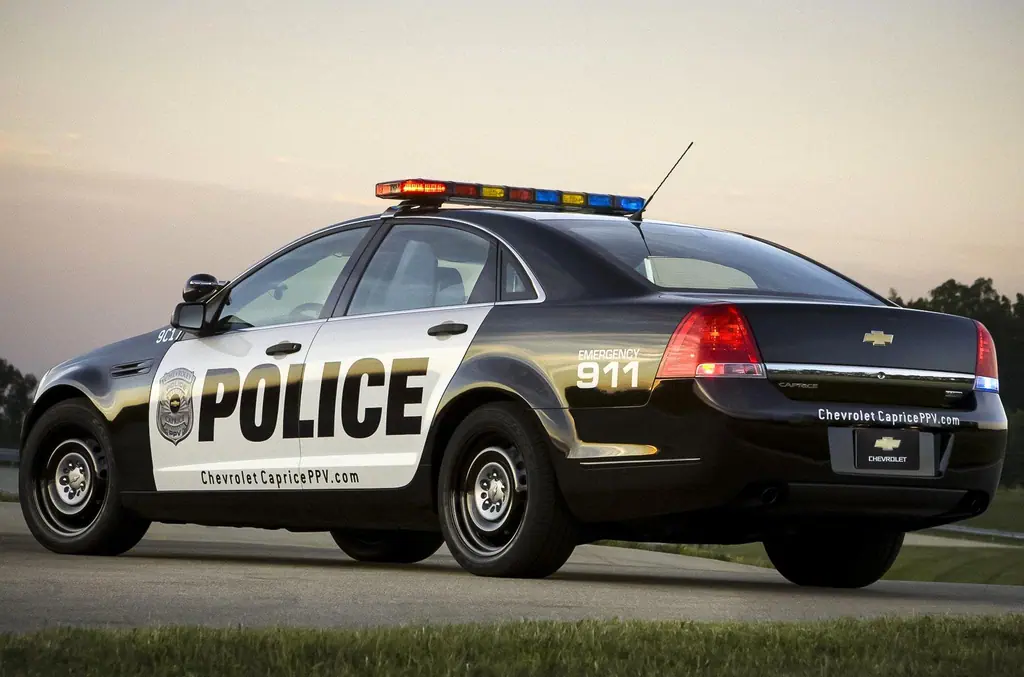
The Caprice PPV also offered a roomy cabin, supportive seats for long patrol shifts, heavy-duty brakes and suspension, additional cooling for the engine, transmission and power steering, and a police-specific stability-control calibration.
It had everything a modern patrol car needed.
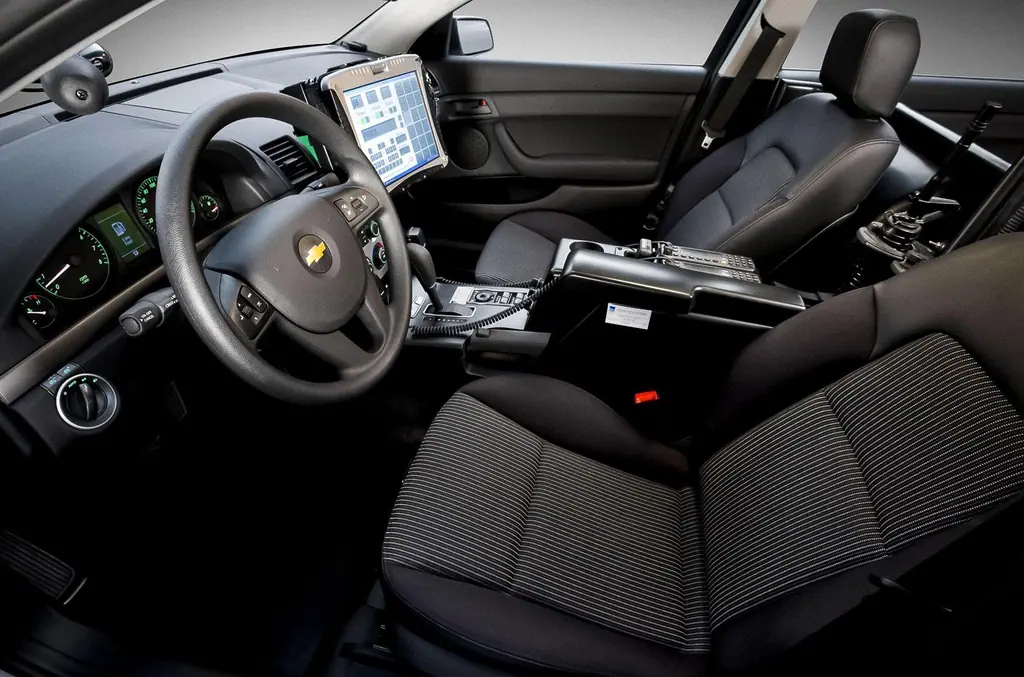
GM promoted the Caprice PPV as a car capable of outperforming the aging Crown Victoria. But the story ended in 2017 when Holden's Australian manufacturing operation shut down. The Caprice PPV disappeared along with it.
Ford Mustang SSP — The Mustang That Went After Porsches
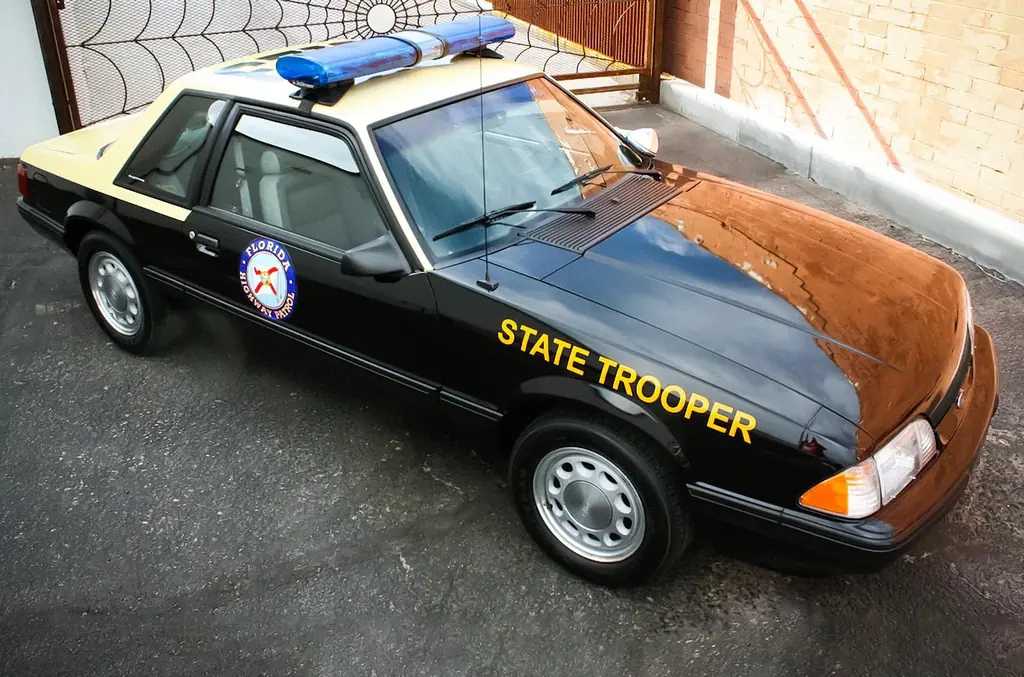
Long before the Camaro became a police favorite, law enforcement agencies were looking at the Ford Mustang.
In the late 1970s, police departments wanted something lighter and quicker than the big sedans that had traditionally filled their fleets. After trying several alternatives, they settled on the third-generation Mustang built on Ford's Fox platform.
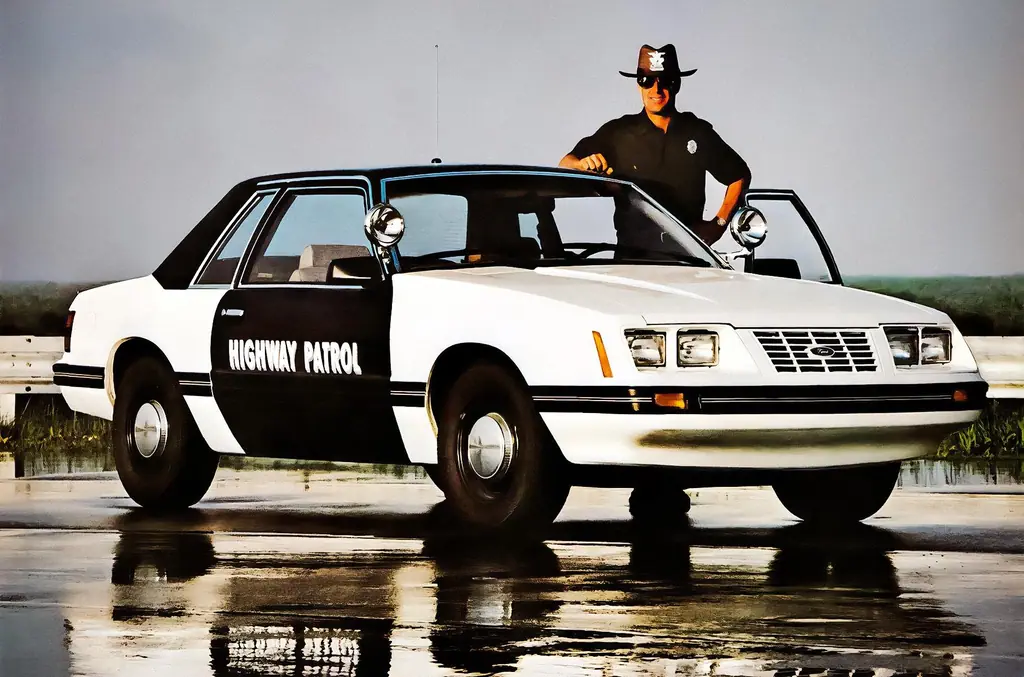
That led to the Mustang SSP, or Special Service Package.
Under the hood was a 5.0-liter V8, accompanied by upgraded cooling, a high-output alternator and a variety of other modifications designed for police duty.
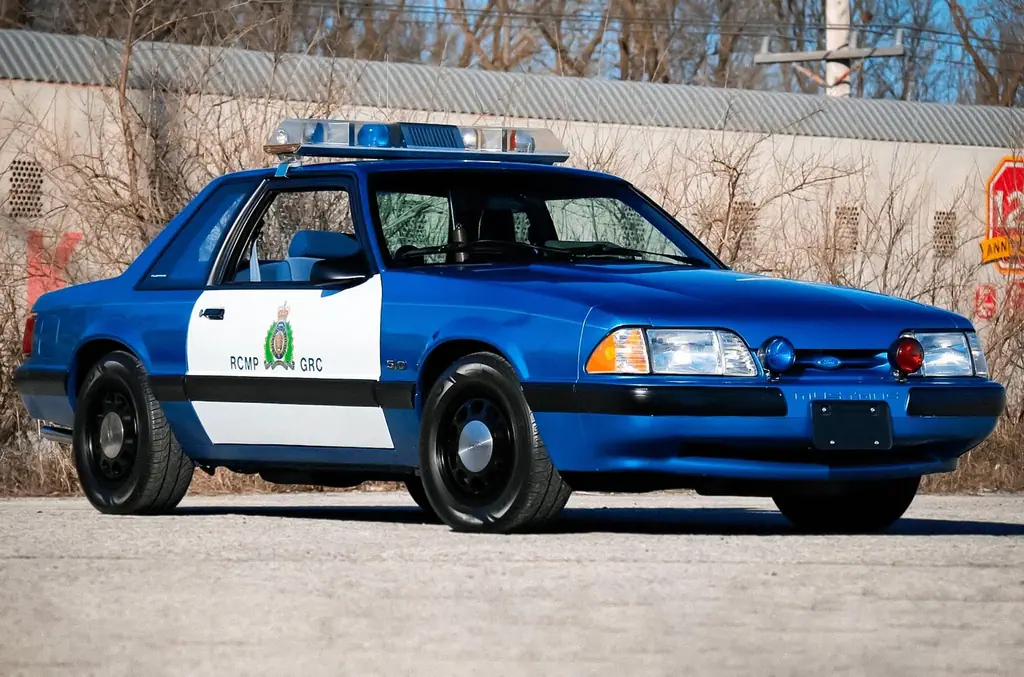
The coupe was quick and intimidating. Early versions could reach 60 mph in about 6.3 seconds, while later cars with up to 228 hp offered even stronger performance.
Ford even promoted the SSP with the slogan, "This Mustang will chase a Porsche for a living."
That wasn't exactly an empty marketing claim.
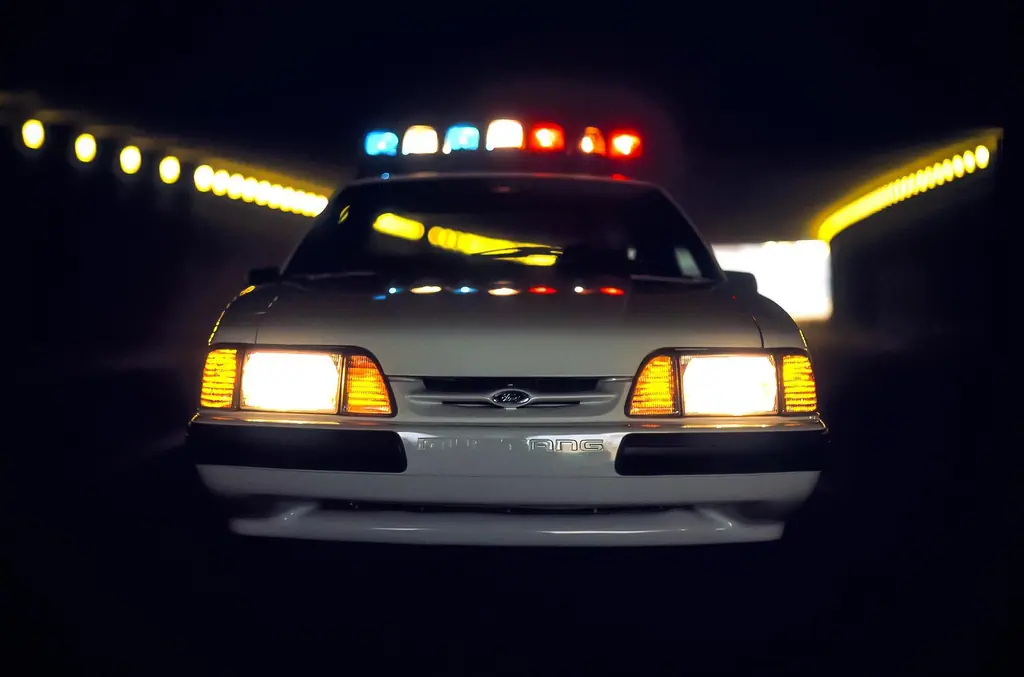
During the 1980s, officers knew the limitations of the big Crown Victorias. They could approach 130 mph, but acceleration was hardly their strong suit. The Mustang, by contrast, could quickly close the gap on drivers who thought they had escaped a full-size patrol car.
From 1982 through 1993, Ford built roughly 15,000 Mustang SSPs. They served with police agencies across the country as well as the FBI, DEA and other government agencies.
Dodge Charger Pursuit — The Modern Hunter
When the Dodge Charger Pursuit entered police service in 2005, plenty of officers welcomed the change. After years of relying on aging Crown Victorias, departments finally had a modern performance sedan designed to chase down fast offenders.
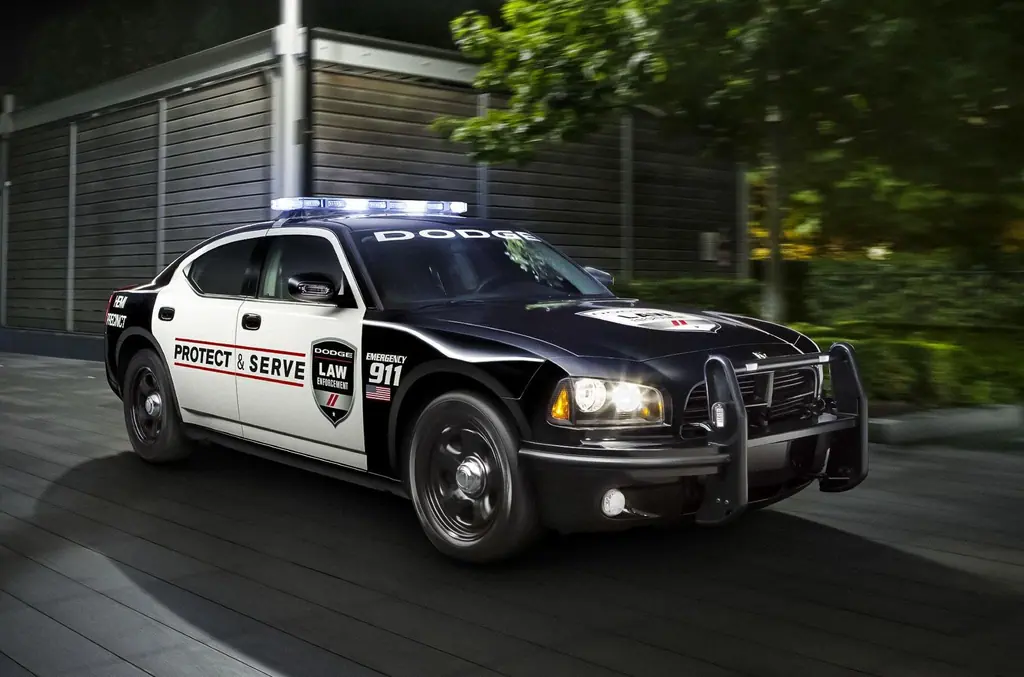
The early Charger Pursuit was powered by a 5.7-liter Hemi V8 producing 345 hp. It could reach 60 mph in about six seconds and had a top speed of roughly 149 mph.
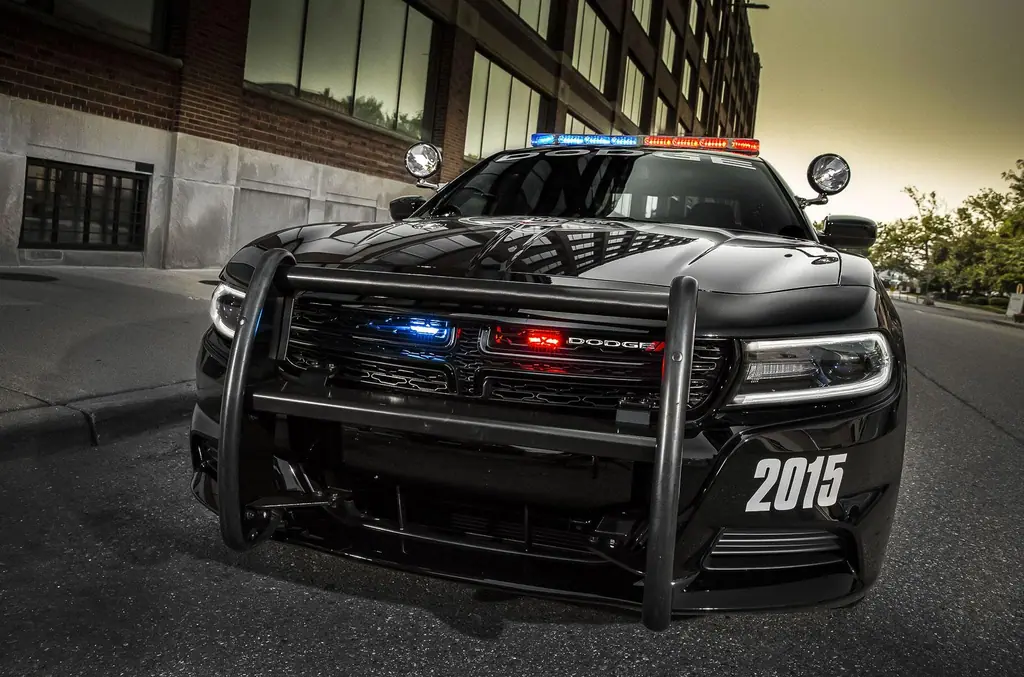
Later versions were offered with two engines: the 3.6-liter Pentastar V6 making 304 hp and the 5.7-liter Hemi V8 producing 375 hp. An eight-speed automatic transmission handled shifting, while all-wheel drive was available, an especially useful option for departments operating in snowy states.
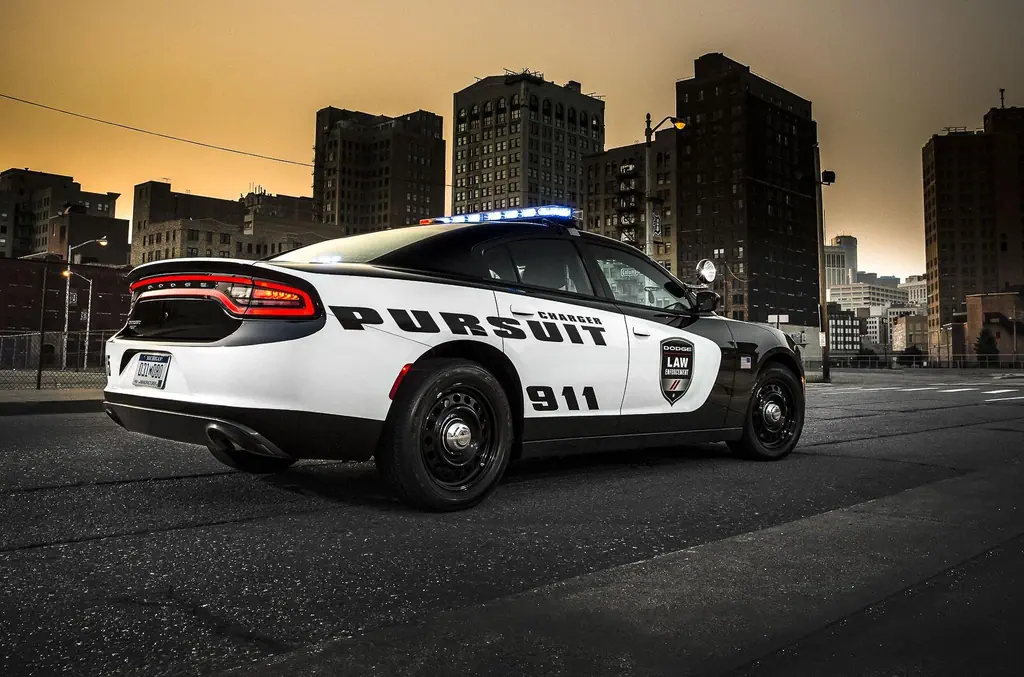
The Pursuit also featured a number of small but important details. One example was the column-mounted shifter, which freed up space on the center console for police equipment.
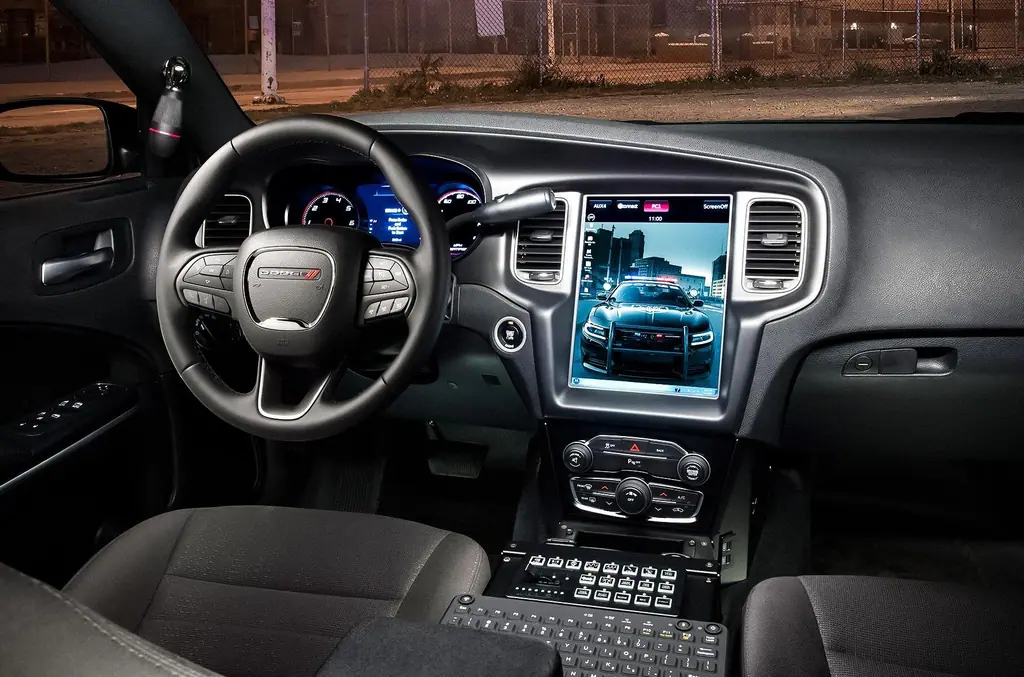
Another system used the rearview camera to monitor suspicious movement around the vehicle. If it detected a potential threat, it could automatically lock the doors, raise the windows and activate the exterior lights to discourage anyone from approaching.
Ford F-150 Police Responder — The Pickup Nobody Expected
And finally, here's the surprise: the Ford F-150.
At first glance, a pickup truck doesn't exactly scream "pursuit vehicle." But in 2021, Michigan State Police and the Los Angeles Police Department tested the F-150 Police Responder—and the results were eye-opening.
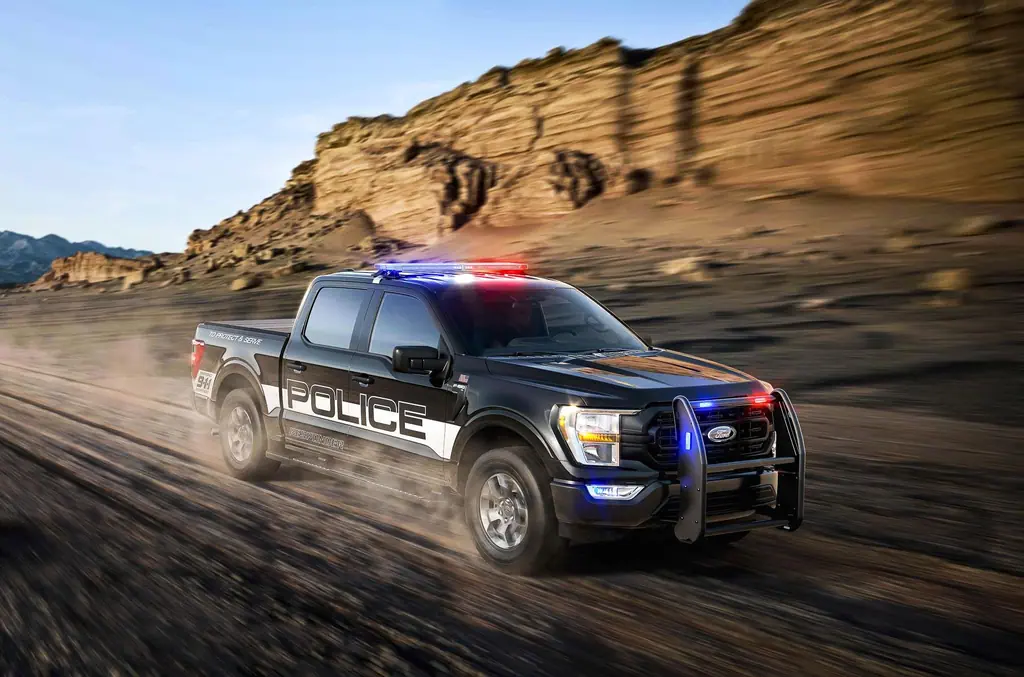
Under the hood was Ford's twin-turbocharged 3.5-liter EcoBoost V6 making more than 400 hp and 500 lb-ft of torque. The truck came with four-wheel drive and an automatic transmission.
The result? A 0-to-60-mph time of just 5.4 seconds and a top speed of more than 118 mph.
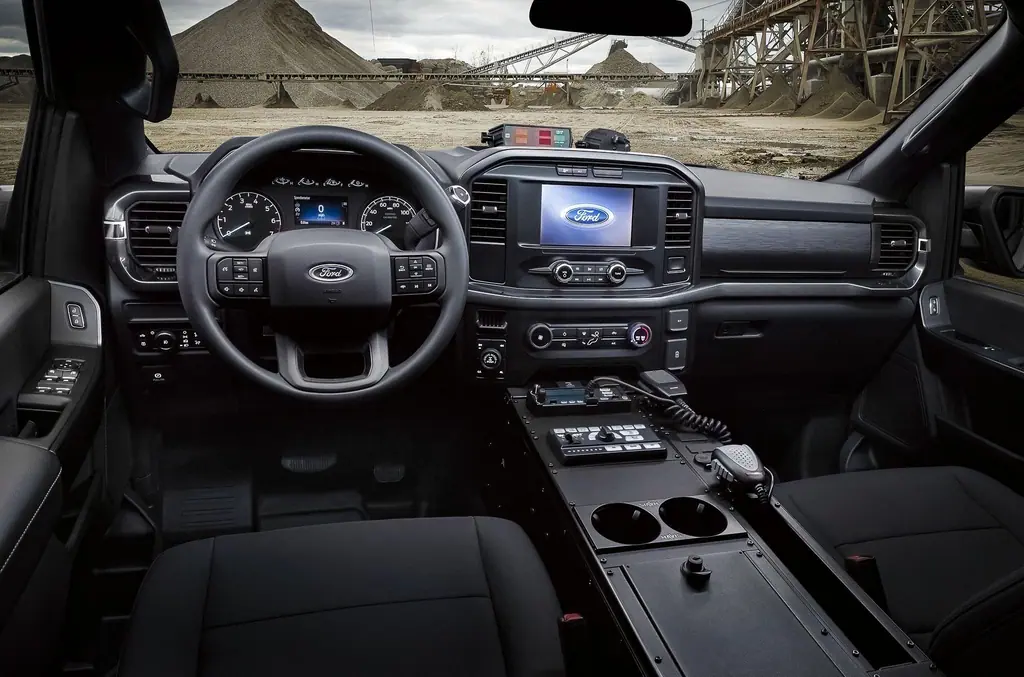
For something that looks like a farm truck, that's almost absurd. But the numbers don't lie: the F-150 Police Responder became one of the quickest police vehicles in America.
Police cars in the United States are about much more than flashing lights and sirens. They're a reflection of how the auto industry adapts to changing demands, technology and the challenges faced by law enforcement.
From heavyweight Dodge Polaras to modern Ford pickups, every generation of police vehicles tells a story about its era. In the 1960s, a suspect might have been staring down the hood of a big-block V8 Dodge. Today, that same suspect could find a pickup truck closing the gap in the rearview mirror.
One thing hasn't changed, though: trying to outrun the law in America has always been a bad idea—and it still is.
You may also be interested in the news:
These 8 Cars Went Over 1 Million Miles — They Just Don’t Build Them Like They Used To
Some cars outlast generations of owners, proving that careful maintenance and durable engineering can deliver extraordinary mileage.
The 1957 Dodge: How “Autodynamics” Shaped One of Detroit’s Boldest Designs
The 1957 Dodge Looked Like a Dream Car, but Its Biggest Flaw Was Hiding Beneath the Surface.
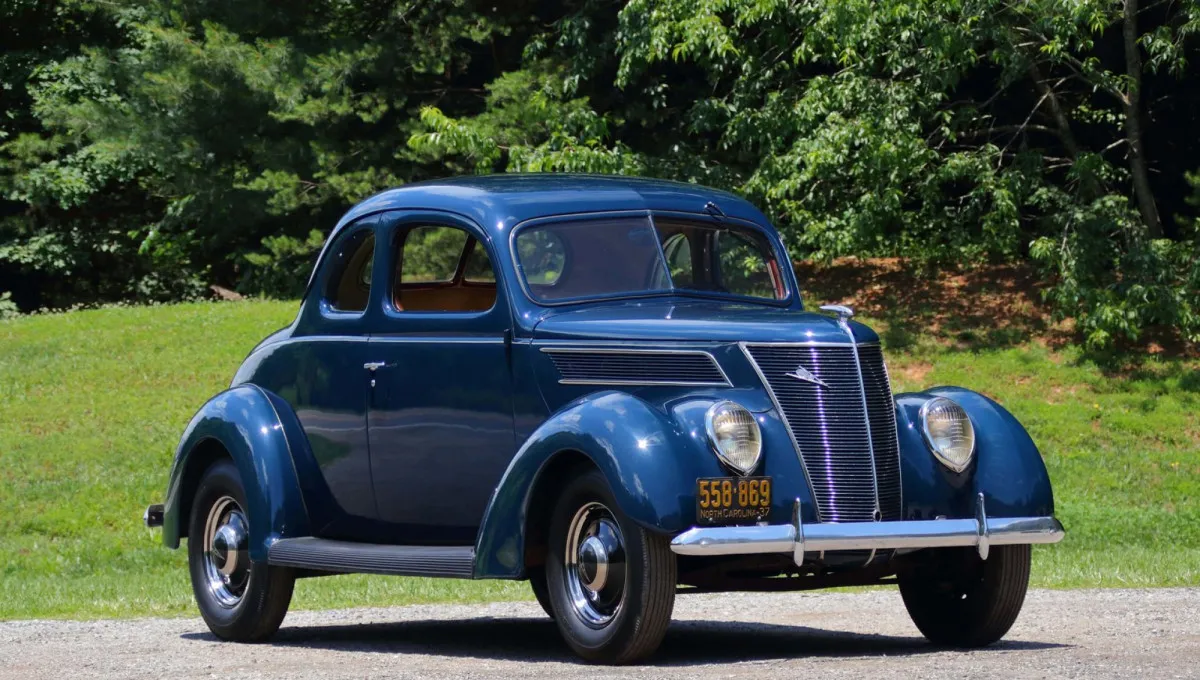
The 1937 Ford Was a Quality Car at an Affordable Price — Here’s What Made It Stand Out
The 1937 Ford featured several major changes and improvements. Let’s take a closer look.
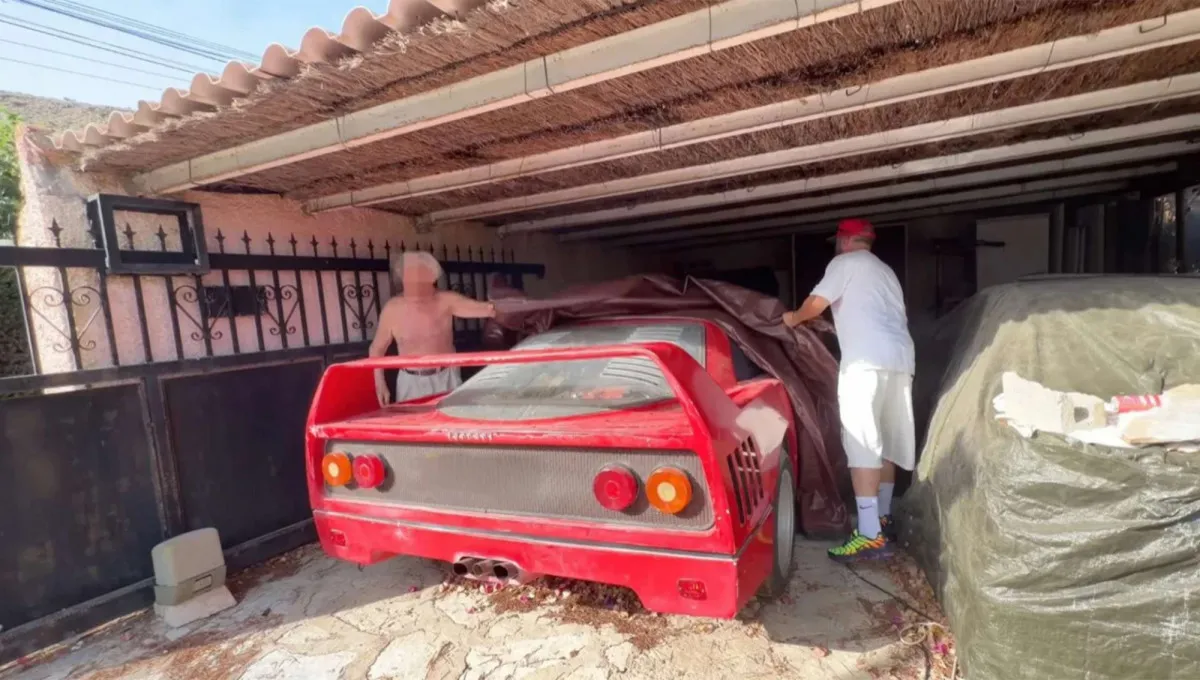
Two Ferrari F40s Spotted on Google Maps Turn Out to Be Pontiac Fiero Replicas
Two Ferrari F40 lookalikes spotted on Google Maps in Spain turned out to be replicas built on an American sports car.
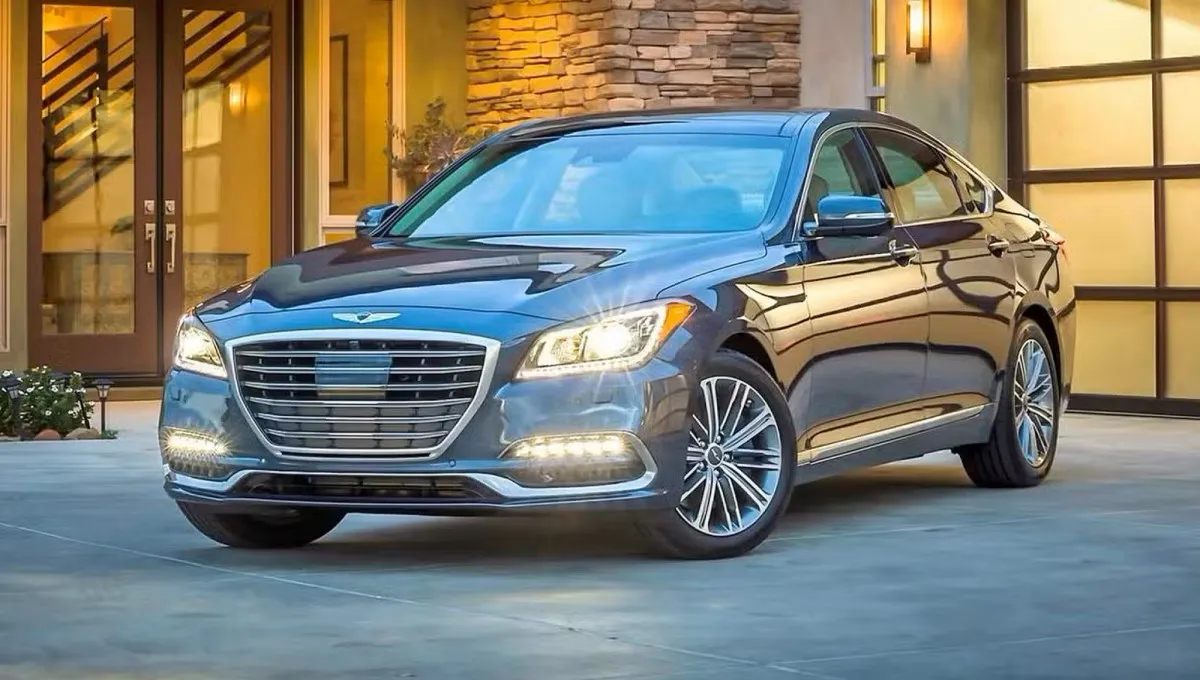
Hyundai Recalls Nearly 95,000 Genesis Sedans Over Fire Risk From Power Seats
Hyundai is recalling 94,622 Genesis sedans after a faulty power seat switch was linked to overheating and potential vehicle fires.