
Crazy Studebaker: The 75 mm Gun Motor Carriage T27
The Studebaker T27 was an ambitious American attempt to build a low-profile, highly mobile tank destroyer before the concept was ready.

The Story of America's Experimental 75 mm Tank Destroyer
Using automobiles as gun platforms wasn't a new idea when World War I began. At the time, putting artillery on a wheeled chassis was one of the few practical ways to make it more mobile. Anti-aircraft guns were an obvious application, and militaries experimented with self-propelled anti-aircraft weapons throughout the era.

The U.S. Army was no exception. American engineers also experimented with self-propelled guns, including systems that would later be considered for anti-tank use. But after World War I, American self-propelled artillery largely went dormant for nearly two decades. Money was scarce, and by the early 1920s, a conservative Army leadership saw little need for self-propelled artillery.
The Army returned to wheeled self-propelled guns in 1940, largely because there weren't many alternatives. The United States had few suitable tracked chassis available, particularly purpose-built tank chassis. An attempt to build a tank destroyer on a tractor chassis looked questionable from the beginning.
There was also a fundamental problem with the Army's early tank-destroyer concept. The 3-inch Gun Motor Carriage T1 needed a wide field of fire, something its chassis couldn't provide.

By the summer of 1941, the Army came up with a more practical temporary solution: mount a 75 mm gun on a half-track. That led to the 75 mm Gun Motor Carriage T12, better known as the GMC M3. At the same time, engineers continued working on wheeled tank destroyers. Initially, these vehicles carried nothing more powerful than the 37 mm M3A1 anti-tank gun, but the idea of fitting a larger weapon was clearly attractive.
In 1941, Army planners became increasingly interested in four-wheel-drive vehicles with unusually low profiles. One of the people pushing the concept was Col. Herbert Lawes, the quartermaster at Camp Holabird.

The first attempt was the Ford Swamp Buggy, a low-slung, four-wheel-drive multipurpose vehicle built around components from the Ford 2G8T truck. A prototype was completed in May 1941 and eventually received the designation 37 mm Gun Motor Carriage T8.
Early testing suggested that the basic idea had potential. That led to a proposal for an alternative chassis for the 75 mm M1897A4 gun. The existing GMC T12 was relatively tall, something the Tank Destroyer Command didn't particularly like.
That was the beginning of the 75 mm GMC T27, which would carry the most powerful weapon ever proposed for one of these two-axle low-profile gun carriers.

Why Studebaker Got Involved
Studebaker's interest was easy to understand. Without the large-scale truck production contracts it wanted from the U.S. Army, the Studebaker Corporation was looking for additional opportunities.
The company's military work included the Studebaker US6, but an Army contract for a specialized combat vehicle was potentially even more attractive. Like Ford, Studebaker was willing to experiment with unusual military projects in search of new business.
The low-profile chassis for the 75 mm M1897A4 appears to have been driven largely by Col. Herbert Lawes and the work being done at Camp Holabird.
In the summer of 1941, an extremely unusual chassis arrived there. It wasn't just low-slung; it also had two separate driving positions. A second, even stranger chassis followed.
On that vehicle, the engine was moved from the front to the side. That created an open platform in the center of the chassis where a gun could be mounted with a 360-degree field of fire. The second prototype also used dual rear wheels.
Most importantly, its payload capacity was twice that of the Ford Swamp Buggy — roughly 1.65 U.S. tons rather than about 1,650 pounds. The Studebaker chassis was also considerably larger.
That made it a much more promising candidate for carrying the Army's 75 mm gun.

The T27 Runs Into Trouble
In early October 1941, both vehicles were sent to Aberdeen Proving Ground for testing.
Engineers took the first prototype, with its rear-mounted engine, and installed a gun mount similar to the one used on the GMC T12. The arrangement effectively turned the rear of the vehicle into its front. With two driving positions, that wasn't necessarily a problem.
The vehicle was designated the 75 mm GMC T27.
Testing, however, didn't last very long.
The first problem was weight. The chassis was simply overloaded. Once simulated ammunition racks were installed and the crew climbed aboard, the Studebaker's shortcomings became obvious.
Then came an even bigger problem: the chassis wasn't stable enough to serve as a gun platform for such a large weapon. When the 75 mm gun was fired, the entire vehicle was pushed sideways.
In theory, outriggers or firing spades could have helped anchor the vehicle to the ground. But the Tank Destroyer Command wasn't interested in pursuing that solution.
The T27 was therefore rejected relatively quickly. The program was officially canceled in April 1942, although the vehicle had effectively been abandoned much earlier.
Studebaker Kept Experimenting
There was one more possibility for the unusual side-engine chassis. Engineers considered converting it into a carrier for the 37 mm M3A1 gun. But by then, the production GMC M6 already offered a much more practical solution, leaving little reason to continue with the conversion.
Studebaker didn't stop experimenting with unusual military vehicles, though.
In 1942, the company produced the low-profile LA and LC trucks, but neither progressed beyond the prototype stage.
Still, the company's willingness to chase unconventional military contracts eventually paid off.
A British order led Studebaker into the development of a tracked snow vehicle that would later become useful in snow and swamp conditions. That vehicle became the M28/M29 Weasel — one of Studebaker's most interesting wartime projects, even though it is often overshadowed by the company's better-known US6 military truck.
Interestingly, the M29 was also considered as a potential gun platform.
That story, however, deserves a separate look.
You may also be interested in the news:
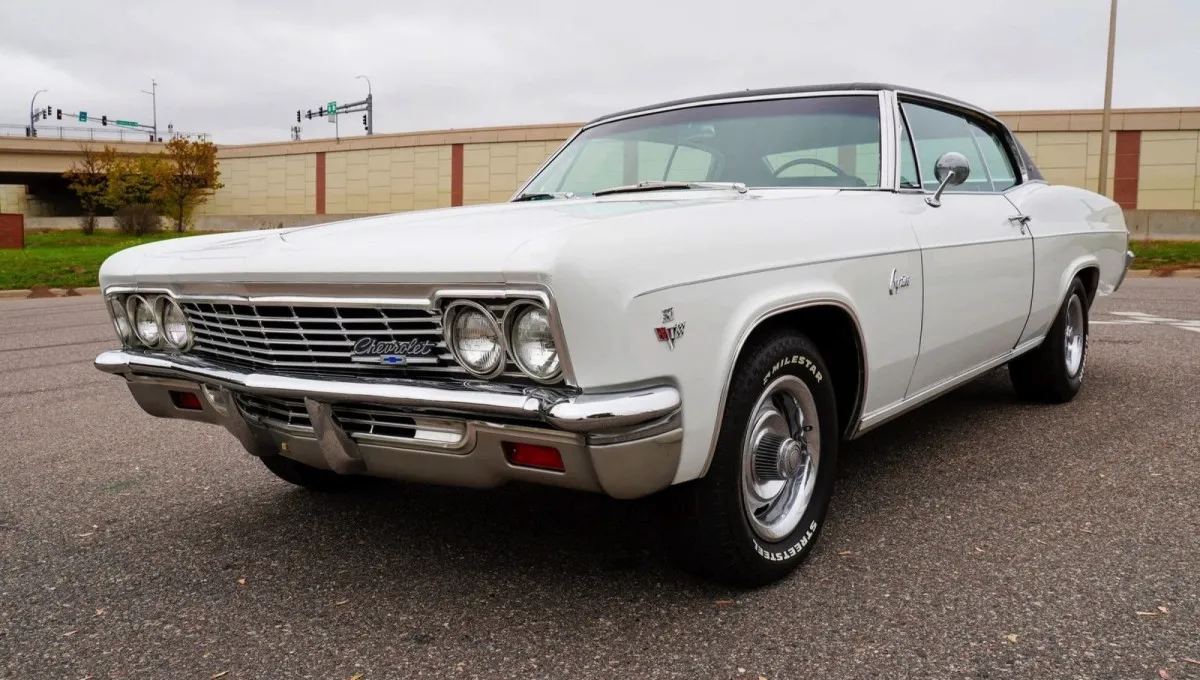
Restored 1966 Chevy Caprice Looks Showroom-Fresh, but Those 13K Miles Don't Tell the Whole Story
This restored 1966 Chevrolet Caprice looks road-ready, but its 13,000-mile odometer reading comes with an important catch.
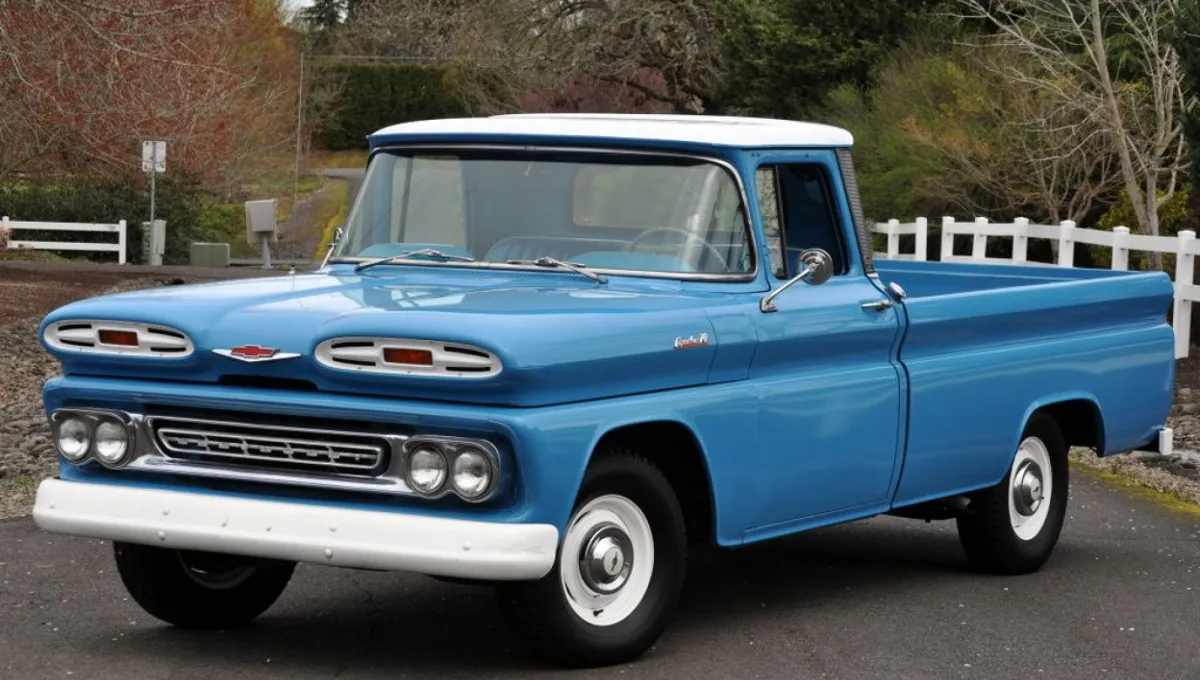
The 1960 Chevrolet Pickup: The Biggest Thing to Happen to Trucks Since Trucks Were Invented
Chevrolet unveiled an all-new pickup for 1960, calling it “the most important news since trucks came into being!”
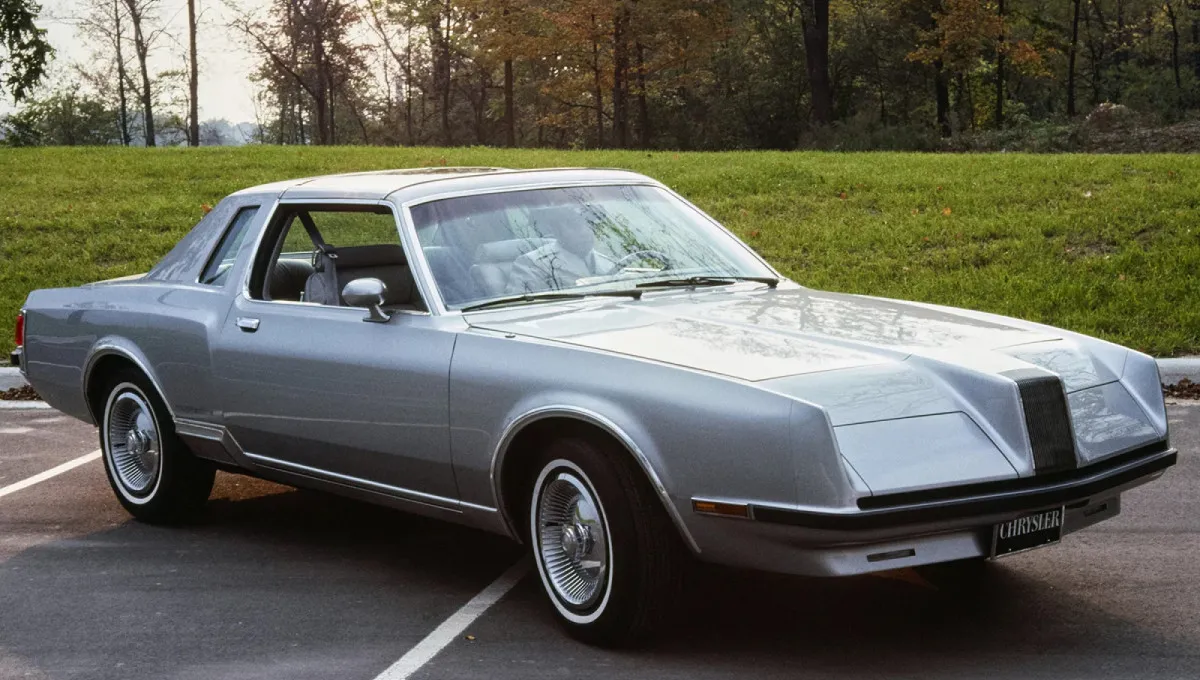
The 1977 Chrysler LeBaron Turbine: The Final Chapter of a 25-Year Experiment
Chrysler's 1977 LeBaron Turbine concept showcased decades of gas turbine research, but financial troubles ultimately brought the ambitious program to an end.

Why Colored Stripes on New Tires Confuse Drivers: What They Really Mean
A blue stripe on one tire brand can mean something entirely different on another, leaving drivers wondering what the markings mean.
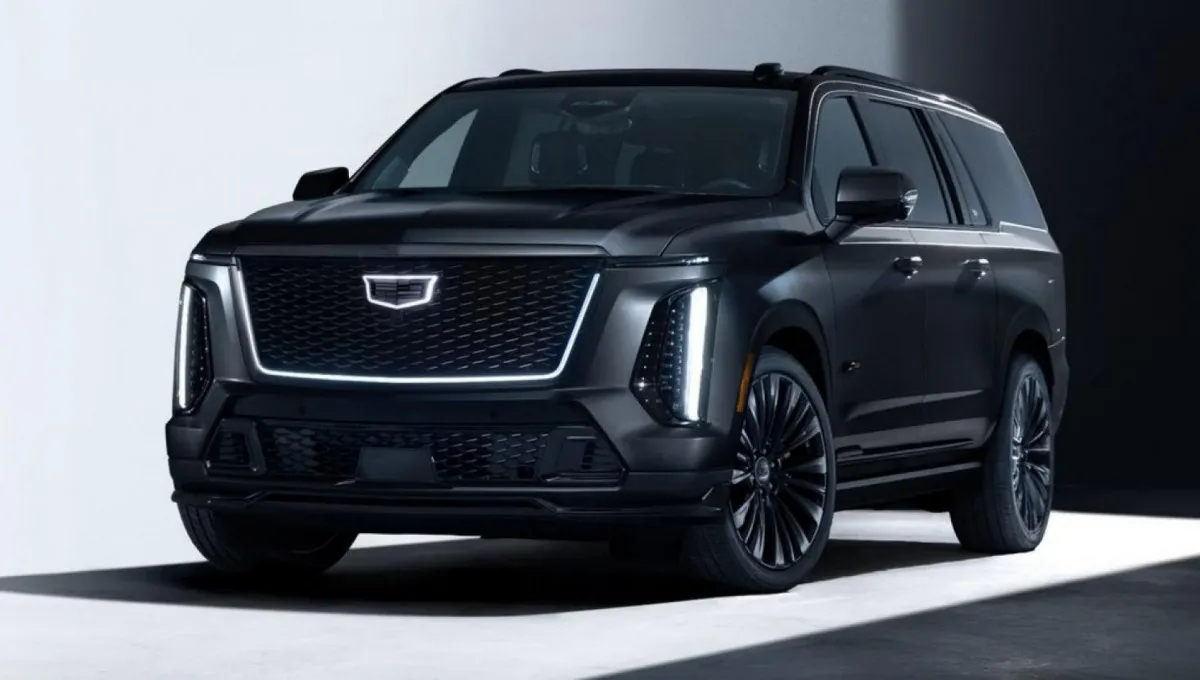
Cadillac Celebrates Its 125th Anniversary With the Most Expensive Escalade-V Ever
One of America’s oldest automotive brands has unveiled a limited-edition version of its flagship SUV to mark a major milestone.