
GWM Dismisses Range Extenders as a “Shortcut,” Unveils World’s First AI-Driven Platform Supporting Every Powertrain Type
Great Wall Motors has outlined the core pillars of its long-term technology strategy

Great Wall Motors Rules Out Range-Extender EVs, Bets on Efficiency With New GWM One Platform
As global automakers experiment with every possible form of electrification, China’s Great Wall Motors (GWM) is drawing a clear line in the sand. During the global launch of its new GWM One vehicle platform, company president Mu Feng said the automaker will not pursue range-extended electric vehicles — a technology some rivals see as a transitional solution.
According to Mu, the decision isn’t about engineering difficulty. It’s about efficiency.
Why GWM Is Walking Away From Range Extenders
Range-extended EVs use a gasoline engine not to drive the wheels directly, but to generate electricity for an electric motor. While the idea promises longer driving range and fewer charging stops, Mu argues that the real-world tradeoffs outweigh the benefits.
In GWM’s internal testing, these systems showed significant efficiency losses due to multiple energy conversions: fuel to electricity, electricity through control systems, and then back to mechanical motion at the wheels. At medium and highway speeds, those losses become especially pronounced.
GWM estimates that range-extended systems can be at least 13 percent less efficient than direct-drive powertrains.
“We prefer a technically simpler solution,” Mu said. “This is about staying true to the fundamentals of mobility.”
What Is GWM One?
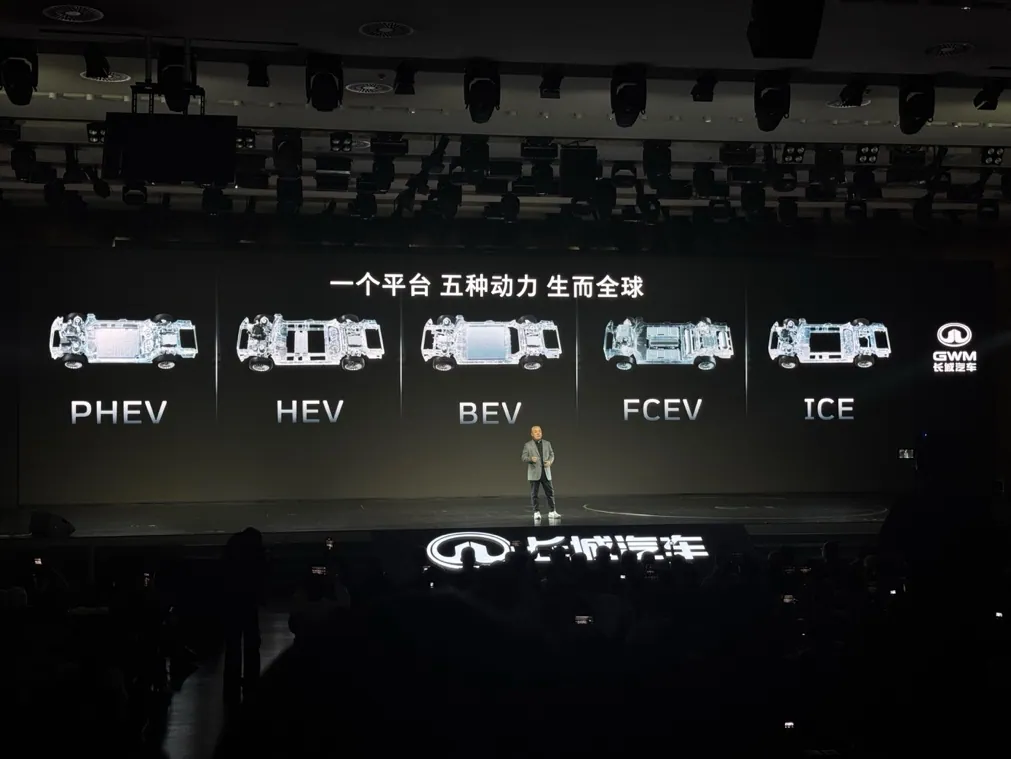
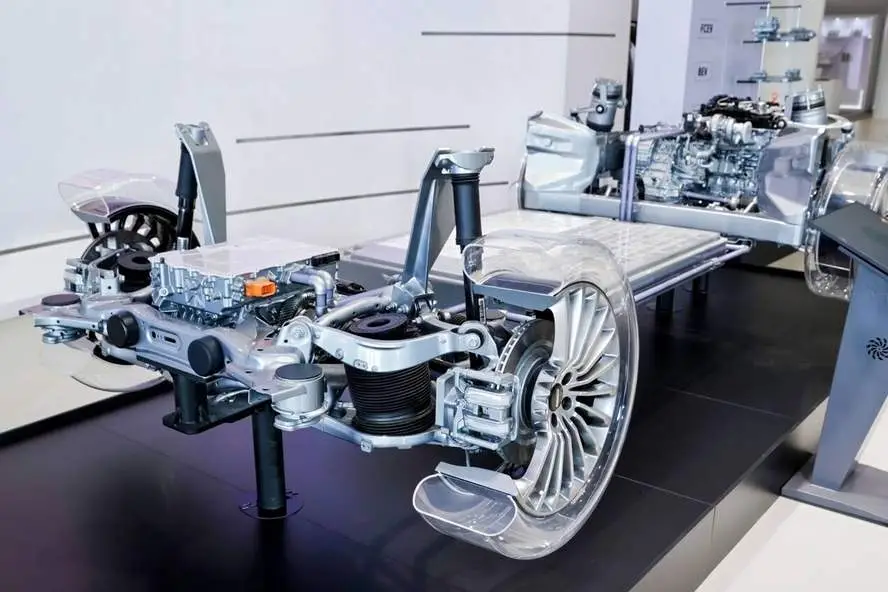
GWM One is the company’s most ambitious vehicle platform to date, described by the automaker as the world’s first AI-based architecture designed to support a full spectrum of powertrains.
The platform is engineered to accommodate:
-
Battery-electric vehicles
-
Fuel-cell electric vehicles
-
Internal combustion engines
-
Hybrid and plug-in hybrid systems
Key hardware features include a dual-motor layout for both front and rear axles, a modular vehicle structure, and intelligent torque vectoring for improved handling and efficiency.
GWM also revealed an upgraded version of its Hi4 hybrid system, which now supports:
-
Dual motors on both axles
-
Multiple hybrid operating modes
-
Multi-speed transmissions, including a four-speed hybrid gearbox
-
A turbocharged 2.0-liter hybrid engine
Built for Scale and Flexibility
GWM One is designed to underpin more than 50 models globally, spanning sedans, SUVs, compact cars, pickups, and other vehicle segments. The company calls its strategy “one architecture, full compatibility,” allowing different powertrains and body styles to be developed on a shared technical foundation.
At the heart of this approach is a highly modular design. Hardware is broken down into 49 core modules — such as engines, gearboxes, and battery systems — along with 329 shared components. Software follows a similar philosophy, using AI to dynamically combine more than 300 reusable functional modules and thousands of configuration tags depending on driving scenarios.

High-Voltage Tech and Future Powertrains
The platform supports an electrical architecture of up to 900 volts, enabling ultra-fast charging. GWM claims peak charging power can exceed 600 kW, along with support for bidirectional power discharge.
Looking ahead, the company also plans to introduce a diesel-hybrid powertrain based on GWM One. GWM says this setup could reduce overall fuel consumption by 9 percent and cut city fuel use by up to 15 percent — a notable move as most automakers focus exclusively on gasoline hybrids.
Software, Safety, and Materials
GWM One integrates several in-house systems, including the Coffee EEA 4.0 electronic architecture, an ASL intelligent agent, and a dual large-model control system managing the powertrain, chassis, and driver-assistance data.
On the safety side, the platform uses ultra-high-strength steel rated at 2,200 MPa, semi-solid magnesium alloy components, and proprietary crash-test dummies designed to evaluate both passive and active safety systems.
With GWM One, Great Wall Motors is betting that efficiency, modularity, and software intelligence matter more than hedging bets with range-extender technology. As the platform rolls out across dozens of future models, the company’s stance signals a clear strategic choice: no range extenders, no half measures — just a tightly integrated approach to electrification.
Whether that philosophy resonates with global consumers remains to be seen, but GWM has made one thing clear: it’s not following the crowd.
You may also be interested in the news:

Honda Is Developing a System That Charges EVs While They Drive
Honda plans to begin testing wireless charging technology for electric vehicles on the move later this year.
Tesla’s New Roadster Can Fly, but That May Be the Least Impressive Thing About It
Nearly a decade after Elon Musk unveiled the next-generation Roadster, Tesla has finally revealed its most outrageous capabilities.
Students Develop an Electric Car That Captures Tire and Brake Dust
A student-built electric concept aims to reduce road pollution by collecting microscopic particles released by tires and brakes.
Jaguar Type 01 Revealed as Brand's First Production Model After Its Reinvention — Pricing Announced
Jaguar has unveiled the Type 01, a luxury electric grand tourer that marks a new chapter for the British automaker ahead of 2027 production.
Volkswagen's New Electric SUV Can Travel 372 Miles on a Charge — And It's Replacing the ID.4
Volkswagen has officially unveiled the all-electric ID. Tiguan, a new SUV designed to replace the ID.4 with updated styling and improved range.