
The Secret Goldfisch Project: BMW Engineers Created a V16 Monster
Hidden behind closed doors, BMW once built a V16-powered flagship that nearly rewrote the luxury car rulebook.
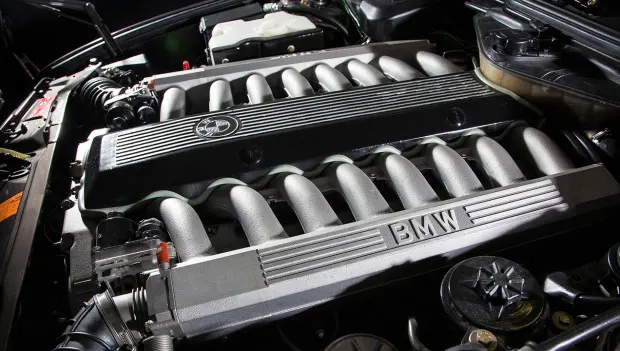
During the late 1980s, the automotive industry was locked in a technological arms race. Germany’s premium automakers were competing not only in luxury but also in engineering, constantly searching for innovations that would impress the world’s most demanding buyers. It was during this period that BMW quietly developed one of the most ambitious and secretive projects in its history: Goldfisch.
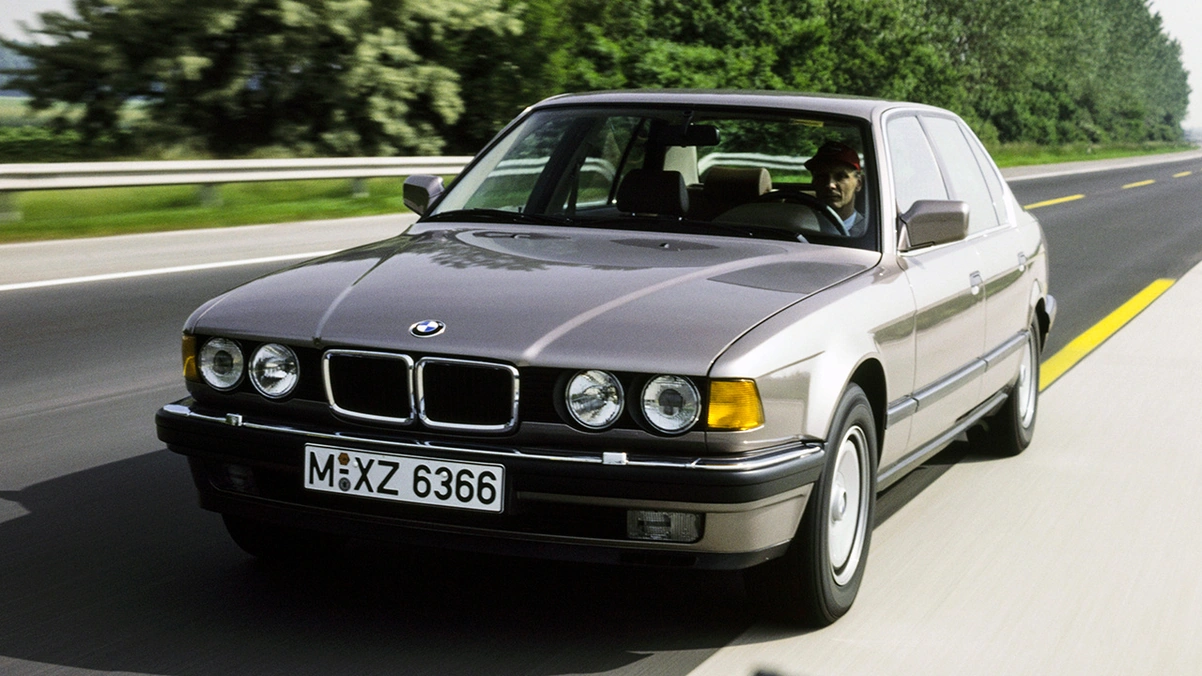
The rivalry between Munich and Stuttgart had been intensifying since the mid-1970s. BMW’s flagship 7 Series emerged as a direct challenger to the Mercedes-Benz S-Class, setting the stage for a battle that would eventually focus on engine technology.
While Mercedes continued relying on V8 power, BMW stunned the industry in 1987 with the launch of the 750iL, powered by a 5.0-liter V12 producing 300 horsepower. Mercedes responded four years later with the legendary S600 and its 6.0-liter V12. At the time, it seemed inevitable that the competition would escalate even further, and both manufacturers seriously explored the idea of building 16-cylinder engines.
The concept itself wasn’t new. The first attempts at creating V16-powered automobiles date back to the 1920s. In 1925, Bugatti unveiled the Type 45, widely regarded as one of the earliest V16 projects. Despite displacing just 3.0 liters, its engine produced an astonishing 250 horsepower—an incredible figure for its era.
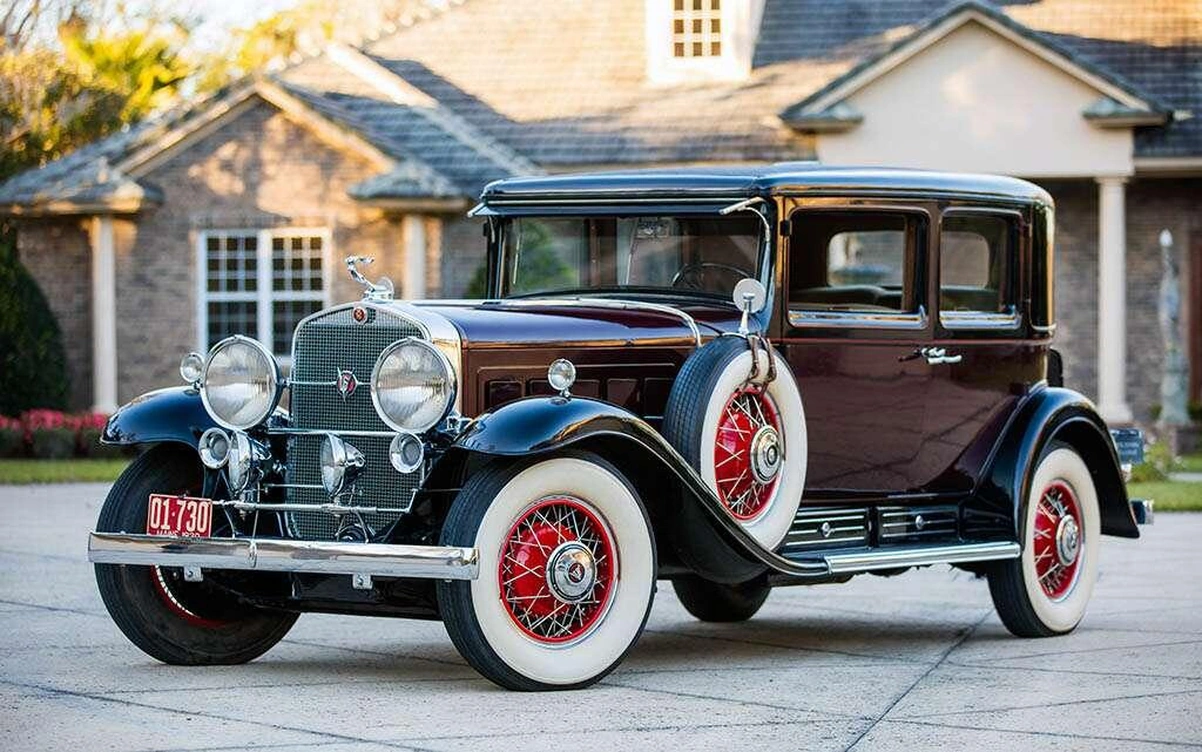
American manufacturers also experimented with the configuration. During the 1930s, Cadillac equipped its prestigious Series 90 models with a massive 7.0-liter V16 that generated 165 horsepower.
Legendary engineer Fred Duesenberg had even bigger ambitions, envisioning a four-carburetor Model H engine capable of producing 700 horsepower. World War II ultimately halted many of these projects, and the industry shifted toward more practical solutions in the postwar years.
For decades afterward, proven engine layouts dominated the market. Americans embraced V8s, while Europeans favored inline-four and inline-six designs. That changed in the 1980s when BMW and Mercedes reignited the horsepower war.
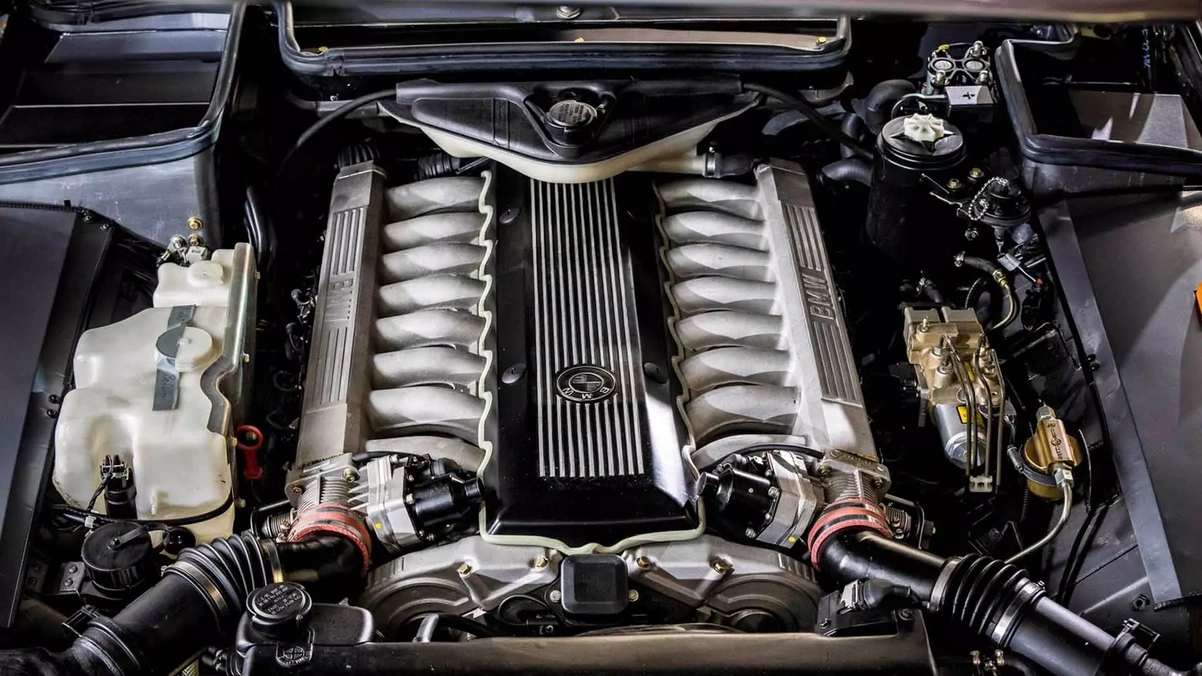
BMW took the first major step by developing a V12 for the second-generation 7 Series. The engine was essentially created by combining two inline-six engines on a common crankshaft. The result delivered smooth operation, impressive torque, and relatively manageable production costs. The downsides included higher fuel consumption, increased weight over the front axle, and more demanding cooling requirements.
The success of BMW’s V12 encouraged engineers to think even bigger.
In 1987, a team led by Dr. Karl-Heinz Lange, Adolf Fischer, and Hans-Peter Weisbarth received approval to develop an all-new V16 engine under the codename Goldfisch.
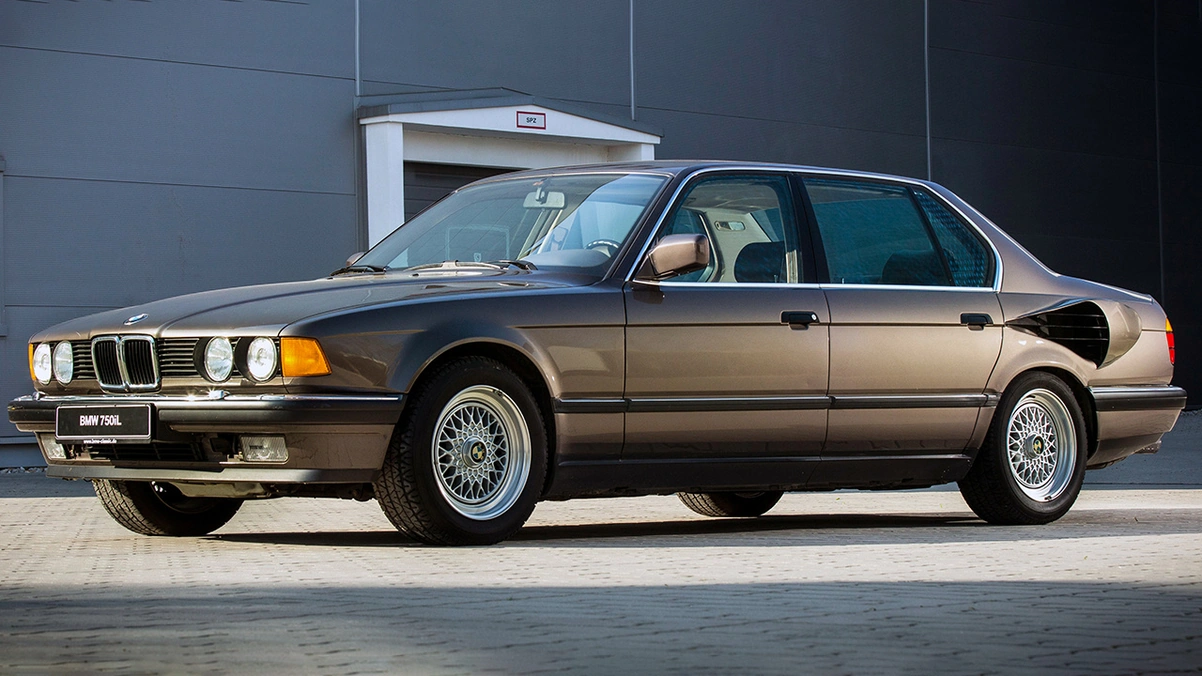
Just six months later, in January 1988, BMW completed the first prototype. The naturally aspirated 6.7-liter V16 featured a relatively simple design with a single camshaft per cylinder head, yet it produced an impressive 408 horsepower and 470 lb-ft of torque.
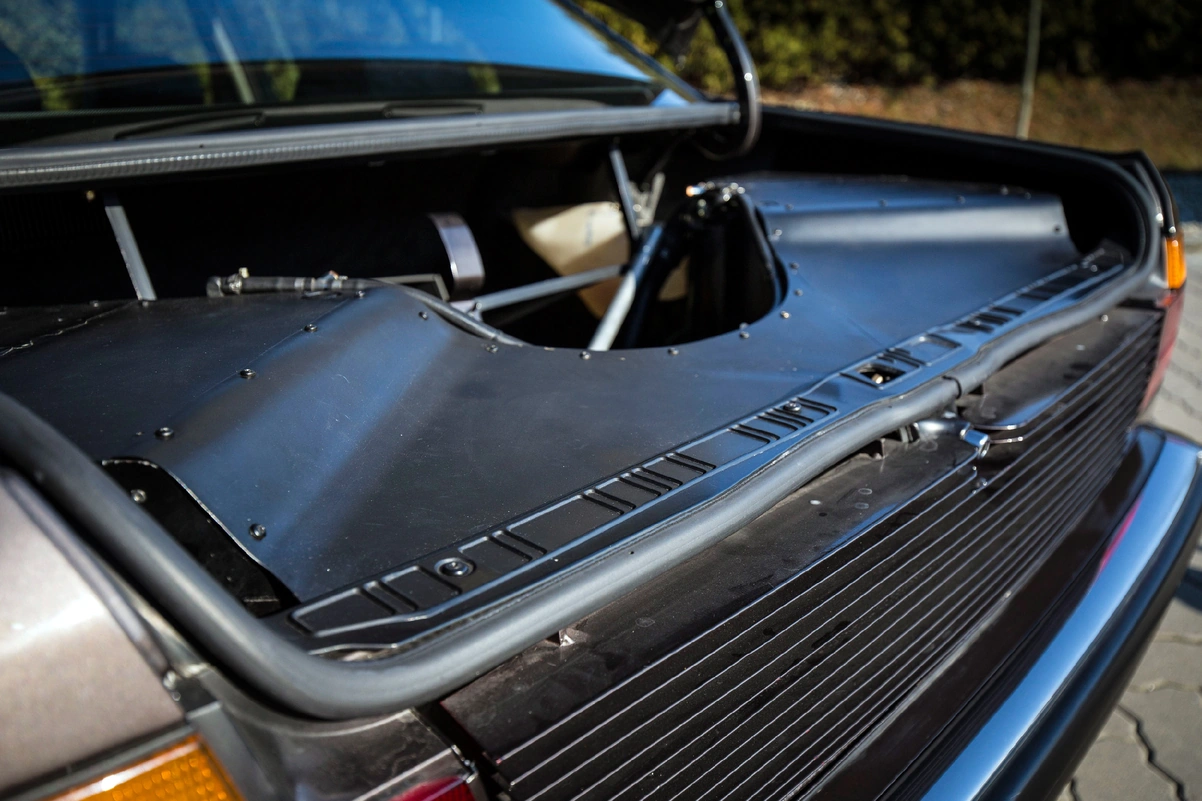
Fitting such a massive engine into a 7 Series proved challenging. Engineers had to completely redesign the cooling system, relocating the radiators and cooling fans to the rear of the vehicle. Large air intakes were cut into the rear fenders to feed the system, giving the sedan an appearance that some compared to a Porsche.
Performance was extraordinary for the era.
The prototype could sprint from 0 to 62 mph in just six seconds, while its theoretical top speed approached 186 mph. By comparison, the production BMW 750iL equipped with an automatic transmission reached 62 mph in about seven seconds and was electronically limited to 155 mph.
Despite its impressive specifications, Project Goldfisch never reached production.
Several factors worked against it. First, increasingly strict emissions regulations made large-displacement engines far more difficult to justify. Second, the economics simply didn’t make sense. At a time when a BMW 750iL cost roughly 130,000 German marks, a V16-powered flagship could easily have exceeded 300,000 marks, placing it far beyond the reach of most buyers.
There was also a growing realization that even V12 engines were already more than most luxury sedan customers needed. The arrival of BMW’s compact and efficient M60 V8 engines further undermined the case for a V16. Those newer V8s produced only slightly less power than the company’s V12 while offering lower weight, better efficiency, and lower production costs.
In the end, Goldfisch remained exactly what BMW intended it to be: a fascinating engineering experiment. Yet it also stands as a reminder of an era when automakers were willing to pursue seemingly impossible ideas simply because they could.
You may also be interested in the news:
“Are You Sure It’s Chinese?” Who Really Builds China’s Car Engines
Who Really Develops China’s Car Engines?
Chrysler's Aluminum Slant 6 Engine: The Lightweight Experiment of 1961–1963
Chrysler built more than 50,000 cars with an aluminum-block Slant 6 before production challenges brought the project to an end.
Chrysler’s Hemi Was Too Expensive to Build. Its 1958 Plan B Became a V8 Legend
After its famous Hemi V8s, Chrysler took a new direction in 1958 with a simpler, more affordable engine.
BMW Develops Ultra-Lightweight Wheels for the M5
BMW's new high-pressure cast wheels promise lower weight, improved strength, and more aerodynamic designs when they arrive this fall.
BMW Adds Another Electric SUV: Meet the New iX4
BMW has unveiled the all-electric iX4, a new SUV coupe arriving in 2027, with European pricing already announced.