
Volkswagen Amarok Will Continue on U.S. Platform, While South American Model Moves to Chinese Architecture
The next-generation Amarok coming to South America will ride on a Chinese SAIC platform rather than the Ford Ranger architecture used globally.
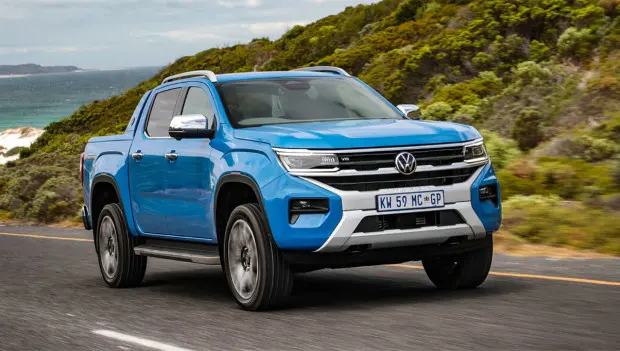
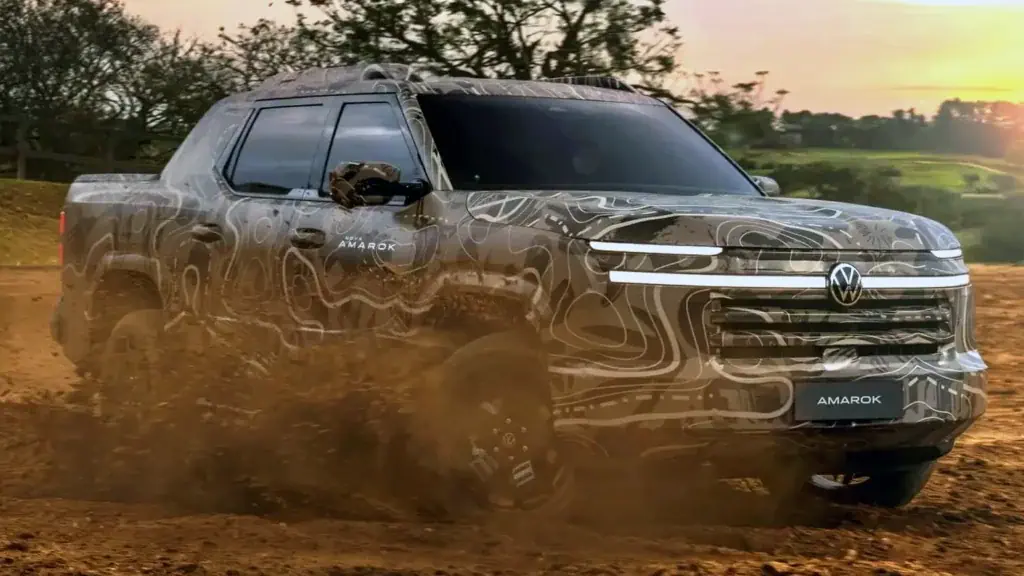
The arrival of the next-generation Amarok is getting closer. Volkswagen has shown its updated midsize pickup in camouflage, shortly after unveiling the smaller South American Tukan last weekend. The truck, which competes with the Toyota Hilux, Ford Ranger, and Mitsubishi Triton, will have little in common with previous Amarok generations. It is expected to go on sale next year, with production set to begin at Volkswagen's plant in Argentina, where the current pickup is already built.
This generation is expected to be aimed primarily at South American markets, although it could also reach other regional markets. Volkswagen has been developing it for at least a couple of years, and while the company has yet to reveal many details, the truck is expected to be the result of Volkswagen's long-term partnership with Chinese automaker SAIC. It will reportedly share its underpinnings with the Maxus Interstellar X.
The Two Amaroks
Borrowing engineering from another automaker is nothing unusual in the midsize pickup segment. Just look at the Nissan Navara and Mitsubishi Triton. Volkswagen has taken a similar approach before, launching the global second-generation Amarok on the Ford Ranger's platform.
At the same time, Volkswagen continued producing the first-generation pickup in South America, keeping the 2010 model on its original body-on-frame architecture and giving it a facelift in 2024. As a result, the two current Amaroks share little more than a name. One is based on Ford's platform, while the other uses an architecture that Europe abandoned back in 2020.
Images of the next Amarok designed for South America confirm that it will look substantially different from the outgoing model. The front end is completely new, featuring a full-width LED light bar and two additional daytime running lights positioned right along the hood line. Below them is a relatively narrow grille split by two horizontal bars.
From the side, the truck gets boxy side mirrors, squared-off wheel arches, large door handles, angular windows, and roof rails. The images do not show the rear of the new Amarok, but that end is also expected to look noticeably different from the current truck.
Chinese Underpinnings
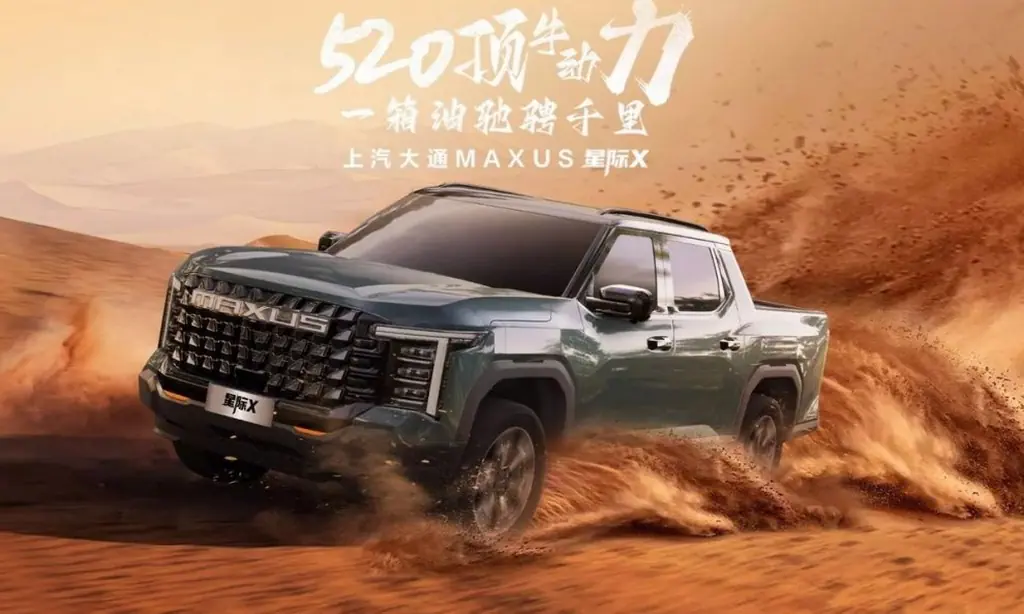
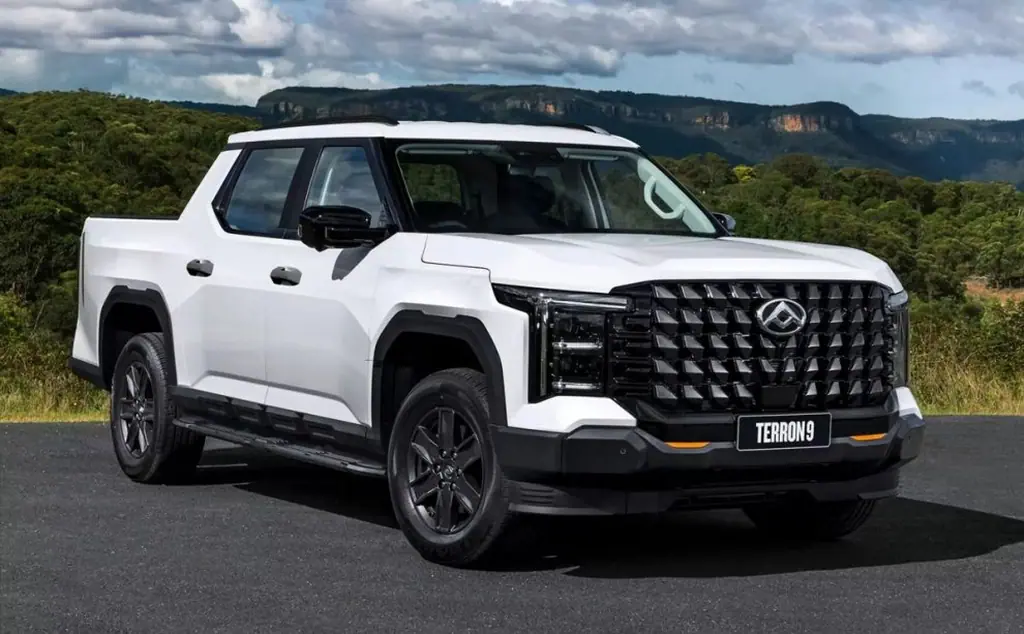
The South American Amarok is expected to use the same platform as SAIC's Maxus Interstellar X, which is sold outside China, including in Australia, as the LDV Terron 9. Judging dimensions from photographs is always difficult, but the Volkswagen appears to be slightly shorter and narrower than the Maxus.
For comparison, the Interstellar X is roughly 18 feet long, 6.6 feet wide, and rides on a wheelbase of about 10.8 feet. The current Amarok is approximately 17.6 feet long, with a wheelbase of about 10.2 feet.
Exact powertrain specifications have not been announced either, but Volkswagen has confirmed that the next generation will be electrified and the most powerful Amarok ever built. The range-topping 800 TSI, for example, is expected to feature a plug-in hybrid powertrain producing more than 470 horsepower and 590 lb-ft of torque. That should be enough to propel it from 0 to 62 mph in less than five seconds.
Naturally, four-wheel drive will be available. A turbo-diesel engine is also expected to remain part of the lineup, as the Maxus Interstellar X is offered with a 2.5-liter diesel.
You may also be interested in the news:
5 of the Most Beautiful Chevrolet Cars: Timeless Designs With Stunning Silhouettes
Which Chevrolet models deserve to be called the most beautiful?
Nissan Restarts US-Made Murano, Pathfinder, Frontier Sales in Canada
Nissan resumed Canadian sales of three U.S.-built models, but tariffs keep supply below earlier levels.
41,748 Ford SUVs and Trucks Recalled—Your Headlights Could Suddenly Stop Working
Ford recalls 41,748 vehicles after contaminated LED chips threaten required headlight performance on newer models.

The Sheriff Knew She Was Speeding—Then This Blonde Driver Turned the Ticket Against Him
A sheriff pulls over a Ferrari for speeding, but the driver's bizarre logic quickly turns the traffic stop against him.
Stellantis Patents System That Lets an EV Drop Its Battery and Drive Away
A new patent details an emergency system that could let an EV disconnect its high-voltage battery and move away from danger.