
Dodge Charger 500 Sat for 35 Years After Losing Oil Pressure, Now It Has to Move
The 1970 Dodge Charger 500 spent 35 years parked after its 318 V8 lost oil pressure and was finally sold before its owner moved.
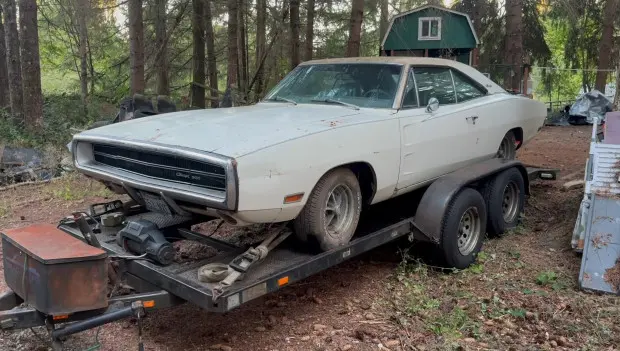
In 1991, Operation Desert Storm followed Iraq’s invasion of Kuwait and the fierce military response led by the United States. Back in California, another kind of oil crisis brought an American icon to a standstill for more than three decades. This 1970 Dodge Charger 500 has remained parked since the George H.W. Bush administration, yet it was never viewed as a candidate for the scrapyard.
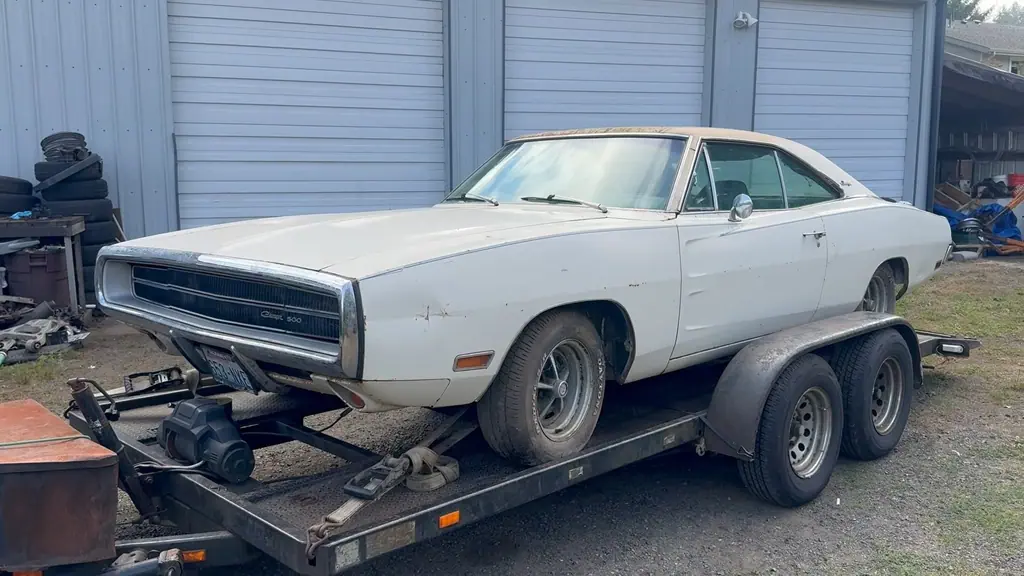
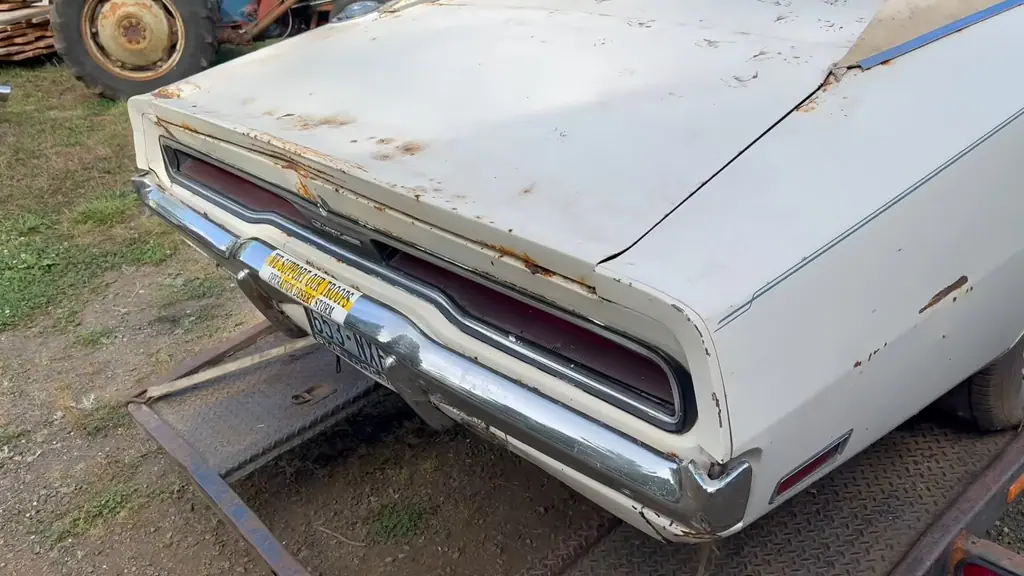
That same year, Gisela was driving her prized Charger home when the original 318 engine suddenly lost all oil pressure. She parked the classic coupe with plans to restore it completely “someday.” That was as far as the project went. She did manage to add a large bumper sticker reading “We Support Our Troops – Operation Desert Storm,” but nothing else followed.
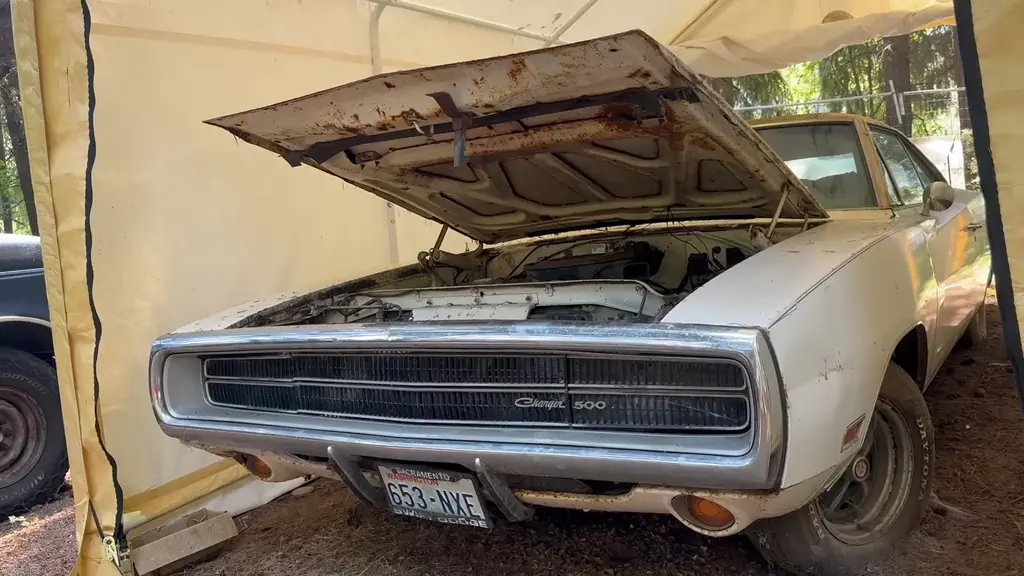
Gisela had purchased the Charger as her first vehicle after moving to the United States from Germany in the late 1980s. After the engine failure, the car stayed off the road until 2026, when she decided to sell it before moving across the country.
Jamie Atwood, the mechanic and host of the Dead Dodge Garage YouTube channel, bought the 37,000-mile Charger on the spot. The second-generation Charger remains one of his favorite Mopar muscle cars.
The Charger nameplate arrived in 1966 with a massive fastback design aimed at American buyers. The market showed little enthusiasm for the sloping-roof formula, and the first-generation Plymouth Barracuda had already demonstrated how difficult that style could be to sell.
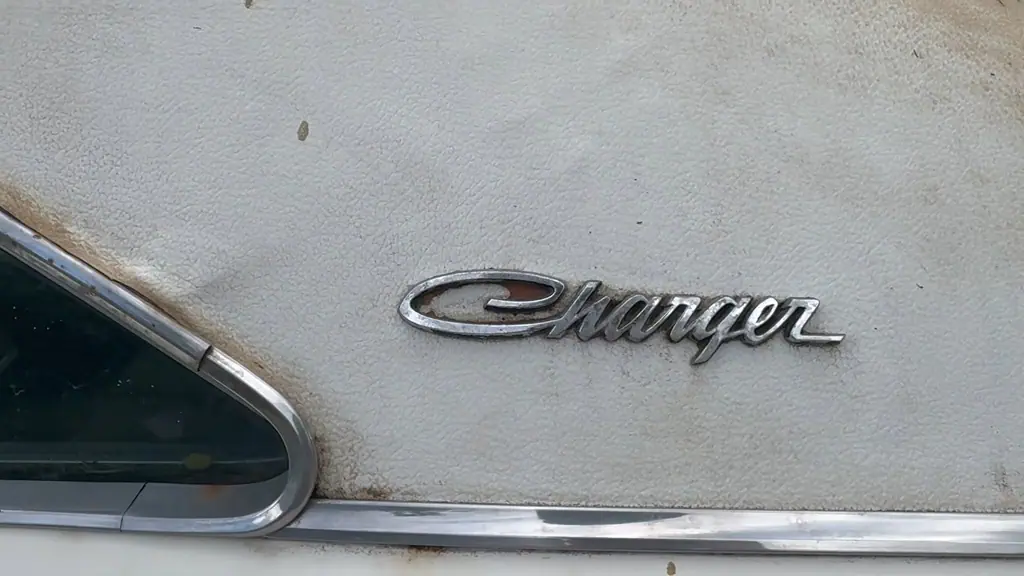
Over the decades, the Charger evolved through eight generations, moving from upscale fastbacks to muscle cars, personal luxury coupes, third-millennium four-door sedans, and modern fastbacks.
Despite those dramatic changes, the second generation remains the most coveted among passionate collectors. Produced from 1968 through 1970, it became one of the defining shapes of the muscle car era. Dodge built 96,100 Chargers in 1968, followed by 89,200 in 1969.
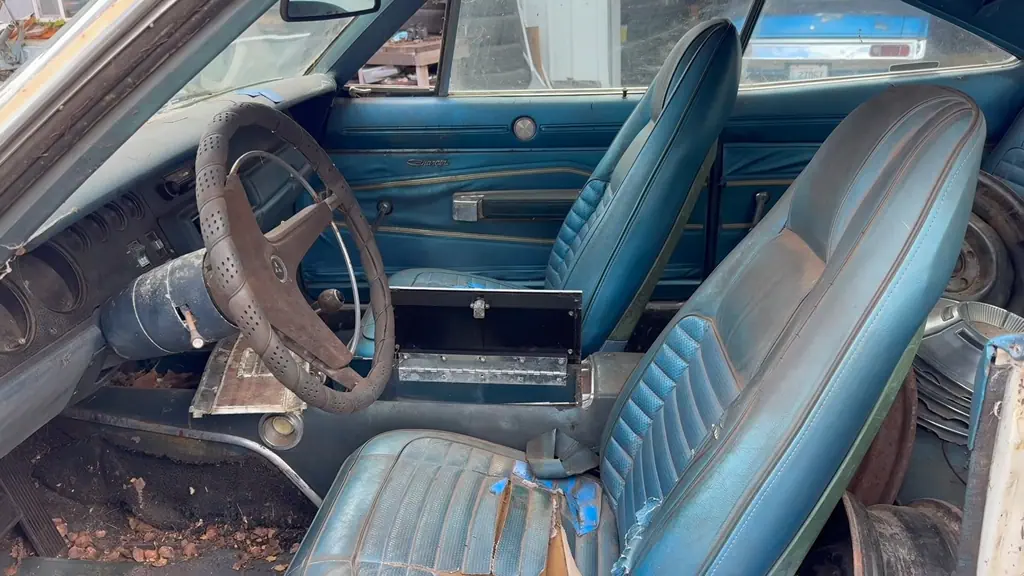
For 1970, production dropped sharply to 46,315 cars before an all-new design arrived. The muscle car era was already fading, and other large-displacement midsize cars from Detroit were experiencing similarly weak showroom performance.
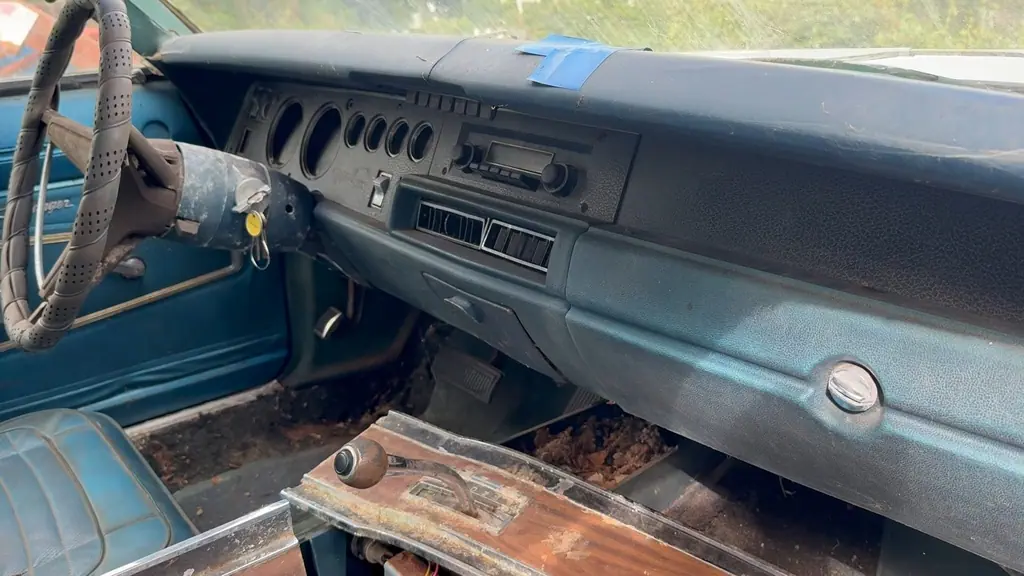
The 1970 Charger range included three series: the base model, identified by the XH VIN code; the 500, carrying the XP code; and the legendary R/T, designated XS. Unlike the 1969 Charger 500, which served as a performance-oriented model, the 1970 version became a trim level offering the full selection of Chrysler engines available outside the R/T lineup.
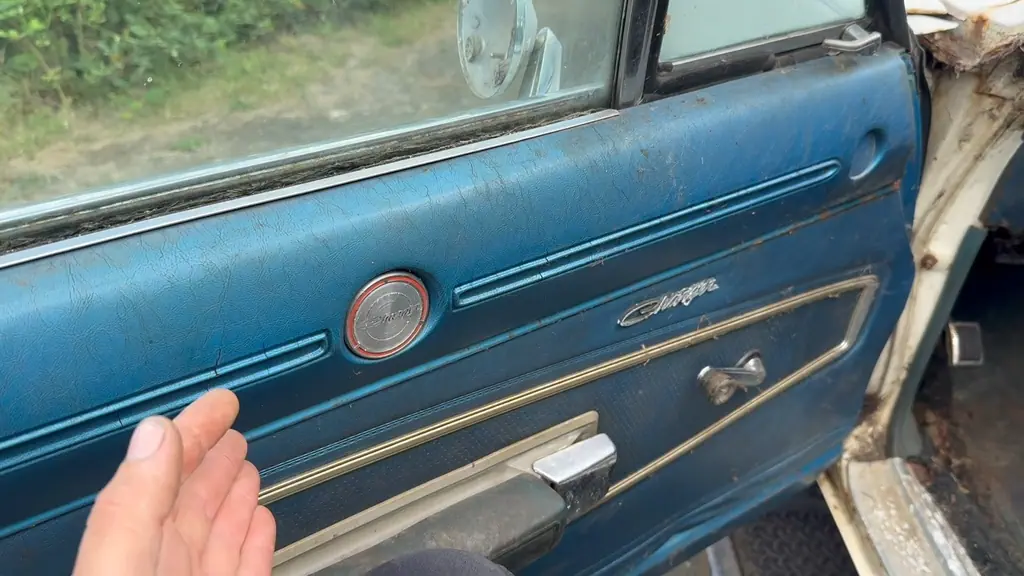
The Charger 500 led sales that year with 27,461 units produced. Of those, 13,101 were fitted with the dependable 318 V8 and its modest two-barrel carburetor. Buyers also overwhelmingly favored automatic transmissions, with 13,019 cars receiving the three-speed TorqueFlite.
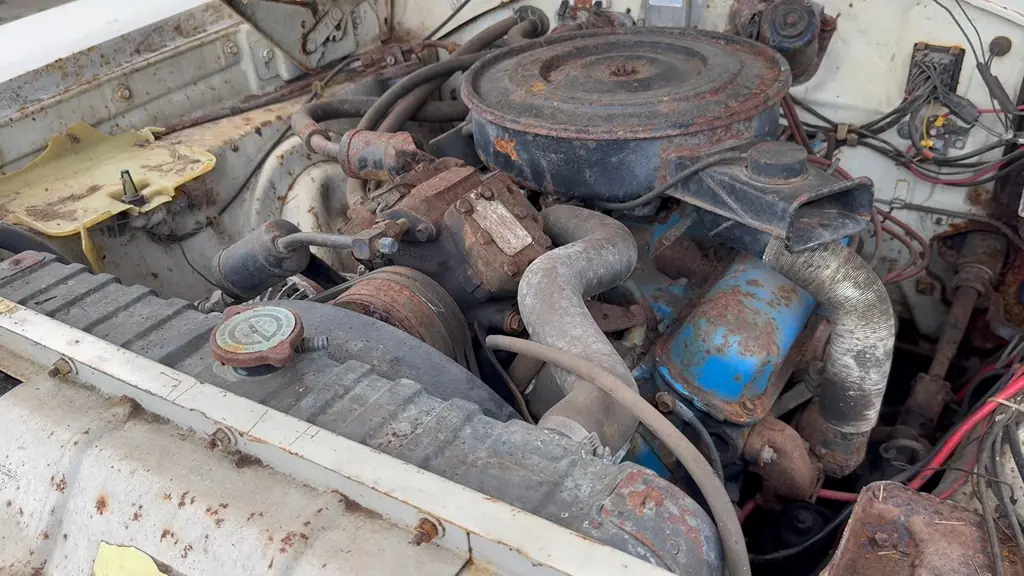
The 318 small-block produced 230 horsepower and 320 lb-ft of torque, placing it squarely between economy and performance. It was not as famously durable as the Slant Six, however, and Gisela’s Charger became one of the unlucky examples.
The original cracked engine block was still inside the rusted trunk. Under the rusty hood sat a crusty replacement engine buried beneath an enormous amount of rodent debris. Mice had also invaded the cabin, chewing through wiring harnesses and the center-console structure. Beneath the vinyl roof, substantial structural rust had developed.
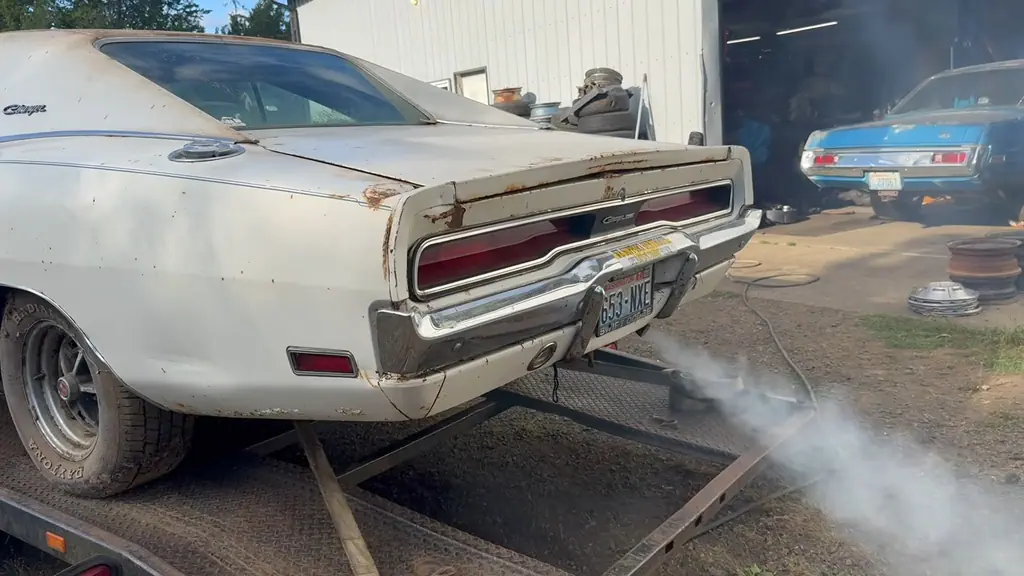
That condition was a long way from the Charger’s original appearance, which featured Alpine White paint, a Blue interior, and factory air conditioning. An inspection of its neglected mechanical systems also uncovered a complete electrical failure that had left the car immobilized.
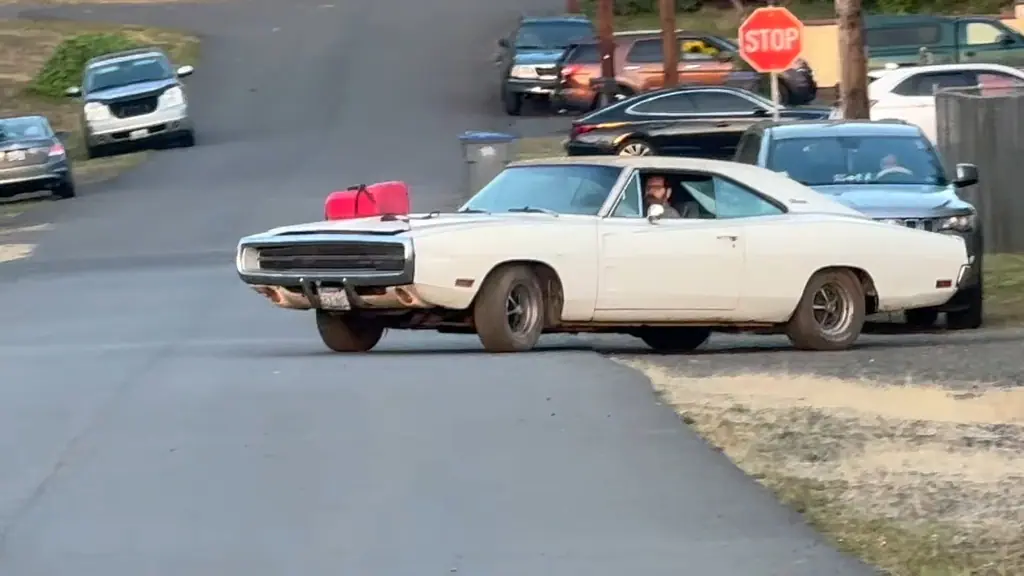
Jamie bypassed the dead firewall connections and managed to revive the ancient ignition system. He then soaked the cylinders with penetrating oil in an attempt to free the pistons that had been locked by years of corrosion.
After cleaning up the corroded distributor points, the stubborn engine finally began to run, producing a heavy cloud of smoke.
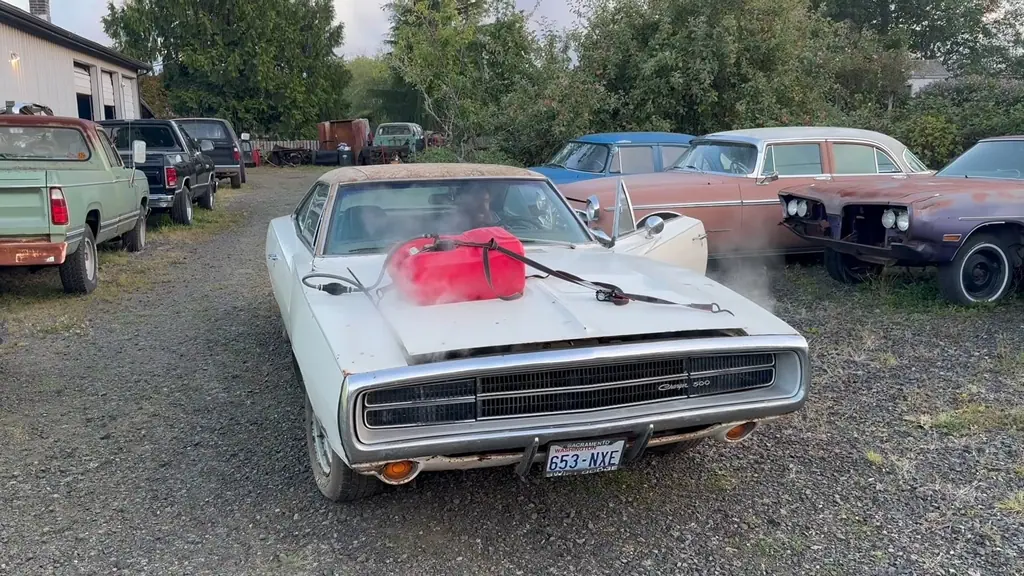
Thick clouds of smoke quickly filled the air as all eight cylinders slowly came back to life after their decades-long sleep. The engine itself was not necessarily to blame; the oil Jamie had poured into the cylinders was burning off, sending a smoky message that the Charger 500 had finally awakened.
The fragile radiator eventually failed, but Jamie continued, temporarily stabilizing the cooling system before moving on to the transmission.
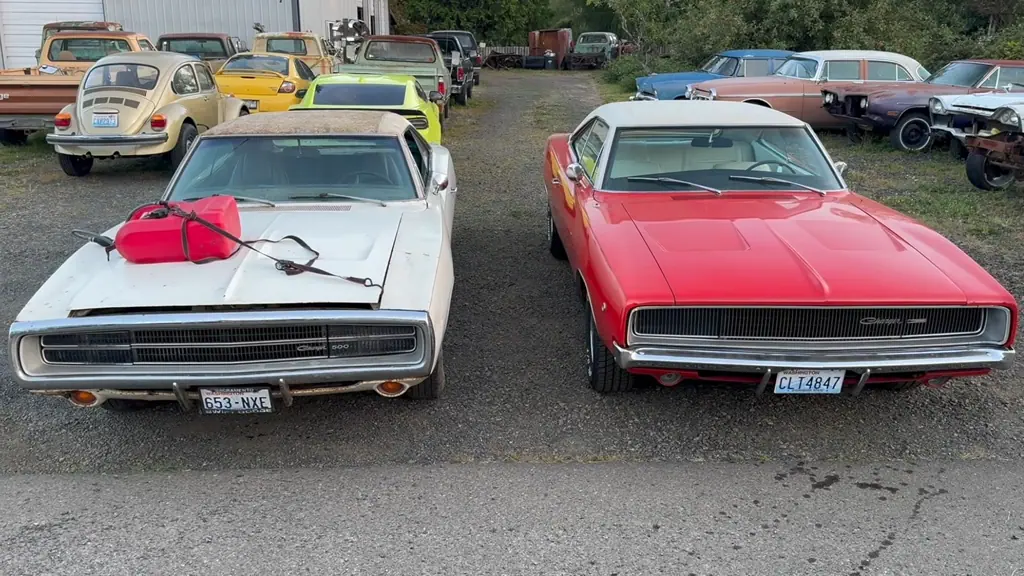
Against the odds, the rusty Charger slowly rolled off its transport trailer. However, as Pirelli famously put it: “Power is Nothing Without Control.” The Charger 500 still needs brakes before Jamie turns his attention to the ticking noise coming from the engine.
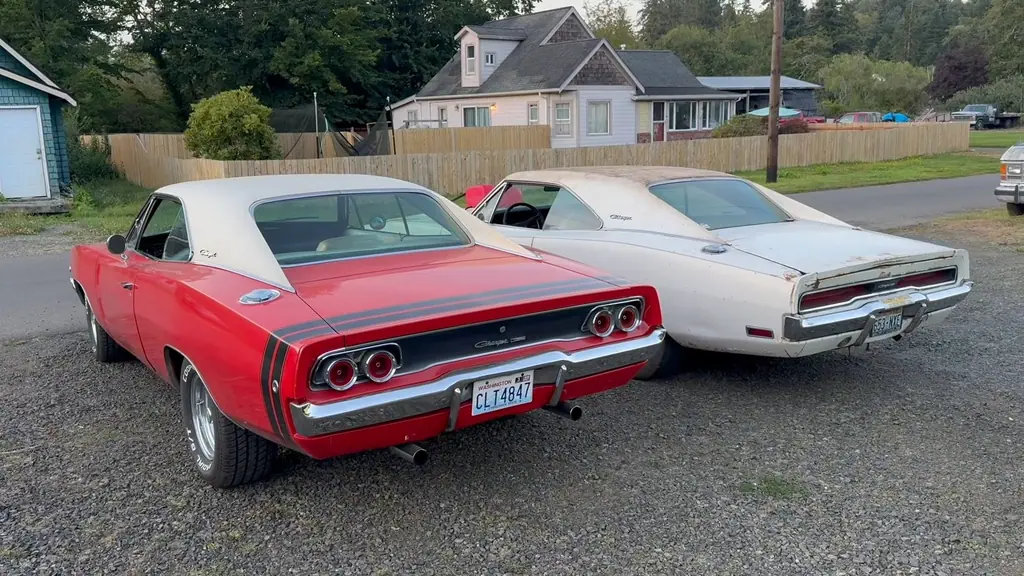
The restoration will not involve fitting a massive high-performance powertrain. Instead, the plan is to methodically revive the car’s mechanical components while preserving its authentic exterior patina indefinitely.
After 35 years of sitting still, this surviving Charger 500 is finally headed back into active service.
You may also be interested in the news:
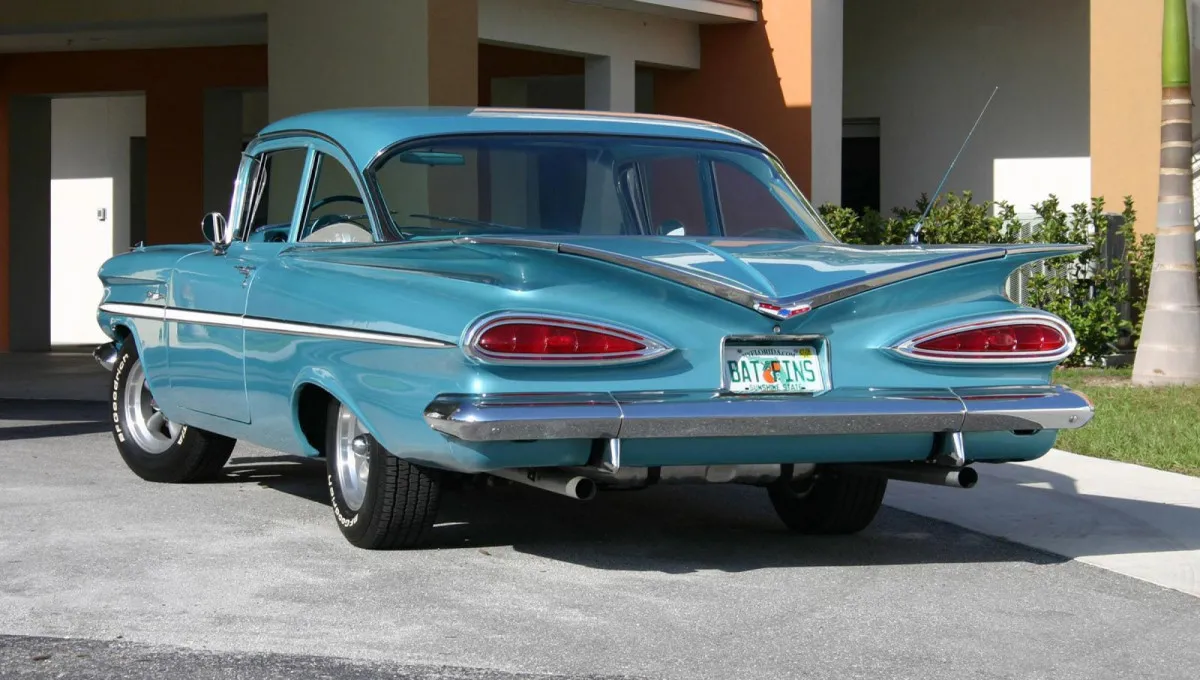
Elegance for Everyone: How Chevrolet Made Its 1960 Cars Stand Out
Chevrolet toned down its extravagant 1959 styling for 1960, bringing a more refined look to its affordable full-size cars.

Invisible Cows and a 17.3 MPH Speed Limit? 4 of America's Strangest Road Signs
From invisible cows to alien highways, these unusual American road signs turn ordinary drives into unforgettable roadside surprises.
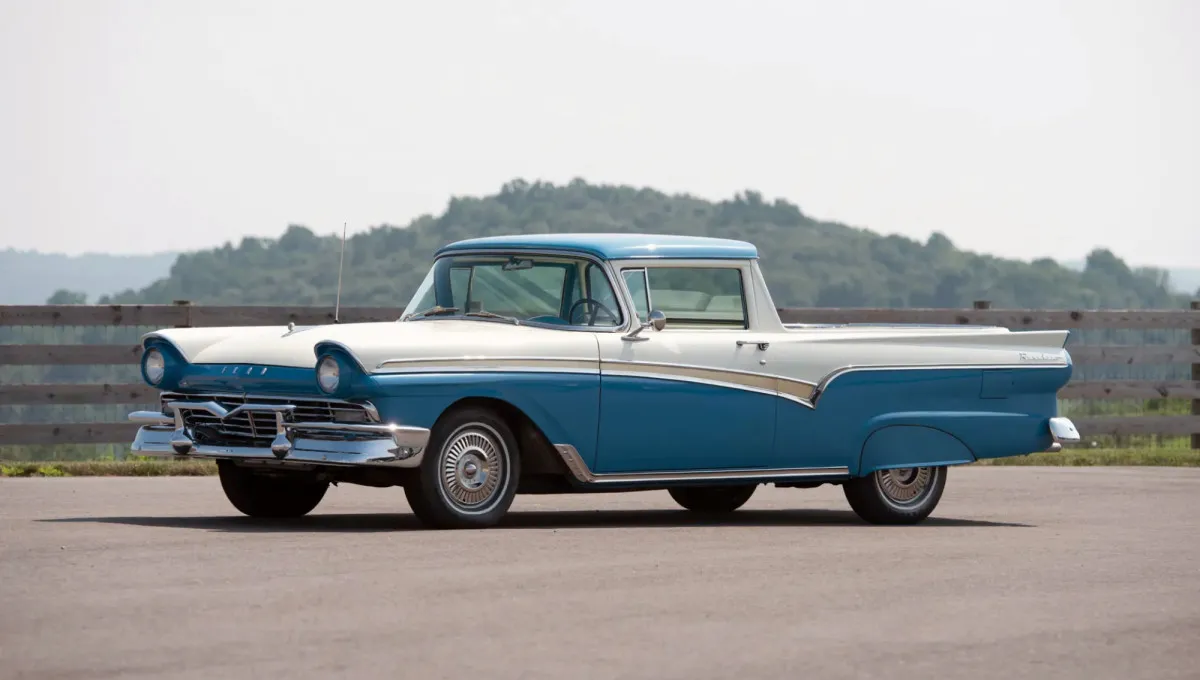
More Than a Car! More Than a Truck! The 1957 Ford Ranchero
The 1957 Ford Ranchero launched a new kind of American vehicle, blending passenger-car styling with pickup-truck utility years before the segment took off.
Pontiac's 1970 GTO Had a Wild Exhaust Option—Only 233 Cars Got It
Pontiac offered an unusual exhaust system for the 1970 GTO, but the factory option didn't last long.
Chrysler's Aluminum Slant 6 Engine: The Lightweight Experiment of 1961–1963
Chrysler built more than 50,000 cars with an aluminum-block Slant 6 before production challenges brought the project to an end.