
BYD Patents a Battery That Is Cooled by Literally Submerging It in Liquid
A new BYD patent describes a battery architecture that uses dielectric fluid to cool battery modules while keeping electrical components dry.

BYD has patented a different approach to battery cooling that could change the way heat is removed from energy-storage systems. The patent application was filed in March 2025 and was published by China's intellectual property authority, CNIPA, only a few days ago.
Instead of relying on conventional indirect cooling, the design uses a dielectric fluid to surround the battery modules. The electrical components that need to remain completely dry are isolated from the liquid in a separate compartment.
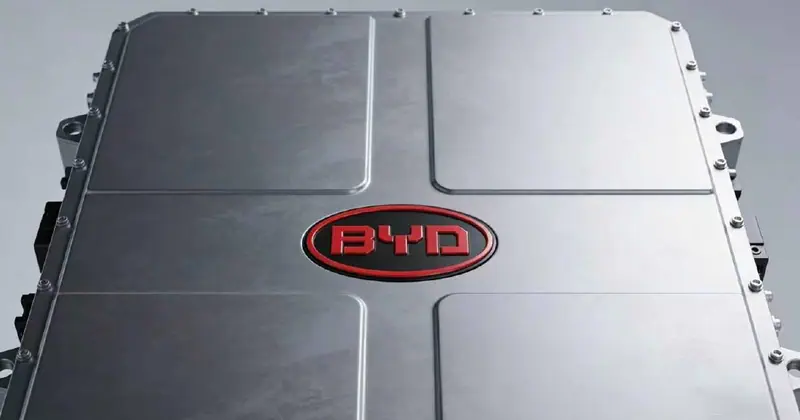
Most battery manufacturers currently use indirect liquid cooling. Coolant typically flows through aluminum plates positioned next to the battery modules, carrying heat away through the module housing. BYD's patented design takes a different approach by reducing the distance between the battery cells and the cooling medium.
How the New Architecture Works
According to the patent, the battery housing is divided into two separate chambers.
The upper chamber contains the electrical components that must remain dry. The lower chamber is filled with cooling fluid, with the battery modules and cells positioned inside it and surrounded by the liquid.
Conductors run from the lower chamber into the upper chamber, where their other ends connect electrically to components located in the dry section.
This arrangement minimizes the possibility of direct contact between the cable exit points and the cooling fluid. At the same time, heat can transfer directly from the surfaces of the battery modules into the surrounding liquid.
The electrical connections are routed upward rather than through the side walls or bottom of the liquid-filled chamber. According to the patent description, this approach also allows the design to take advantage of the hydrostatic pressure exerted by the fluid on the battery module.
What Benefits Could the Design Offer?
The patent describes several potential advantages of the architecture:
- Reduced risk of coolant leaks
- Better sealing around the points where cables pass between the two chambers
- Improved overall operating safety
- Potentially better performance for the energy-storage system
There is an important limitation, however. This is currently a published patent, not an announcement of an upcoming production system. BYD has not said that the technology will soon enter mass production.
Another detail stands out: the patent calls for a dielectric fluid rather than the conventional coolant typically associated with modern automotive battery systems.
Is This Technology Intended for Electric Cars?
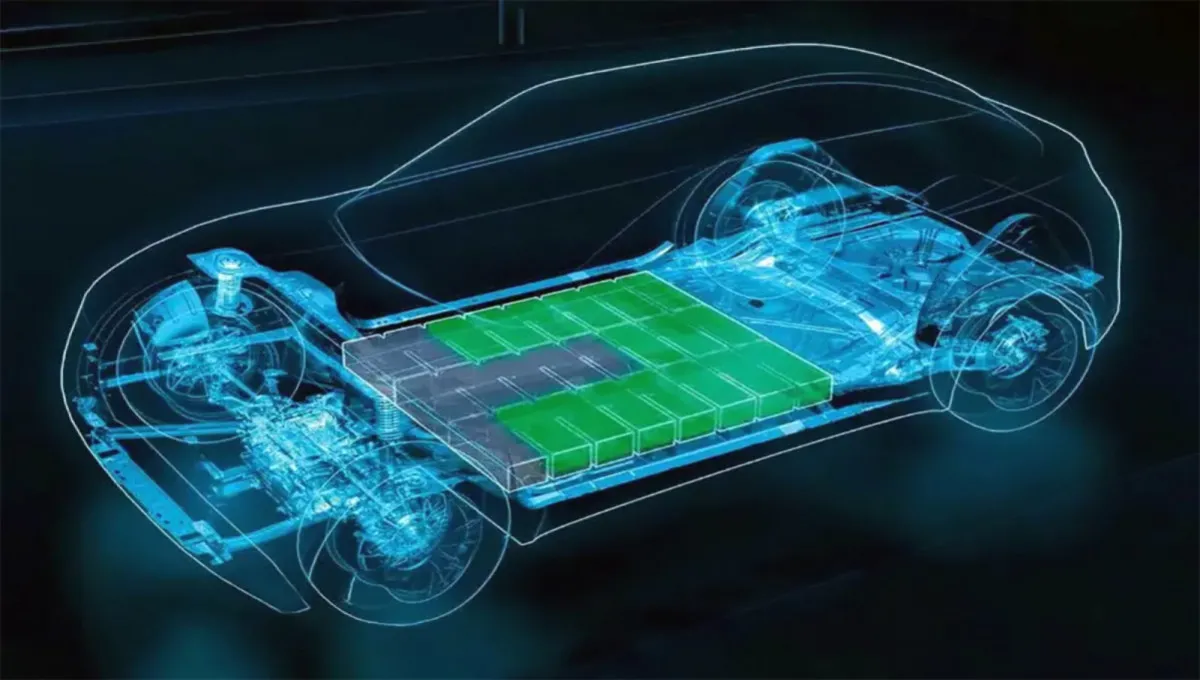
The patent does not specifically state that the architecture was developed for EV or hybrid passenger-car batteries.
Instead, the wording appears to point toward stationary energy-storage systems. These systems can be used to store electricity at charging stations and in other high-power applications where large amounts of energy need to be stored and managed.
That distinction matters. The patent should not automatically be interpreted as evidence that BYD is preparing a new generation of Blade batteries for its electric vehicles.
For now, the technology appears to be a separate engineering effort focused on energy storage. Whether BYD eventually adapts the concept for automotive applications remains to be seen.
You may also be interested in the news:
Stellantis Patents System That Lets an EV Drop Its Battery and Drive Away
A new patent details an emergency system that could let an EV disconnect its high-voltage battery and move away from danger.
The New Range Rover Sport Electric Is Here: Two Motors, 550 HP and Virtual AWD
The new electric SUV combines two motors, serious off-road capability and the premium comfort expected from Range Rover.

3 Signs Your Car Battery Is About to Die — And the Warning Signs Drivers Often Miss
A failing car battery rarely dies without warning, and these three signs can give drivers time to act before getting stranded.
Audi Reveals EV With Unusual Door Handles
Audi has unveiled the new A2 E-Tron, an electric hatchback with distinctive styling and tiny flush-mounted door handles.
Volkswagen ID. Polo Demand Is So Strong Buyers Face a Nearly Yearlong Wait
Demand for Volkswagen’s affordable EV is so strong that buyers may wait nearly a year before taking delivery.