
Incredible Features Found in American Cars of the 1950s
America’s booming postwar auto industry introduced futuristic technologies decades ahead of their time.
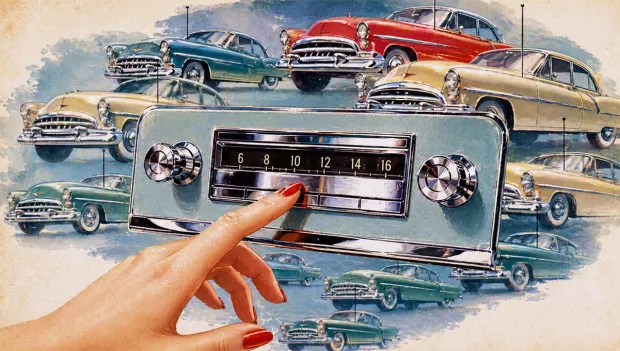
During the 1950s, the American auto industry experienced a massive wave of technological innovation. Carmakers began introducing power-operated accessories, automatic transmissions, advanced ventilation systems, and a variety of futuristic features that seemed years ahead of their era.
Some of the most fascinating breakthroughs appeared not under the hood, but inside the dashboard.
Delco Radio and the First Auto-Seek Car Radio
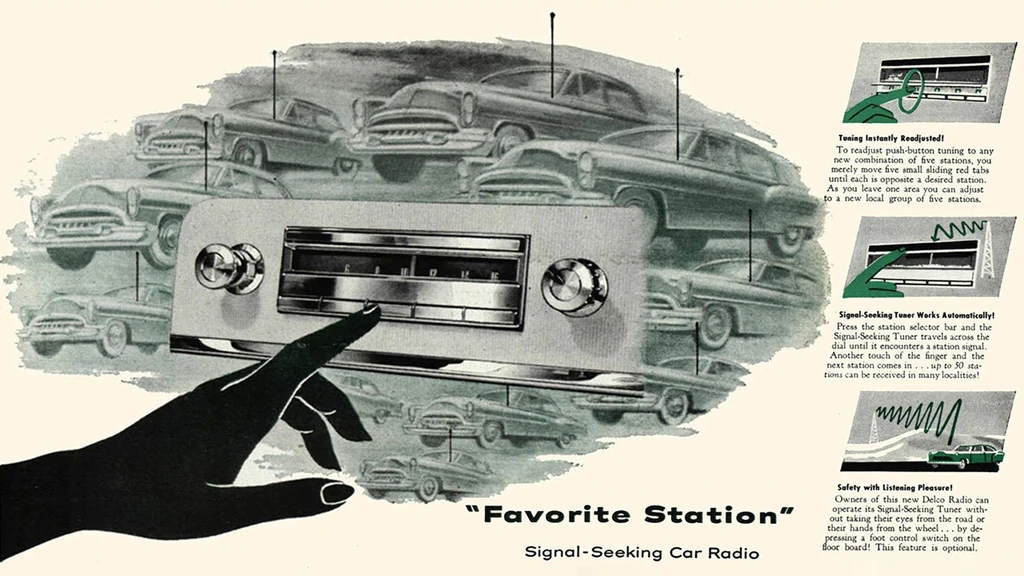
One of the most revolutionary automotive gadgets of the decade came from Delco Radio, a division owned by General Motors. In 1952, the company introduced the Wonder Bar — one of the world’s first car radios with automatic station seeking.
At the time, radio technology itself was rapidly evolving. Large and power-hungry vacuum-tube radios were gradually being replaced by newer transistor-based systems. Carmakers also began adopting FM radio alongside traditional AM broadcasting, dramatically improving sound quality and reducing interference.
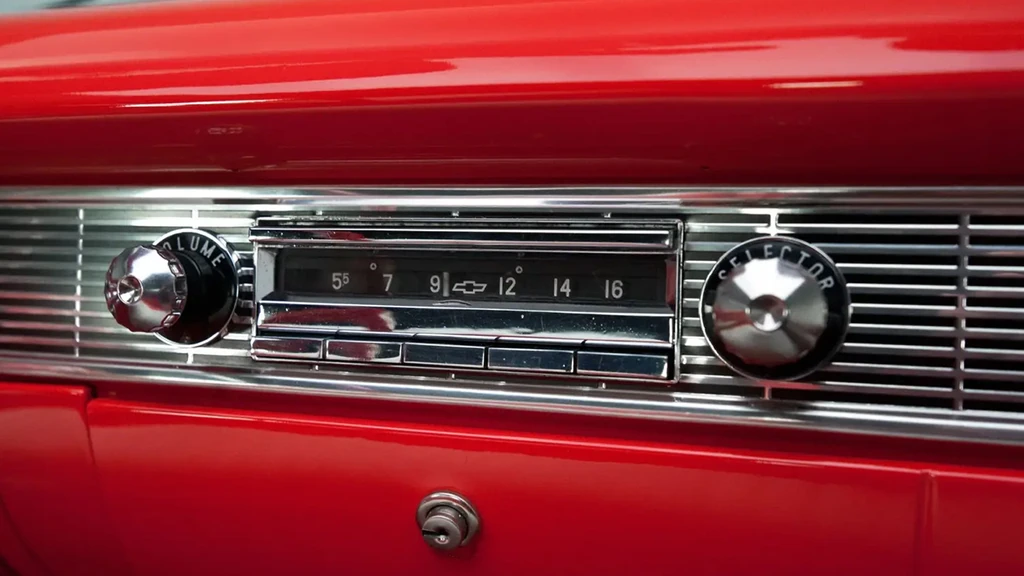
The Wonder Bar became the crown jewel of this new generation of automotive audio systems. Unlike modern digital tuners, its auto-seek function relied on a surprisingly complex electromechanical mechanism. After the driver pressed the search button, a spring-loaded solenoid physically rotated the tuner dial until the system detected the next available radio station.
The technology was incredibly advanced for its era — and extremely expensive. The Wonder Bar radio cost around $140 in the 1950s, equivalent to roughly $1,600 today when adjusted for inflation. That made it about twice as expensive as a conventional push-button radio.
Because of its price, the system was reserved for top-tier GM models, including the Cadillac lineup, the Oldsmobile 98, and the Buick Roadmaster.
The Highway Hi-Fi Record Player
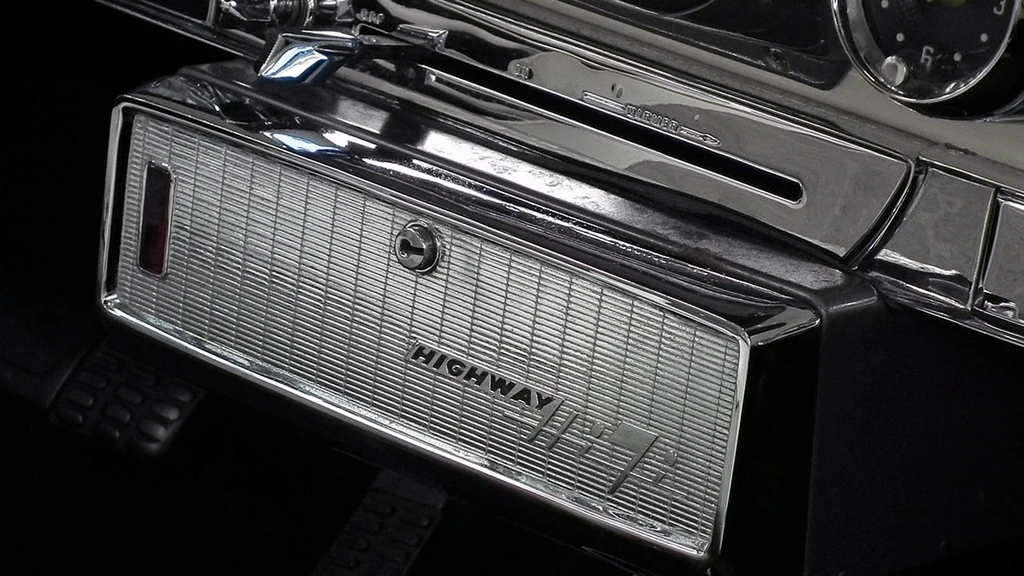
Even the most advanced radios still had one major limitation: drivers couldn’t choose their own music. That changed in 1956, when Chrysler introduced the world’s first in-car vinyl record player, called Highway Hi-Fi.
The system caused a sensation at launch. Newspapers covered it extensively, and major radio stations discussed the futuristic audio technology on air.
From an engineering standpoint, Highway Hi-Fi was remarkably ambitious. Traditional record players were extremely sensitive to vibration, road impacts, and body roll — all unavoidable conditions inside a moving automobile.
To solve the problem, engineers at CBS Laboratories developed an elaborate suspension system using both inner and outer shock-isolation mounts.
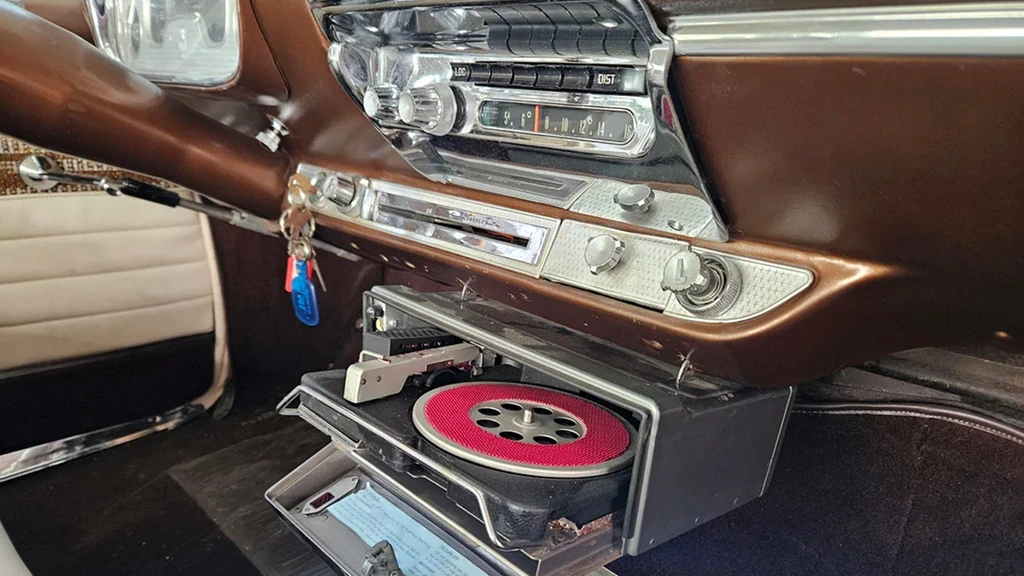
The player itself was mounted beneath the dashboard and occupied a considerable amount of space. Audio was routed through the car’s existing radio amplifier and speakers. The system appeared in vehicles such as the 1958 Plymouth Fury.
Engineers also redesigned the tonearm and stylus system entirely. While home record players used very light tracking pressure, Highway Hi-Fi pressed the stylus into the groove with approximately 2 to 3 grams of force — dramatically higher than typical home systems of the time. This required specially manufactured wear-resistant records and sapphire-coated needles.
The downside was compatibility. Standard vinyl records could not be used with the system, making Highway Hi-Fi both expensive and highly impractical.
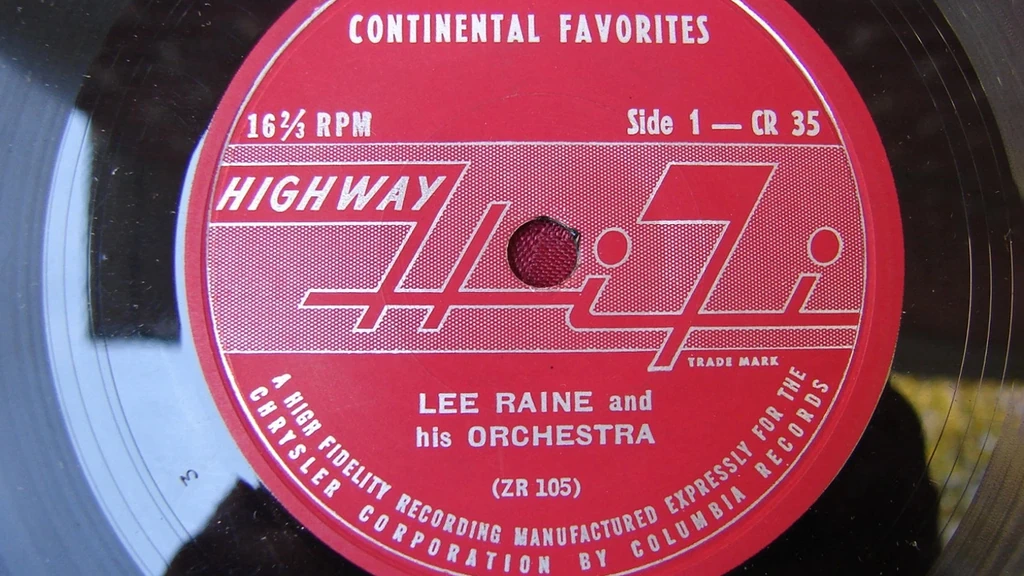
The complete audio package could cost nearly $200 in the late 1950s — about $2,300 in today’s money. Individual records were also expensive, typically selling for the equivalent of roughly $35 to $60 each after inflation adjustment.
CBS released only 42 compatible records featuring songs from the most popular artists of the era, severely limiting music choices for owners.
The special Highway Hi-Fi records measured the standard 7 inches in diameter, but they were roughly 50% thicker than ordinary vinyl records to withstand the heavier stylus pressure. They spun at 16 2/3 rpm and could store between 45 and 60 minutes of audio per side — impressive for the period.
Despite the initial excitement, consumer interest faded almost as quickly as it appeared. By 1959, the Highway Hi-Fi system disappeared from the option lists of Chrysler, DeSoto, Dodge, and Plymouth vehicles.
The real revolution in automotive audio would arrive in the 1960s with the introduction of magnetic tape cartridges and cassette systems — but that’s a story for another time.
You may also be interested in the news:

Copart to Acquire ACV Auctions in $1.9 Billion Deal, Expanding Into Dealer-to-Dealer Car Auctions
Copart is acquiring ACV Auctions for about $1.9 billion, expanding its online auction business into dealer-to-dealer vehicle sales.
GM Just Unleashed an 8.3-Liter Diesel V8 to Take on Ford’s 1,200-Lb-Ft Power Stroke
General Motors has confirmed an all-new 8.3-liter Duramax V8 diesel called Mongoose for the 2027 Silverado HD and Sierra HD.

12 Used Cars Retirees Should Know About—These Models Put Safety, Comfort and Reliability First
Great for Retirees: These Used Cars Stand Out for Safety, Reliability and Comfort

Volkswagen Recall Bombshell: 250,000+ Vehicles Hit by Steering Failure and Sudden Engine Stall Risks
Volkswagen is recalling more than 250,000 vehicles in the U.S. over steering, software and engine-stall concerns.

You've Seen These Black-and-Yellow Road Markers—But Do You Know What They Really Mean?
Those familiar black-and-yellow road markers quietly tell drivers which direction to take around roadside obstacles.