
Why You Should Never Ignore the Sticker Under Your Hood With Percentages and a Headlight Icon
Small sticker under the hood explains headlight angle—and it directly affects nighttime driving safety.
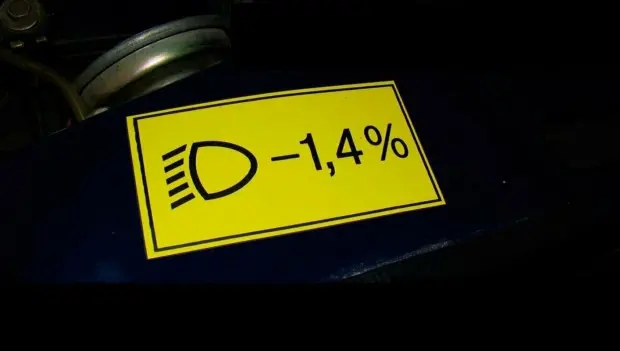
Open the hood of almost any modern car and you’ll likely find a small sticker showing a headlight symbol and a percentage. Most drivers never pay attention to it. Some assume it’s a minor technical label, while others have no idea what it actually means. The confusion grows when people notice that the numbers differ from one vehicle to another. In reality, that sticker directly relates to how your headlights are aimed—and it plays an important role in nighttime safety.
The percentage printed on the label indicates the downward angle of the low-beam headlights. Headlights are not designed to shine straight ahead. Instead, the beam is intentionally angled slightly downward so it lights the road without blinding oncoming drivers.
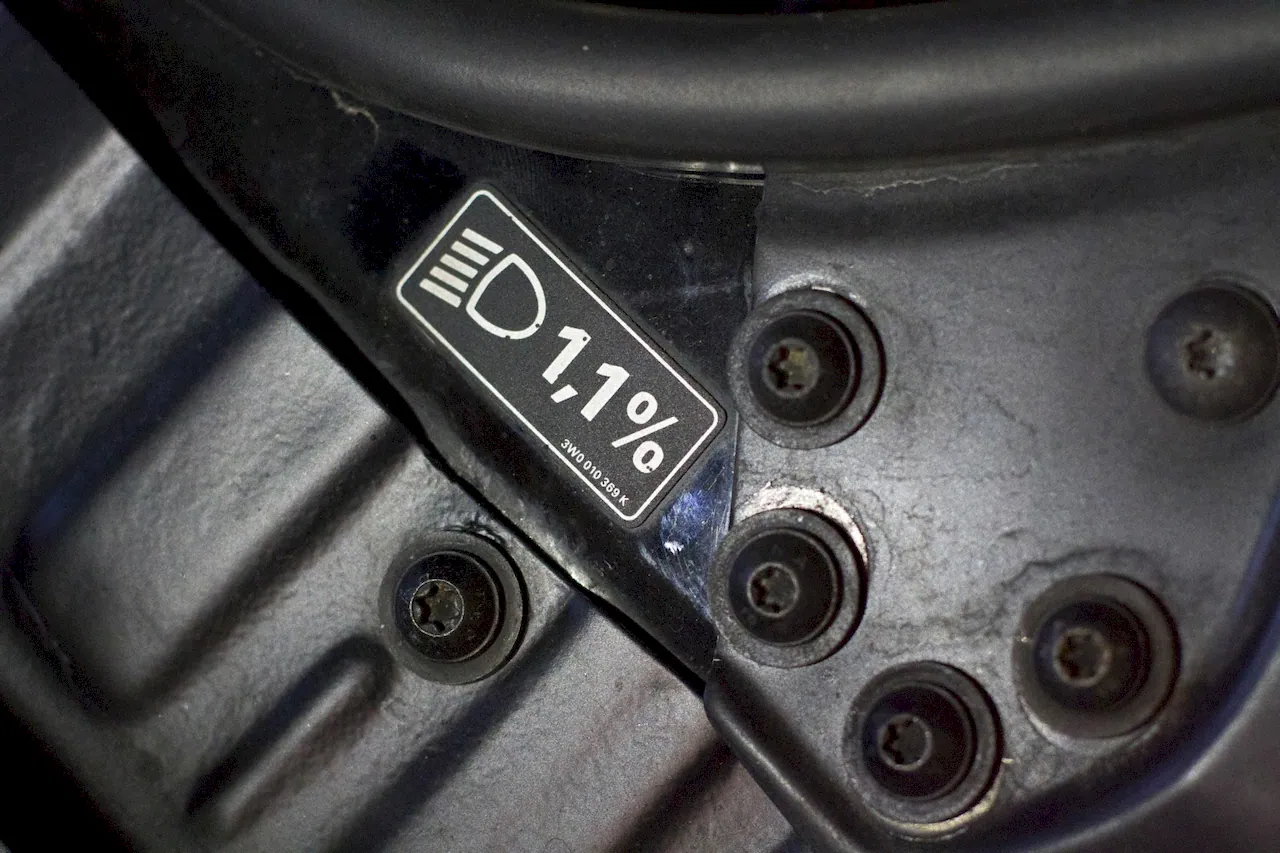
The number on the sticker helps technicians set the beam correctly. Essentially, it shows how much the top edge of the light beam drops as the distance from the car increases. For example, if the sticker shows 1.3%, then at a distance of about 33 feet from the vehicle, the top edge of the beam should sit roughly 5 inches below the center of the headlight. When headlights are adjusted properly, that’s roughly where the beam should fall.
The exact percentage varies by vehicle. Some models specify 1.0%, others 1.2% or 1.5%. The difference depends on the headlight design, body style, and engineering details of a particular model. There isn’t a universal number.
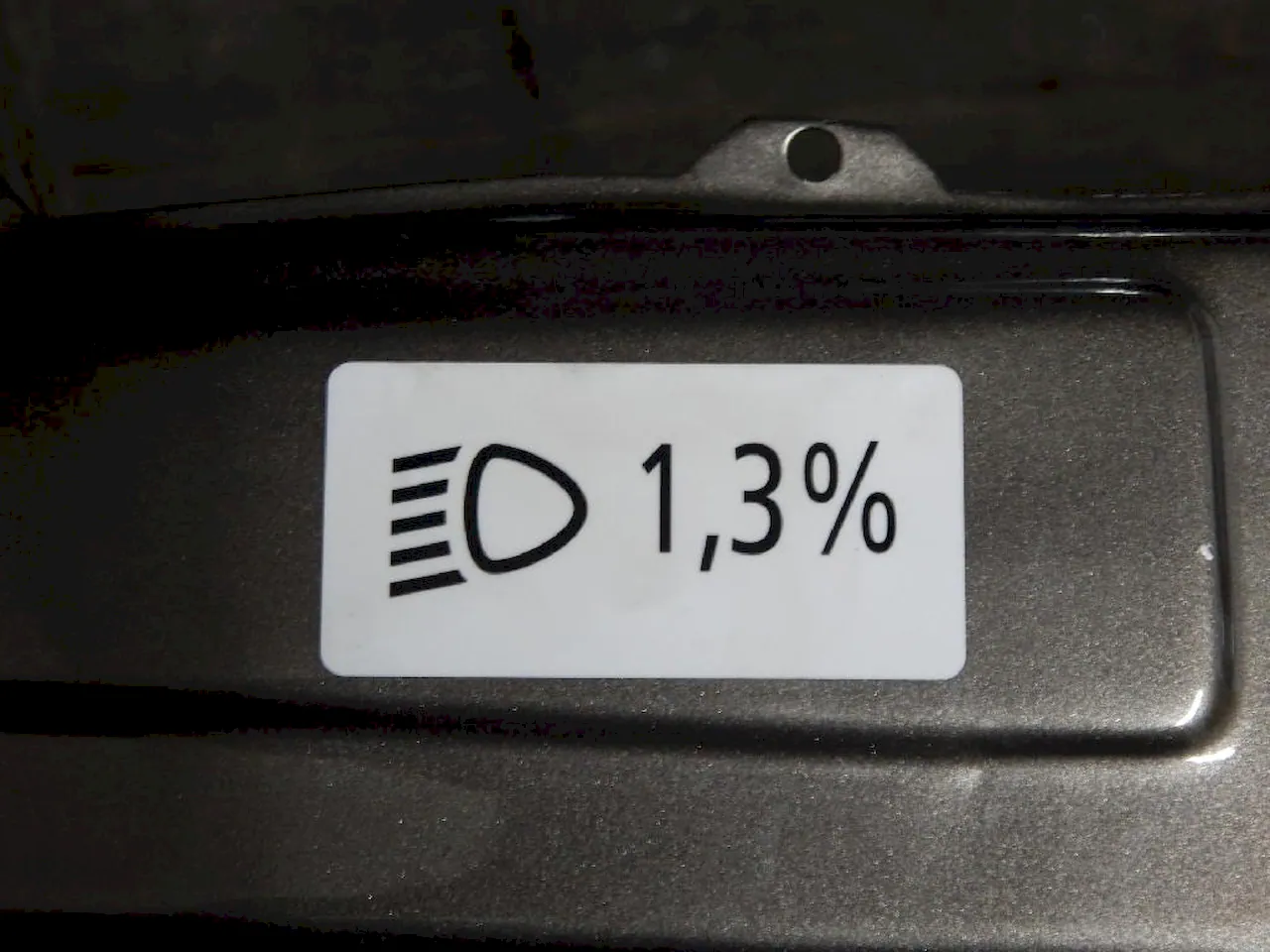
In some cars you won’t see a separate sticker under the hood. Instead, manufacturers often place the same information directly on the headlight housing itself—usually molded into the plastic casing. It can be harder to find, but the meaning is exactly the same.
Many drivers don’t pay much attention to headlight adjustment. It may seem like a small detail. But on the road, especially at night, it quickly becomes clear how important it is. The direction of the headlights determines both how well you see the road ahead and how comfortable the drive is for other motorists.
If the lights are aimed too high, they can blind oncoming drivers. Even a brief moment of glare can cause a driver to lose visibility—sometimes long enough to create a dangerous situation. If the headlights are aimed too low, the road ahead isn’t illuminated properly, and obstacles may appear too late. In either case, the headlights can lose roughly a quarter of their effective performance. The difference becomes especially noticeable at night, in rain, or on dark highways.
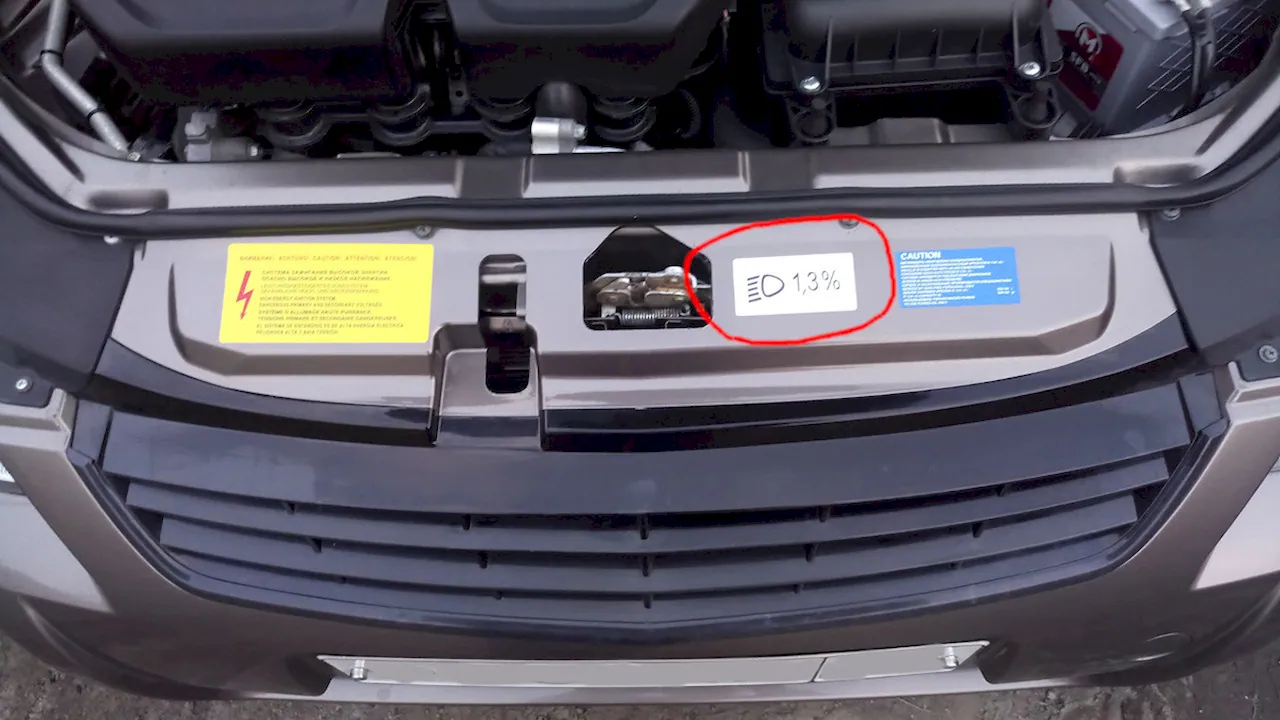
The good news is that checking headlight alignment can be done at home with a flat surface and a wall—such as a garage door. At dusk or nighttime, the beam pattern becomes clearly visible.
Before adjusting anything, it’s important to prepare the car. Check your tire pressure and remove heavy items from the cabin or trunk. A heavily loaded vehicle—or even slightly underinflated tires—can change the car’s ride height and throw off the headlight aim.
Headlights are almost always adjusted using the low beams, since those are the lights used most often while driving. High beams are rarely adjusted separately. In most vehicles, once the low beams are set correctly, the high beams naturally align as well.
To perform a basic check, park the car facing a flat wall about 16 feet away. If the car has a manual headlight leveling control inside the cabin, set it to zero before starting. Turn on the low beams and observe where the light pattern hits the wall.
Mark the height of the headlight center and draw a horizontal line across the wall at that level—chalk or tape works fine. That line becomes your reference point.
Next comes the calculation. If your car specifies a 1.3% downward angle, then at a distance of 16 feet, the beam should drop about 2½ inches below that reference line. If the top edge of the beam lands around that mark, the headlights are properly aligned—lighting the road ahead while avoiding glare for oncoming traffic.
You may also be interested in the news:
Your Steering Wheel Starts Shaking at 60 MPH? Don’t Ignore These Warning Signs
A vibrating steering wheel is often most noticeable at highway speeds, but the cause isn’t always immediately obvious.
Windshield Wipers Aren’t Cleaning Properly? Here’s What Could Be Wrong
Why do windshield wipers sometimes fail to do their job?
Best Sedans for Interior Space: The Roomiest Cars of 2026
These six sedans offer generous legroom and shoulder room, giving families a comfortable alternative to larger SUVs for long trips.

Best Cars for Teen Drivers: Affordable and Safe Picks
These affordable used and new vehicles combine strong safety ratings, reliability, and reasonable prices for young drivers and their families.

12 Used Cars Retirees Should Know About—These Models Put Safety, Comfort and Reliability First
Great for Retirees: These Used Cars Stand Out for Safety, Reliability and Comfort