
Old-Timers Know, but Some Mechanics Only Heard About It: What a Distributor Is, How It Works, and Why It’s Needed
Everything you need to know about the distributor: what it is, what it does, whether it’s still used today, and if you can install one.
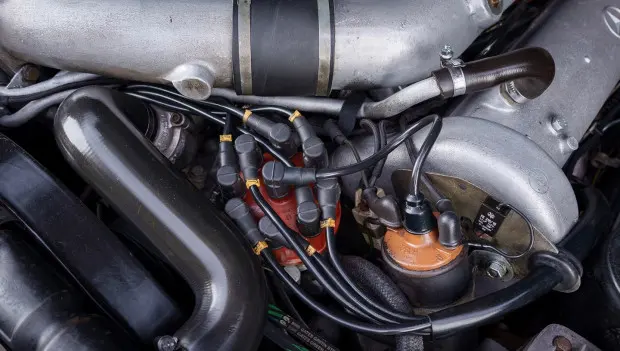
Modern cars have completely moved away from distributor-based ignition systems. Still, on a number of older vehicles, the distributor continues to serve its purpose.
A distributor is a mechanical-electrical component of the ignition system that generates and directs the spark to the engine’s cylinders in the correct sequence and at the right time. Its formal technical name is the ignition breaker-distributor.
Distributors were used on gasoline engines with both contact and contactless ignition systems—from older carbureted engines to early fuel-injected models. Today, they’ve been entirely replaced by electronic ignition systems with individual coil-on-plug setups, except for some specialty or vintage vehicles.
What a distributor looks like
Visually, it’s a cylindrical metal housing with a plastic or phenolic cap on top. High-voltage wires run from the cap to the spark plugs, while a rotating mechanism sits inside.
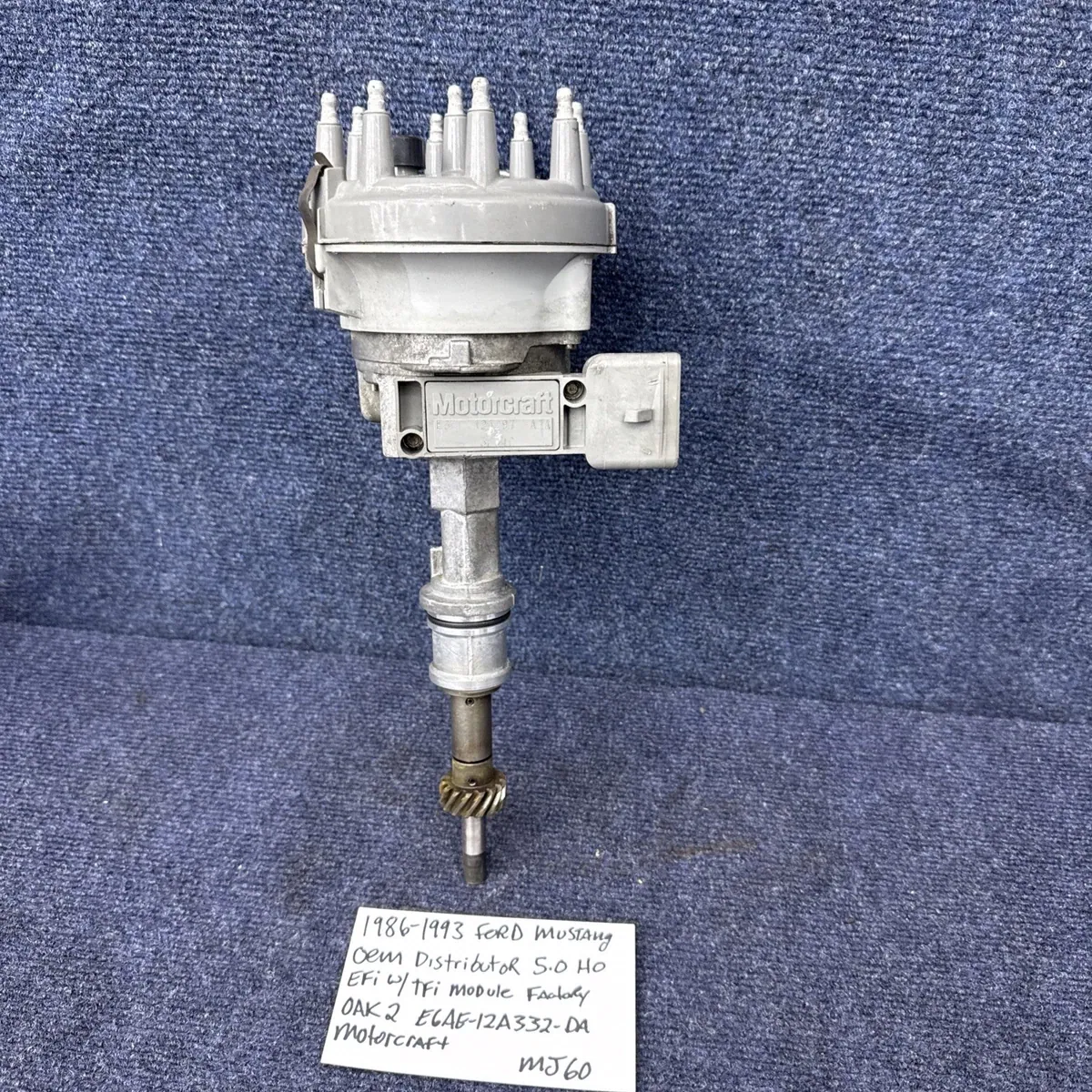
The distributor is usually mounted on the cylinder head or the side of the engine block. It’s driven by the camshaft—or sometimes the crankshaft.
The main function: to manage the ignition system. The distributor performs several key roles:
-
Signals the ignition coil to generate a high-voltage spark.
-
Distributes that spark to the correct cylinder.
-
Adjusts the ignition timing—the moment the spark occurs.
-
Synchronizes the ignition with engine speed.
In short, the distributor determines when and which cylinder receives the spark.
Distributor components
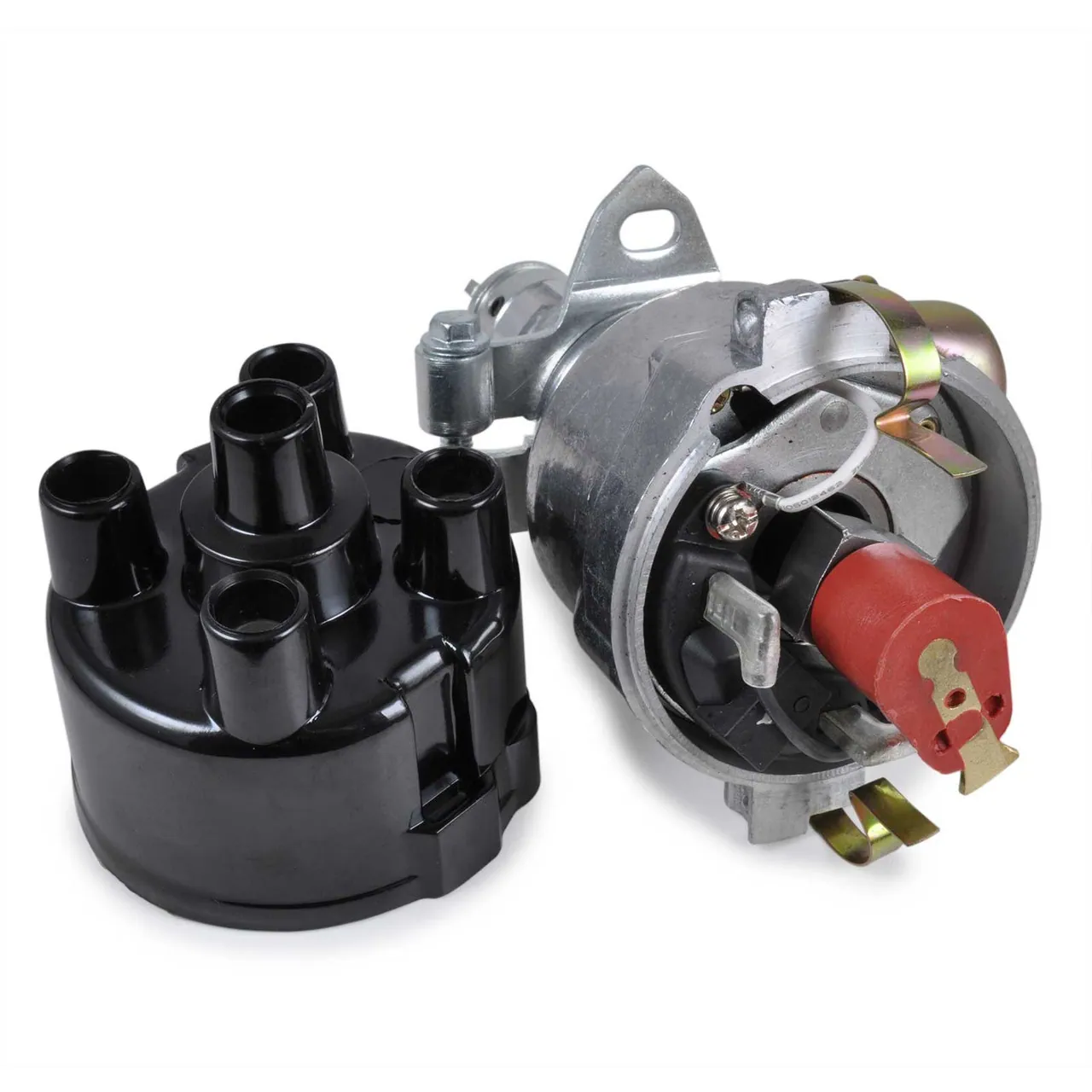
A classic contactless distributor typically includes:
-
Housing: metal, with a removable plastic or phenolic cap.
-
Cap with contacts: for high-voltage wires.
-
Rotor: attached to the shaft, spinning inside the cap to direct the spark to the correct cylinder.
-
Sensor plate (or shutter): fixed to the shaft, it triggers the spark at the correct moment.
-
Hall effect sensor (or inductive sensor): positioned near the bottom, it signals the coil to fire.
-
Centrifugal and vacuum advance mechanisms: adjust ignition timing depending on engine speed and load.
Earlier contact-based distributors lacked sensors; a cam would mechanically open and close contacts to trigger the coil. These purely mechanical systems are now considered outdated, and even vintage car owners often upgrade to contactless distributors for reliability and efficiency.
How a contactless distributor works
-
The camshaft (or sometimes the crankshaft) drives the distributor shaft.
-
The rotor and sensor shutter are fixed to the shaft.
-
When a window in the shutter aligns with the sensor, it triggers.
-
The ignition coil generates a high-voltage pulse.
-
The rotor directs the spark to the appropriate cylinder via the distributor cap.
-
The process repeats for each cylinder in the correct order.
-
Centrifugal and vacuum advance mechanisms adjust timing as engine speed and load change.
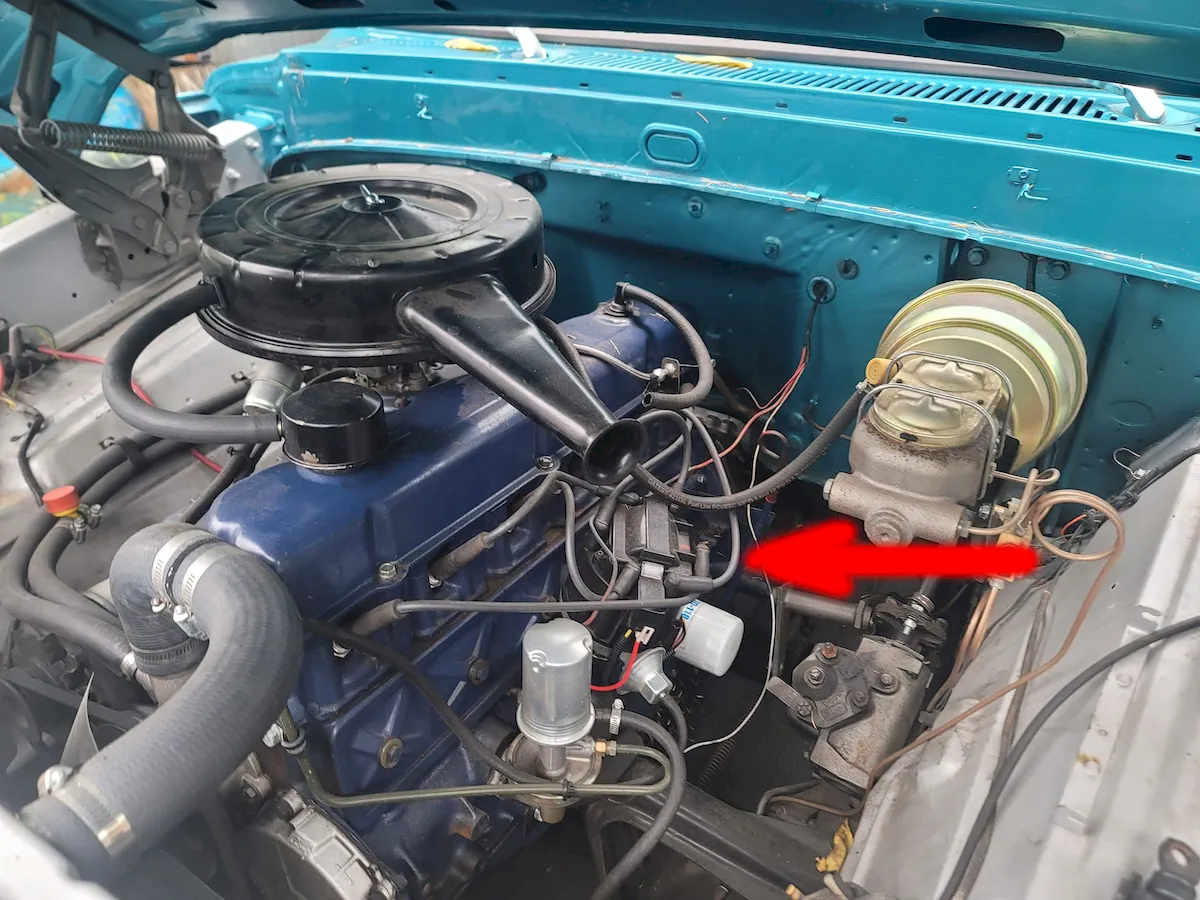
Setting the distributor
A timing light is needed for accurate adjustment. It flashes when a spark passes through the wire to the first cylinder, allowing you to see the timing mark on the crankshaft pulley. General steps include:
-
Warm up the engine to operating temperature.
-
Loosen the adjustable plate on the distributor.
-
Connect the timing light to the first cylinder’s spark plug wire.
-
Rotate the distributor plate: one direction advances timing, the other retards it (direction depends on the engine).
-
Achieve smooth, detonation-free engine operation per the service manual.
-
Tighten the plate in place.
Without a timing light, adjustments can be made by ear, but accuracy is lower.
Signs of a failing distributor
Symptoms of distributor failure are typical of ignition issues:
-
Hard or erratic starting
-
Engine stumbles or jerks under acceleration
-
Loss of power
-
Increased fuel consumption
-
Engine knocking or pinging
-
Stalling at idle
How to check a distributor
Unlike modern computerized systems, distributors can be diagnosed visually and mechanically. Basic checks include:
-
Inspect for cracks, corrosion, or carbon buildup
-
Examine the cap, rotor, and contacts for wear
-
Check the Hall sensor or mechanical contacts
-
Inspect the distributor shaft for play
-
Test the vacuum and centrifugal advance mechanisms
If you lack experience, full diagnostics are best done at a service center, especially for modern contactless distributors. Keep in mind, however, that not every mechanic today is familiar with this older technology.
You may also be interested in the news:
Your Speedometer Says 65 MPH, but Your GPS Says 62 — Here’s Why Your Car Does That
Your speedometer reads 65 mph, but your GPS says 62 mph. Here’s why the numbers rarely match.
“Are You Sure It’s Chinese?” Who Really Builds China’s Car Engines
Who Really Develops China’s Car Engines?
Why Experienced Drivers Still Warn Against Buying a Used Car With a CVT
CVTs offer smooth acceleration and good fuel economy, but expensive repairs and durability concerns make used models risky.
Hidden Key Fob Trick: Open All Your Car Windows With One Button
An auto mechanic explains how drivers can remotely open and close car windows using a key fob, provided the vehicle has the right hardware.

8 Car Maintenance Mistakes That Could Cost You Thousands if You Wait Too Long
Depending on driving conditions, some maintenance tasks may need to be performed sooner and more often than the automaker recommends.