
Europe’s Auto Industry Is Splitting at the Seams: Valmet Automotive Halts for the First Time in 50 Years as Plants Shut Down One After Another
For the first time in half a century, Finland’s Valmet Automotive plant in Uusikaupunki has halted production — employees began receiving layoff notices on December 1.

For the first time in fifty years, the Valmet Automotive plant in Uusikaupunki has shut down its production lines. Workers started getting layoff notices as early as December 1. Over its long history, the factory built SAABs, Opels, and, since 2013, a range of Mercedes-Benz models. Now both the paint shop and assembly lines are idle, and CEO Pasi Rannus has confirmed that no new contracts with automakers are in place.
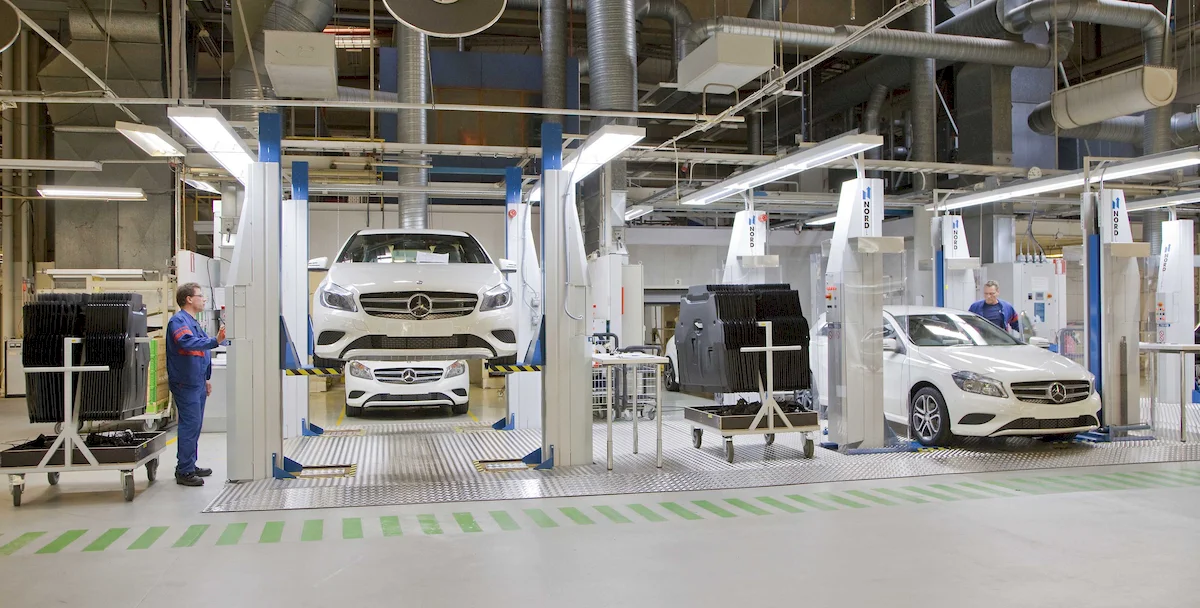
This isn’t an isolated incident — it’s part of a much larger crisis sweeping through Europe’s auto sector. Bloomberg analysts warned last year that EU plants were running with far more capacity than the market could support, and many risked closure. By November 2024, Volkswagen had already announced the shutdown of three German factories, and Audi will wind down production in Brussels in early 2025 — the last Q8 e-tron has already rolled off the line.
Stellantis is following suit: in February, the company halted operations at its historic Luton plant in France, where Opel/Vauxhall Vivaro vans were built. Over the next three years, output at Stellantis’ French facilities is expected to drop by 11%. Union forecasts suggest that by 2028, production in France could fall to just 587,800 vehicles.
The causes are clear. Europe is accelerating its shift away from internal combustion engines in favor of EVs, while competition from China — paired with mounting trade barriers — is making things even tougher. Experts say nearly a third of Europe’s auto plants are now at risk of closure, forcing manufacturers to either cut output or move production to cheaper regions.
ACEA president and Mercedes-Benz chief Ola Källenius has bluntly warned that Europe’s auto industry has only a few years left to stabilize. Surveys show that 70% of suppliers feel growing pressure from Chinese companies. Without immediate action, Germany alone could lose up to 100,000 jobs by 2030. Volkswagen, Audi, Bosch, Continental, ZF, Schaeffler, Porsche, and Ford have already announced sweeping layoffs and plant closures.
Whether the sector can adapt to this new reality remains an open question.
You may also be interested in the news:
2027 Ram 1500 Rumble Bee: Pricing, Options and How to Build Yours
The 777-HP Ram Rumble Bee Is Coming — But You Can Buy the New Hemi Truck Now
“Are You Sure It’s Chinese?” Who Really Builds China’s Car Engines
Who Really Develops China’s Car Engines?

This Ford F-150 Isn’t Just a Pickup — It’s an Orange Apocalypse on Four Wheels
This outrageous Ford F-150 listing turns an ordinary pickup into a mud-loving, obstacle-crushing legend with attitude.
Nissan Restarts US-Made Murano, Pathfinder, Frontier Sales in Canada
Nissan resumed Canadian sales of three U.S.-built models, but tariffs keep supply below earlier levels.
Stellantis Just Revealed Nine New Cars Under $40,000 — And Two Could Cost Less Than $30K
Stellantis plans nine cheaper vehicles as high prices leave American shoppers with fewer affordable new-car choices.