
Future Pickup Hesitates at the Line: 1970 Chevrolet Chevelle Beats the Cybertruck
Tesla’s electric pickup is brutally quick, but reaction time still matters—and old-school muscle proved it.
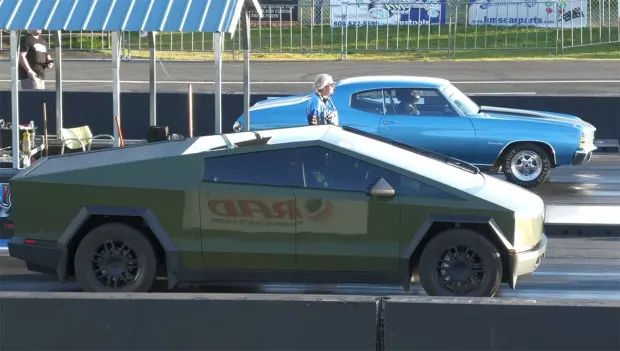
Tesla’s Cybertruck may deliver shocking straight-line speed, but one thing still matters in drag racing: reaction time. And in this case, a 56-year-old muscle car used that advantage perfectly.
Classic V8-powered machines versus modern EVs is a debate that never gets old. Some compare horsepower numbers, others settle it at the starting line. In the latest drag race video, the contenders were a Tesla Cybertruck and a tough-looking 1970 Chevrolet Chevelle Malibu.
This wasn’t some quiet restored cruiser from a weekend car show. Wide rear drag tires, aggressive wheels, and a lowered stance made it clear this Chevelle was built for serious launches. Back in 1970, the biggest engine available for the model was a massive 7.4-liter V8. Modern naturally aspirated tuning packages can push those engines to 500–600 horsepower without forced induction, and judging by how this one performed, it clearly had plenty of power.
When Old Iron Reacts Faster
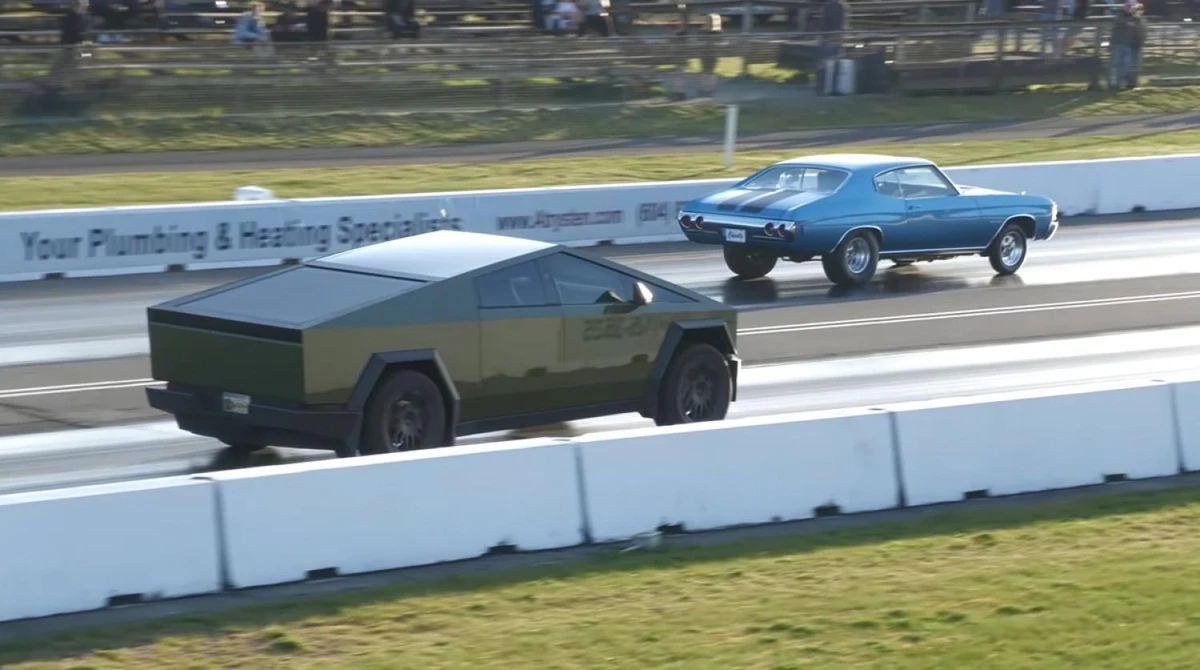
On paper, logic favored the EV. Instant torque usually means the Cybertruck jumps ahead immediately while classic muscle cars scramble to catch up.
But this race played out differently.
The moment the light turned green, the old Chevrolet launched like it had been fired from a cannon. By the middle of the track, it had built such a strong lead that the race looked finished. Meanwhile, the Tesla seemed to hesitate—as if it hadn’t fully realized the run had started.
Then it woke up.
The tri-motor Cyberbeast version, rated by Tesla at 845 horsepower, suddenly unleashed its full force and started erasing the gap at an alarming rate. The giant stainless-steel wedge charged toward the finish line, gaining ground with every foot.
But drag racing doesn’t care who looks faster at the end—it cares whose bumper crosses first.
That’s where things got interesting.
Official timing showed the Cybertruck taking the quarter mile in 11.39 seconds at 119 mph. The Chevelle followed with an 11.69-second run at 115 mph.
Technically, the Tesla posted the faster elapsed time. But thanks to the stronger launch and quicker reaction, the old-school Chevelle actually crossed the line first.
Classic car fans will call it proof that experience still beats technology. EV supporters will argue that if the Tesla driver had reacted faster, the result would have changed completely. Maybe so—but racing doesn’t deal in “what ifs.”
That night, 56-year-old Detroit steel beat the spaceship.
For reference, a basic 1970 Chevrolet Chevelle can still be found on the U.S. used market for around $20,000. A fully restored example with serious performance upgrades like this one can easily exceed $100,000.
A Tesla Cybertruck Cyberbeast starts around $100,000 as well, and with options and modifications, the total can climb past $120,000.
So financially, it was almost a tie. On the track, old-school confidence won.
You may also be interested in the news:
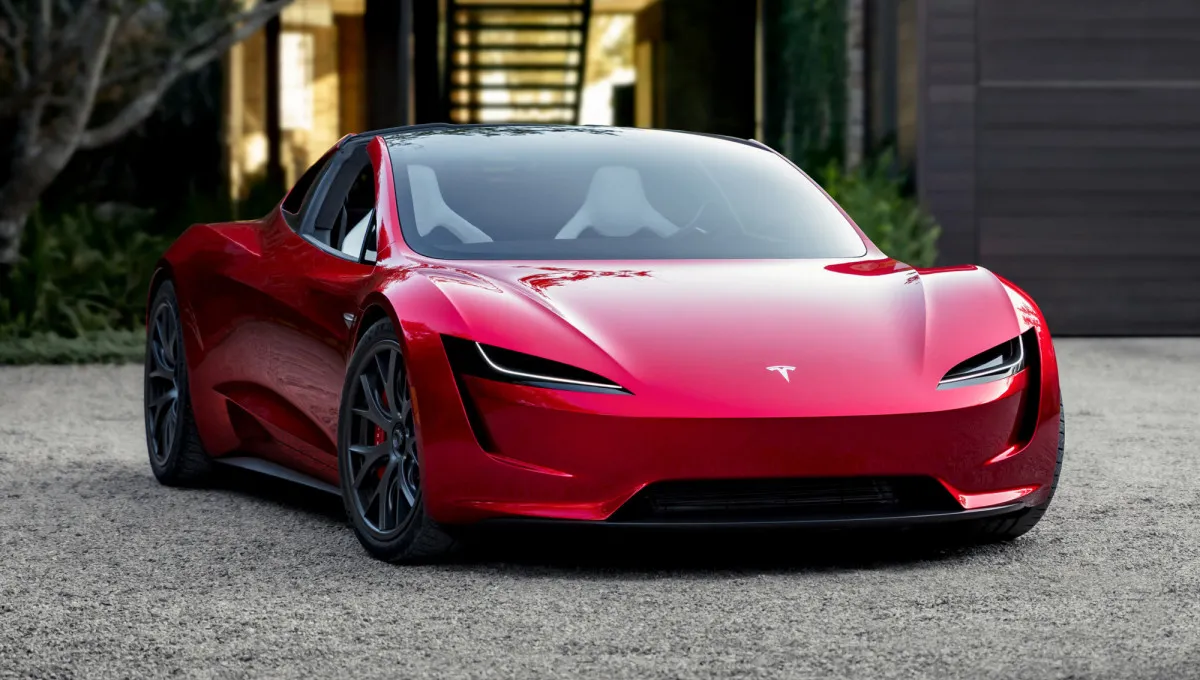
Tesla Will Unveil the Roadster on October 2. Teaser Hints at SpaceX Thrusters
Tesla has officially confirmed that the long-awaited second-generation 2026 Roadster will finally be unveiled on October 2.

Toyota's First Engine Was Copied From a Chevrolet
Toyota's first engine, the Type A, wasn't entirely Japanese—it was based heavily on a Chevrolet straight-six.

It Hauled Kids and Terrified Mustangs: The Story of Chevrolet’s Strangest 1965 Wagon
It simply did its job—loudly, heavily, and with an unmistakable sense of purpose.

The $245,000 K5 Blazer Looks Incredible—But It's Not Perfect
ECD Automotive Design built a stunning custom Chevrolet K5 Blazer, but its quarter-million-dollar price comes with some questionable panel gaps.
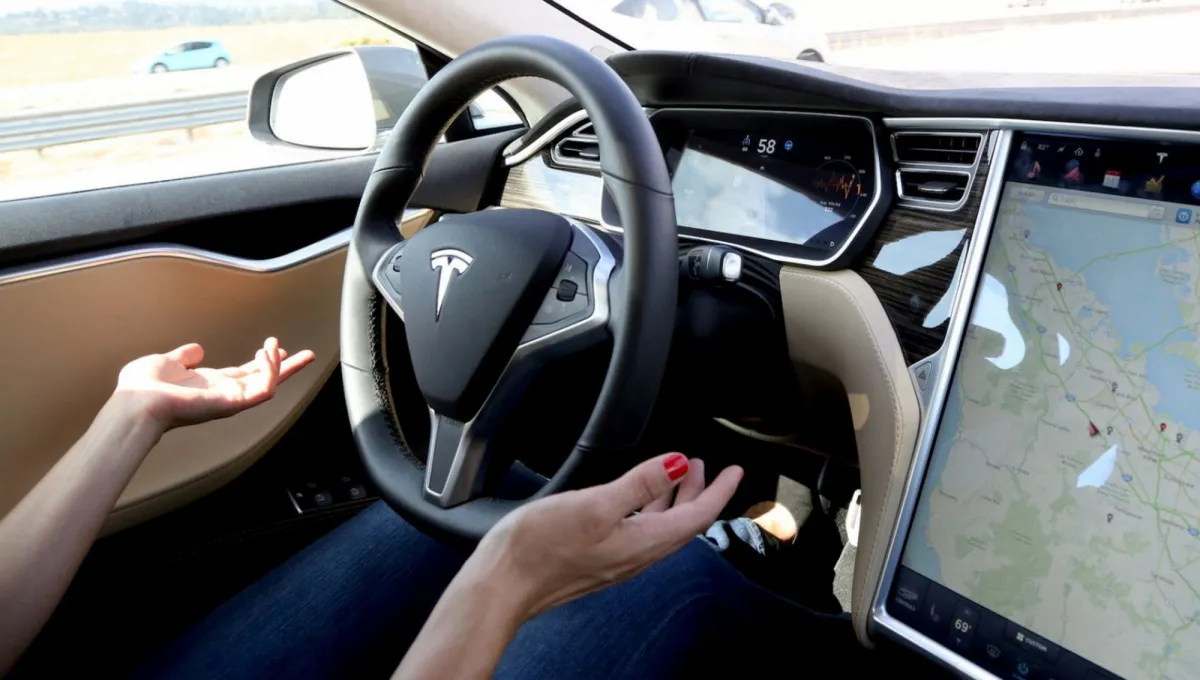
She Thought Her Tesla Was Acting Strange. ‘I’m in Your Car’: Man Used a Tesla App to Harass His Ex
A man remotely controlled his ex-partner’s Tesla, changed its settings, and restricted how fast she could drive.