
Distant Relatives: The Asian Off-Roaders Inspired by America’s Legendary Jeep
After World War II, Jeep-inspired SUVs helped launch Asia’s future automotive giants and off-road legends.
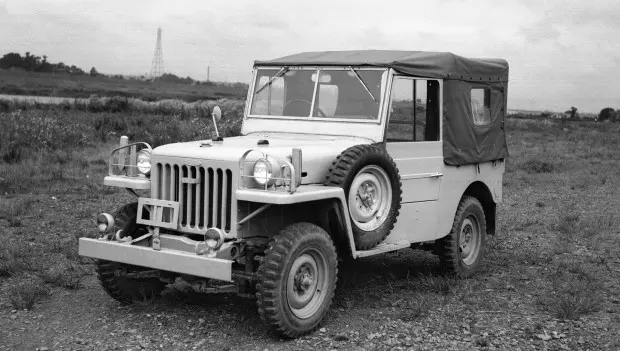
After World War II and the Korean War, large numbers of American Jeep vehicles remained across Asia, quickly becoming inspiration for local automakers. Some companies legally licensed Jeep technology, others created vehicles heavily influenced by the originals, and a few simply copied the designs outright.
Either way, many legendary Asian SUVs can trace their roots back to the iconic American Jeep, complete with leaf-spring suspension, rugged styling, and simple four-wheel-drive systems featuring manually engaged front axles and no locking differentials.
Japan’s Off-Road Revolution Begins
At the end of World War II, Japan’s auto industry was in rough shape. Some officials even considered shutting it down entirely and importing vehicles directly from the United States. But history took a different turn after the Korean War broke out in 1950.
The U.S. military urgently needed vehicles, and shipping them from America proved expensive and slow. Building them in nearby Japan suddenly made far more sense — a move that would eventually help create some of Detroit’s toughest competitors.
Mitsubishi: The Licensed Jeep Builder
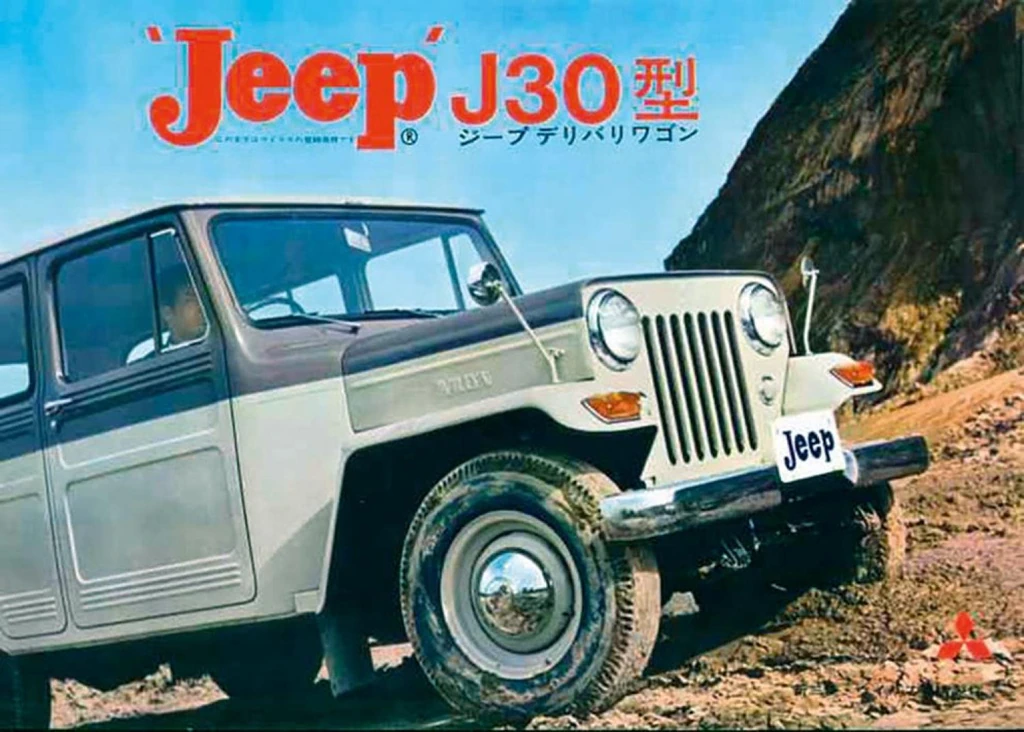
In 1951, Mitsubishi, Nissan, and Toyota all began producing military-style off-roaders inspired by Jeep models. Mitsubishi ultimately won major military contracts because it chose the smartest path: licensed production.
The company started building the Mitsubishi Willys Jeep CJ-3A and later the CJ-3B under official agreement. The CJ-3B became recognizable for its unusually tall hood, needed to fit a unique 2.2-liter engine using both overhead and side valves. Output ranged between 72 and 75 horsepower.
By 1956, Mitsubishi introduced a 2.2-liter diesel producing 56 horsepower, later increased to 60 hp. Top speed remained modest at about 53 mph.
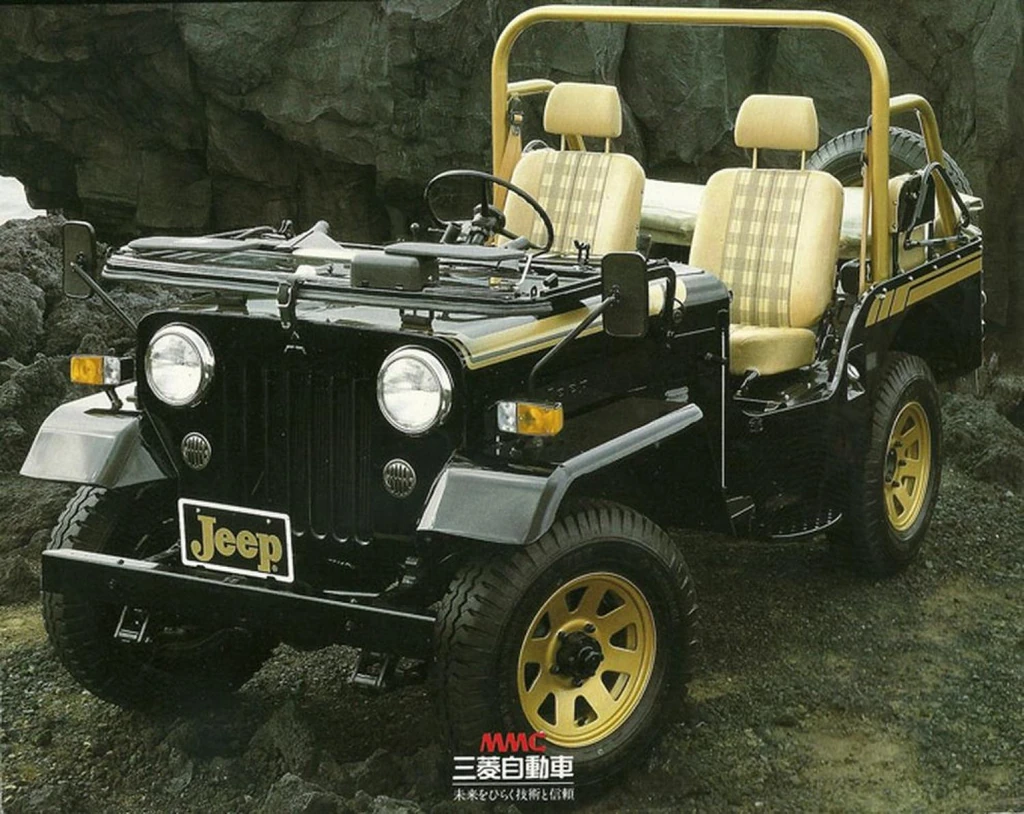
Starting in the mid-1950s, the lineup expanded into long- and short-wheelbase versions, pickups, wagons, and commercial chassis models. Early vehicles carried large “Willys” badges on the hood sides before eventually switching to Jeep branding.
Civilian models gradually became more comfortable, receiving proper doors, roll-up windows, and upgraded interiors. Military versions supplied to Japan’s Self-Defense Forces and South Vietnam remained far more basic and continued using gasoline engines only.
Over time, American mechanical components were replaced with Japanese-built parts, and by the 1960s the Mitsubishi Jeep had evolved into its own machine rather than a simple copy.
Later versions from the 1980s and 1990s featured 2.0-liter gasoline engines with 100 horsepower, 2.4-liter engines making 110 hp, and a 2.7-liter diesel rated at 80 hp. Top speeds increased to between 62 and 75 mph. A 95-horsepower turbodiesel arrived in 1988.
Ironically, the first prototype for the Mitsubishi Pajero was developed from the aging Jeep platform. Production of the old CJ-3B-derived models continued until 1997, ending only when the military finally moved on to newer vehicles.
Nissan Patrol: Bigger and More Powerful
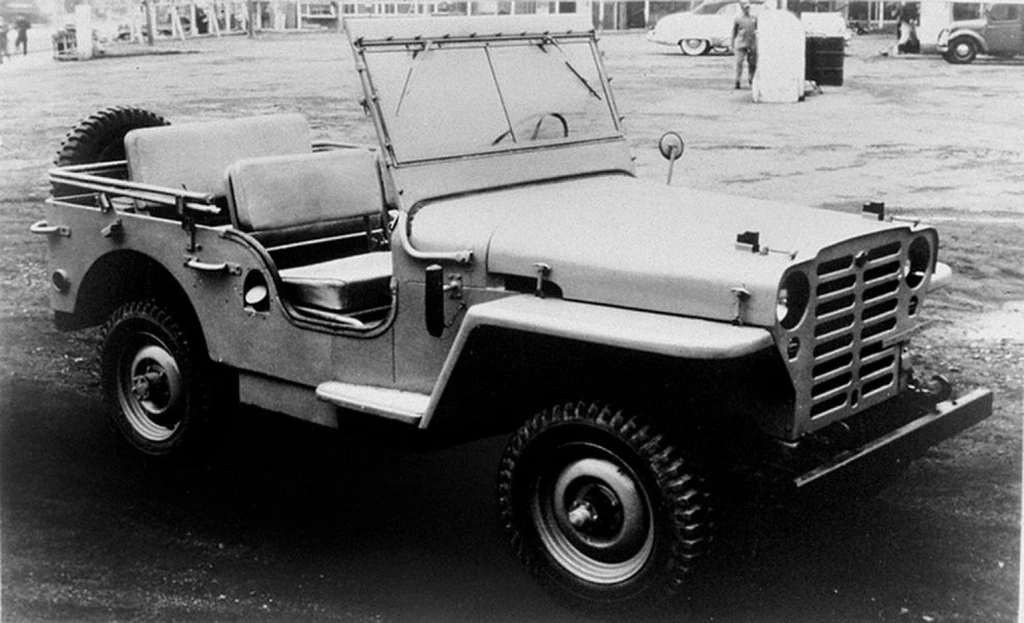
Nissan took a completely different approach.
The original Patrol 4W60 still resembled a Jeep but featured a longer hood, horizontal grille, and significantly larger dimensions. Compared to the wartime Willys MB, the Nissan measured 142 inches long with an 87-inch wheelbase, while the Jeep stretched just 133 inches with an 80-inch wheelbase.
Its biggest advantage was under the hood: a massive 3.7-liter inline-six gasoline engine borrowed from a bus. It produced 75 horsepower and 152 lb-ft of torque.
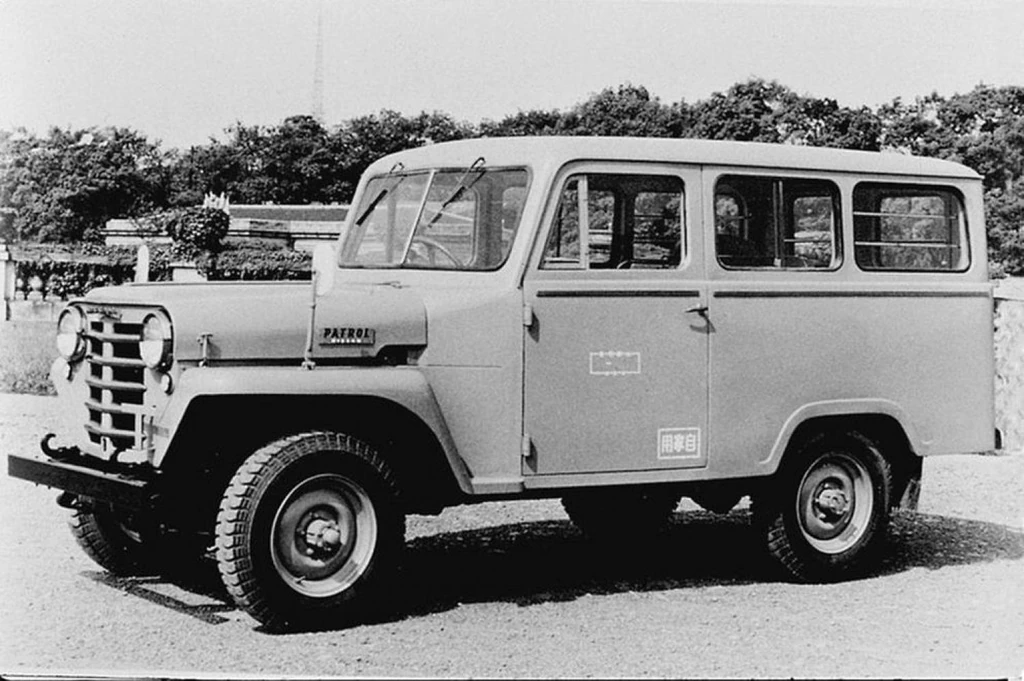
Soon Nissan added a fully enclosed wagon version, followed in 1955 by the upgraded 4W61 Patrol featuring a stronger 92-horsepower six-cylinder engine. Later models gained a 4.0-liter engine producing 105 hp, while the 4W65 introduced wider tracks and additional trim.
Interestingly, some front fender styling closely resembled the never-produced Willys CJ-4 concept.
By the late 1950s, the Patrol 4W66 arrived with 125 horsepower, and in 1960 Nissan launched the completely redesigned 60 Series Patrol — a vehicle no longer visually tied to Jeep roots.
Toyota Land Cruiser: Jeep DNA With Japanese Character
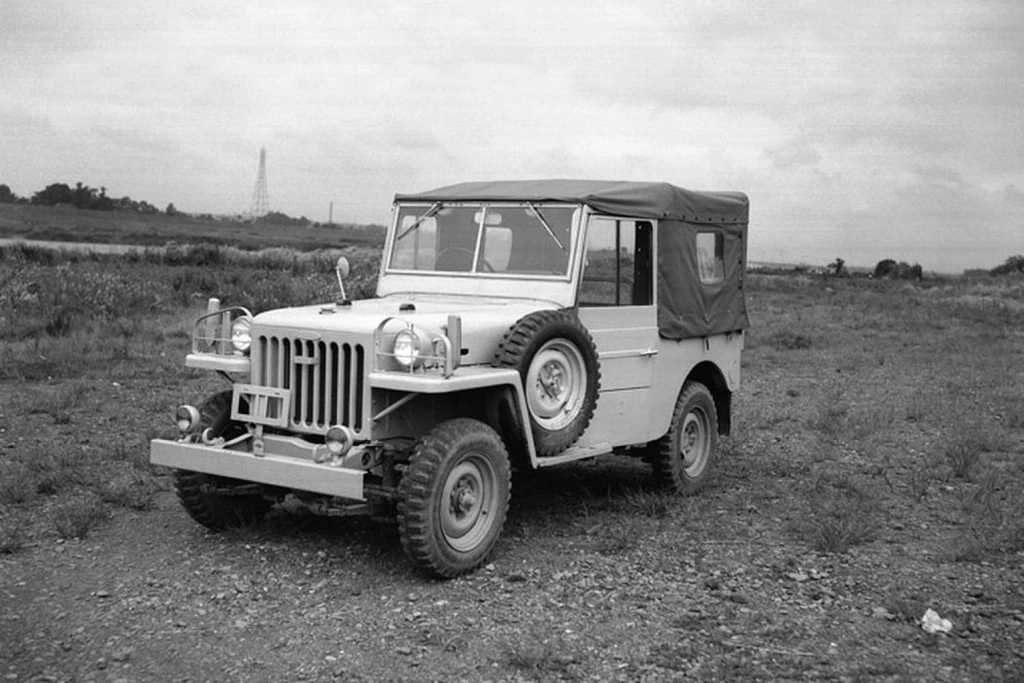
Toyota’s first Land Cruiser, originally called the BJ from 1951 to 1954, followed a similar formula.
It combined Jeep-like proportions with a longer hood designed to house a 3.4-liter inline-six making 85 horsepower. The grille and headlight guards looked heavily inspired by the legendary Dodge WC military trucks from World War II.
Toyota also borrowed the idea of a transfer case without low range.
The BJ came in three main forms:
- Open-body off-roader
- Pickup truck
- Chassis-cab version for fire trucks and commercial equipment
In 1954, Toyota upgraded the vehicle with a 3.9-liter engine producing 123 horsepower, redesigned front fenders, and chrome hubcaps.
Interestingly, the BJ never entered military service but became popular with Japanese police departments.
South Korea’s Jeep Story
South Korea’s auto industry also began with Jeep-inspired vehicles.
The country’s first postwar SUV, the Shibal, debuted in 1955 from Gukje Motors. Based heavily on the military Jeep M606, it featured a crude enclosed body reportedly made from recycled oil drums.
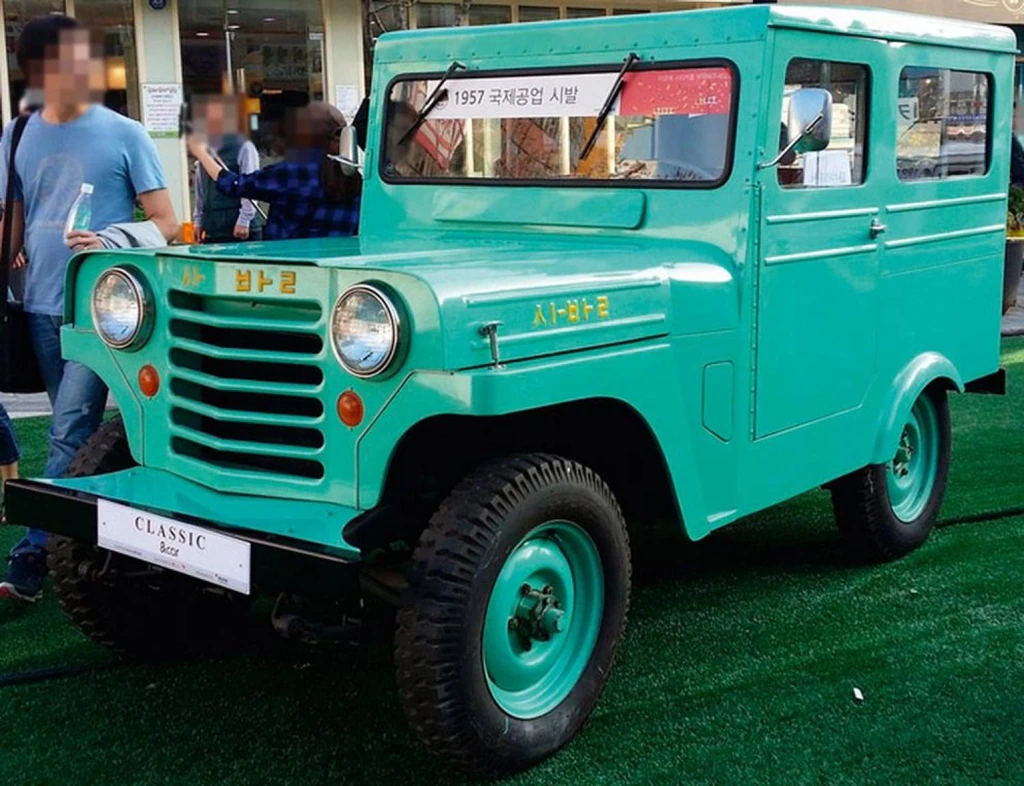
Later models looked far more refined, while the front fenders started resembling Nissan Patrol designs from the same era.
The original American engine was eventually replaced with a locally developed 1.3-liter OHV engine paired with a three-speed transmission.
Production reportedly lasted until either 1962 or 1964, depending on the source.
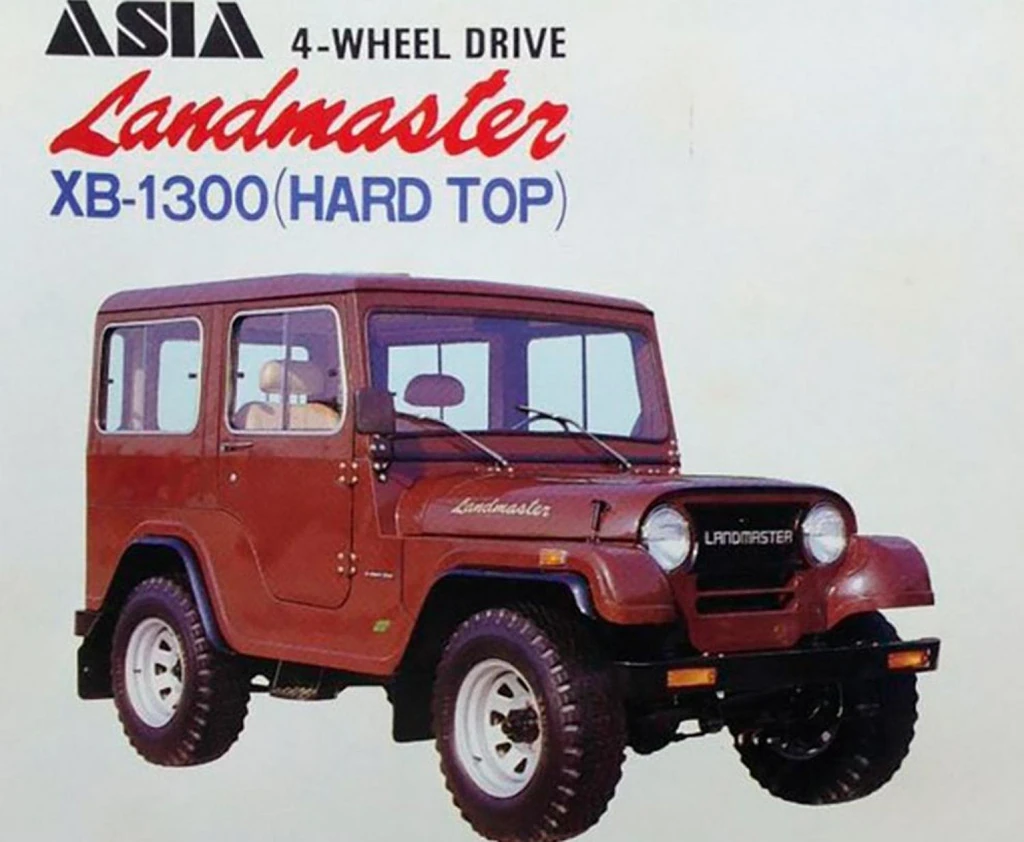
A major turning point came in 1974 when Korean automaker Shinjin signed a deal with American Motors Corporation, then owner of Jeep. The agreement allowed production of CJ-5, CJ-6, and CJ-7-based vehicles under the Asia brand.
Military versions became known as the Asia KM410, while civilian models used the Landmaster name.
In 1976, Shinjin-Asia became part of Kia Motors.
SsangYong Korando and the Korean Jeep Boom
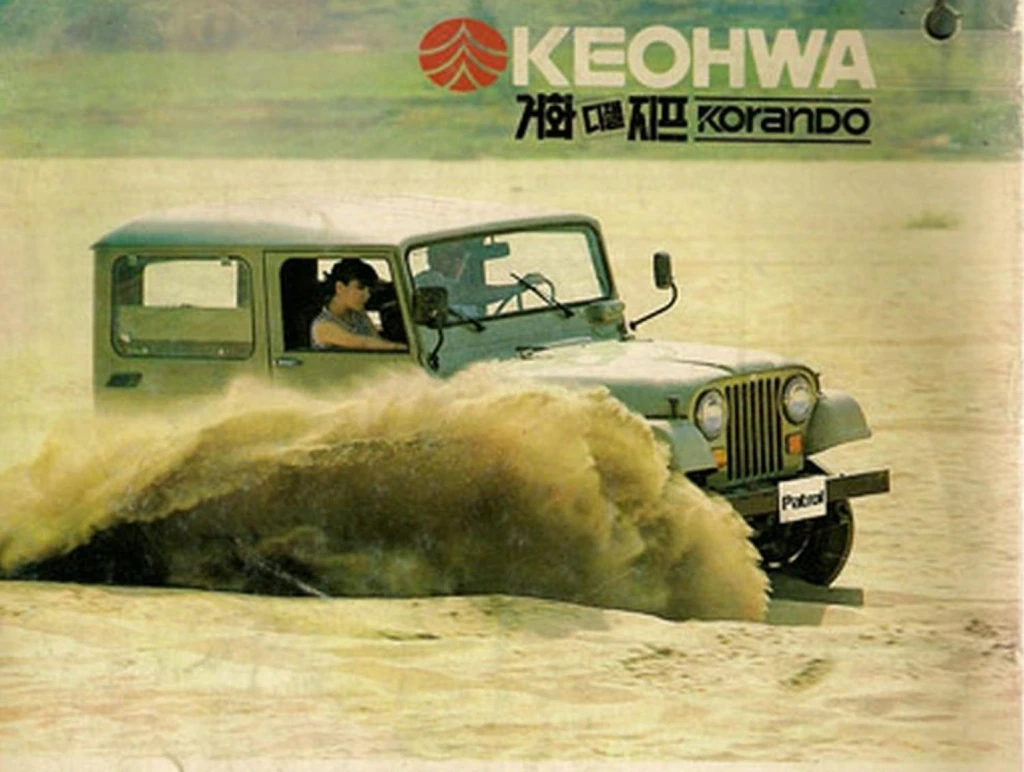
Government intervention in South Korea’s auto industry during the late 1970s created major restructuring.
Production of civilian Landmaster models moved to Geohwa, while military production initially stayed with Shinjin. Eventually Geohwa also began building military SUVs before later becoming part of Dong-A Motor and eventually SsangYong.
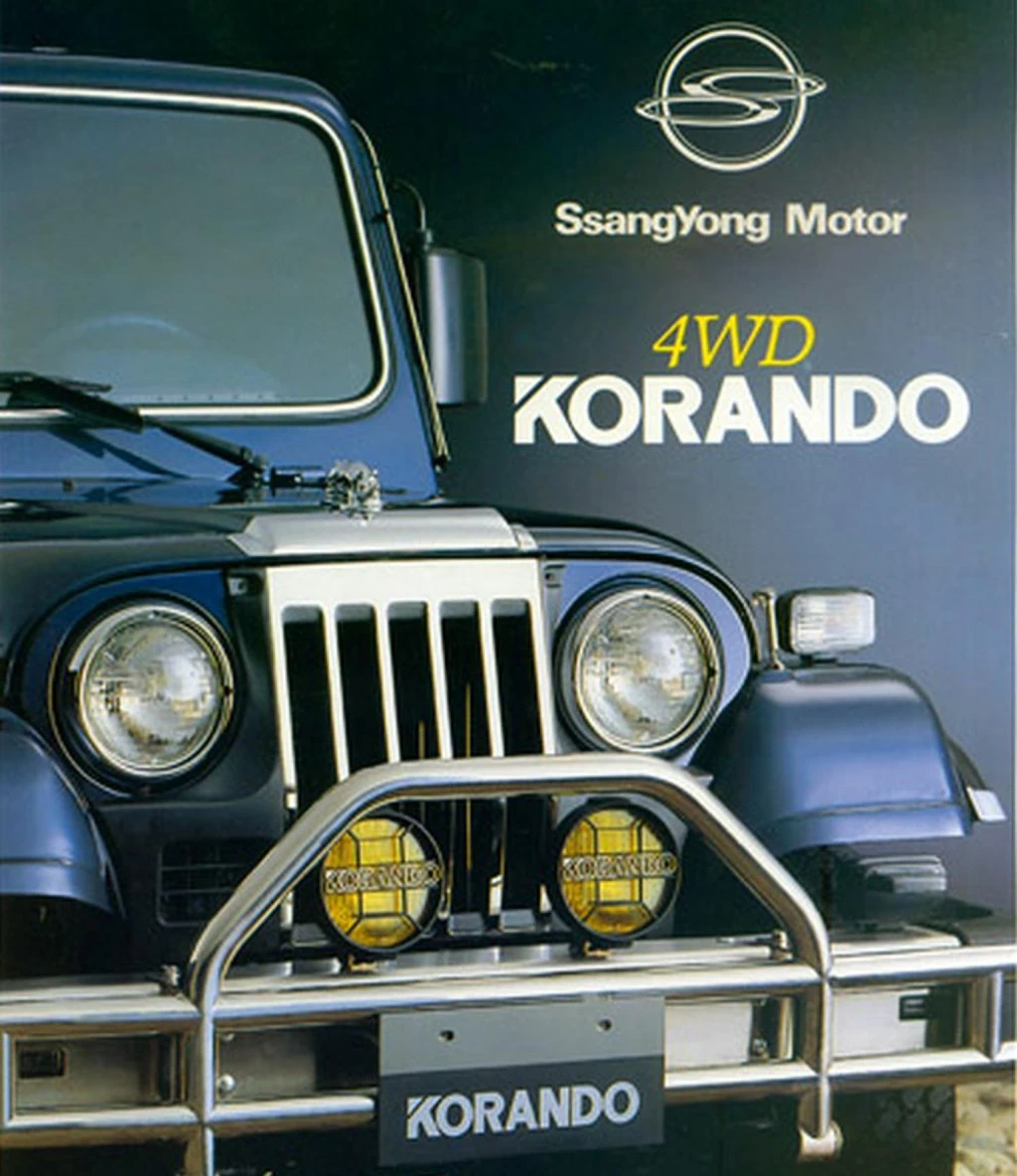
That evolution ultimately created the SsangYong Korando, a CJ-7-derived SUV that became surprisingly familiar in Eastern Europe during the early 1990s.
Later Korando models featured redesigned enclosed bodies, chrome grille trim, power windows, wood-style interior accents, and upgraded cabins resembling Mitsubishi designs.
Engine choices included:
- 2.6-liter gasoline engine — 120 hp
- 2.5-liter diesel — 79 hp
- 2.2-liter diesel — 68 hp
Drivers could choose automatic or manual front axle hubs, while the rear differential featured limited-slip technology.
Ground clearance measured nearly 8 inches, and gasoline-powered versions reached speeds up to 101 mph.
Kia Rocsta: Korea’s Last Classic Jeep Clone
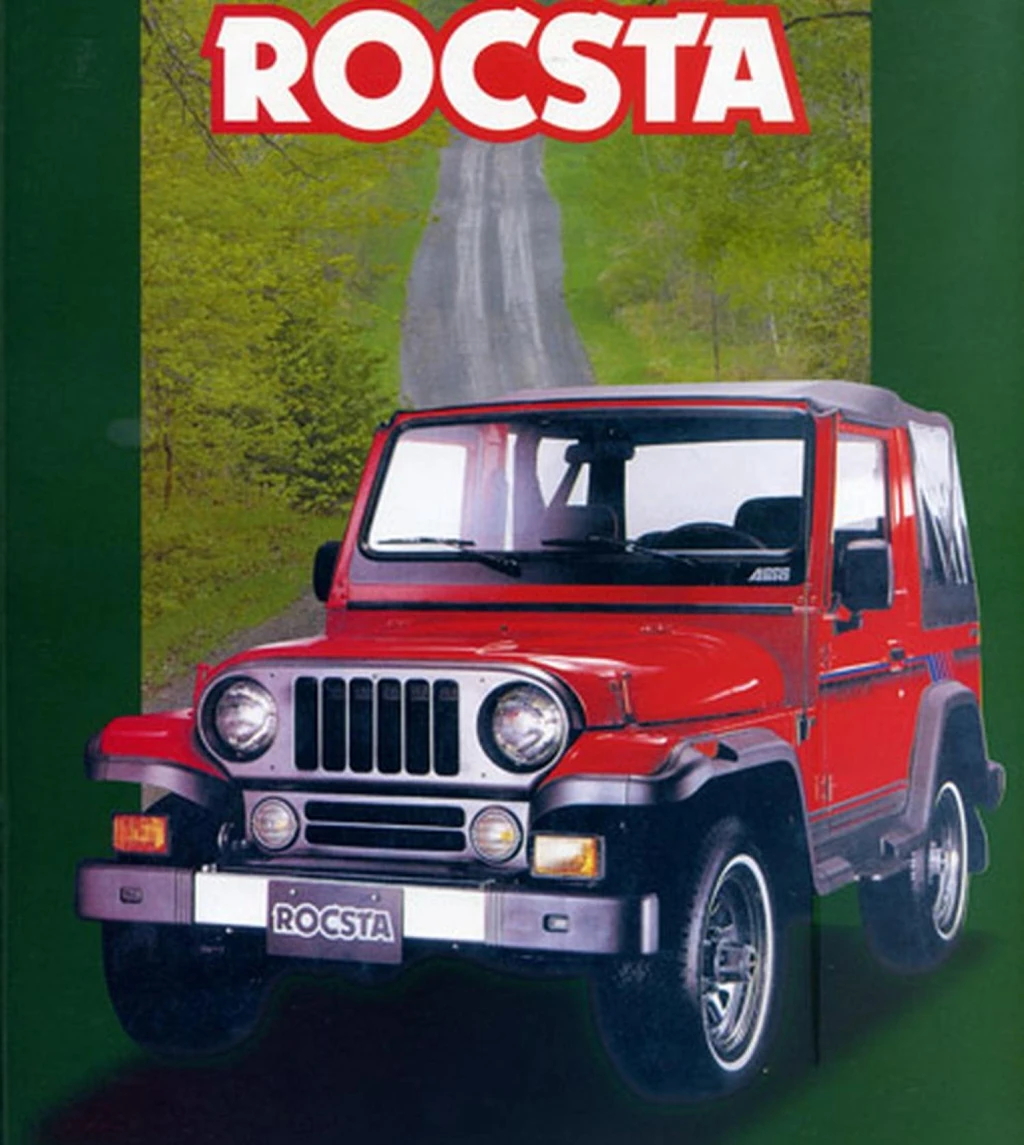
Watching SsangYong’s success, Kia revived its own Jeep-inspired SUV in 1990: the Asia Rocsta.
Based on the military KM410 platform, the Rocsta featured a black plastic grille, modernized styling, and an interior strongly influenced by Mazda designs.
Mazda also supplied the licensed five-speed manual transmission and 1.8-liter gasoline engine producing 85 horsepower.
Diesel versions used a British-built 2.2-liter Perkins engine making 70 hp.
Top speed ranged from 86 mph for diesel models to nearly 99 mph with gasoline power.
Buyers could choose between:
- Short- or long-wheelbase versions
- Open-top or enclosed bodies
- Pickup-style cargo variants
Limited-slip differentials were optional, and ground clearance remained close to 8 inches.
Assembly of the short-wheelbase Rocsta even took place in Russia through a partnership with Avtotor.
Period advertising proudly claimed owners would experience “pure pride” thanks to the SUV’s “stunning sporty appearance.” Still, corrosion protection and build quality weren’t exactly class-leading, though the Rocsta developed a loyal fanbase.
Production ended in 1997, while the Asia division itself disappeared in 1999.
China’s Jeep Clones
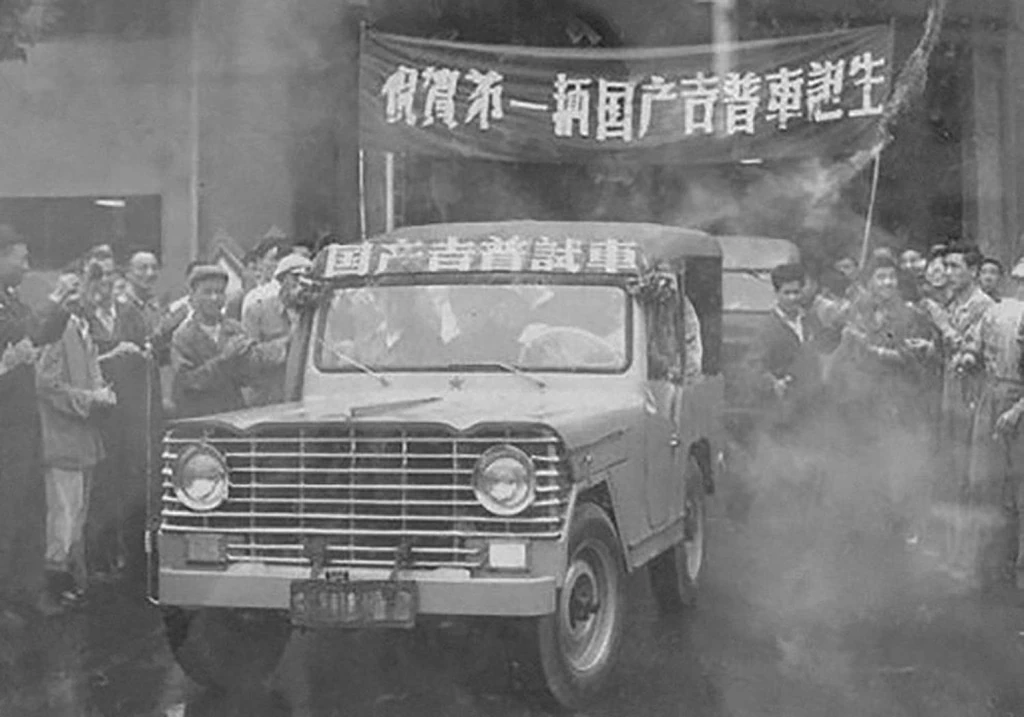
China’s first Jeep-inspired vehicles appeared between 1958 and 1960 at Shanghai Auto Works.
Roughly 250 unlicensed copies of the Jeep CJ-2A were produced using 50-horsepower engines borrowed from the Soviet GAZ-M20 Pobeda sedan.
Near the end of production, the Chinese SUVs gained a unique but overly decorative grille design.
Later came the Changjiang Chang’an 46, another Jeep copy based on the CJ-5 and also powered by the Pobeda engine. About 1,400 were built between 1959 and 1963.
Meanwhile, Taiwan quietly produced Jeep CJ-5 copies under the Yue Loong YL-1 name from 1951 through 1970 with unofficial American approval. These vehicles used a 2.2-liter engine producing 71 horsepower.
Taiwanese engineers even developed unique local variants, including the YL-2 — essentially a soft-top people mover capable of carrying 10 passengers.
Eventually, Yue Loong partnered with Nissan in 1957 and shifted focus toward Japanese vehicles instead.
You may also be interested in the news:
That O/D OFF Button in Your Car Has a Purpose—Here’s When You Actually Need to Press It
That mysterious O/D OFF button isn't a warning of transmission trouble—it can actually make driving easier in specific situations.
Ford Ranger FX4 Level II Was Cool Long Before the Raptor
Ford Built This Insane Ranger Years Before the Raptor—and Almost Nobody Remembers It
7 Cars That Should Have Been Legends — But One Big Flaw Held Them Back
Some cars had the styling, performance and character to become icons, but one glaring weakness kept them just short of legendary status.
These 5 Automakers Still Refuse to Build an SUV
SUVs and crossovers now account for roughly 61% of new-vehicle sales in the U.S., yet these five automakers continue to avoid the segment.
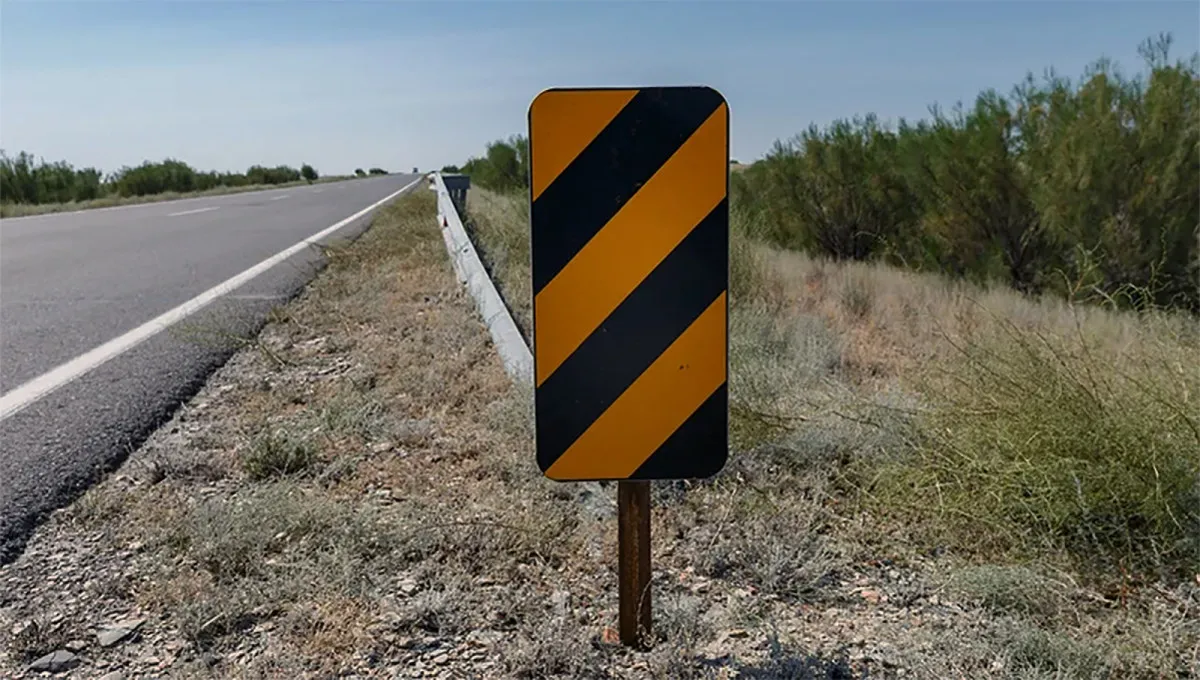
You've Seen These Black-and-Yellow Road Markers—But Do You Know What They Really Mean?
Those familiar black-and-yellow road markers quietly tell drivers which direction to take around roadside obstacles.