
Automatic Failure: Ford’s 1942 Liquamatic Experiment
This is the story of an impressive failure.
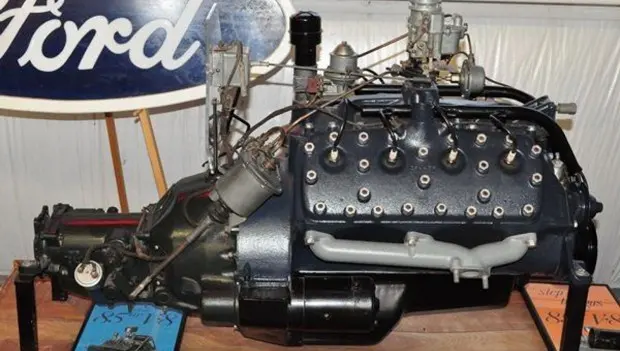
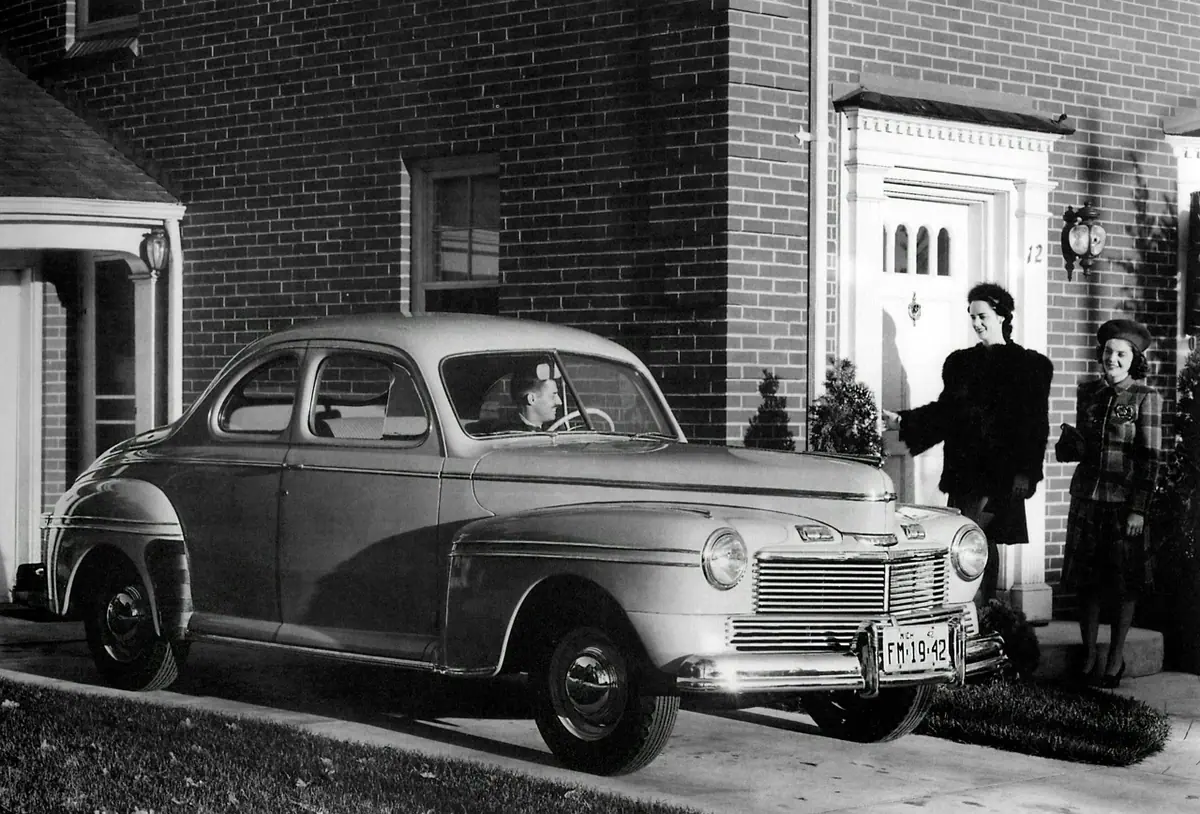
In 1942, Ford offered several Lincoln and Mercury models with a new type of automatic transmission called Liquamatic, but the company quickly pulled it from the market. This is the story of an impressive failure.

It sounds unlikely today, but Ford really did offer an automatic transmission as an option for Mercury and Lincoln models in 1942. Almost nothing is known about the system today, largely because the company withdrew it from the market almost immediately after its launch, and every Liquamatic unit that had been ordered was sent back to the factory.
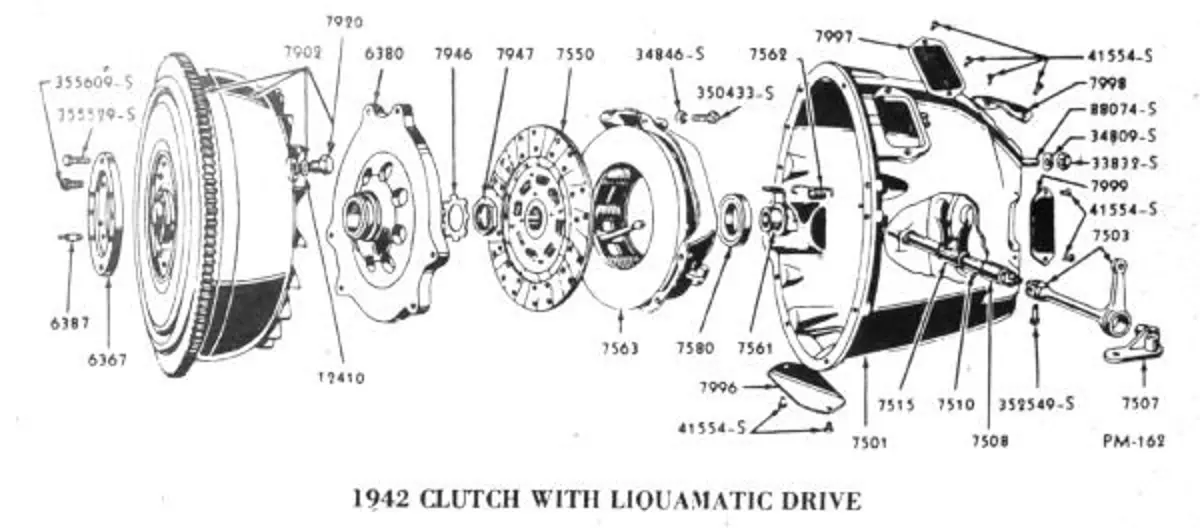
Liquamatic was based on a conventional three-speed manual transmission with a clutch pedal, but it added several important components. First, a hydraulic coupling was mounted on the flywheel ahead of the clutch assembly. It engaged when the engine was started, when the vehicle stopped, and during gear changes without requiring the clutch. A second lever was added to the right side of the transmission, allowing a vacuum-operated servo, controlled electrically, to shift the transmission between second and third gears.
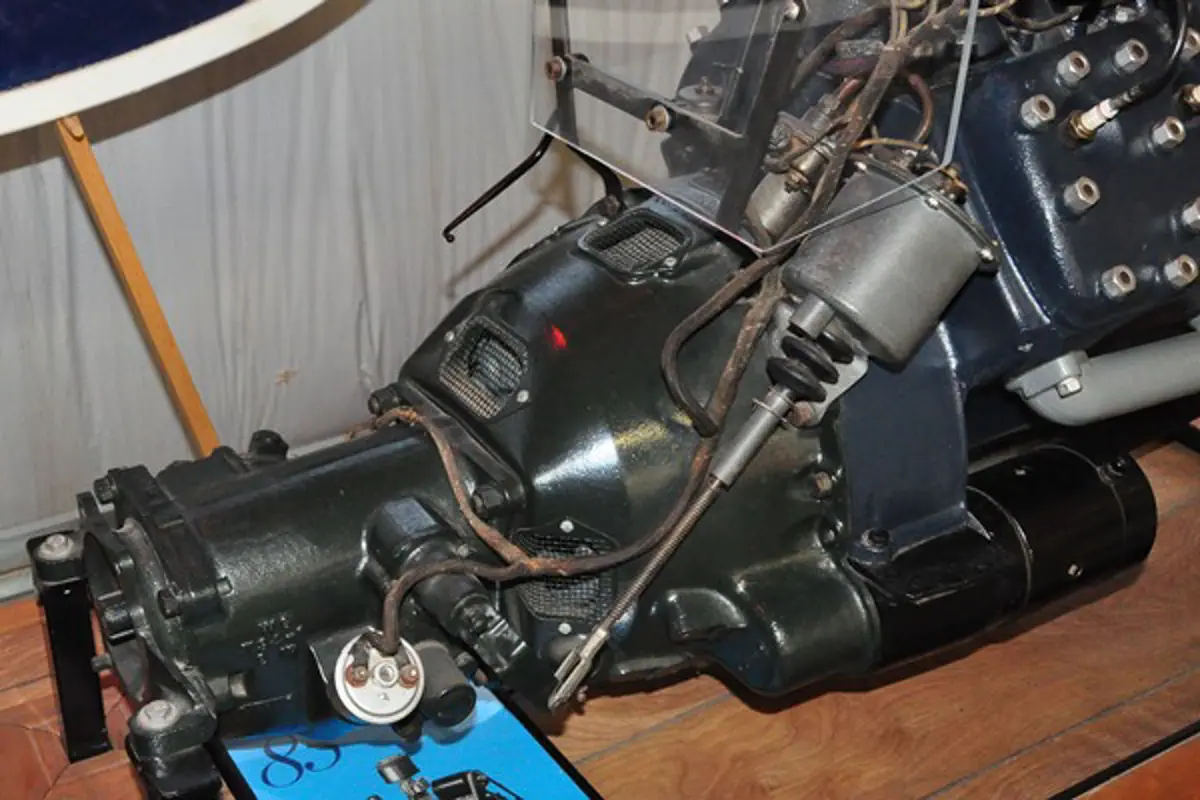
With Liquamatic, the driver could use the clutch pedal and shift manually through first, second and third gears. Alternatively, the transmission could be left in third gear and allowed to operate automatically. With the hydraulic coupling slipping and the system starting off in second gear, acceleration in automatic mode was, to put it mildly, sluggish.
This Lincoln Liquamatic diagram provides a better look at how the system worked. At 12 mph, a servo operated by engine manifold vacuum, controlled by an electrical regulator and solenoid, automatically shifted the transmission from second to third gear. There was also a kickdown switch operated by the accelerator pedal, allowing the transmission to shift from third to second at speeds below 35 mph.
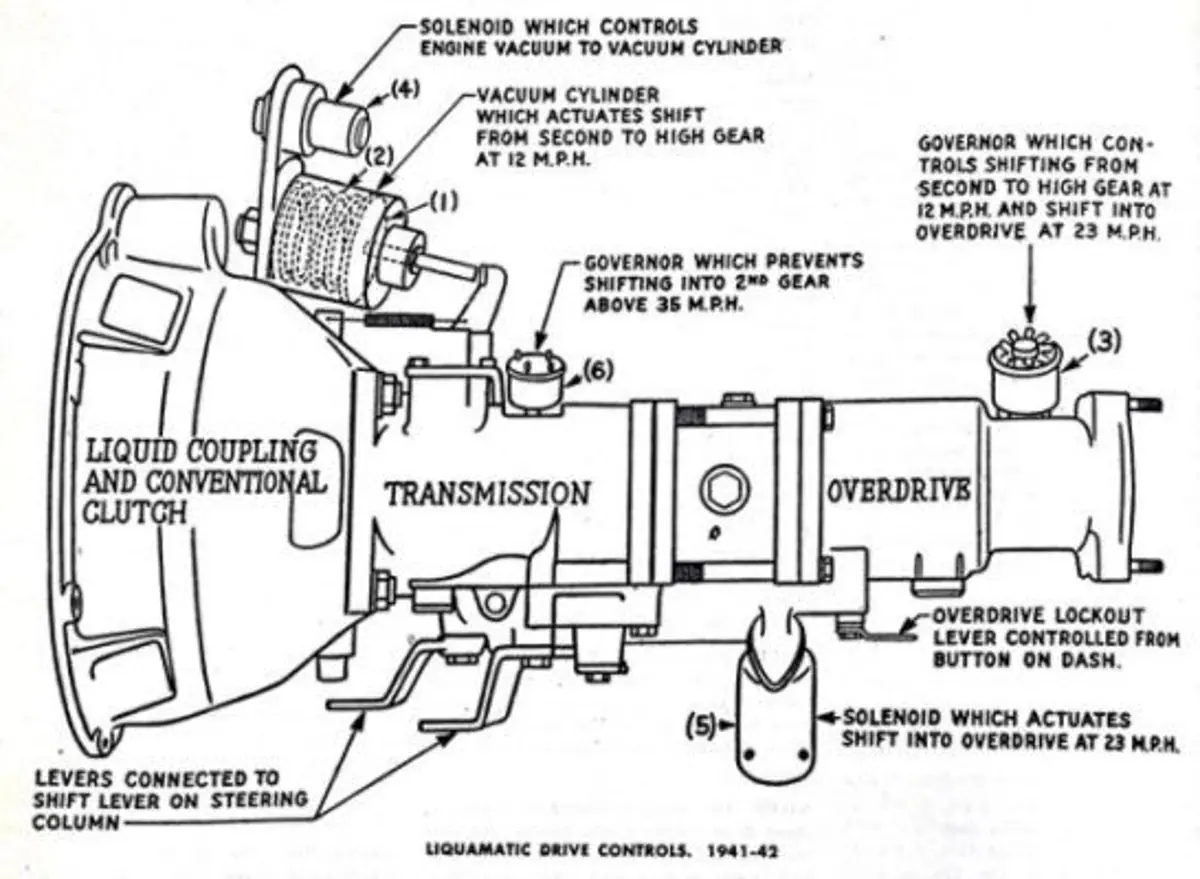
The Lincoln Liquamatic transmission also included a conventional overdrive, as shown above. It engaged at speeds of 23 mph or higher in any forward gear, although the driver could disable it with a switch on the dashboard. While this illustration, taken from a 1946 repair manual, shows the 1941-1942 Liquamatic system, it appears that this fairly expensive $189 option was offered only for 1942. Detroit Gear, a Borg-Warner division, supplied both units.
Because the Ford V-8's one-piece engine block required a special casting to accommodate the hydraulic coupling, the Liquamatic transmission was about 4 inches longer than the standard three-speed manual. The radiator therefore had to be moved to make room for it. Of roughly 23,000 Mercury vehicles produced for 1942, only 744 were reportedly equipped with Liquamatic. Some accounts say that as few as eight Lincoln vehicles received the system.
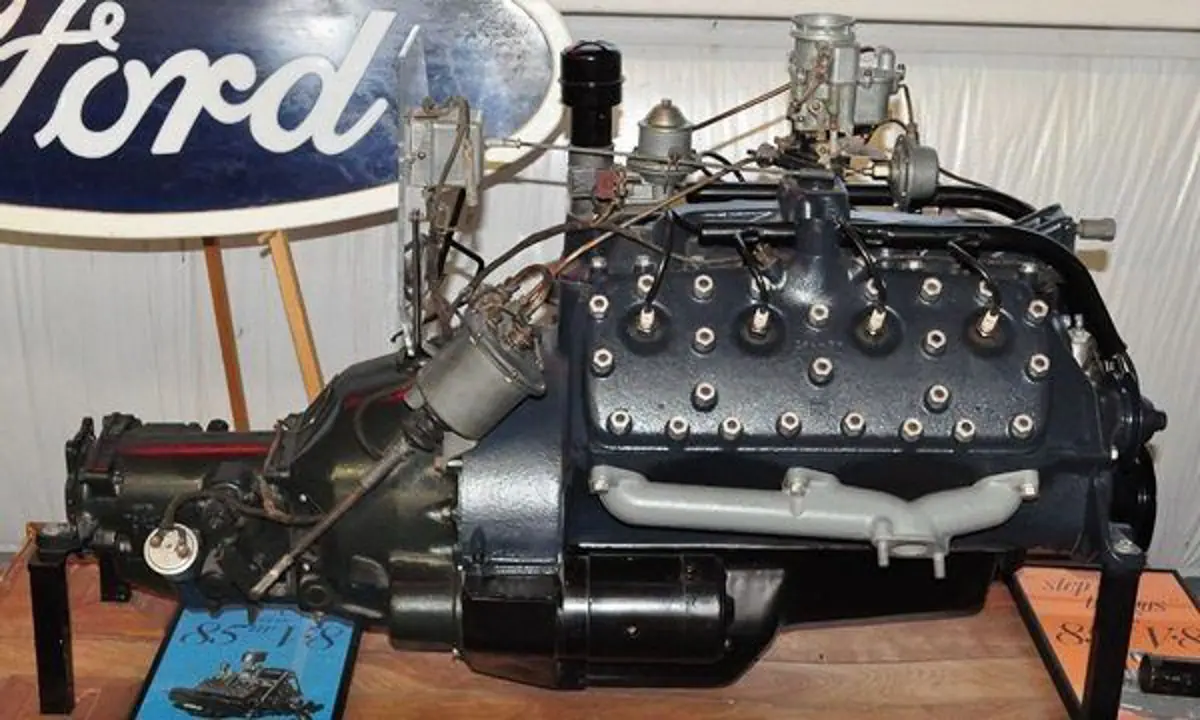
The exact reasons for the withdrawal remain unclear, although the system's poor performance was likely one of the factors. Whatever the problems were, they were serious enough that dealers were instructed to immediately replace the Liquamatic units in customer cars with conventional manual transmissions. The Liquamatic engines and transmissions were then supposed to be packaged up and shipped back to the factory.
One Mercury dealer in Minnesota never returned his Liquamatic unit to Dearborn, however. It was discovered in 1971 and is now the unit displayed at the Early Ford V-8 Museum, shown in the color photos above. Experts believe it may be the only surviving Mercury Liquamatic transmission.
Ford Motor Company would not begin producing its own automatic transmission again until 1951.
You may also be interested in the news:

The 10-Step Guide to Driving a Car When Absolutely Everything Goes Wrong
Driving an unfamiliar car through an unfamiliar city is easy when absolutely nothing makes sense.
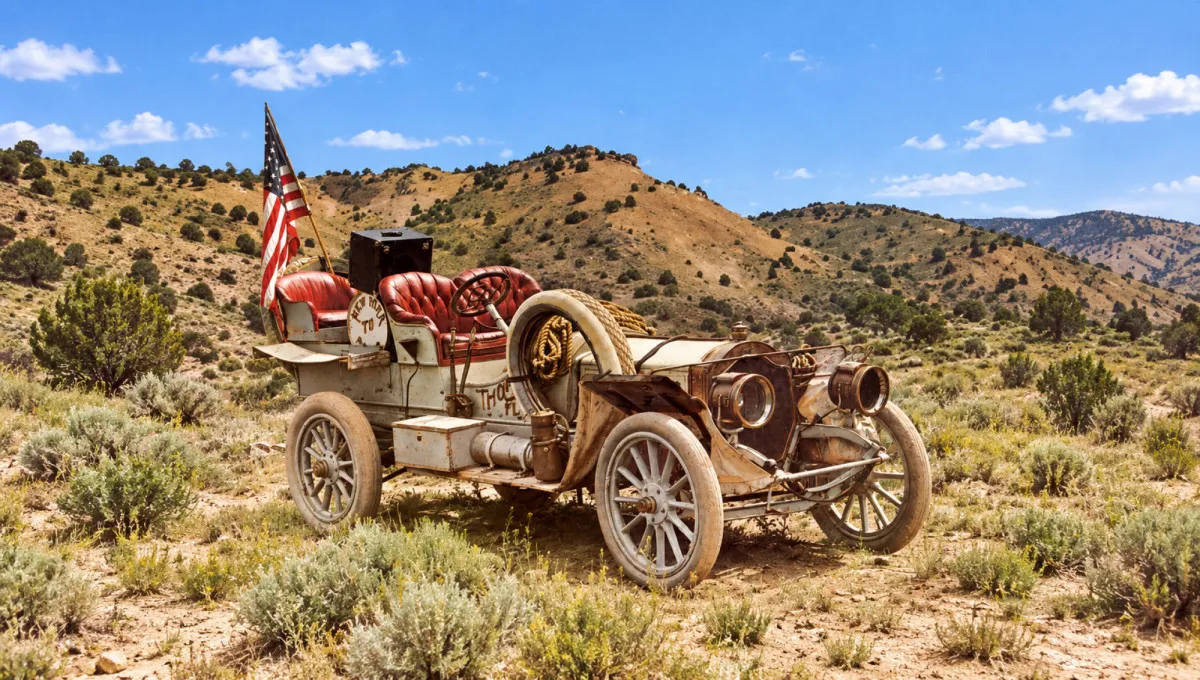
No Roads, No Map, No Car: The $50 Bet That Sent a Doctor Across America
In 1903, one doctor bet $50 he could drive from San Francisco to New York.
Stellantis Just Revealed Nine New Cars Under $40,000 — And Two Could Cost Less Than $30K
Stellantis plans nine cheaper vehicles as high prices leave American shoppers with fewer affordable new-car choices.
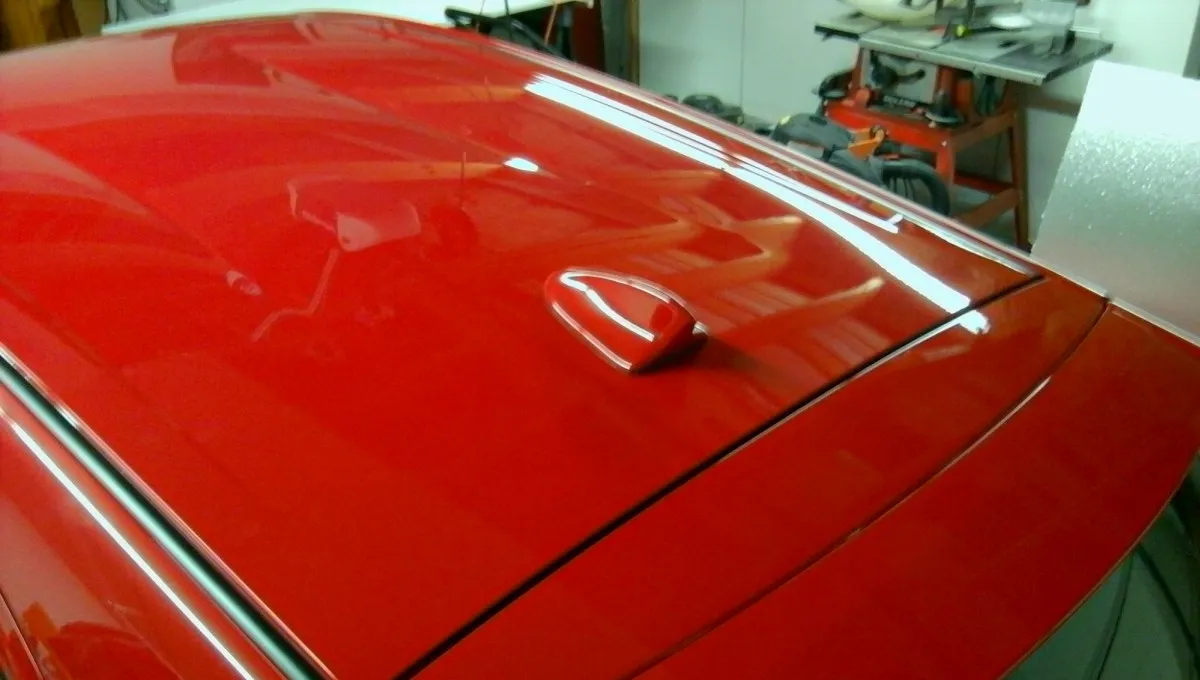
Small Fin, Big Job: Why Your Car’s Shark Fin Is More Than Just a Styling Trick
The small fin on your car's roof may look decorative, but it actually serves several important technical purposes.

This Tiny Home on Wheels Sleeps 5 — And It's Far More Spacious Inside Than It Looks
A tiny home on wheels turns limited space into a surprisingly comfortable setup for family road trips.