
Ten of the Strangest Mercedes Models Ever to Roll Off the Line
Even a brand as buttoned-up as Mercedes sometimes takes a wild swing and winds up building cars that look nothing like the ones we’re used to.
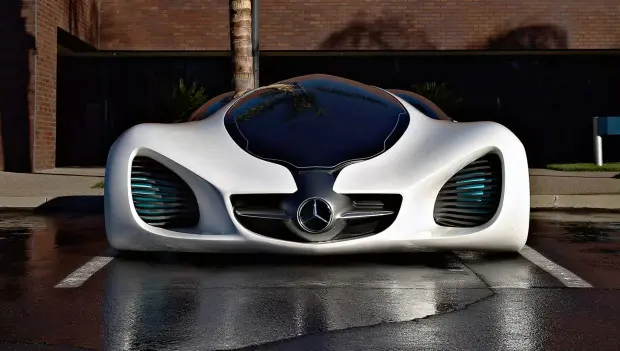
The world-famous German luxury automaker is known for its timeless, conservative lineup. Why gamble when Mercedes-Benz already stands for prestige and rock-solid reliability? Yet every so often, the company steps out of character and experiments with designs that feel downright un-Mercedes-like. Here are ten of the most extraordinary machines ever to leave the Stuttgart factory.
1. Mercedes-Benz 220D “La Pickup,” 1972
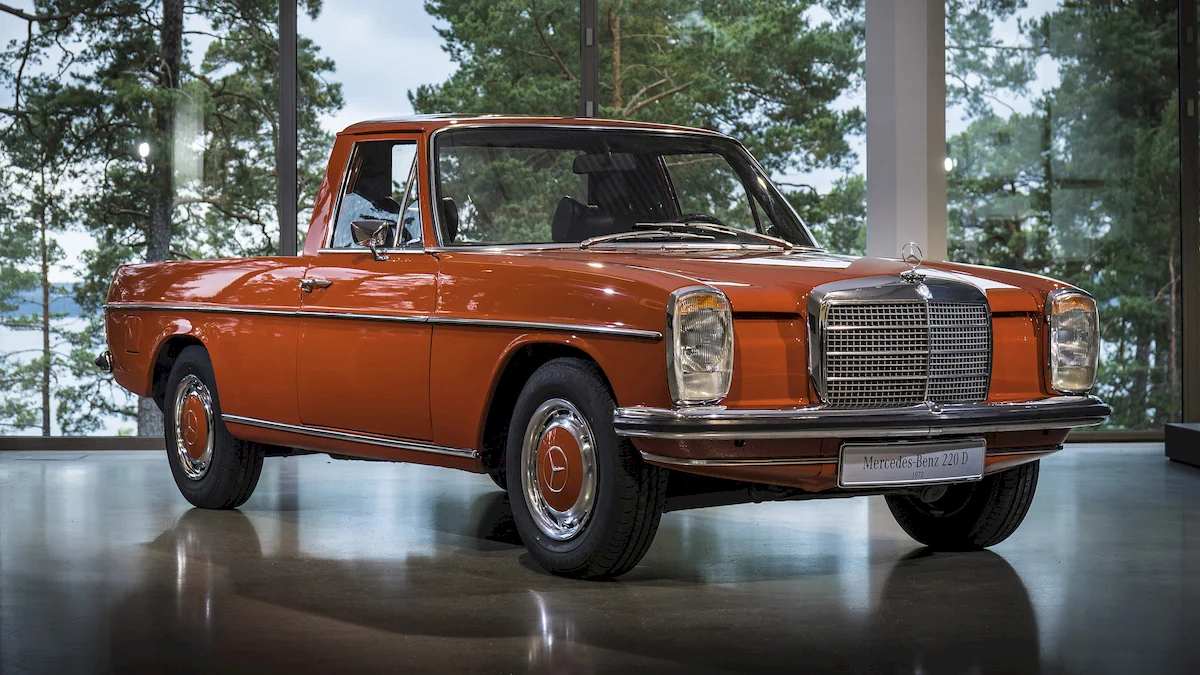
In the early ’70s, Mercedes turned its midsize W115 sedan into a small run of pickups—offered with either a single or double cab and boasting impressive payload capacity.
The diesel-powered 220D variant, built in Argentina and nicknamed La Pickup, was sent back to Germany, where it served the national railway hauling equipment. It wasn’t a purpose-built truck but rather a heavily modified sedan—surprisingly sharp-looking and genuinely useful.
2. Mercedes-Benz C111, 1969–1979
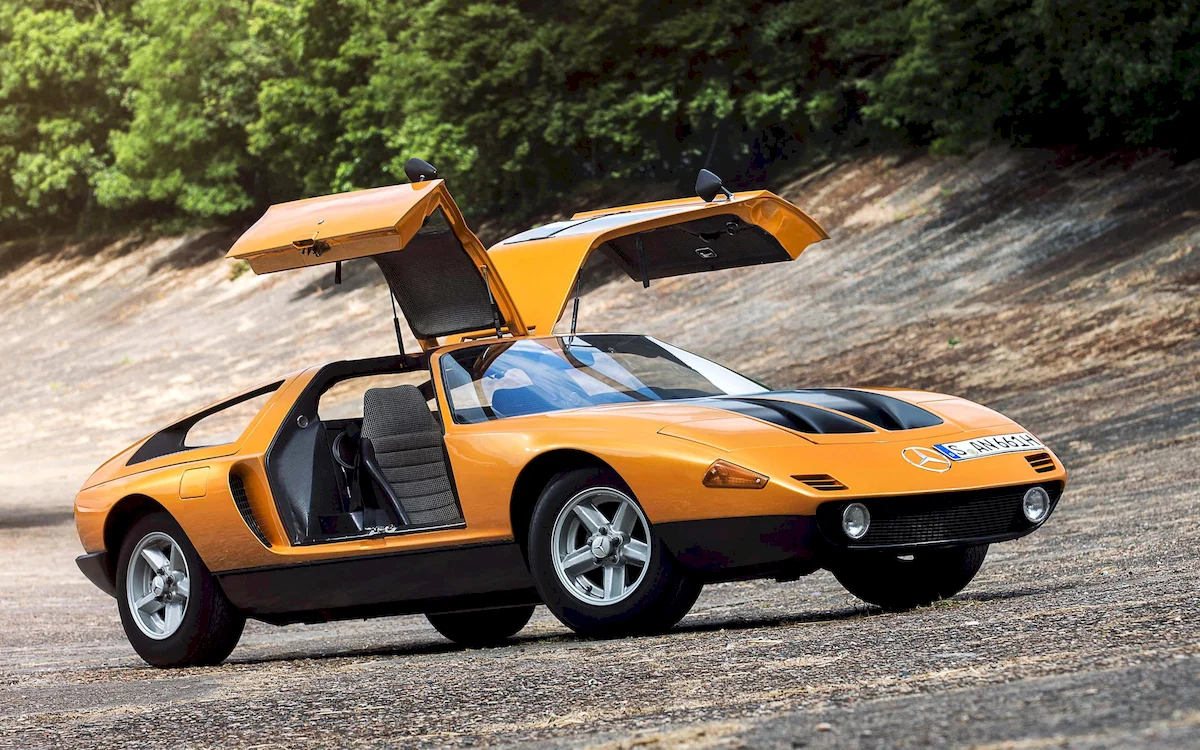
Over a decade of prototypes, Mercedes used the C111 program to test new engineering ideas. Should the future be Wankel rotary power? Diesel? Turbocharging? What materials make the best body? And why not try vertical “gullwing” doors again?
The C111 sat at the center of all these questions. The final version packed a turbocharged V8 making around 500 hp. Four official iterations were built, totaling 16 prototypes.
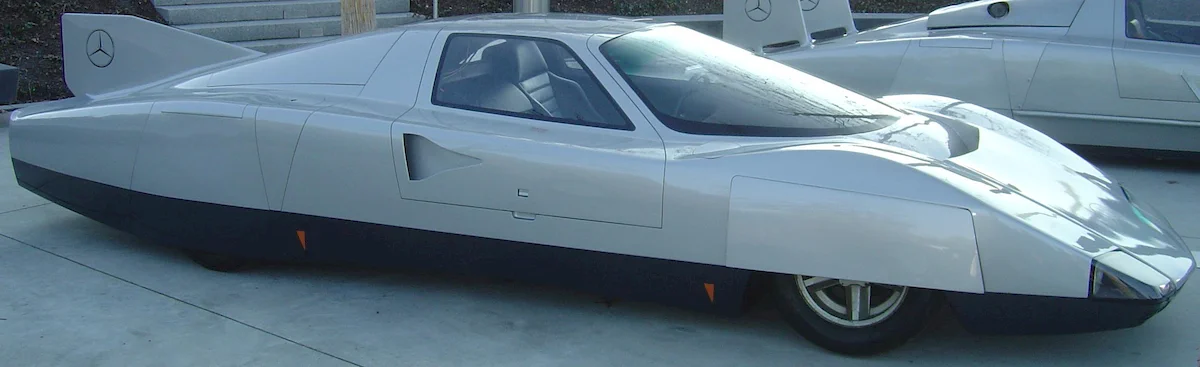
The first two were bright yellow fiberglass cars, while versions III and IV became low-slung record-hunters designed purely for speed.
3. Mercedes-Benz 190E Stadtwagen W201, 1981
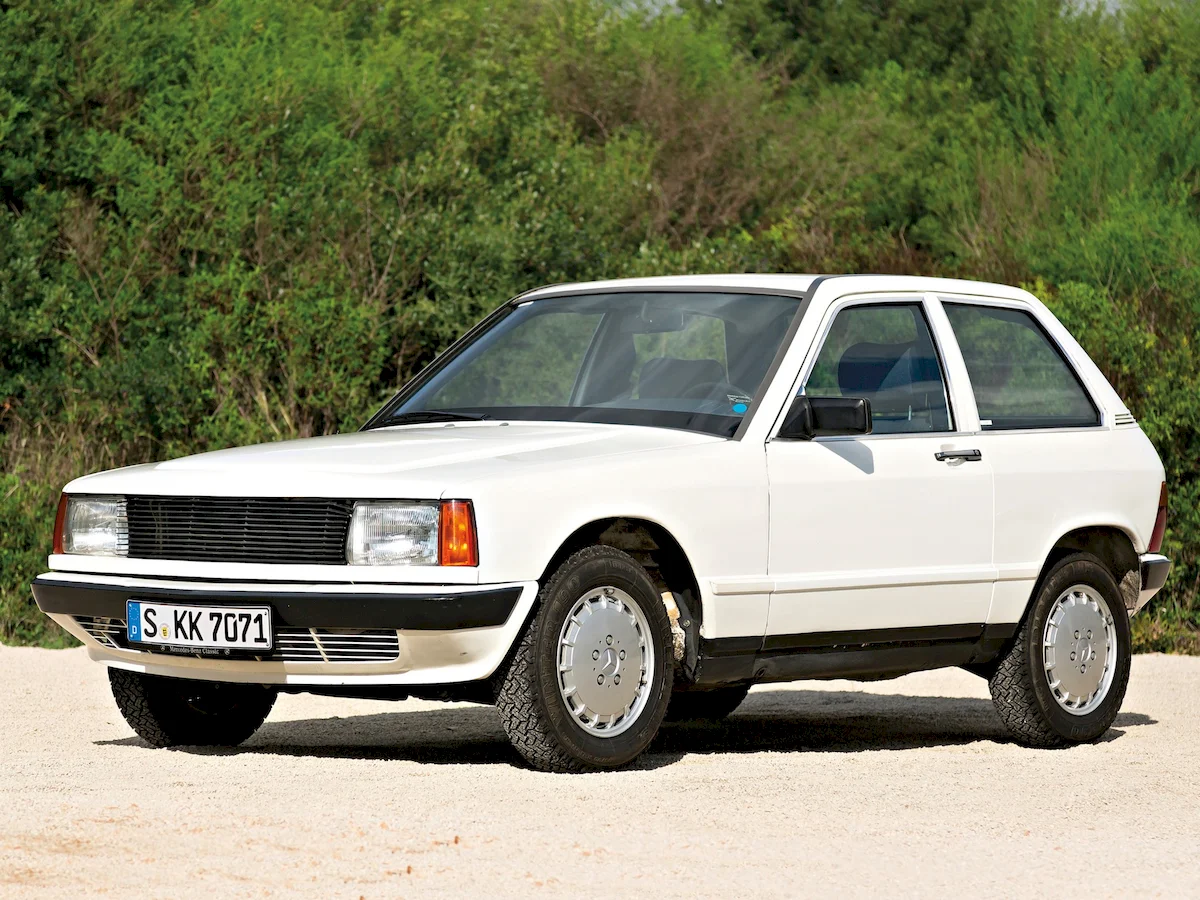
As Mercedes eyed the compact-car market in the ’80s, it created the 190E Stadtwagen—a shortened 190E sedan with the entire rear section chopped off, resulting in a very unusual silhouette.
As an experiment, Mercedes handed the job to the Schulz-Automobile coachbuilder, which sliced up the five-seat, rear-drive sedan into a tiny production run of oddly charming city cars.
4. Mercedes-Benz NAFA, 1982
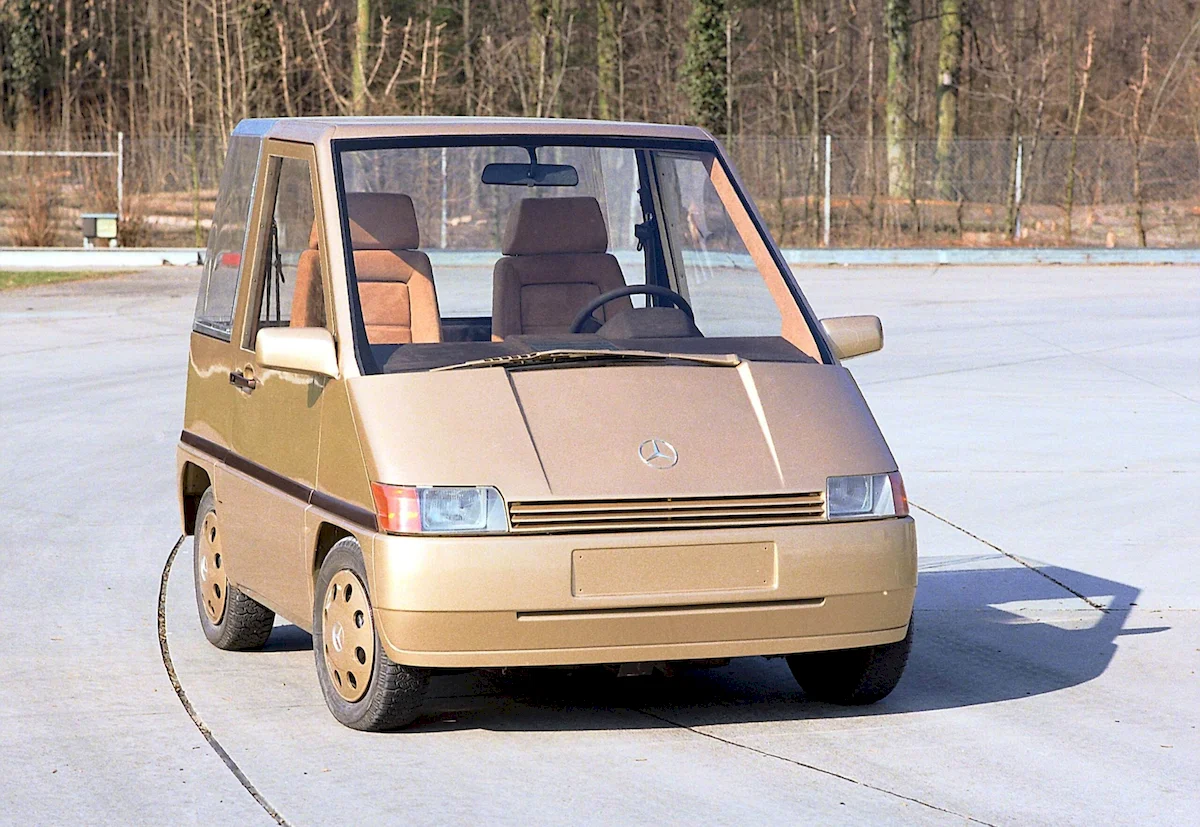
At first glance, you’d hardly believe this tiny pod is a Mercedes at all. But the 1982 NAFA was a serious attempt to help urban residents navigate cramped streets and impossible parking spots.
This two-seater measured just 8.2 feet long and less than 5 feet wide or tall, yet made about 40 hp—enough for city life. The project stalled when engineers realized the NAFA’s miniature footprint made it impossible to meet safety standards. Production was abandoned.
5. Mercedes-Benz F100, 1991
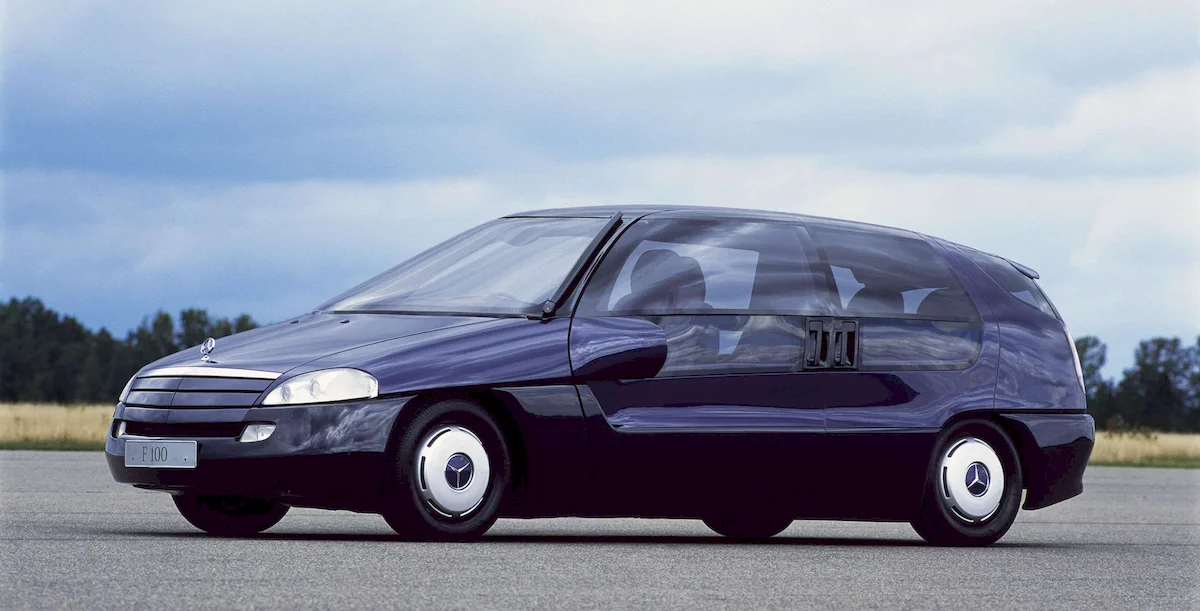
As minivans grew in popularity in the early ’90s, Mercedes decided to show its vision of the future. The F100 concept made its debut at the North American International Auto Show.
Engineers loaded it with cutting-edge tech—features that wouldn’t become mainstream for years. Think adaptive cruise control, blind-spot detection, lane-keeping, tire-pressure monitoring, and more.
It even had solar panels on the roof and a centrally mounted driver’s seat.
6. Mercedes-Benz T80, 1939
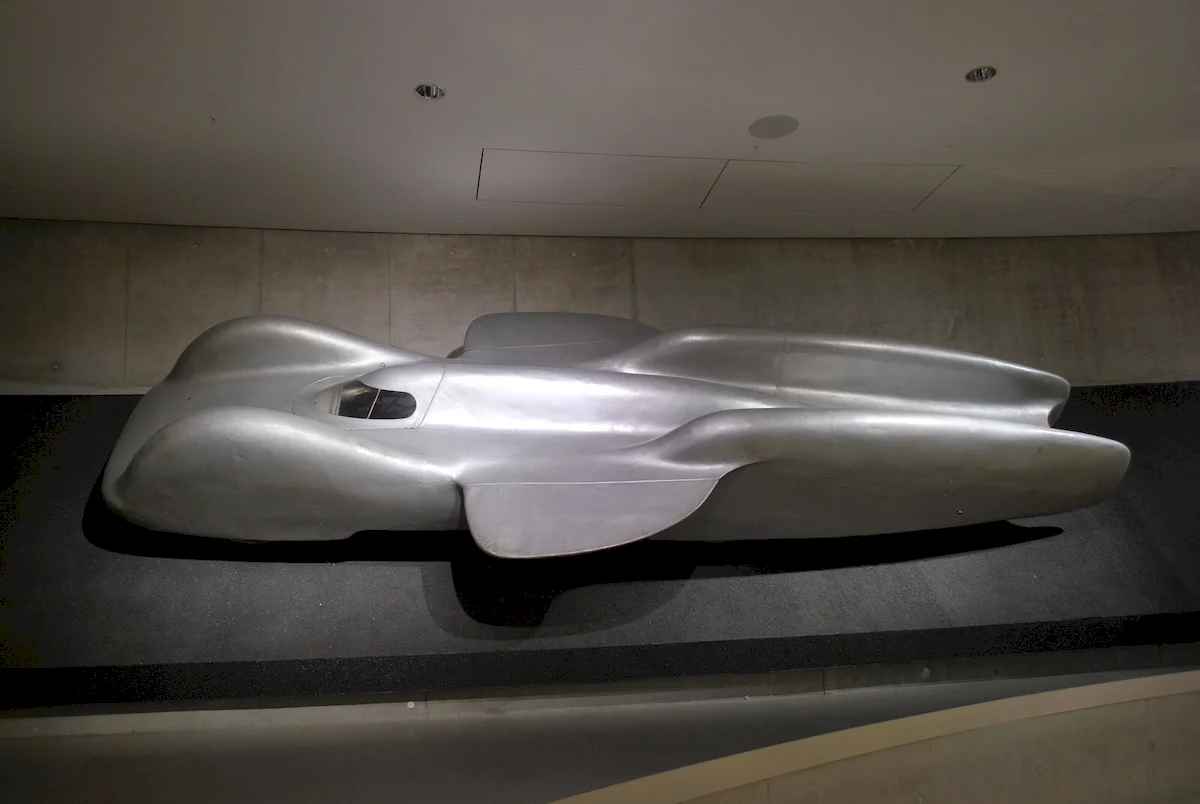
The wild, almost alien-looking T80 wasn’t a futuristic dream—it was a product of pre-war Germany. Designed in 1939 by none other than Ferdinand Porsche, the T80 was built to shatter land-speed records. Adolf Hitler, a racing fanatic, personally supported the project.
The car rode on three axles and six wheels. With a 44.5-liter aircraft engine making around 3,000 hp, the T80 was intended to reach a staggering 465 mph. World War II halted the attempt, and the lone prototype—now preserved in Stuttgart—never got to prove itself.
7. Mercedes-Benz F300 Life-Jet, 1997
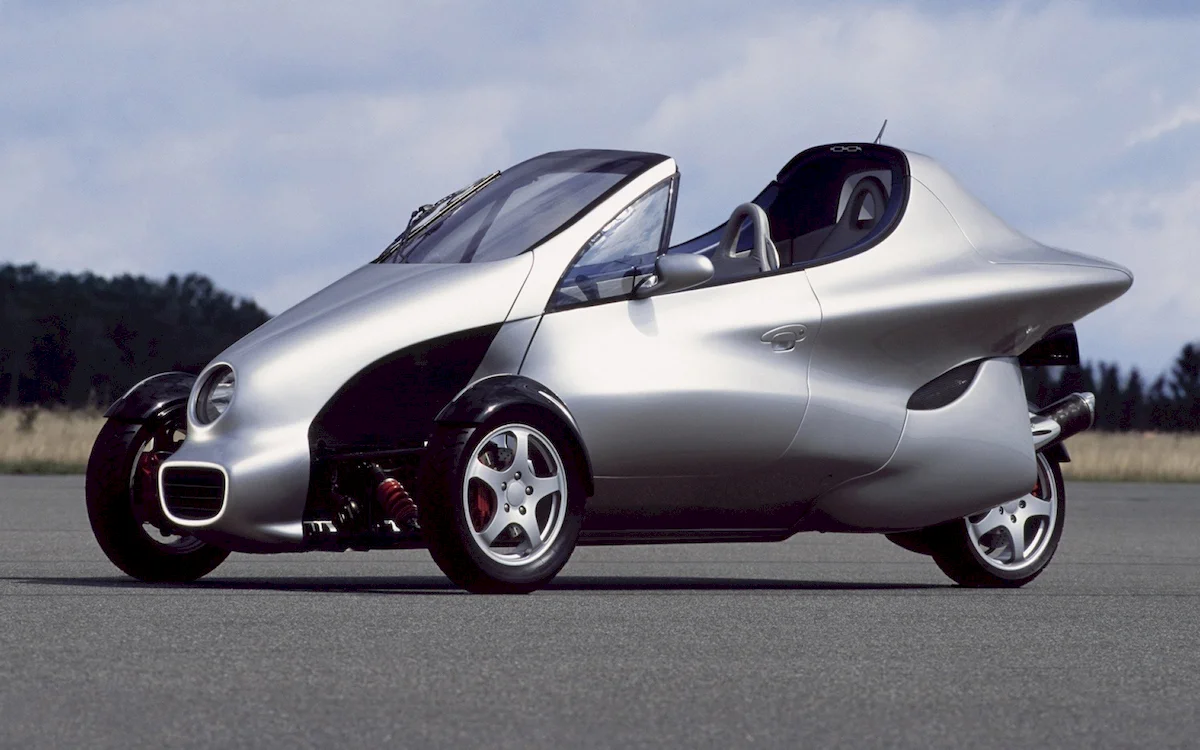
When Mercedes revealed the F300 Life-Jet at the 1997 Frankfurt Auto Show, crowds were baffled. It looked like a futuristic mash-up of a car and a motorcycle, riding on three wheels.
The idea was promising: combine the agility and lightness of a bike with the stability and comfort of a car. But the F300 never made it to production.
The two-seater weighed about 1,760 lbs and could keep up with an A-Class, hitting 130 mph with its 102-hp 1.6-liter engine. The cockpit had jet-plane-style controls, and a new tilting-body system helped it lean into corners with precision.
8. Mercedes-Benz Bionic, 2005
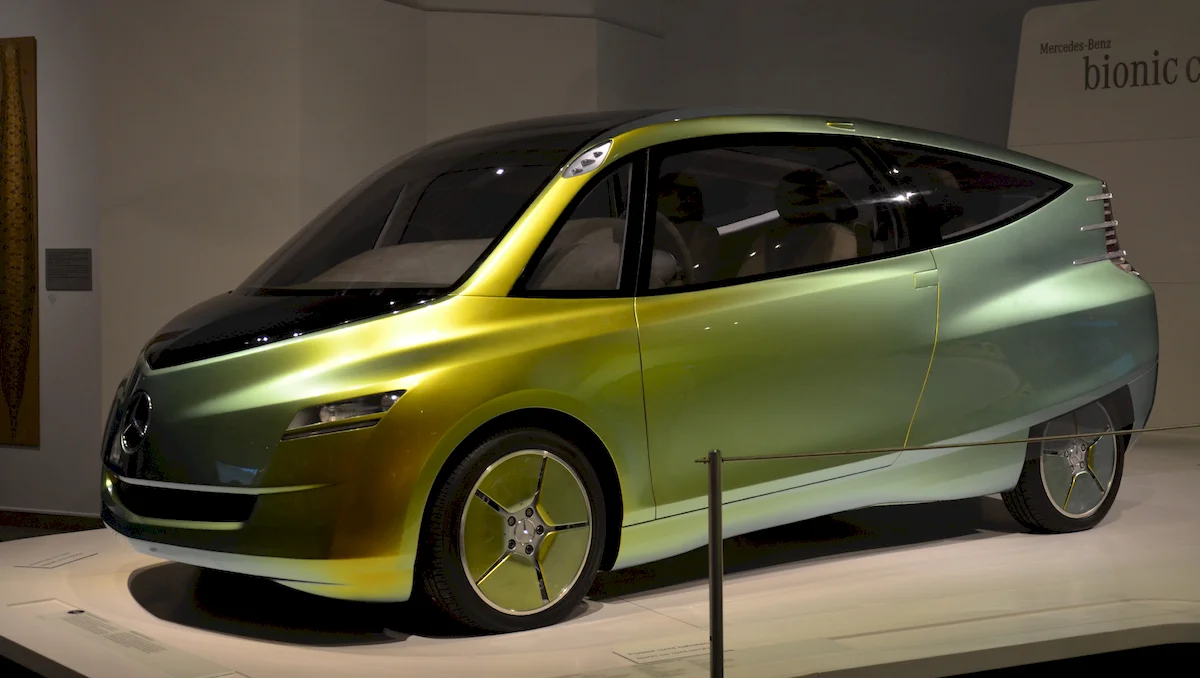
Few Mercedes concepts are as unusual as the Bionic, inspired directly by nature. The goal: improve aerodynamics and cut emissions. While many automakers were exploring eco-design, Mercedes took it literally.
Engineers modeled the shape, structure, and even the color scheme after a tropical fish—Ostracion cubicus. The result? A surprisingly slippery shape with a drag coefficient of just 0.19.
But what works in water doesn’t always work on land. The fish’s natural agility translated into overly quick, almost dizzying road behavior. The idea stayed a concept.
9. Mercedes-Benz Renntransporter, 1954
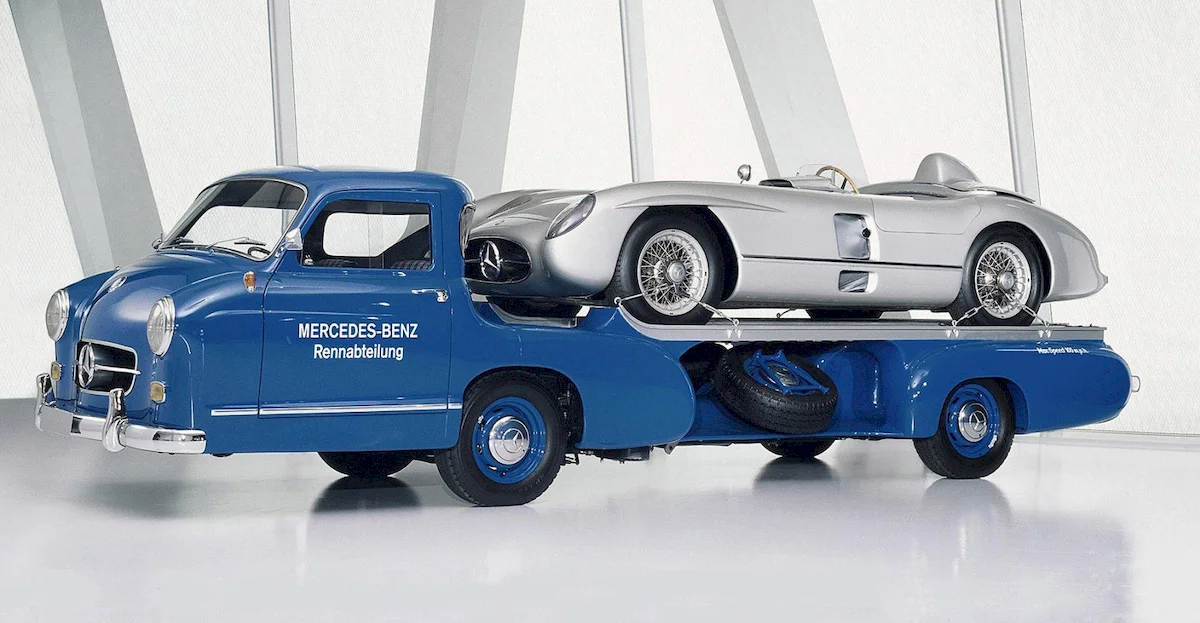
Built in a single example, this special transporter moved race cars to and from the track at nearly racing speeds itself—up to about 124 mph.
Nicknamed the “Blue Wonder,” it borrowed components from various Mercedes models. The version displayed today at the Mercedes-Benz Museum is actually a faithful reconstruction from the 1990s; the real one was scrapped in 1967.
10. Mercedes-Maybach G650 Landaulet, 2018
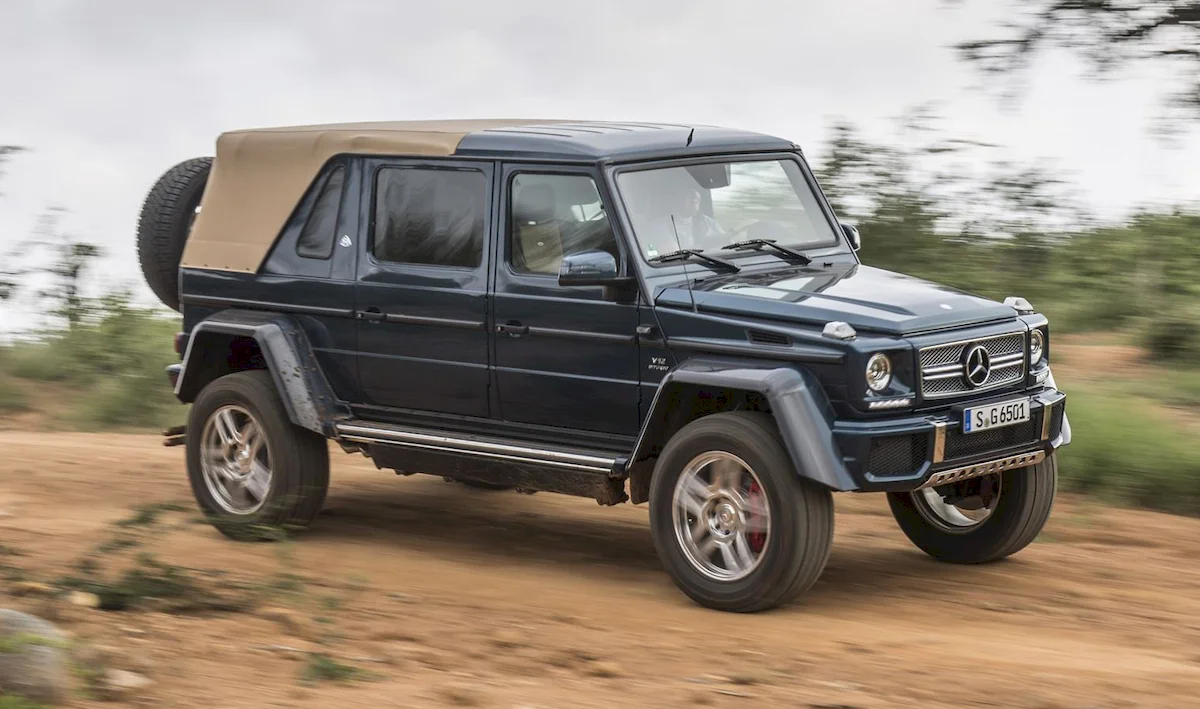
Mercedes can do rugged luxury like no one else. The G650 Landaulet was created for extravagant outdoor touring, with a fabric rear roof section that drops at the touch of a button—perfect for taking in the scenery from plush seats while sipping chilled drinks from silver goblets that come with the SUV.
Under the hood is a beastly twin-turbo V12 with 621 hp, pushing the Landaulet to about 155 mph. Thanks to massive wheels and nearly 18 inches of ground clearance, it’ll crawl over almost anything.
Knowing this ultra-lux model was beyond the means of most buyers, Mercedes limited production to just 99 units.
You may also be interested in the news:
Pontiac's 1970 GTO Had a Wild Exhaust Option—Only 233 Cars Got It
Pontiac offered an unusual exhaust system for the 1970 GTO, but the factory option didn't last long.
Chrysler's Aluminum Slant 6 Engine: The Lightweight Experiment of 1961–1963
Chrysler built more than 50,000 cars with an aluminum-block Slant 6 before production challenges brought the project to an end.
1959 Chevy Impala Parked in a Farm Begs for Restoration As Owner Decides To Let It Go
This 1959 Chevrolet Impala has landed online with one big mission: it must convince a skilled restoration guy to give it a second chance
This Ford F-150 Isn’t Just a Pickup — It’s an Orange Apocalypse on Four Wheels
This outrageous Ford F-150 listing turns an ordinary pickup into a mud-loving, obstacle-crushing legend with attitude.
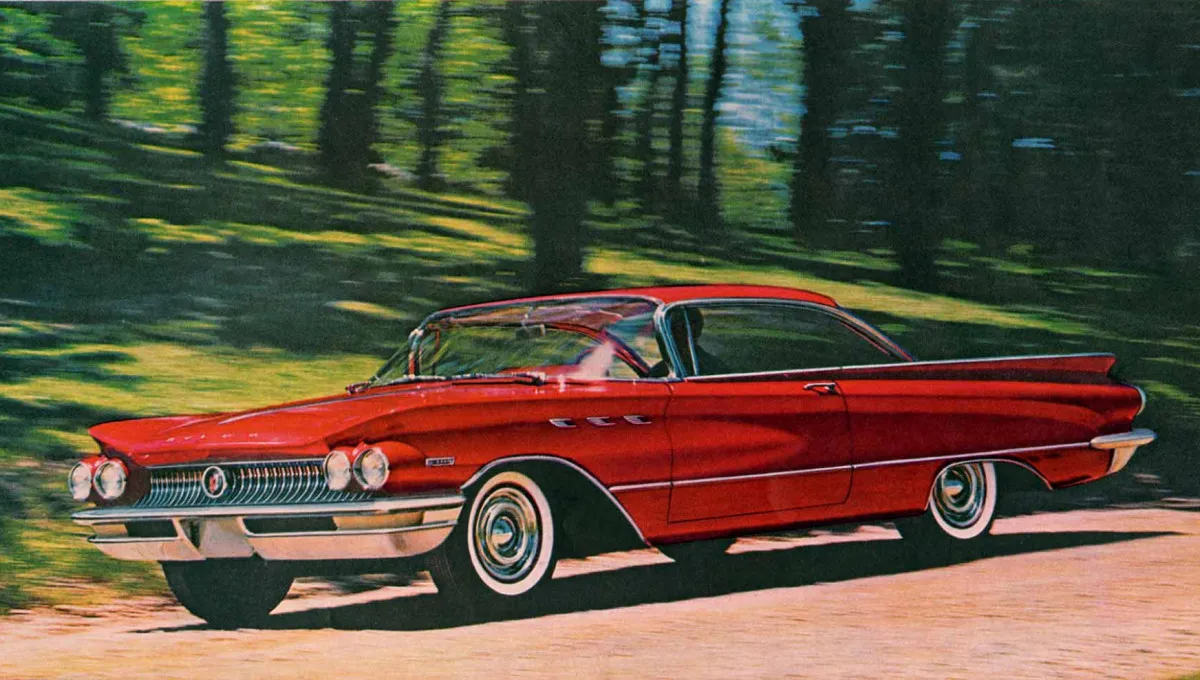
Buick Called Its 1960 Cars “Turbine Drive” Models, but There Was No Turbine Engine Under the Hood
Buick spent decades using memorable marketing phrases, but its 1960 turbine-drive branding had a surprising explanation.