
Never Press the ESC OFF Button “Just Because” — It Can Be Dangerous: Many Drivers Don’t Even Know What It’s For
What this function actually does — and how to use the system correctly.
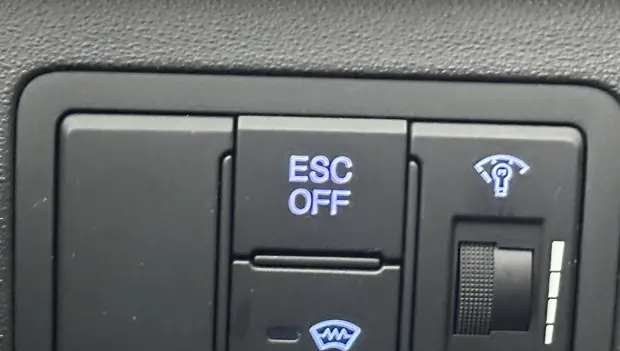
Before we begin, it’s worth recommending one simple thing: open your vehicle’s owner’s manual at least once. Many basic questions disappear on their own after that. But for now, let’s talk about the ESC OFF button — what this system is, why it exists, and how to use it properly.
In this article, we’ll break down everything you need to know about ESC OFF in modern vehicles: why automakers include this function and how to use it safely. Imagine this situation: you’re driving on a snow-covered road, and suddenly the car starts slipping in deep snow, slush, or on ice. At that moment, the stability control system may work inefficiently — or even interfere with your ability to move forward. That’s where ESC OFF comes into play, allowing the driver to take more direct control of the vehicle. Below, we’ll explain the technical side of the system, the situations where ESC should be disabled, and practical recommendations for safe use.
What Is ESC OFF and How Does It Work?
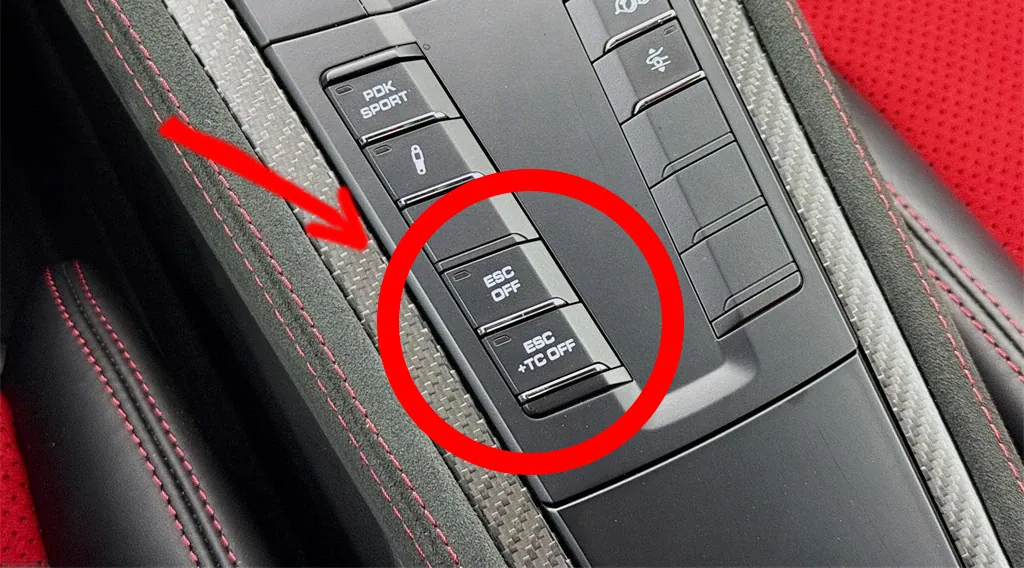
ESC OFF is a function that disables the vehicle’s Electronic Stability Control (ESC), one of the most important components of modern active safety systems. To better understand how ESC OFF works, it helps to look at the main elements involved:
- ESC control module
- yaw-rate and lateral-acceleration sensors
- wheel-speed sensors
- hydraulic brake modulator
- engine control unit (ECU)
When the ESC OFF button is activated, the interaction between these components is partially suspended, giving the driver more direct control over the vehicle. It’s important to understand, however, that this is usually not a complete shutdown of all safety systems. Core functions such as ABS and, in some cases, traction control may remain active.
“Modern ESC systems are highly complex, with each sensor playing a specific role. Disabling ESC requires a clear understanding of the consequences,” says Artyom Viktorovich Ozerov, an expert with 12 years of experience at ssl-team.com.
ESC operating modes (comparison):
-
Skid control:
-
ESC ON — automatic
-
ESC OFF — manual
-
-
Individual wheel braking:
-
ESC ON — active
-
ESC OFF — disabled
-
-
Engine power limitation:
-
ESC ON — automatic
-
ESC OFF — manual
-
Statistics show that more than 65% of drivers do not fully understand how ESC works or when it should be disabled. According to a 2024 study by the National Highway Safety Administration, improper use of the ESC OFF function increases crash risk by 23%.
Under normal operation, ESC continuously monitors vehicle dynamics through sensors and sends data to the control unit. If the system detects a deviation from the intended trajectory, it automatically intervenes by adjusting braking and engine output. When ESC OFF is engaged, these automatic corrections stop, leaving full control in the driver’s hands.
When Disabling ESC Makes Sense
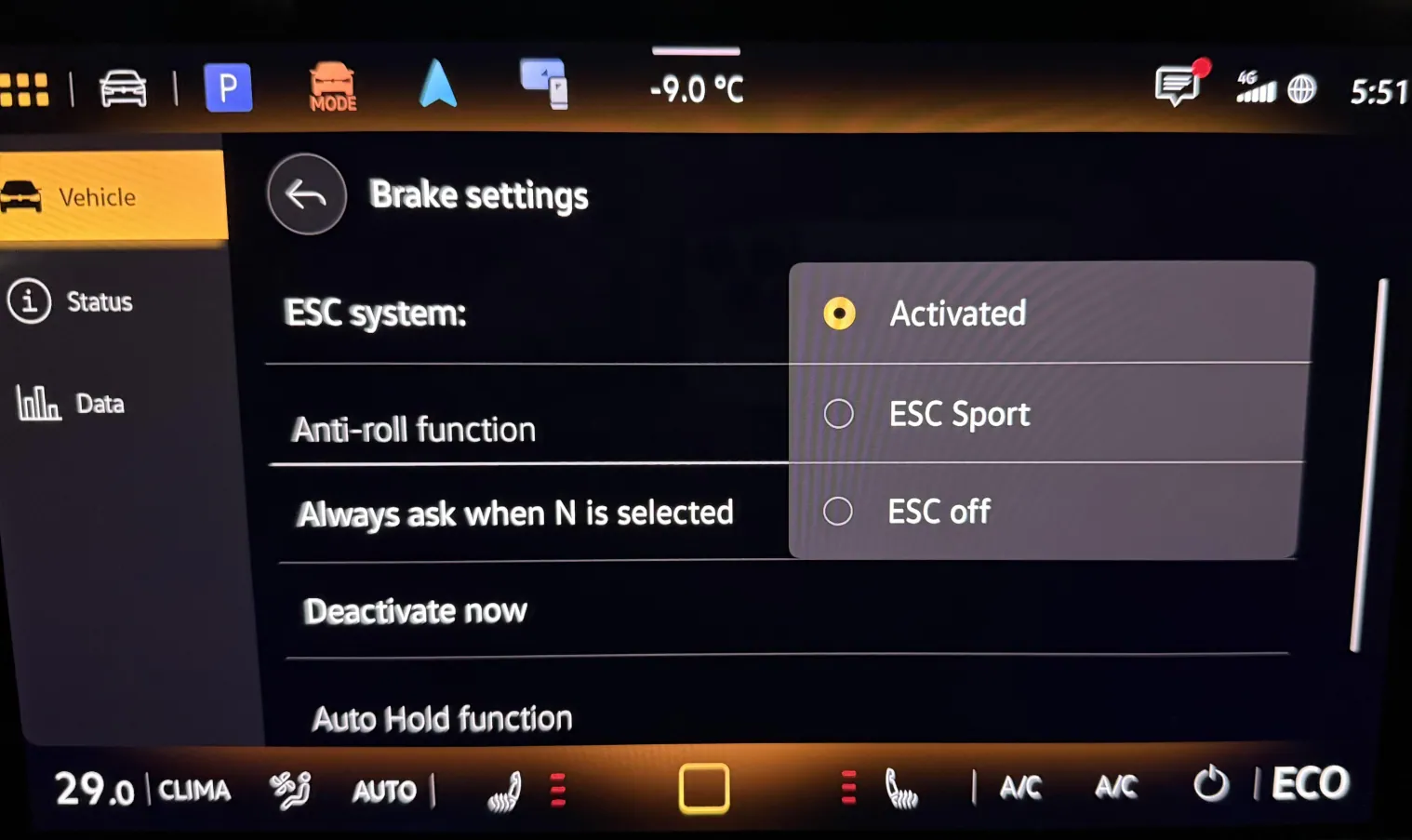
There are several key situations where turning off stability control can actually help maintain safe control of the vehicle.
1. Off-road driving
Deep mud, sand, or loose terrain often requires wheel slip to maintain momentum. In these conditions, ESC may mistakenly interpret wheelspin as loss of control and aggressively reduce power, making it harder to get unstuck.
“Off-road, ESC often misreads wheelspin as instability, which significantly reduces a vehicle’s capability,” experts note.
2. Winter driving
On ice or packed snow, especially when starting from a stop, ESC may overly restrict engine power, making it difficult to move. This is particularly noticeable in vehicles with powerful engines, where traction control can be overly conservative.
3. Performance and specialized driving
Professional drivers may disable ESC for controlled drifting or other advanced driving techniques that require more freedom. However, this demands high skill and experience.
4. Towing
When towing a trailer or another vehicle, ESC can react unpredictably to altered vehicle dynamics, especially on slippery surfaces. This may result in unexpected braking or power reduction.
A 2024 study found that about 45% of ESC deactivations occur in winter conditions, 30% during off-road driving, 15% while towing, and only 10% in other scenarios. When used correctly, ESC OFF is associated with incident rates as low as 1.3% of all activations.
While modern ESC systems are becoming smarter and more adaptive, there are still situations where driver skill and judgment outperform automated algorithms.
Common Mistakes When Using ESC OFF
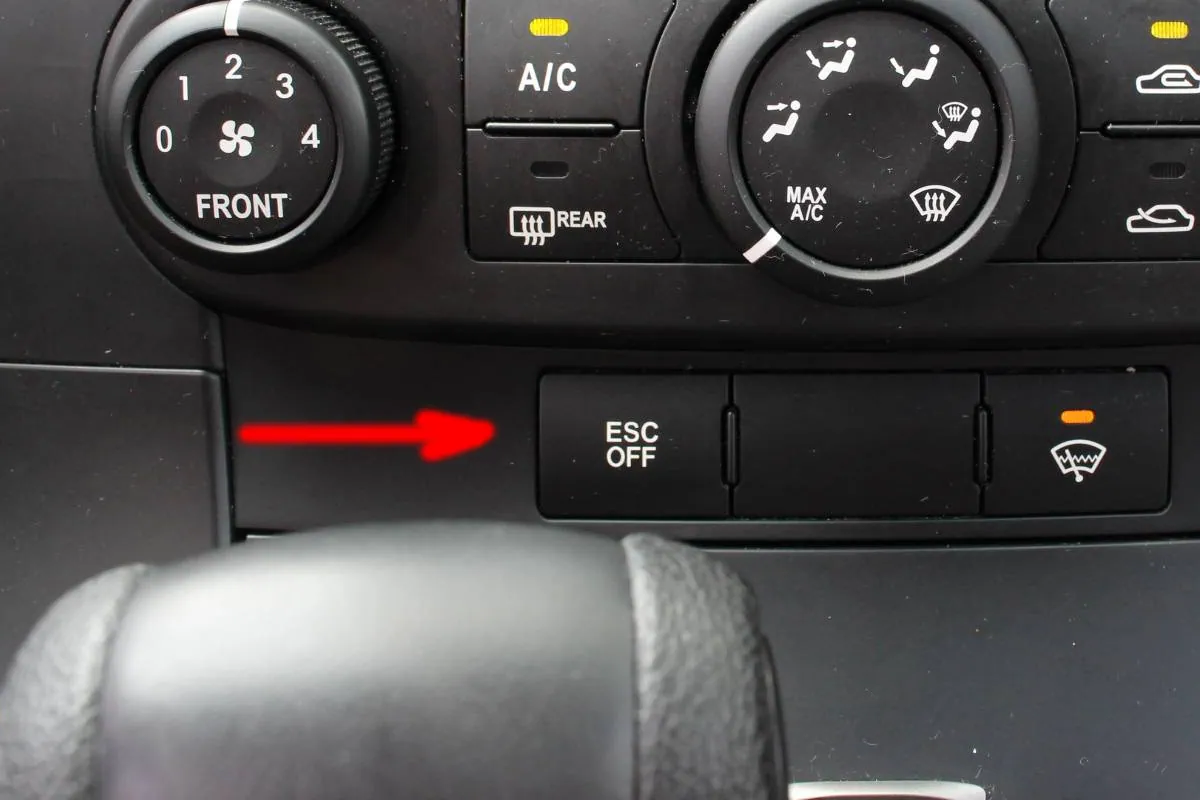
Analysis of data from 2023–2024 reveals several frequent mistakes drivers make when using ESC OFF. Understanding these errors can help avoid dangerous situations.
1. Disabling ESC too early
Many drivers — especially beginners — turn off ESC at the first sign of wheel slip without first letting the system attempt to correct the situation.
“It’s common to see drivers immediately hit ESC OFF during minor wheelspin, even though the system could have handled it on its own.”
2. Misjudging driving conditions
The most common incorrect decisions include:
- disabling ESC at high speed — loss of control (35%)
- ignoring weather conditions — increased crash risk (28%)
- staying in ESC OFF mode too long — system overheating (22%)
- misjudging road surface — unexpected vehicle behavior (15%)
3. Lack of driver preparation
Many owners never take the time to learn how the system works and rely instead on advice from friends or random online sources. A 2024 study showed that only 42% of drivers have received any formal instruction on driving with ESC disabled.
4. Incorrect use while towing
Drivers often disable ESC but fail to account for how additional weight affects braking and acceleration. This can lead to unpredictable behavior, especially on slick roads.
5. Forgetting to turn ESC back on
Statistics show that about 67% of incidents involving ESC OFF happen because drivers continue driving in normal conditions with stability control still disabled.
Even when all recommendations are followed, driving with ESC OFF requires heightened attention and concentration. This mode should not be overused and should only be activated when it’s genuinely necessary.
You may also be interested in the news:

The “Gas-Saving” Tricks That Could Destroy Your Car — And What Drivers Should Do Instead
Some fuel-saving tricks can backfire, costing drivers far more in repairs than they ever save at the gas pump.
How Oldsmobile Invented a Manual Gearbox for an Automatic
Long before paddle shifters and electronic driving modes, Oldsmobile found a clever mechanical way to let drivers shift an automatic transmission themselves.

Your Car Can Hear You: Four Zodiac Signs That Talk to Their Cars
Aries, Taurus, Leo and Scorpio don't just drive—they talk to their cars, each with their own language, rituals and demands.

How to Protect Your Car Mirrors From Rain: A Simple Home Hack
A simple household product can help keep your car’s side mirrors clearer when rain makes visibility a challenge.
Not a Manufacturing Error: Why Some Wheels Have Two Valve Stems
Two valve stems on one wheel may look unusual, but the setup serves a practical purpose in racing and specialized tire service.