
Volkswagen Unveils the Gen.Urban Autonomous Vehicle With No Steering Wheel or Pedals, Road Testing Begins
The vehicle made its debut in Wolfsburg, where Volkswagen has already started real-world testing on public city streets.
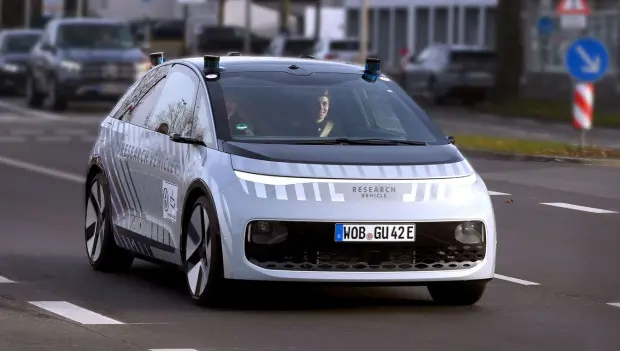
On December 13, Volkswagen introduced its new experimental vehicle, the Gen.Urban, developed specifically to advance fully autonomous driving technologies for the robo-taxi segment. The model was unveiled in Wolfsburg, Germany, where the company has already begun operating it in real urban traffic conditions.
The defining feature of the 2026 Volkswagen Gen.Urban is the complete absence of a steering wheel and pedals. Traditional driving controls are intentionally omitted, signaling a break from conventional vehicle design and pointing toward a new kind of relationship between people and future mobility.
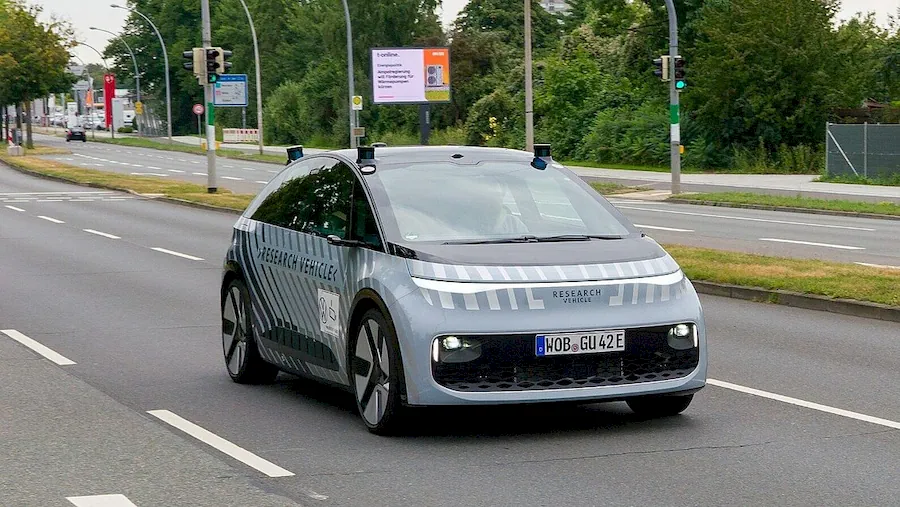
The vehicle follows a minimalist design philosophy and is intended exclusively for fully autonomous use. Safety requirements, however, remain in place. A second seat is occupied by a certified operator who can take control in emergency situations, in line with international standards for testing autonomous systems.
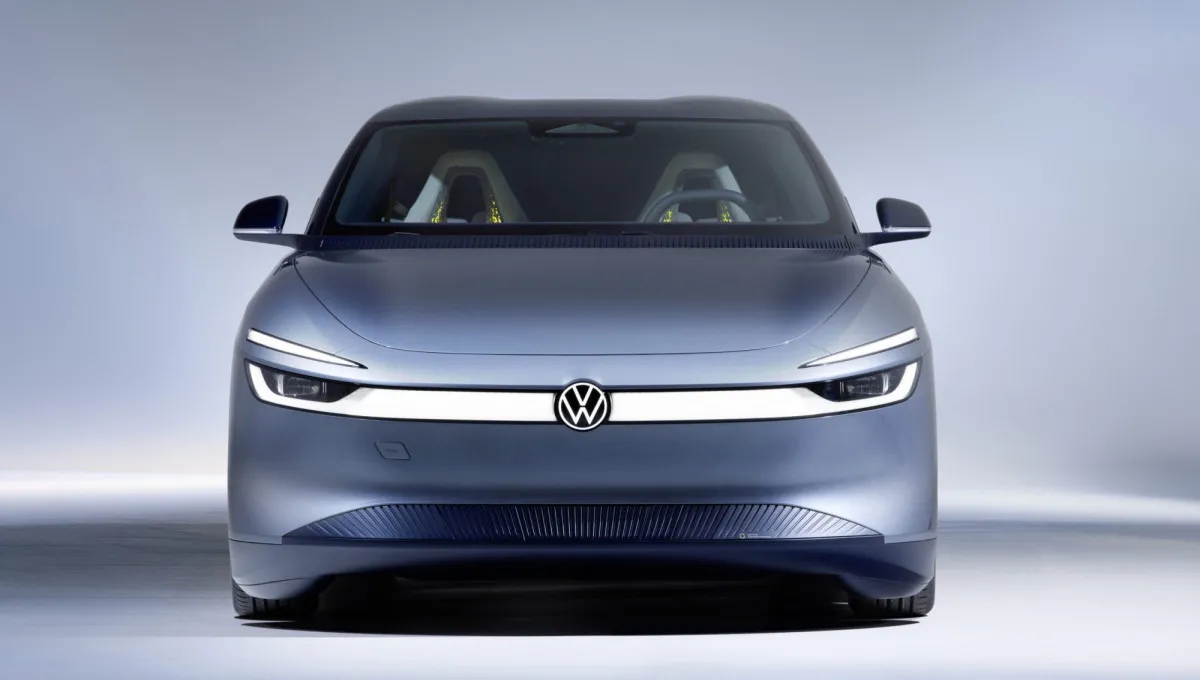
Visually, the Gen.Urban draws clear inspiration from Volkswagen’s ID family. Its overall silhouette resembles an evolved version of the ID.3, with smooth, flowing body lines, a wide front fascia, and low-mounted LED lighting. The futuristic look is reinforced by hidden touch-sensitive elements in place of traditional door handles and side mirrors, along with a continuous light bar connecting the headlights. Four to five next-generation sensors are mounted on the roof, while a dedicated intelligent camera sits at the front — all working together to provide the situational awareness required for autonomous operation.
Unlike many self-driving test programs that focus primarily on technical accuracy, Volkswagen’s project places strong emphasis on what it calls “customer adaptation.” Engineers are studying how passengers of different ages behave and what they need while riding in a fully autonomous vehicle — how they spend their time, whether working, relaxing, or socializing, what emotions they experience when control is handed entirely to software, and how different age groups adapt to this new form of mobility.
Personalization also plays a key role. Using a dedicated mobile app, passengers can preset cabin temperature and lighting before the trip begins. Upon entry, the primary seat automatically adjusts to individual preferences. A wide display in front of the passengers shows route information and real-time location, replacing the traditional instrument cluster. All of these elements are designed to build trust in autonomous technology and make the ride as comfortable as possible.
As part of the study, the Gen.Urban covers a route of roughly 10 kilometers, navigating typical Wolfsburg city environments such as traffic-light intersections, roundabouts, and road construction zones. Each test ride lasts about 20 minutes. Notably, the prototype had already undergone a year of intensive internal testing before public trials began. With road testing now underway, the project has officially shifted from hardware validation to exploring real-world passenger experience.
You may also be interested in the news:
Volkswagen Just Did the Unthinkable: The New GTI Is Rear-Wheel Drive
Volkswagen's ID.3 GTI reaches 60 mph in 5.6 seconds and offers 373 miles of range.
Hyundai Delays Nvidia-Based Automated Driving System
Hyundai Motor Group has pushed back the rollout of its own driver-assistance system to the end of 2029.
Volkswagen Mission Efficiency Concept Sets Three World Records, Looks Like a 13-Year-Old Model
Volkswagen has unveiled the new Mission Efficiency concept, a radical electric coupe focused on maximizing range and energy efficiency.
“VW on the Outside, Porsche Underneath”: The Story of the Failed EA-128 Sedan
A little-known Volkswagen prototype combined a large sedan body with Porsche 911 hardware in an attempt to enter the upscale market.
Volkswagen Finds Support in India as Company Plans New Vehicles With JSW
Volkswagen and JSW Group have signed a memorandum to create a joint venture in India focused on developing new vehicles.