
Bavarian Go-Kart for Grown-Ups: The Story of BMW’s Strangest Sports Car That Nearly Reached Production
Yet there was a moment in BMW history defined by absolute engineering freedom—the wild 1990s.
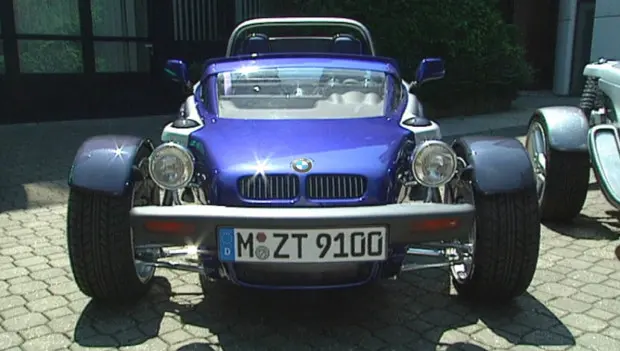
When we think of BMW performance cars today, high-tech monsters like the latest M5 come to mind: incredibly powerful, comfortable, but also heavy and packed with electronics. Yet there was a time in the Bavarian brand’s history marked by near-total engineering freedom—the wild 1990s. It was during this era that a secret skunkworks division called BMW Technik conceived a car meant to give drivers pure, unfiltered driving pleasure. Meet the BMW Just 4/2, also known as Project Z21.
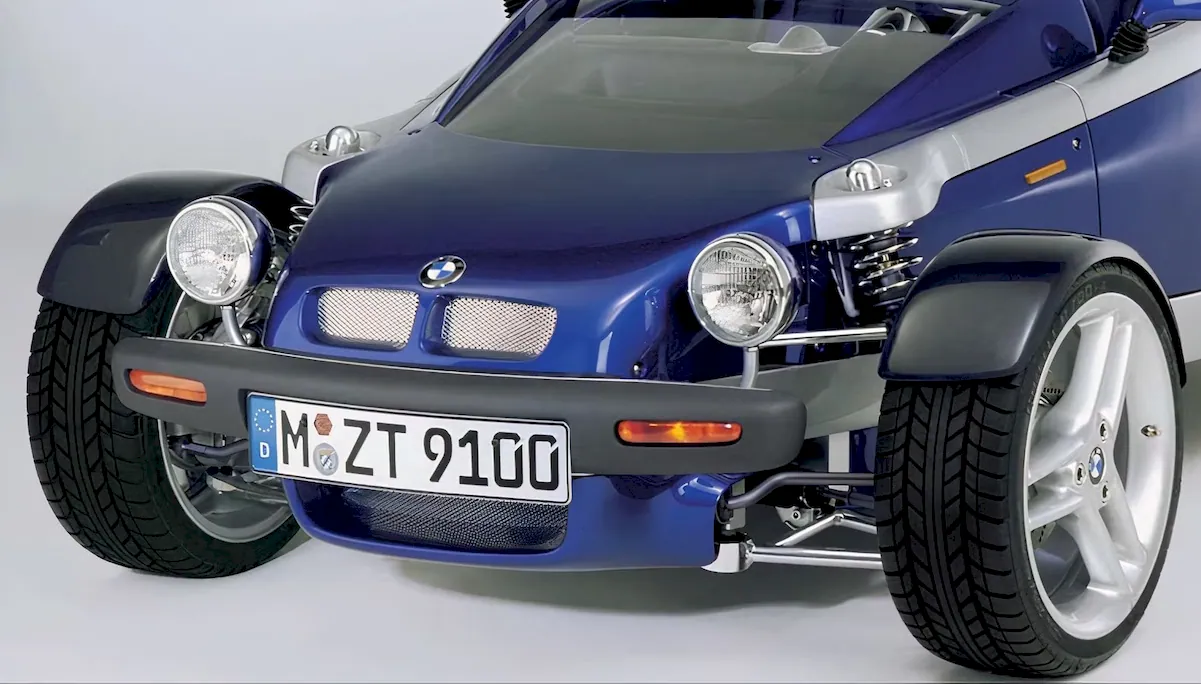
In today’s automotive world, heavy crossovers and EVs dominate, often turning the driver into a passive passenger. But in the mid-1990s, BMW seriously considered building a car that was the ideological opposite of everything produced today. It was envisioned as a direct rival to the British Caterham: brutally simple, ultra-lightweight, and aggressively focused on driver engagement—capable of delivering sensations no conventional sedan could match.
An Automotive Renaissance
To understand how such a project could even exist, you have to look at the era. The mid-1990s were a golden age for car enthusiasts. The world was obsessed with the Dodge Viper (which didn’t even have exterior door handles or side windows), the McLaren F1 was rewriting the laws of physics and interior layout, and Subaru was proving that a humble sedan could outrun supercars on gravel.
In this atmosphere of creative freedom, BMW decided to explore radical minimalism. The 1995 Tokyo Motor Show was approaching, and Japan—long known for its love of compact, unconventional vehicles (from kei cars to the cult status of the Caterham Seven)—seemed like the perfect stage for something truly outrageous.
That’s how the BMW Just 4/2 concept was born (a play on words meaning “Just for two”). Internally, it was known as Project Z21. BMW’s marketing brief summed up its mission succinctly: “Enhanced driving pleasure on public roads.”

Motorcycle Philosophy on Four Wheels
Development was handled by BMW Technik GmbH—essentially the brand’s science-fiction department, where engineers were free from boardroom constraints. Their idea was simple: take the sensations of riding a powerful motorcycle and translate them to a four-wheel platform, while retaining the safety of a car.
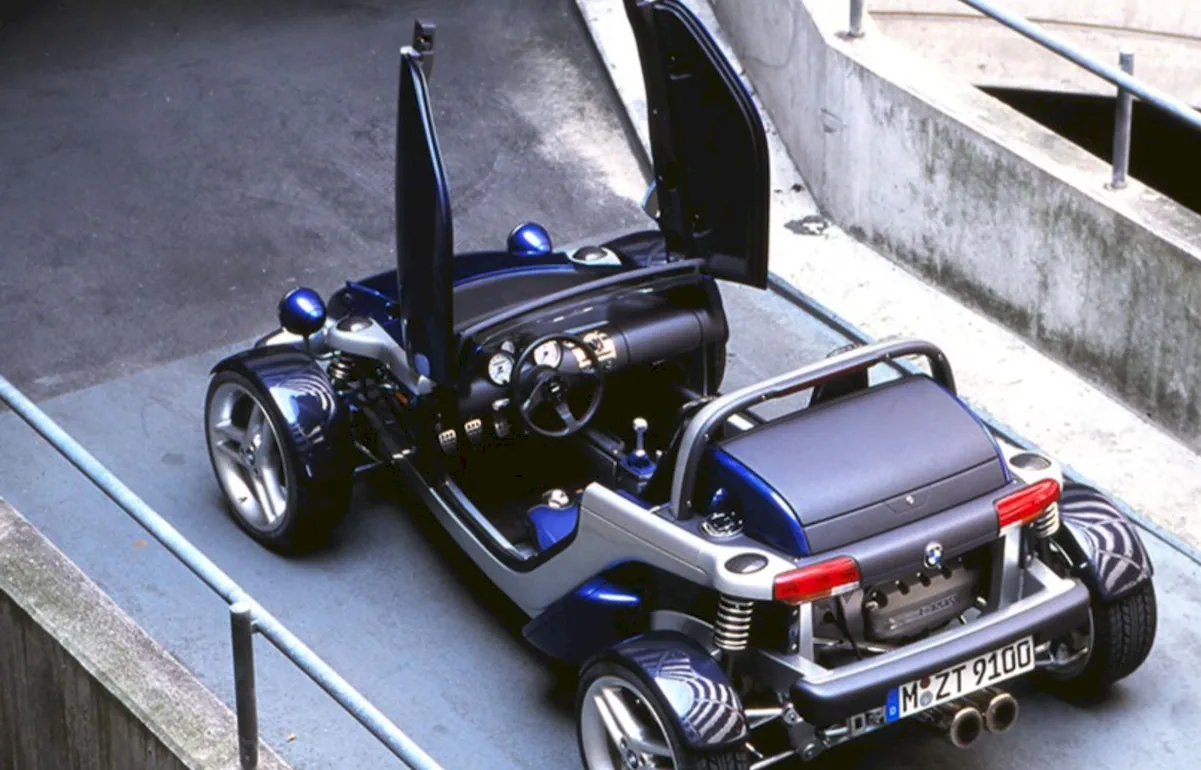
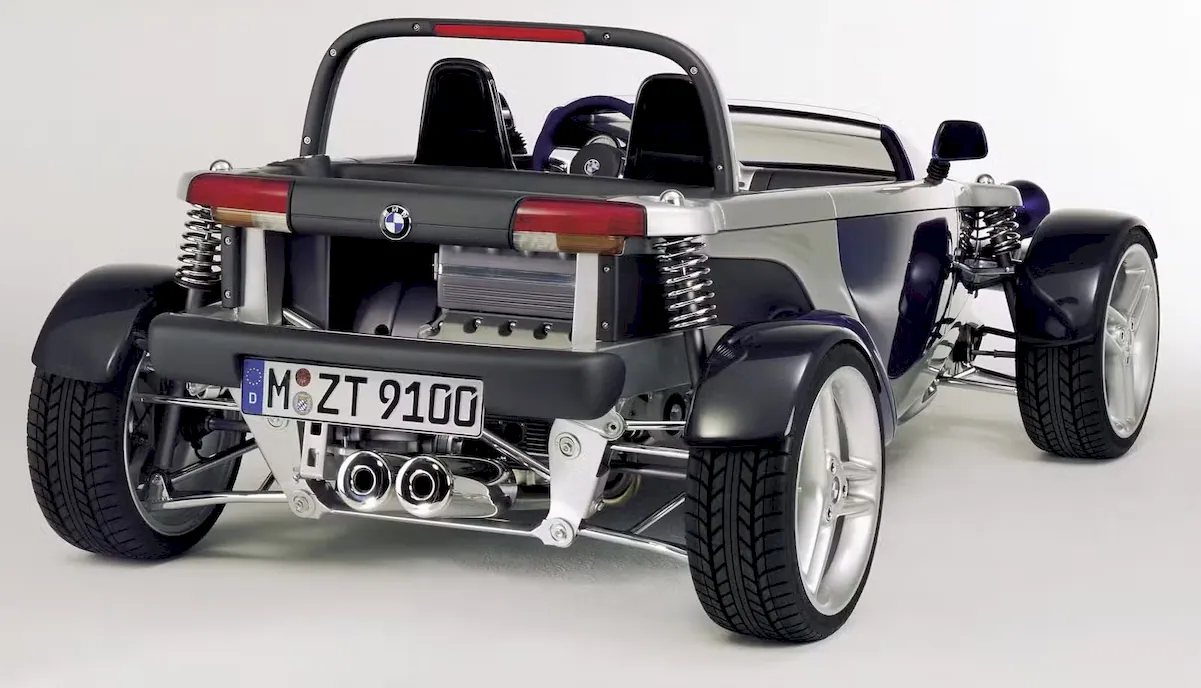
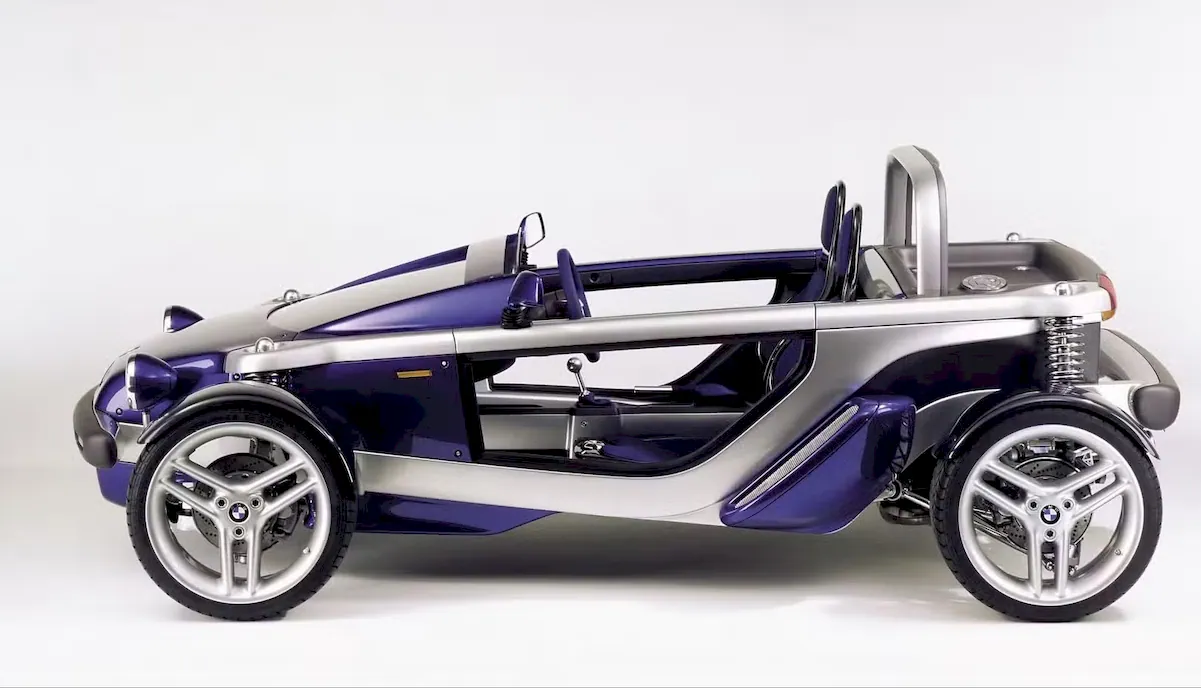
Visually, the Just 4/2 looked like the exposed skeleton of a race car. It had no roof, no windshield, and no conventional doors. It was a rolling exoskeleton that anticipated cars like the Ariel Atom by nearly a decade.
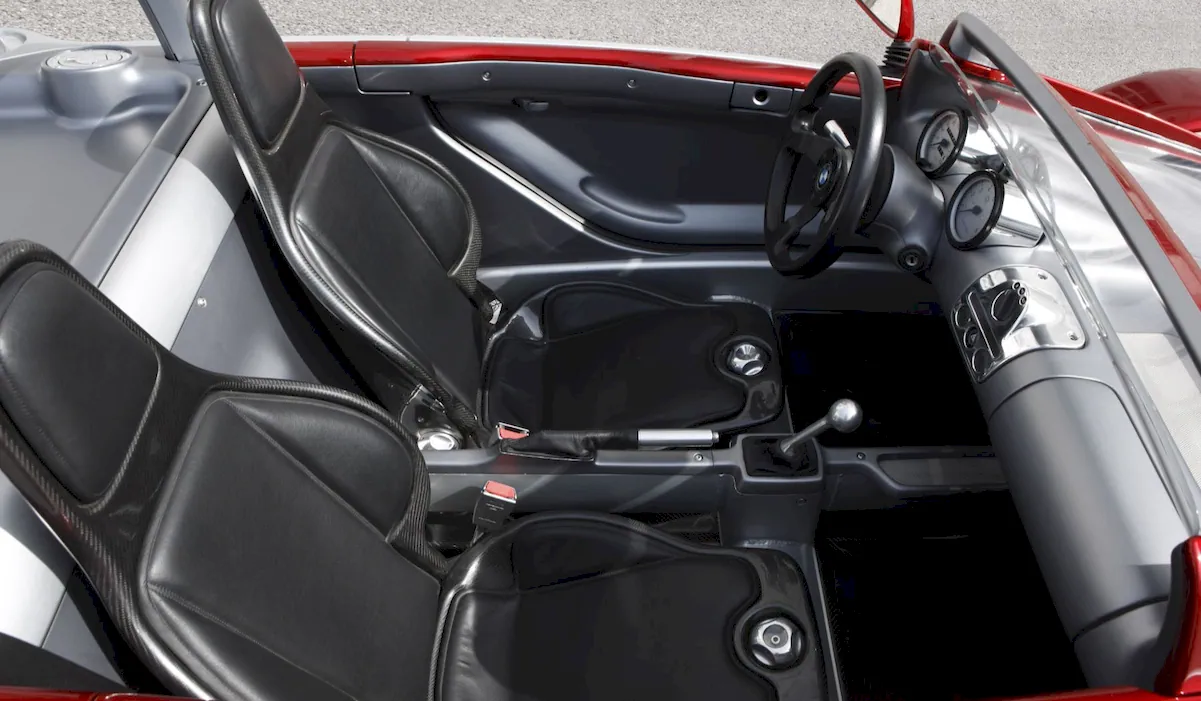
The design was deliberately open. Driver and passenger sat virtually in the open air, with the wheels pushed outside the main body and covered only by lightweight fenders that could be removed entirely. The effect was like piloting a Formula car through city streets. To enhance the futuristic vibe, BMW even designed special driving gear and helmets that looked more like Daft Punk props than traditional safety equipment.
Engineering Brilliance: Less Weight, More Thrill
The Z21’s magic wasn’t about massive horsepower—it was about extreme weight reduction. Engineers fought for every ounce.
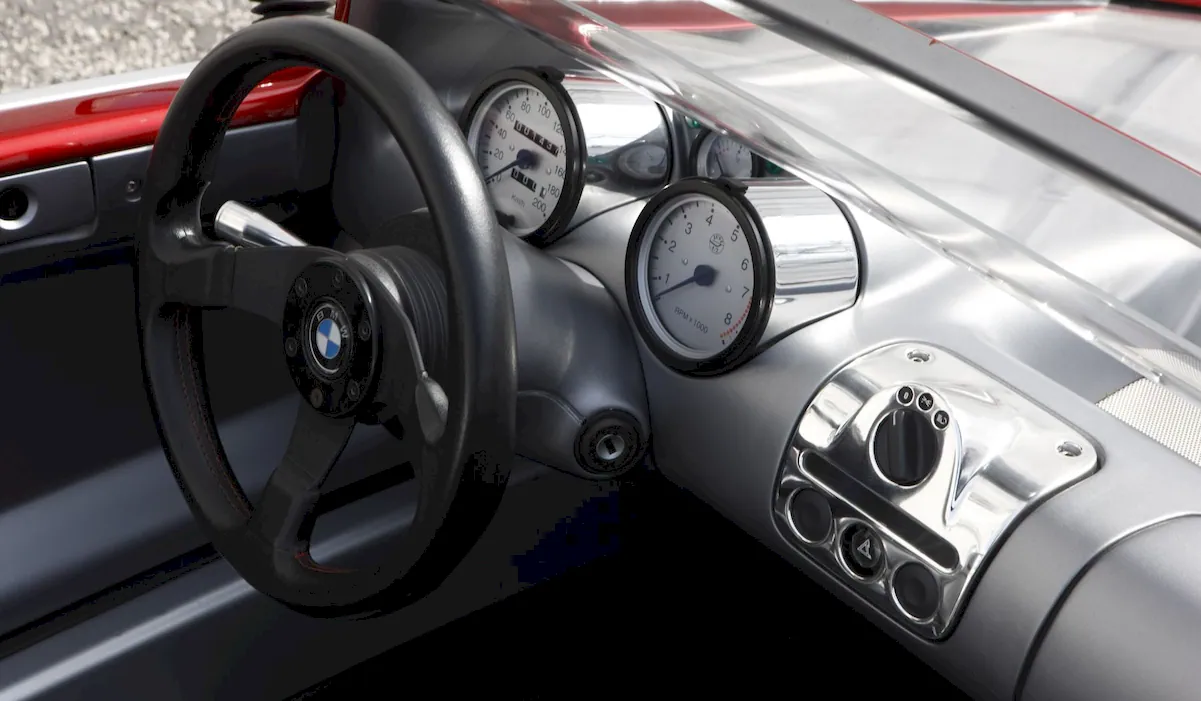
Power came from a BMW K1100 touring motorcycle engine: an inline four-cylinder displacing 1.1 liters. That may sound tiny by car standards, but this motorcycle-derived engine could spin up to 8,500 rpm and delivered a thrilling soundtrack.
Key Specifications:
-
Power: 100 horsepower
-
Curb weight: approx. 1,210 lb
-
Acceleration: 0–62 mph in 6.0 seconds
-
Top speed: about 112 mph
-
Drivetrain: Rear-wheel drive
-
Transmission: Sequential (motorcycle-style)
-
Power-to-weight ratio: approx. 165 hp per U.S. ton
That power-to-weight ratio is where the magic happened. With barely over half a ton to move, 100 horsepower felt more like 300 in a conventional car. In 1995, a 6-second sprint to 62 mph was quick enough to embarrass many serious sports cars at traffic lights—especially given the engine’s razor-sharp throttle response.
Chassis and Construction
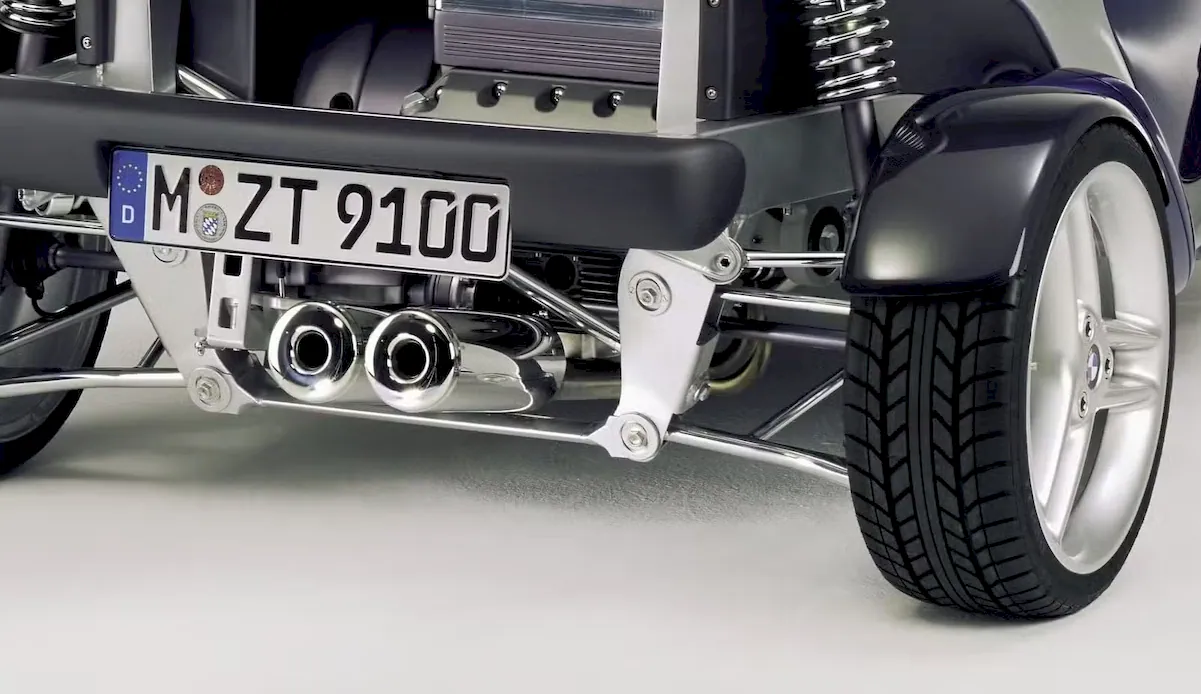
The chassis was a spaceframe made from aluminum profiles of varying cross-sections. Exterior panels were crafted from Kevlar and carbon fiber—materials that, at the time, were largely reserved for Formula 1 and aerospace applications.
Suspension was fully independent at all four corners, with exposed dampers that could be tuned for specific tracks. Stopping power came courtesy of brakes borrowed from the BMW M3. On a car weighing just over 1,200 lb, they were effectively overkill—delivering immense and fade-free stopping performance.

Aerodynamics and Safety: Z21 Innovations
At first glance, safety might seem like an afterthought in what looked like a “bathtub on wheels.” But this was still a BMW.
Instead of a windshield, engineers developed an ingenious deflector system. Hundreds of hours in the wind tunnel resulted in airflow that arched over the cockpit. At speed, air reflected off special panels on the nose and passed above the occupants’ heads, creating an invisible “air dome.” In theory, this allowed helmet-free driving—though goggles were mandatory.
The car was also surprisingly safe for its class:
-
Airbags: Full-size airbags for both driver and passenger—almost unheard of for a 1990s track toy.
-
Side-impact protection: Reinforced beams integrated into the body sides.
-
Road legality: Full lighting, mirrors, and license plate mounts made it street legal.
At least three fully functional prototypes were built, finished in BMW blue, dark red, and silver.
Why It Never Reached Showrooms
At the 1995 Tokyo Motor Show, the BMW Just 4/2 caused a sensation. The public loved it, and the press urged BMW to put it into production. Encouraged, management even approved simulated crash testing. With a production motorcycle engine and off-the-shelf suspension and brake components, series production seemed plausible.
But pragmatism won out. By the late 1990s, BMW was shifting toward more mainstream, profitable segments. The market demanded comfort and luxury. A niche car with no roof and a steep learning curve for drivers was deemed too risky. Executives concluded margins would be slim at best, and Project Z21 was consigned to the museum.
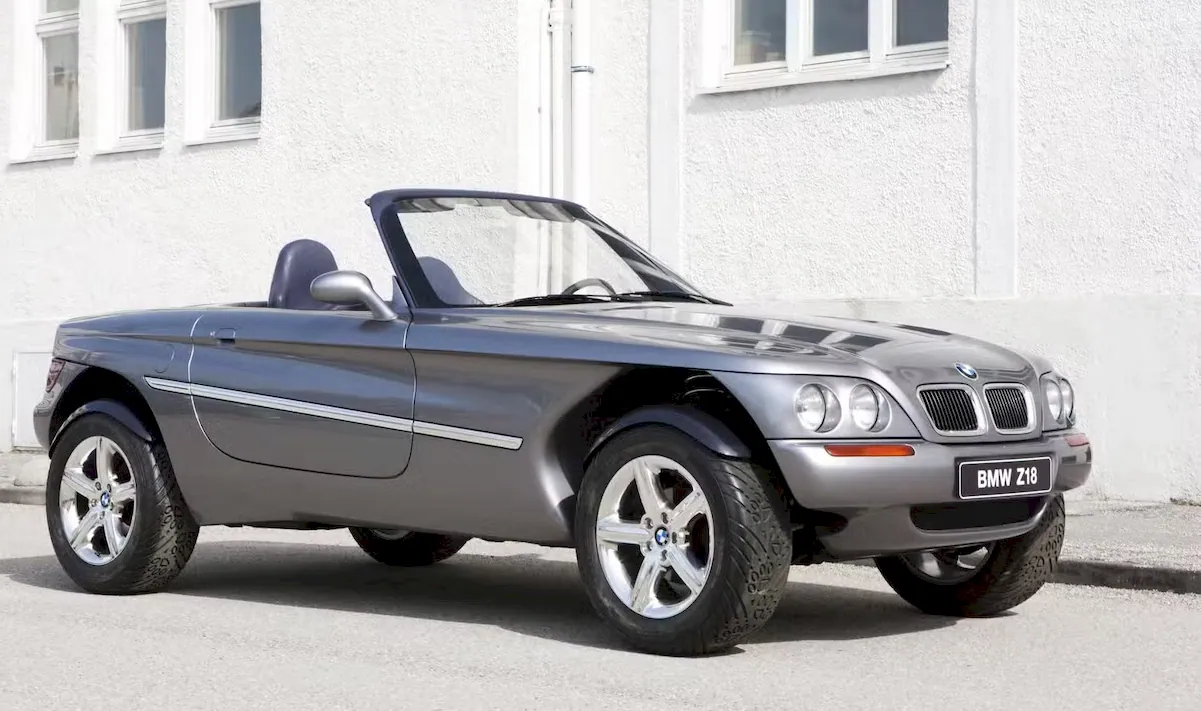
Z18: The Off-Road Twin
No discussion of the Z21 is complete without mentioning another wild project from the same year: the BMW Z18. If the Z21 was an asphalt missile, the Z18 was the world’s first off-road roadster.
It combined elements of the BMW Z3 with what would later become the X5. Featuring a plastic body on a steel frame, all-wheel drive, and a muscular 355-horsepower V8, the Z18 could even transform from a two-seat roadster into a pickup truck.
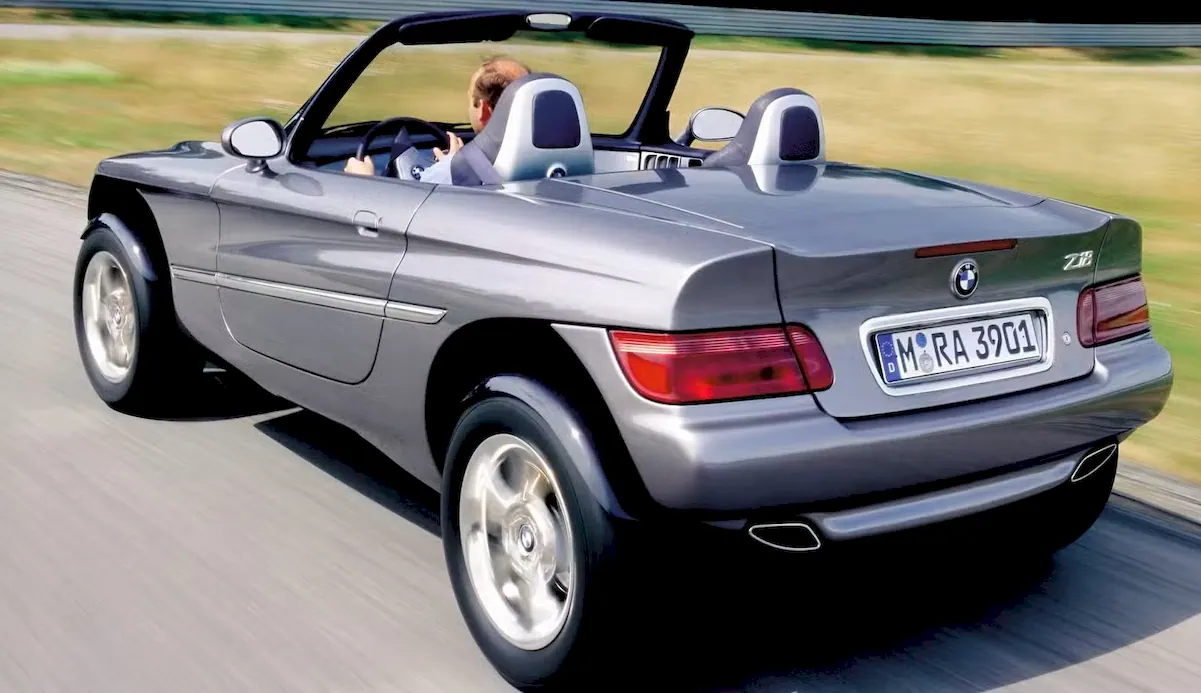
The Z18 foreshadowed the sporty crossover (or SAV) segment that later exploded with models like the BMW X5 and X6. Today, with vehicles such as the Porsche 911 Dakar and Lamborghini Sterrato gaining popularity, it’s clear BMW’s engineers were simply 30 years ahead of their time.
Legacy
The BMW Just 4/2 (Z21) remains one of the clearest examples of what engineers can achieve when freed from marketing constraints. It was a car built for one purpose only: to make the driver smile.
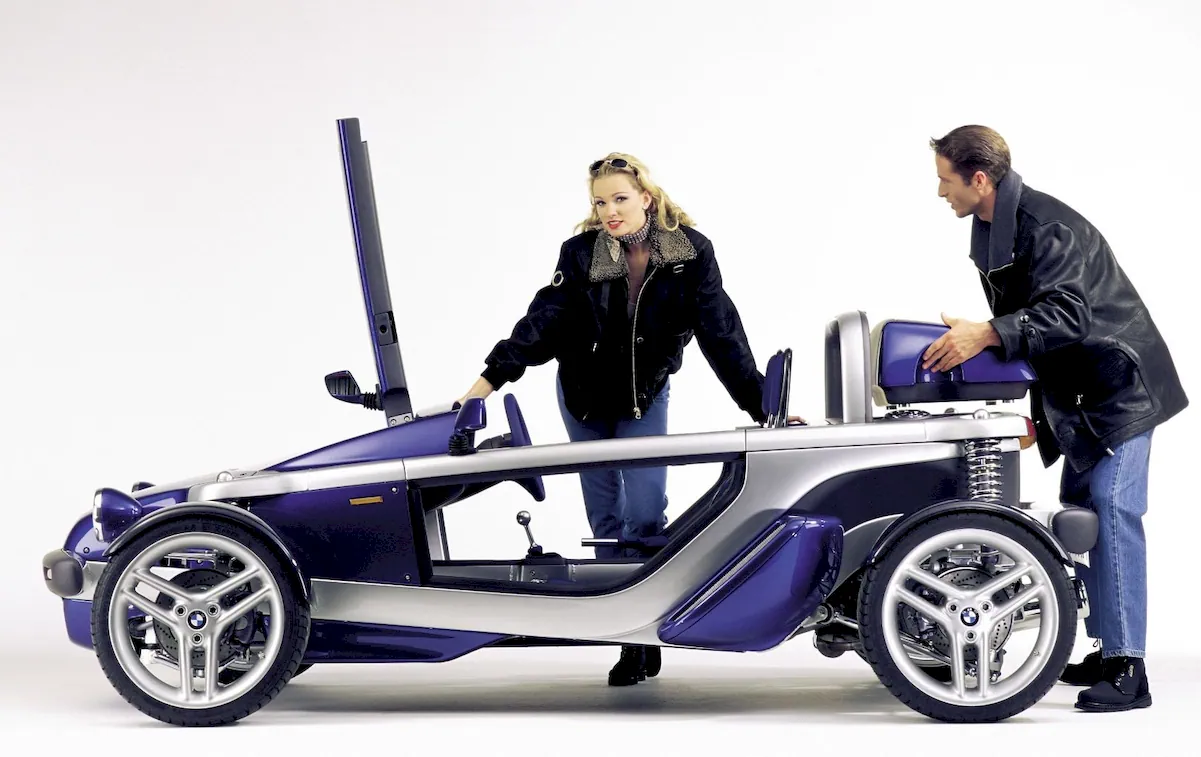
Today, as sports cars become ever more digital and detached, the idea of a 1,200-pound roadster powered by a motorcycle engine feels even more appealing than it did in 1995. The Just 4/2 never made it to production, but it stands as a lasting reminder that BMW can build not only perfect business sedans—but also true toys for grown-ups.
You may also be interested in the news:

This Ford F-150 Isn’t Just a Pickup — It’s an Orange Apocalypse on Four Wheels
This outrageous Ford F-150 listing turns an ordinary pickup into a mud-loving, obstacle-crushing legend with attitude.
Buick Called Its 1960 Cars “Turbine Drive” Models, but There Was No Turbine Engine Under the Hood
Buick spent decades using memorable marketing phrases, but its 1960 turbine-drive branding had a surprising explanation.
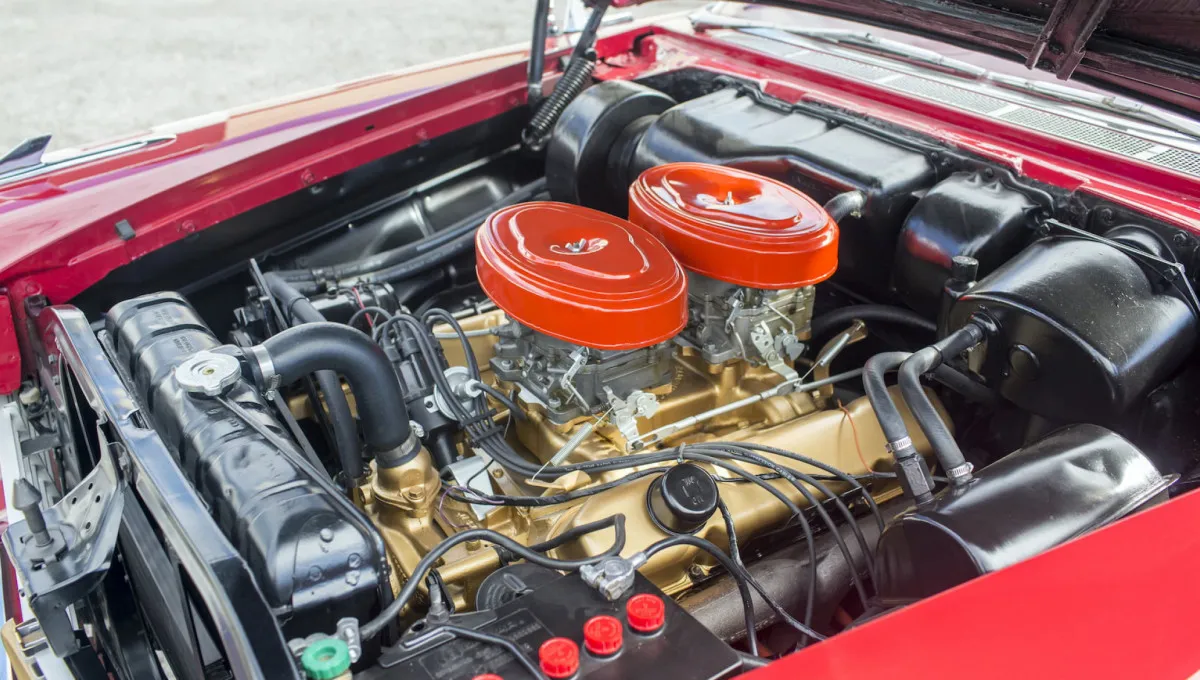
Chrysler’s Hemi Was Too Expensive to Build. Its 1958 Plan B Became a V8 Legend
After its famous Hemi V8s, Chrysler took a new direction in 1958 with a simpler, more affordable engine.
Scooter vs. $32,000 Superbike: The Ending Nobody Saw Coming
A young rider thought his brand-new superbike was unbeatable, until an old man on a little scooter gave him a surprise.
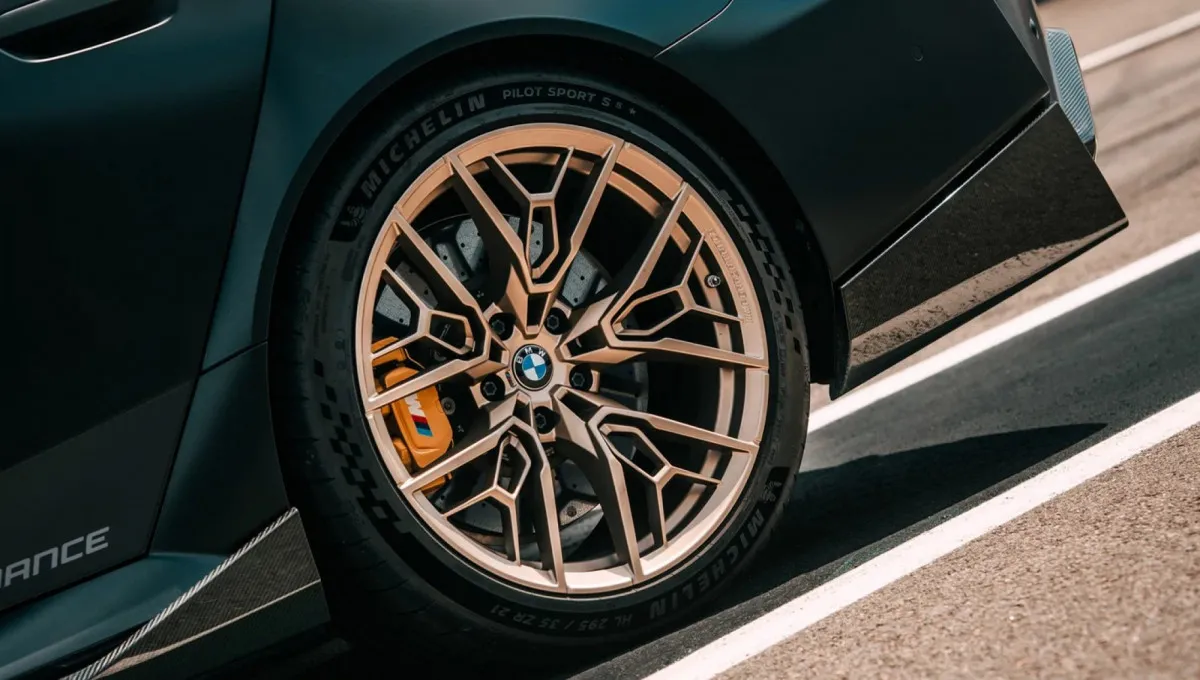
BMW Develops Ultra-Lightweight Wheels for the M5
BMW's new high-pressure cast wheels promise lower weight, improved strength, and more aerodynamic designs when they arrive this fall.