
Is It Safe to Disconnect a Car Battery While the Engine Is Running—and Which Terminal Should You Remove First?
In some situations, drivers remove the battery from a running car, install it in a stalled vehicle to start the engine, and then put it back.

A car battery is more than just a starting device. It stabilizes voltage and protects the vehicle’s electronics from power surges. In theory, an engine can keep running without a battery—the alternator produces enough electricity to power the onboard systems directly.
So why do some drivers disconnect the battery? The reasons vary. In certain cases, to start a dead vehicle, a charged battery is removed from a running car and installed in the stalled one to fire up the engine. Once the second car is running, the charged battery is returned to its original vehicle, while the depleted one is gradually recharged by the alternator.
Testing the alternator. For many years, disconnecting the battery was a popular diagnostic method. If the engine stalled immediately, the alternator was considered faulty; if it kept running, everything was assumed to be fine. Today, however, this approach is outdated. Modern cars are packed with electronics, and a sudden loss of power can cause serious damage to the engine control unit (ECU) or other systems.
Modern vehicles are far more complex than their predecessors. Under the hood is an entire network of electronic modules controlling the engine, transmission, and safety systems. All of them are highly sensitive to voltage fluctuations. The battery acts as a kind of “airbag” for the electrical system, smoothing out spikes. Remove it, and that protection disappears. The result is obvious: the risk of damage increases dramatically.
Back in the era of carbureted engines, when electronics were minimal or nonexistent, this method was generally considered acceptable. Many drivers checked alternators this way or helped start another car by swapping in a charged battery. Serious consequences were rare.

Even then, caution was required. All electrical consumers—headlights, heater fan, radio—had to be switched off first. The terminals had to be removed in the correct order: negative first, then positive. And everything had to be done quickly, without long pauses, to avoid accidental short circuits.
Any vehicle with fuel injection is equipped with an electronic control unit. This component becomes the most vulnerable part of the system when the battery is abruptly disconnected. Without the stabilizing buffer, voltage in the electrical network can spike, often resulting in damaged electronics.
Drivers’ experiences confirm this risk. On older BMW models or Dodge vehicles, owners have repeatedly reported ECU failures after disconnecting the battery. Some got lucky—the engine kept running as if nothing had happened. Others ended up paying for costly repairs or a full control unit replacement.
The core problem is unpredictability. Disconnecting the battery may go smoothly—or it may lead to an expensive failure. There is no reliable way to know in advance how it will end.
You may also be interested in the news:

One Capful and Your Wipers Stop Squeaking: Experts Reveal a Simple Trick
We've all been there: windshield wipers start squeaking, smear grime across the glass and leave streaks behind instead of actually helping.
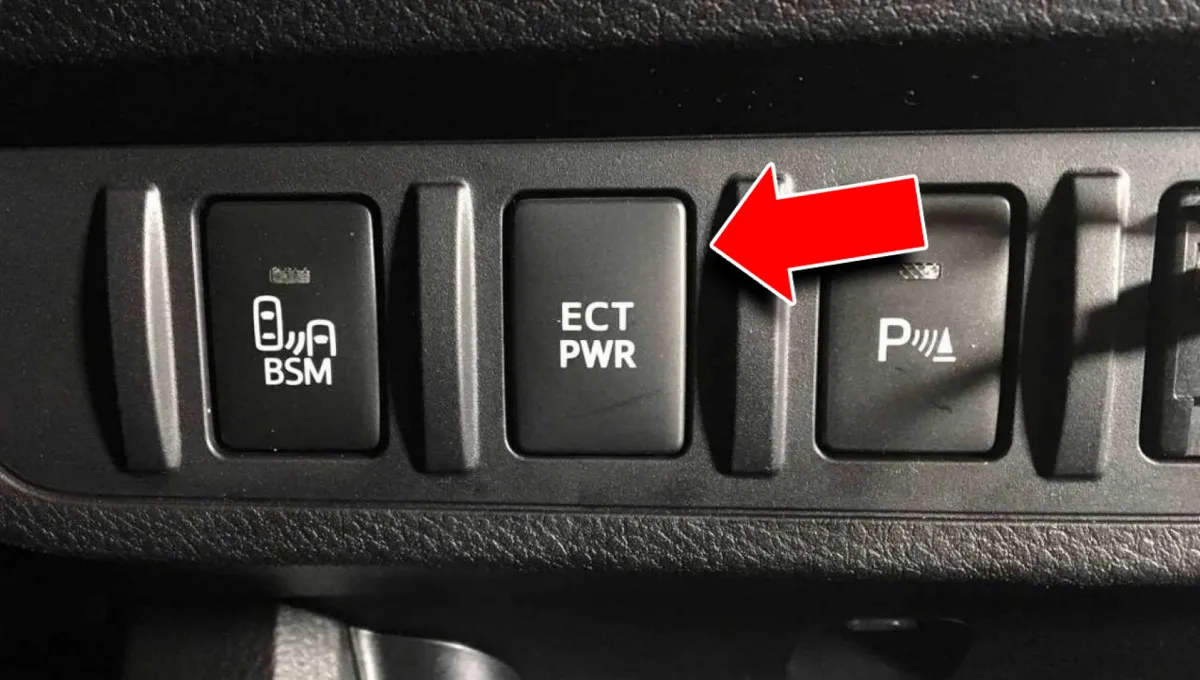
You Hit ECT PWR and Your Toyota Suddenly Wakes Up: What That Mysterious Button Really Does
This little button can change the way a Toyota drives, but plenty of owners have no idea what actually happens when they press it.

It Confuses Many Drivers: What Does the Road Sign With a Thumbs-Up Mean?
This unusual sign appears near highway entrances, tunnels and other locations where roadside stops can create serious safety hazards.

How to Prepare Your Car for a Long Highway Trip
A long trip starts not with loading the suitcases, but with checking the car.

How to Restore Your Car's Shine With a Simple Hair Conditioner Trick
Car owners are constantly looking for effective ways to maintain their vehicles' appearance.