
Why Many Cars Have a Button Under the Gas Pedal—even Those With a Manual Transmission
This button exists regardless of the type of transmission and can serve different functions depending on the vehicle.
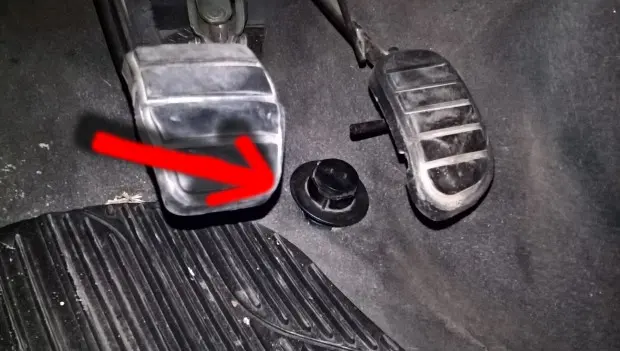
Inside many cars, you can find a small button located beneath the accelerator pedal. Its design and placement depend on the engineering solutions used for a particular model. In some vehicles, the mechanism is hidden so well that it’s hard to spot even with close inspection, while in others the button is clearly visible. It’s used regardless of whether the car has an automatic or manual transmission, which means it can serve different purposes.
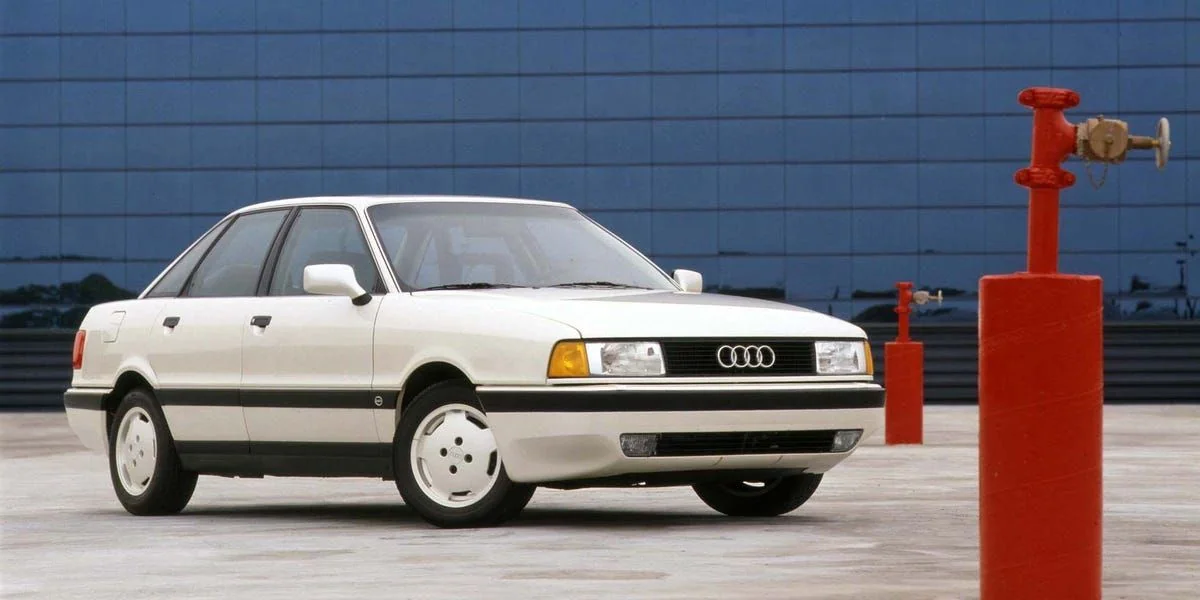
The idea of placing a button under the gas pedal dates back several decades. For example, such a mechanism can be found on the Audi 100 and other German cars from that era. In modern vehicles, the button is usually more refined and blends in with the overall interior design.
On cars equipped with an automatic transmission, its purpose is easy to understand. The button activates kickdown mode, which allows the vehicle to deliver maximum acceleration.
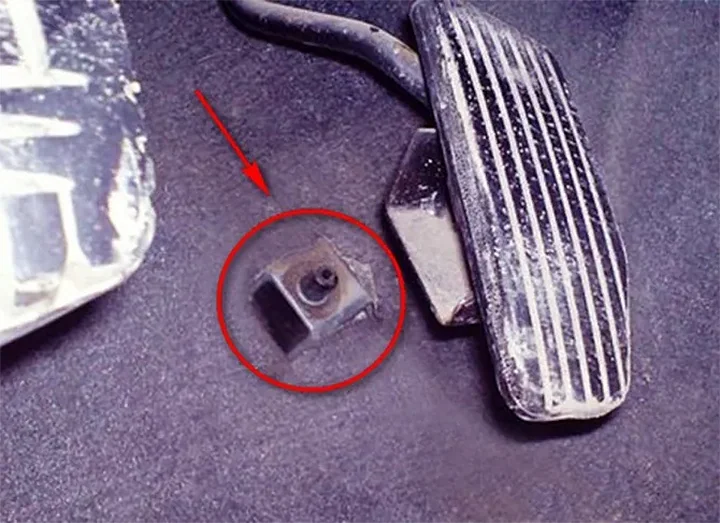
When the accelerator is pressed all the way down, the button sends a signal to the transmission control unit. The computer then downshifts to a lower gear, sharply increasing engine speed and unlocking maximum power and torque.
Kickdown is especially useful during passing maneuvers, when quick acceleration is needed. It not only engages a lower gear instantly, without any additional driver input, but also holds that gear until the accelerator is released. This prevents the transmission from upshifting at the wrong moment, which could otherwise cause a loss of power and torque due to falling engine RPM.
The purpose of the button is less obvious in cars with a manual transmission. In some cases, its presence is simply the result of parts standardization. Automakers may use the same floor trim for all versions of a model. With an automatic transmission, the mechanism functions as a kickdown switch, while in manual-transmission versions it may be replaced by a dummy plug. In a similar way, a button-like component can also serve as a pedal stop, limiting the travel of the accelerator.
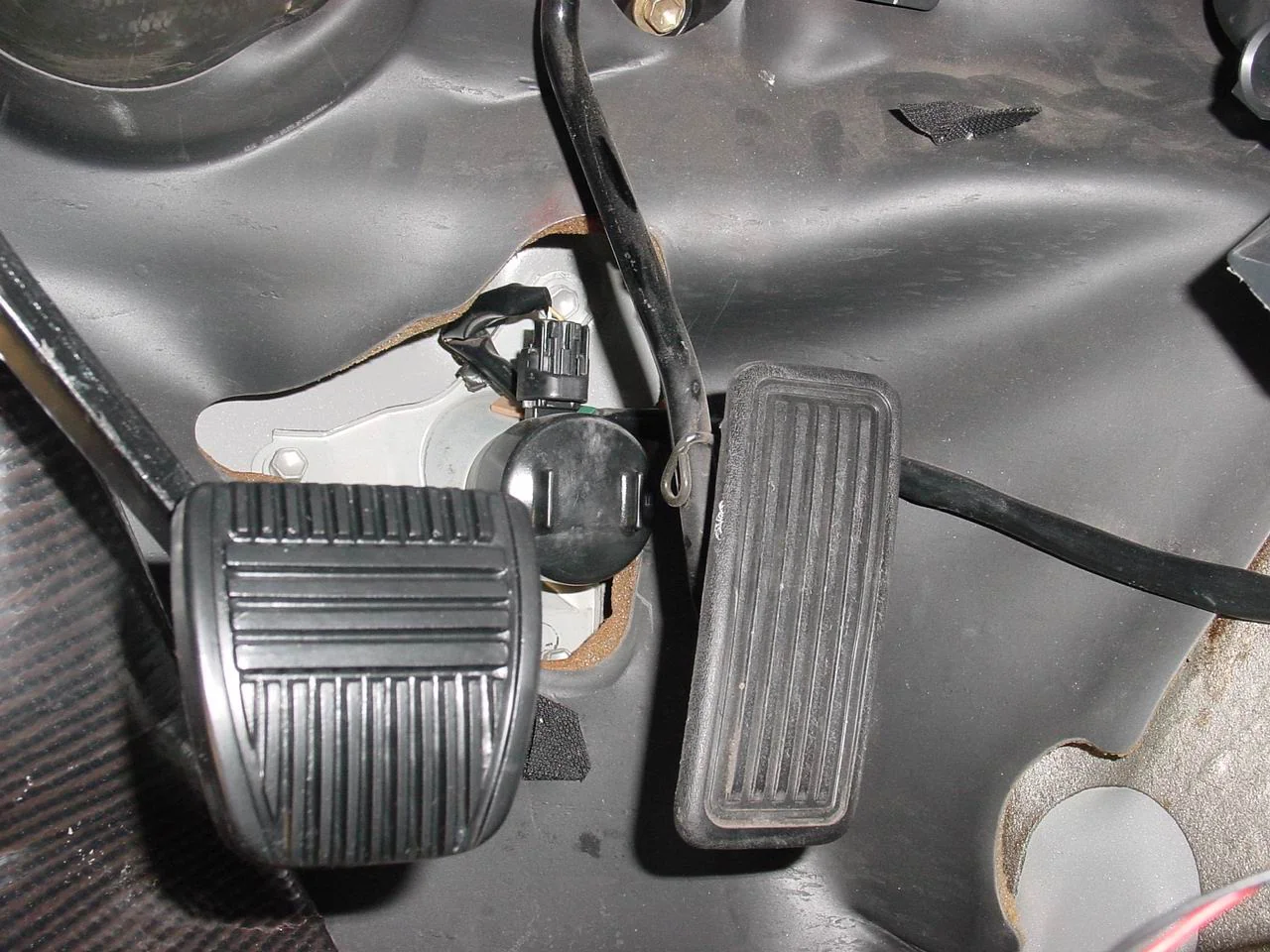
However, in some manual-transmission cars the mechanism does have a specific function. On vehicles such as the Audi 100, wiring from the button under the gas pedal runs to the air-conditioning clutch. When the accelerator is fully pressed, the mechanism temporarily отключает the air-conditioning system, which otherwise draws power from the engine. This effectively creates a form of “kickdown” for cars with a manual gearbox.
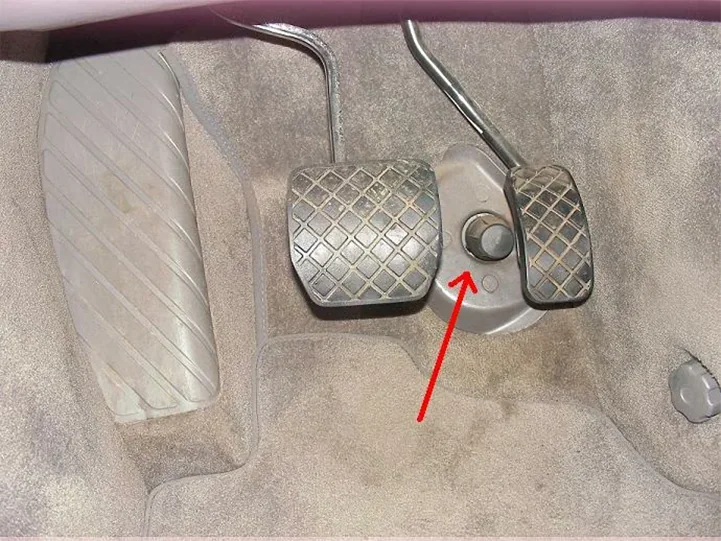
In vehicles produced around the turn of the millennium, the button under the gas pedal was also used to partially disable emissions-related systems. When activated, the engine control unit would adjust the air-fuel mixture, enriching it to achieve maximum power. Under today’s emissions standards, such a “boost” mode is no longer possible, but many older vehicles on public roads still feature this functionality.
You may also be interested in the news:

Steering Wheel Vibrating at Highway Speed? What to Check First
A vibrating steering wheel is often most noticeable at highway speeds, but the cause isn’t always immediately obvious.
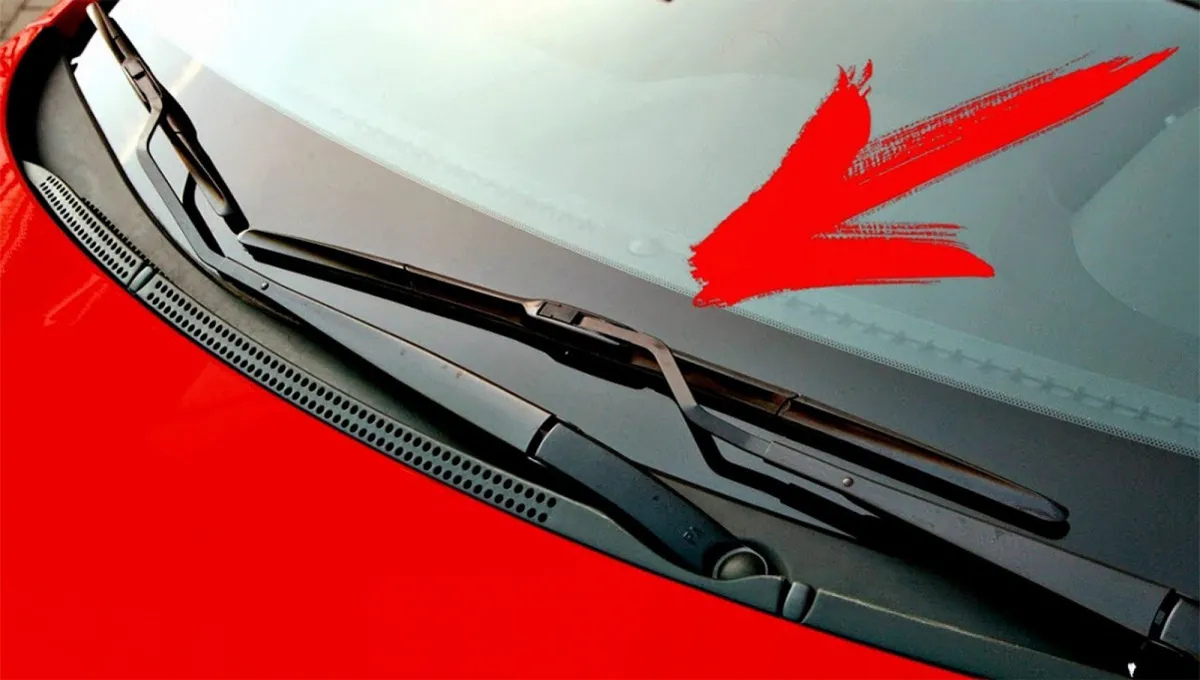
Windshield Wipers Aren’t Cleaning Properly? Here’s What Could Be Wrong
Why do windshield wipers sometimes fail to do their job?

Best Sedans for Interior Space: The Roomiest Cars of 2026
These six sedans offer generous legroom and shoulder room, giving families a comfortable alternative to larger SUVs for long trips.

Best Cars for Teen Drivers: Affordable and Safe Picks
These affordable used and new vehicles combine strong safety ratings, reliability, and reasonable prices for young drivers and their families.

These 5 Automakers Still Refuse to Build an SUV
SUVs and crossovers now account for roughly 61% of new-vehicle sales in the U.S., yet these five automakers continue to avoid the segment.