Have you ever wondered why a cat sleeps on your car — is it a sign or just keeping warm?
There’s Always a Cat on a Car – But Why?

Cats are famously mysterious creatures, and their behavior often leaves us wondering if there’s some hidden meaning behind their actions. So when we see a cat perched on a car, a natural question arises: is it just a coincidence—or some kind of warning?
From a scientific perspective, this behavior is mostly explained by biology and instinct. Studies show that cats are naturally drawn to warmth and elevated surfaces, which explains why cars are such appealing spots for them to rest.
Cats also have an acute sensitivity to tiny vibrations and sounds, helping them avoid potential dangers. However, there’s no scientific evidence that they can predict specific events.
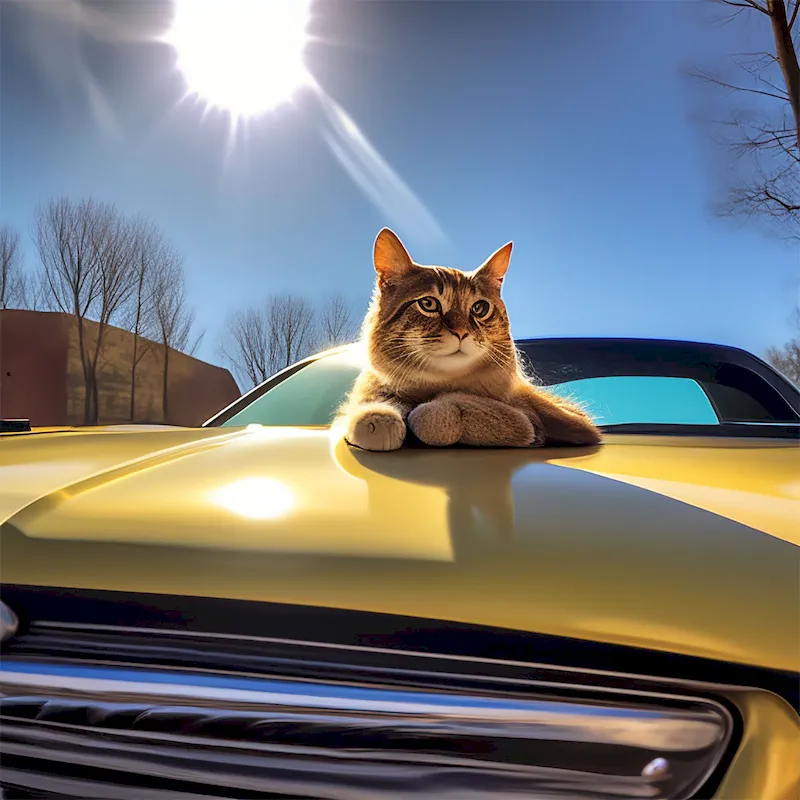
Why Cats Sit on Cars
Several practical reasons explain why cats often choose cars as their perch:
- Warmth – Metal surfaces heat up quickly in the sun, providing a cozy spot for cats. Even a recently parked car can stay warm from a running engine, making it especially inviting in cooler weather.
- Height – Cats instinctively seek high vantage points where they can survey their surroundings.
- Safety – A car offers a sense of shelter and protection from potential threats.
These factors make cars attractive to outdoor cats—no mysticism required.
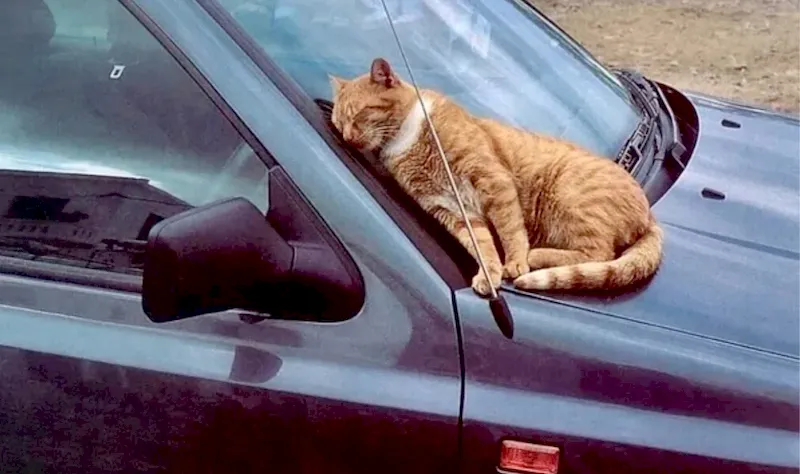
Still, some people like to read a little more into it:
- Some believe a cat sitting on your car brings good luck to the driver and passengers.
- Others claim it’s a warning of potential travel troubles—almost like the cat is advising against going anywhere that day.
- There’s even a notion that a cat can sense mechanical problems and tries to alert the owner.
While these ideas are largely speculative, they continue to influence superstitious interpretations.
Why Cats Pick One Car Over Another
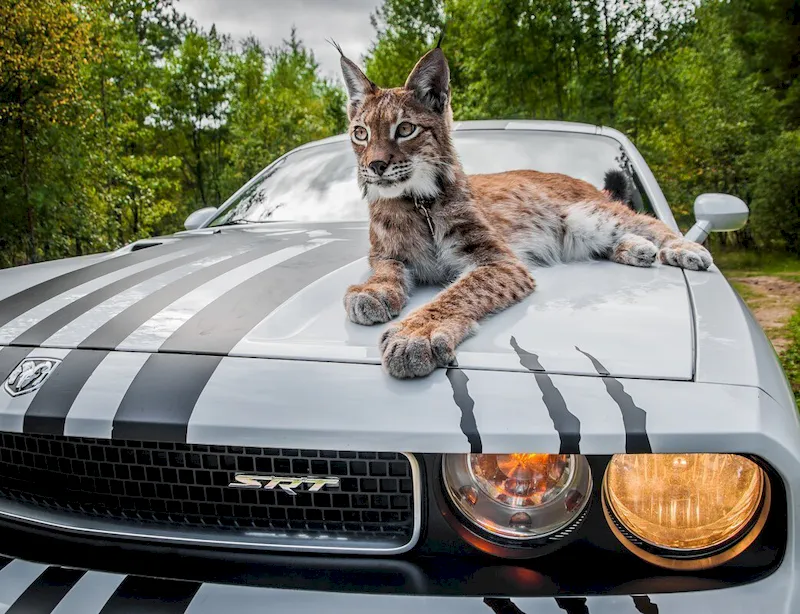
Some might see a cat’s choice of a particular car as mysterious or even magical—but there are logical explanations rooted in feline behavior and physiology.
Factors influencing a cat’s choice:
-
Surface Temperature – Cats are extremely sensitive to warmth and will gravitate to the warmest spots. Hood tops of recently driven cars or vehicles parked in sunny areas are especially attractive.
-
Individual Scent – Cats navigate the world through smell, and each car carries a unique scent from materials, fuel, oil, rubber parts, and past owners. A cat may simply prefer the scent of one car over another.
-
Color and Reflective Surface – Some studies suggest cats respond to color and brightness. Light-colored or metallic surfaces reflect more sunlight, providing extra warmth and comfort.
-
Height and Accessibility – Cats like high vantage points. If a car’s hood or roof is easy to access, it’s more likely to become a cat’s preferred spot.
-
Low Stress Environment – Cats avoid stressful areas. If a particular car is near barking dogs, noisy children, or other disturbances, the cat is likely to pick a calmer alternative.
In short, while it may seem mysterious, cats’ choice of a favorite car is usually just a matter of comfort, safety, and sensory preference.
You may also be interested in the news:
Not Ford, BMW or Audi: Mechanic Names the Car Brand That Almost Never Breaks Down
Auto repair professionals reveal which models rarely suffer major failures and which ones repeatedly end up on the lift.

What Does a Flashing Red Traffic Light Mean? Can You Keep Driving?
Drivers must come to a complete stop at the stop line before deciding whether it is safe to proceed.
Why You Should Check a Tire’s Manufacturing Date Before Buying
Tire buyers should check more than size, tread, and brand because rubber changes with age, even without visible wear.
Four Car Features Modern Drivers Are Starting to Miss
New cars keep adding technology, but some simple features that drivers once relied on are disappearing.