
Why a CVT Can Be Better Than a Traditional Automatic: Three Reasons to Rethink Continuously Variable Transmissions
Many drivers still shy away from CVTs out of habit. They’re often seen as delicate, high-maintenance gearboxes that demand constant attention.

A lot of drivers remain wary of continuously variable transmissions. CVTs are frequently described as fragile and temperamental, with a short lifespan and expensive repairs—often assumed to be less reliable than conventional automatics or dual-clutch gearboxes. Some of that reputation comes from outdated horror stories. When it comes to Japanese units from suppliers like Jatco and Aisin, a well-maintained CVT can easily last more than 155,000 miles without major issues.
According to Auto30.com, CVTs are also cheaper for automakers to produce than traditional automatic transmissions. That’s one reason they’re showing up in an increasing number of budget-friendly models. On top of that, CVTs deliver exceptionally smooth acceleration and strong fuel efficiency, which makes stop-and-go city driving noticeably more comfortable.

From a mechanical standpoint, a CVT is surprisingly simple. There are no complex gearsets or intricate clutch packs. Instead, two variable-diameter pulleys and a belt handle the job of changing gear ratios. Fewer moving parts generally mean fewer things that can fail.

For drivers focused on long-term durability, chain-driven CVTs are the better choice. These are used in certain Subaru models, for example. A chain offers a much higher safety margin than a belt, with real-world mileage reaching close to 185,000 miles. That puts them on par with many traditional automatics known for their longevity.
To push durability even further, engineers have developed clever solutions to reduce stress on the transmission. One of the most notable examples comes from Toyota. Rather than relying solely on pulleys and a belt, Toyota added a torque converter and a physical first gear. This allows the car to pull away more smoothly, reduces load on the CVT itself, and even makes extended wheelspin in loose snow far less damaging.

Even though modern CVTs are significantly tougher than they once were, certain driving habits can still shorten their lifespan. Excessive wheelspin, hard launches, and sustained high-speed driving are best avoided. Driving more smoothly can make a noticeable difference, allowing the transmission to operate under less stress and last longer.
CVTs are also particularly vulnerable when the transmission fluid is cold. Until it reaches operating temperature, the belt can slip against the pulleys and leave marks on their surfaces. That’s why, in winter, it’s a good idea to give a CVT-equipped car a minute or two to warm up after a cold start. Keeping the CVT cooler clean is just as important, ensuring the transmission stays within safe temperature limits during both warm-up and operation.
You may also be interested in the news:
When the First Freeze Hits, Put Newspaper Under Your Floor Mat: An Old Winter Driving Trick
Newspaper under a floor mat can help protect a car's floor from winter moisture, but it requires regular attention.
How a Repair Shop Can Overcharge You: What Every Driver Should Know
An experienced mechanic knows how to increase a repair bill, and drivers should know what to watch for before approving work.
How to Find the Source of a Car Interior Rattle in 15 Minutes
A simple trick can help drivers pinpoint an annoying interior rattle without taking apart half the cabin or visiting a repair shop.
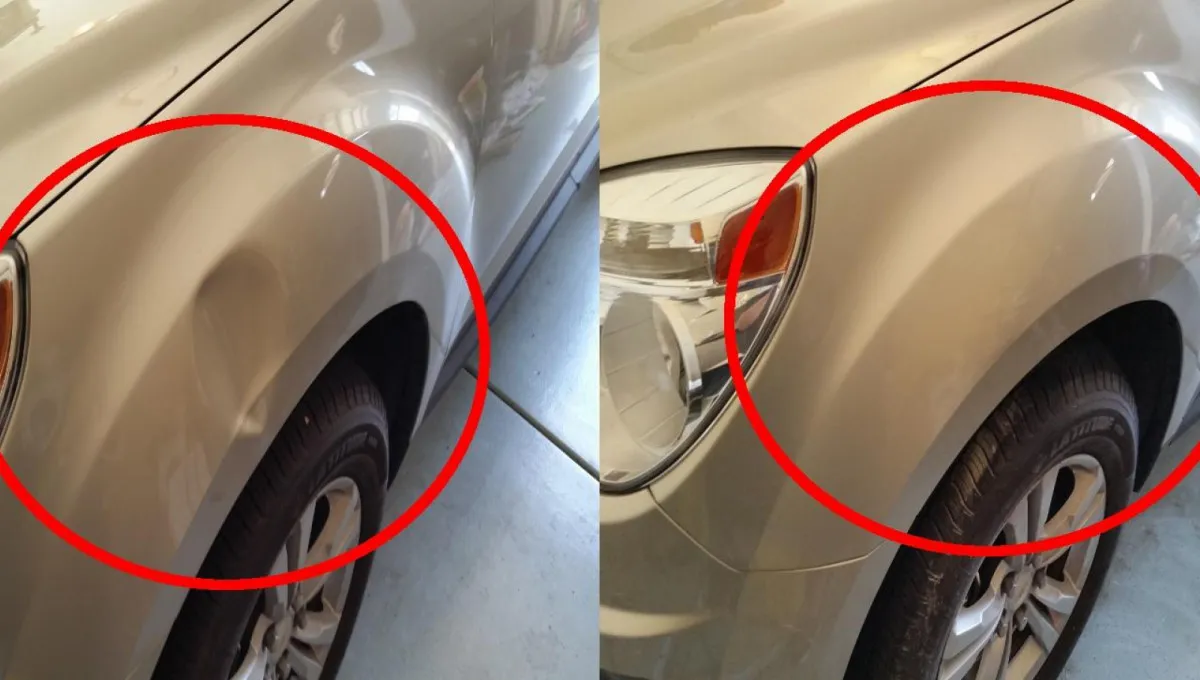
The Dent Can Disappear Without a Trace: How to Repair Car Body Damage Without Paint
Paintless dent repair can restore a damaged panel to its original shape, but only when certain conditions are met.
Not Ford, BMW or Audi: Mechanic Names the Car Brand That Almost Never Breaks Down
Auto repair professionals reveal which models rarely suffer major failures and which ones repeatedly end up on the lift.