
Why Most American Semi Trucks Have Long Hoods While European Trucks Use Flat Fronts
Many American semi trucks have long hoods, while most European trucks use flat fronts.
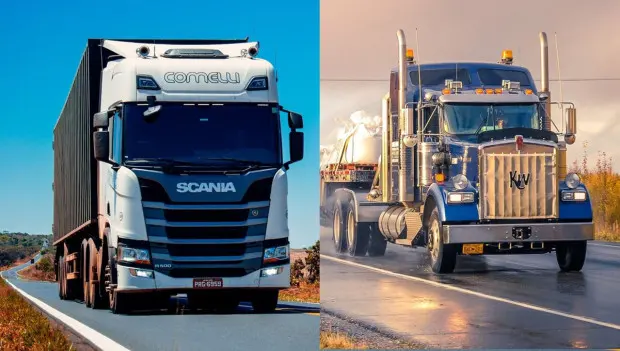
If you’ve ever watched traffic on American highways, you’ve probably noticed one thing: many U.S. semi trucks have a long, stretched-out hood, while most European rigs have a flat front with almost no nose at all.
That design difference isn’t just about style—it comes down to road regulations, operating conditions, and the way trucks are built.
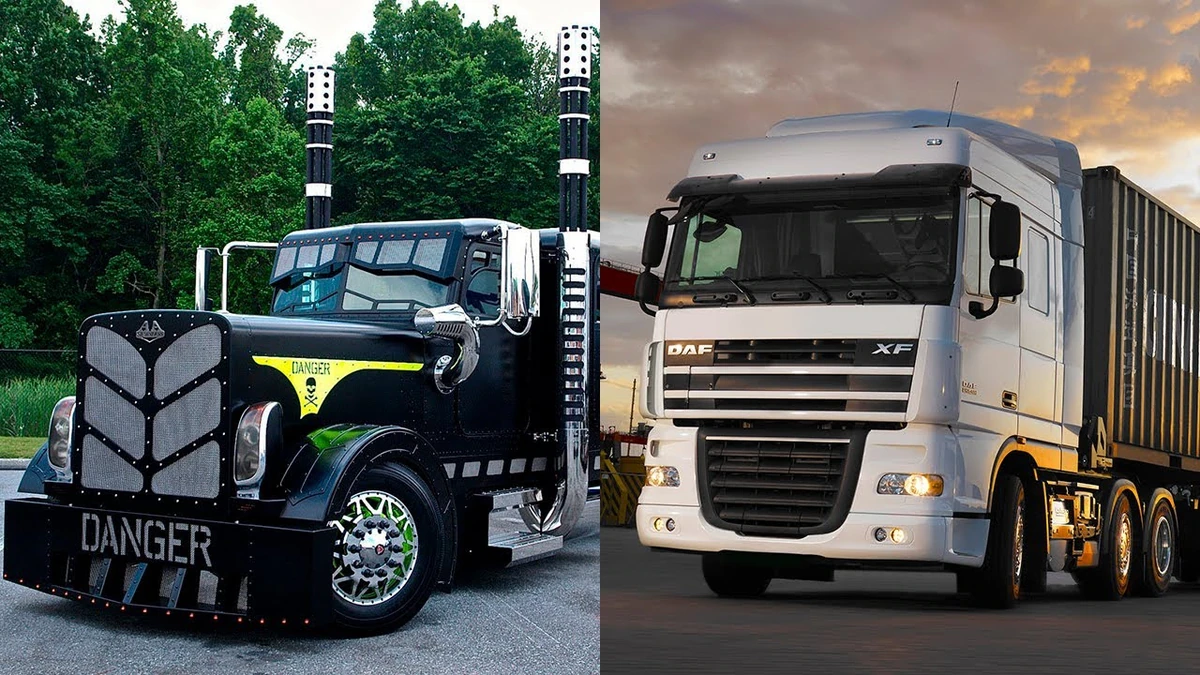
Long-hood tractors have become a symbol of American trucking culture. In the U.S., most heavy-duty semis follow a traditional layout where the engine sits in front of the cab under a separate hood. In Europe, by contrast, the engine is usually mounted underneath the cab itself, creating what’s known as a cab-over-engine design.
The better question may actually be why Europe relies almost entirely on cab-over trucks, while the U.S. still prefers conventional long-nose tractors.
The answer starts with infrastructure. European countries have far more narrow roads, tight city streets, winding routes, and older transportation networks that were never designed for massive modern trucks. Because of that, strict regulations limit the total length of a truck and trailer combination.
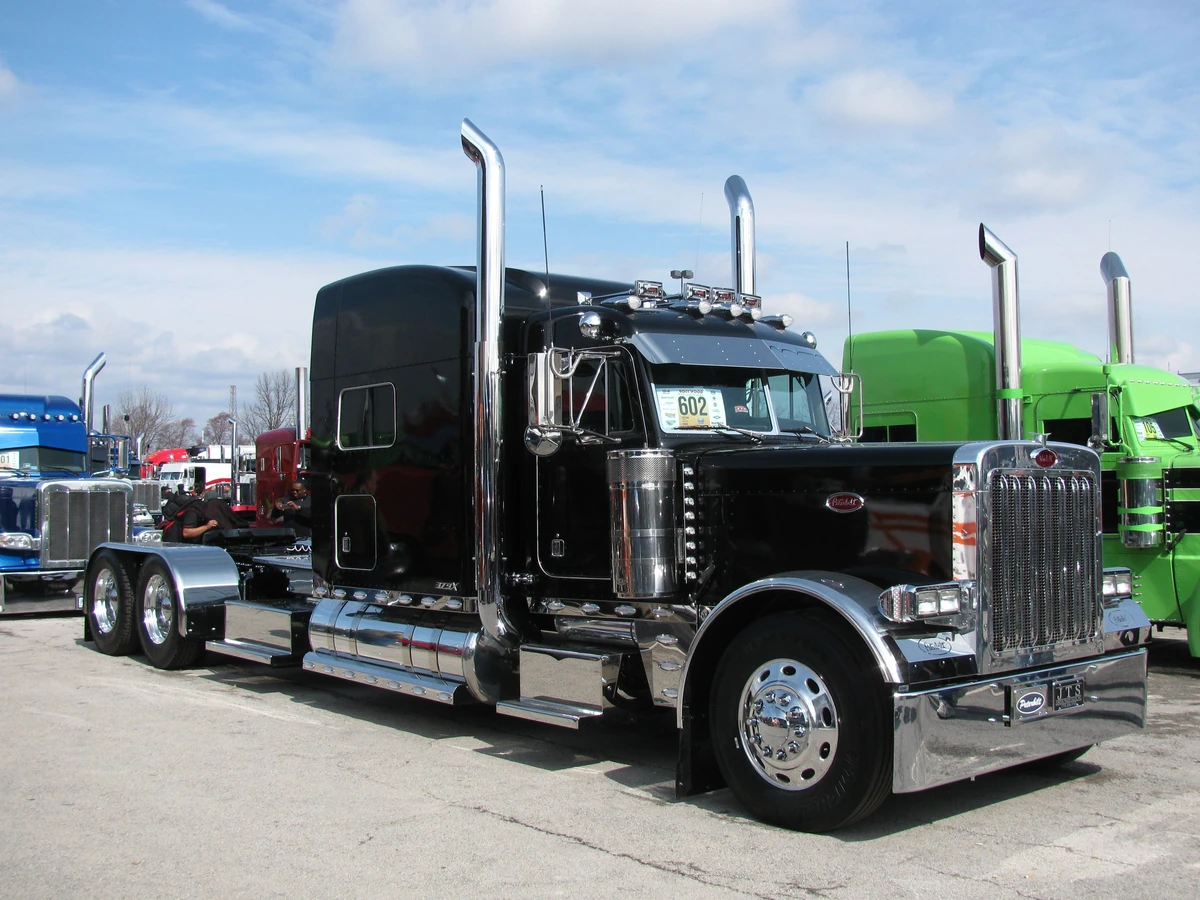
Under standard European rules, a tractor-trailer combination is generally limited to about 54 feet (16.5 meters). To maximize cargo space within that limit, manufacturers eliminated the long hood and moved the engine beneath the cab.
In the United States, regulations are very different. There are no equally strict nationwide limits on overall tractor-trailer length, especially for highway freight operations. With more room to work with, truck makers can keep the traditional hooded design without sacrificing trailer capacity.
There’s also a cultural factor. American drivers and fleet owners have long preferred conventional trucks, and that preference is so strong that European-style cab-over models have never gained major popularity in the U.S. market. For many European truck manufacturers, that has been a major obstacle when trying to expand sales in America.
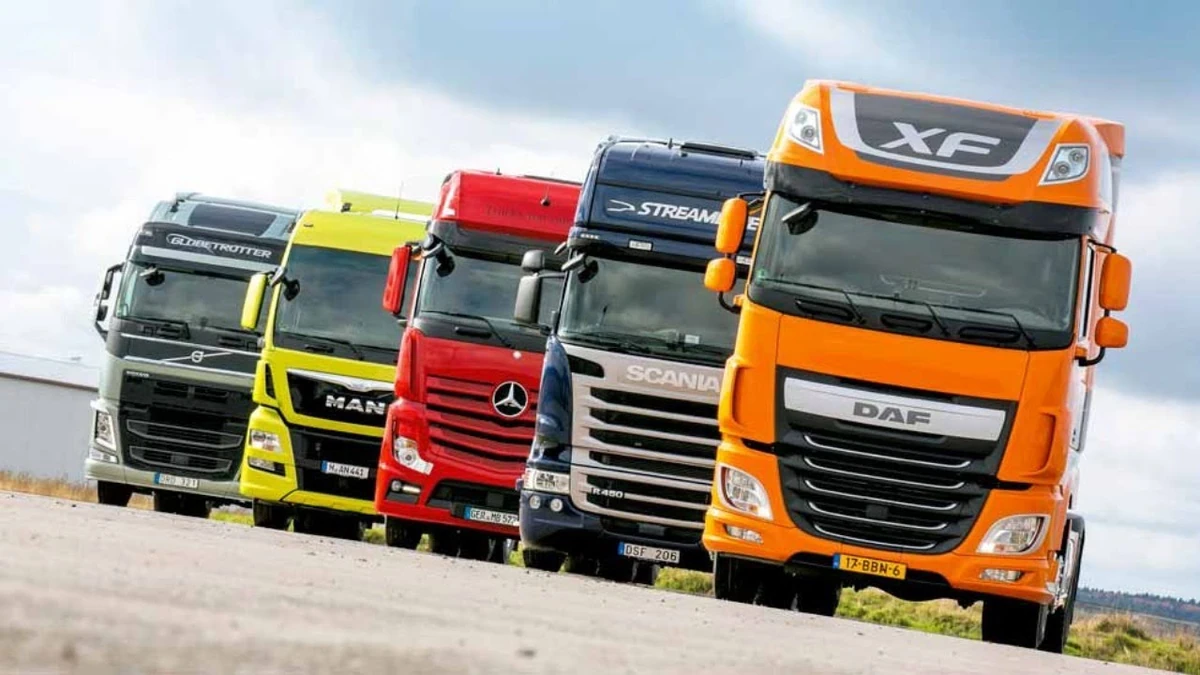
The long-hood design also offers practical advantages. Conventional trucks are often easier to service because mechanics can access the engine without lifting the cab. They also provide better protection for the driver in a front-end collision, and moving the engine forward allows for much larger sleeper cabins—something especially valued by long-haul truckers who spend days or even weeks on the road.
European cab-over trucks, however, have advantages of their own. They are easier to maneuver in tight spaces, safer for pedestrians and nearby traffic because of better visibility, and they typically deliver better fuel efficiency thanks to lower weight and improved aerodynamics.
In the end, neither design is universally better—they were simply built for very different roads, rules, and driving cultures.
You may also be interested in the news:

Flooded Honda NSX Sells for $52,100 in Japan
A 1991 Honda NSX that went underwater sold at auction for an astonishing price.

It Hauled Kids and Terrified Mustangs: The Story of Chevrolet’s Strangest 1965 Wagon
It simply did its job—loudly, heavily, and with an unmistakable sense of purpose.

5 Rare American Cars You Probably Never Knew Existed — Why They Remained Toys for the Few
America knows how to build cars. Sometimes they’re so brilliant that the rest of the world ends up copying them.

Top 5 Police Cars in U.S. History
For decades, American police departments have relied on powerful cars that became as iconic as the officers behind the wheel.

Crazy Studebaker: The 75 mm Gun Motor Carriage T27
The Studebaker T27 was an ambitious American attempt to build a low-profile, highly mobile tank destroyer before the concept was ready.